Between Luxor and Aswan, the cruises suggested here take three or four nights, on a cruise ship or a dahabiya, past temples with their own opening hours and official history.
By ToursXplorer Editorial Team
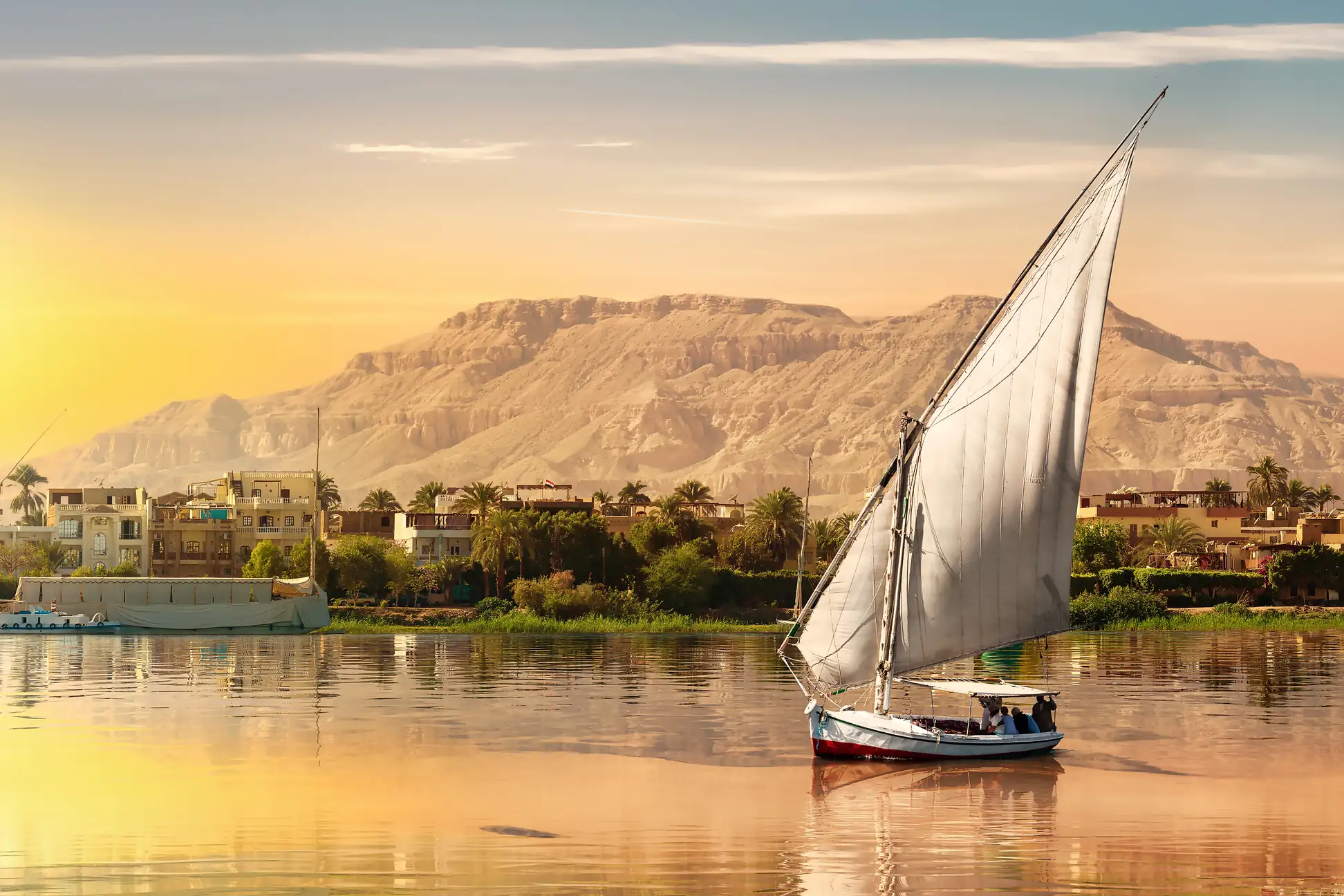
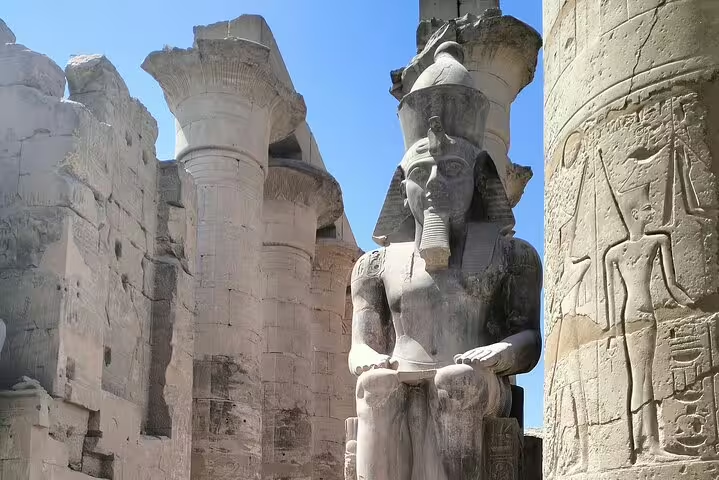
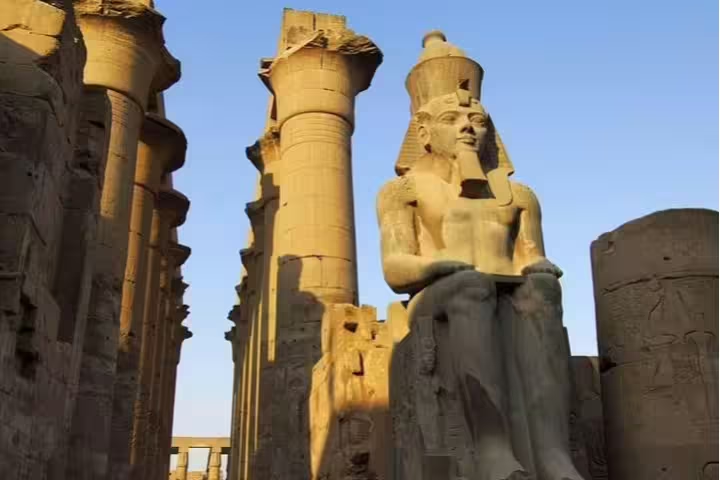
Between Luxor and Aswan, the Nile carries travellers past temples that line both banks: Karnak and Luxor Temple on the east, the Valley of the Kings on the west, and further south Edfu, Kom Ombo and the island sanctuary of Philae near Aswan. The trips suggested here cover this stretch two ways, aboard a cruise ship or aboard a dahabiya, a traditional sailing vessel.
How many days, and from which end of the river? It comes down to the programme: direction, the number of nights aboard, and whether the trip starts beyond Luxor and Aswan in Cairo.
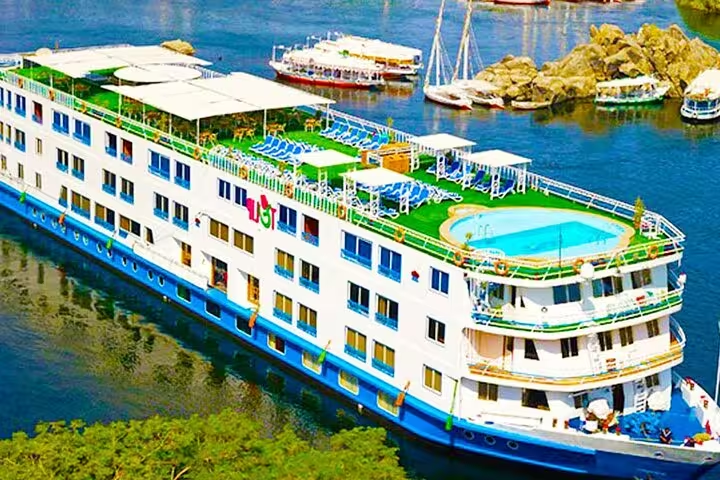
This programme begins in Aswan and sails north to Luxor over three nights, with an early excursion to Abu Simbel folded into the itinerary rather than sold as an add-on. Guests are collected from their hotel, train station or airport in Aswan, cross by motor-boat to Philae Temple, and visit the Aswan High Dam before boarding the cruise vessel. Along the way the ship calls at Kom Ombo and Edfu, including a horse-carriage ride to Edfu Temple and a passage through the Esna lock at dusk, before a sunrise hot air balloon flight over Luxor closes out the trip with ground tours of the Valley of the Kings, Hatshepsut's Temple, the Colossi of Memnon, Karnak and Luxor Temple. The pace stays easy throughout.
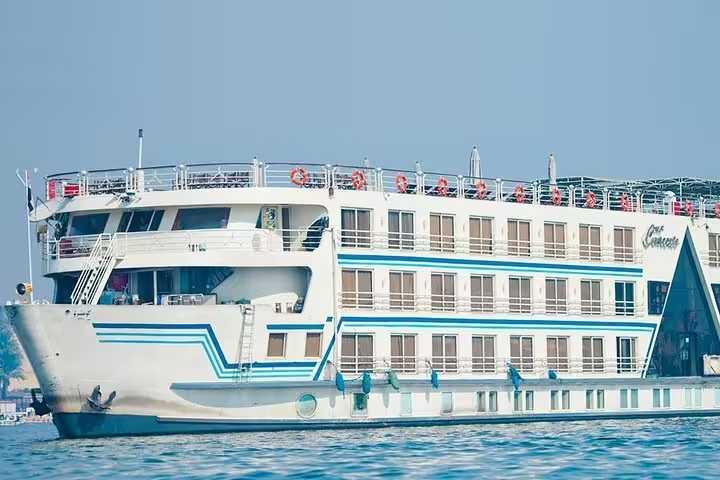
This five-day journey begins in Luxor, where guests check in to the ship and visit Karnak and Luxor Temple on the East Bank before crossing to the Valley of the Kings, Hatshepsut's Temple and the Colossi of Memnon on the West Bank. The ship then sails south, stopping at Edfu to see the Temple of Horus and at Kom Ombo for its double-dedicated temple to Sobek and Haroeris, before docking in Aswan for a visit ahead of departure. Onboard, the vessel offers a swimming pool, restaurant, lounge and evening entertainment between excursions, and the itinerary is rated easy.
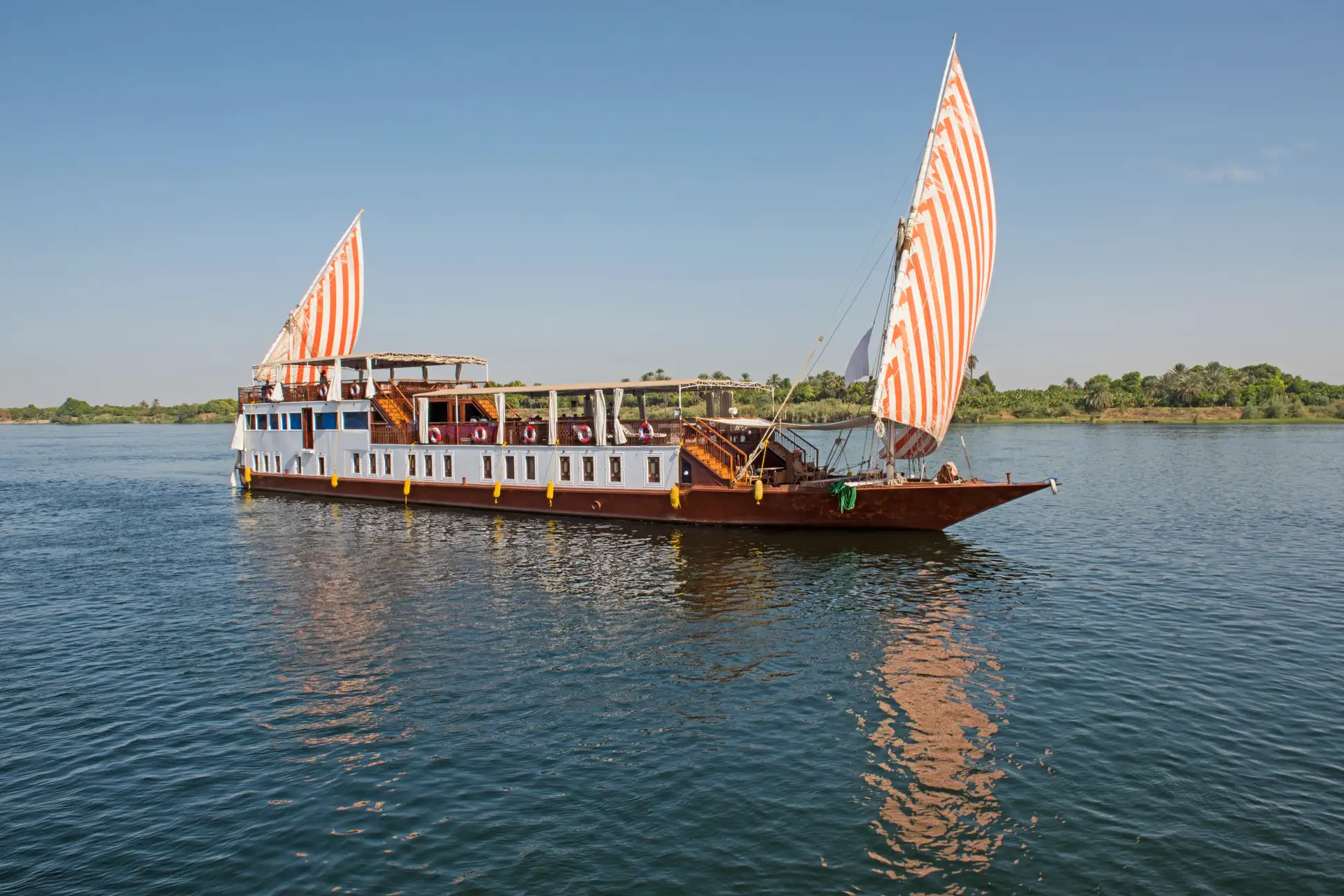
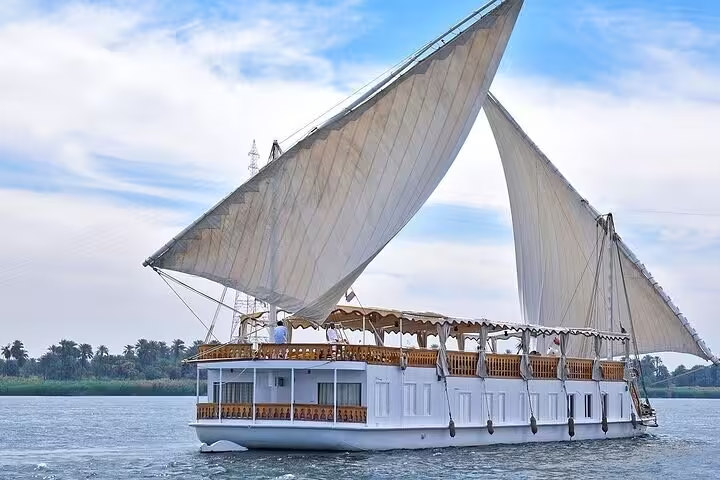
This five-day, four-night cruise covers the same stretch of river as the standard ships but aboard a dahabiya, a two-masted sailing boat described on its own itinerary as a traditional wooden sailing vessel, smaller than a conventional cruise ship, with a private air-conditioned vehicle and an Egyptologist guide for shore excursions. The route begins with the Valley of the Kings, Hatshepsut's Temple and the Colossi of Memnon on Luxor's west bank, moves through Karnak, and continues south with stops at Edfu and Kom Ombo before finishing in Aswan at Philae Temple and the Aswan High Dam. Rated easy, it brings the same temple circuit at a different pace on the water.
This week-long trip opens in Giza with the Pyramids and the Grand Egyptian Museum, then a domestic flight carries travellers to Luxor to join a cruise that sails between Luxor and Aswan, stopping at Edfu and Kom Ombo along the way. Karnak Temple anchors the Luxor stop, and Philae Island rounds out the programme in Aswan before a return domestic flight to Cairo. Transfers, flights and entrance fees are bundled throughout, and the pace moves from land-based sightseeing in Cairo and Giza to the slower rhythm of the ship once the cruise begins.
This longer itinerary begins in Cairo at the airport, then heads south overnight by sleeper train to Aswan to join a cruise sailing from Aswan to Luxor via Kom Ombo and Edfu. In Aswan, the High Dam and Philae Temple are visited before boarding; in Luxor, the Valley of the Kings, Hatshepsut's Temple, the Colossi of Memnon and Karnak close out the river portion, followed by a flight back to Cairo.
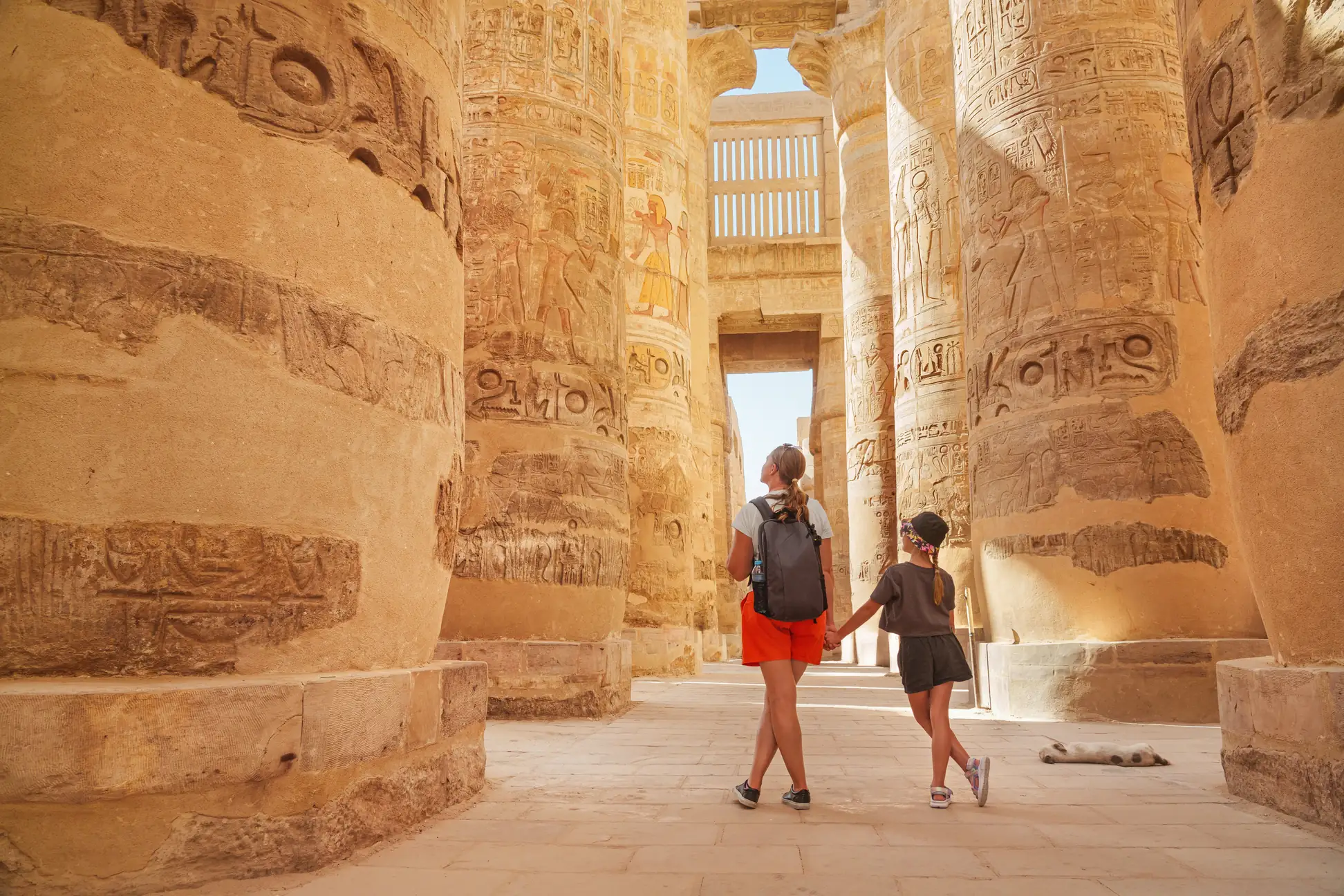
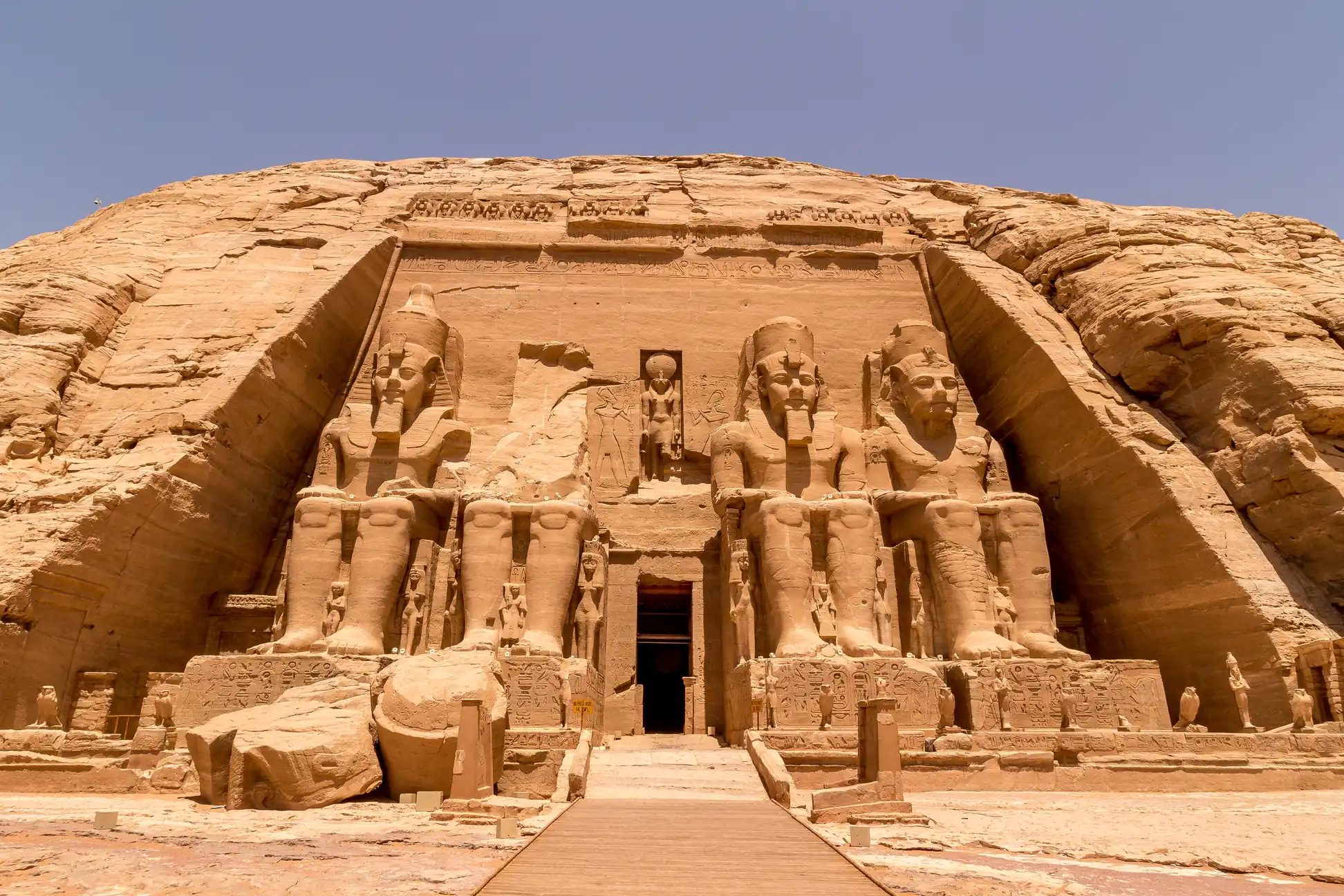
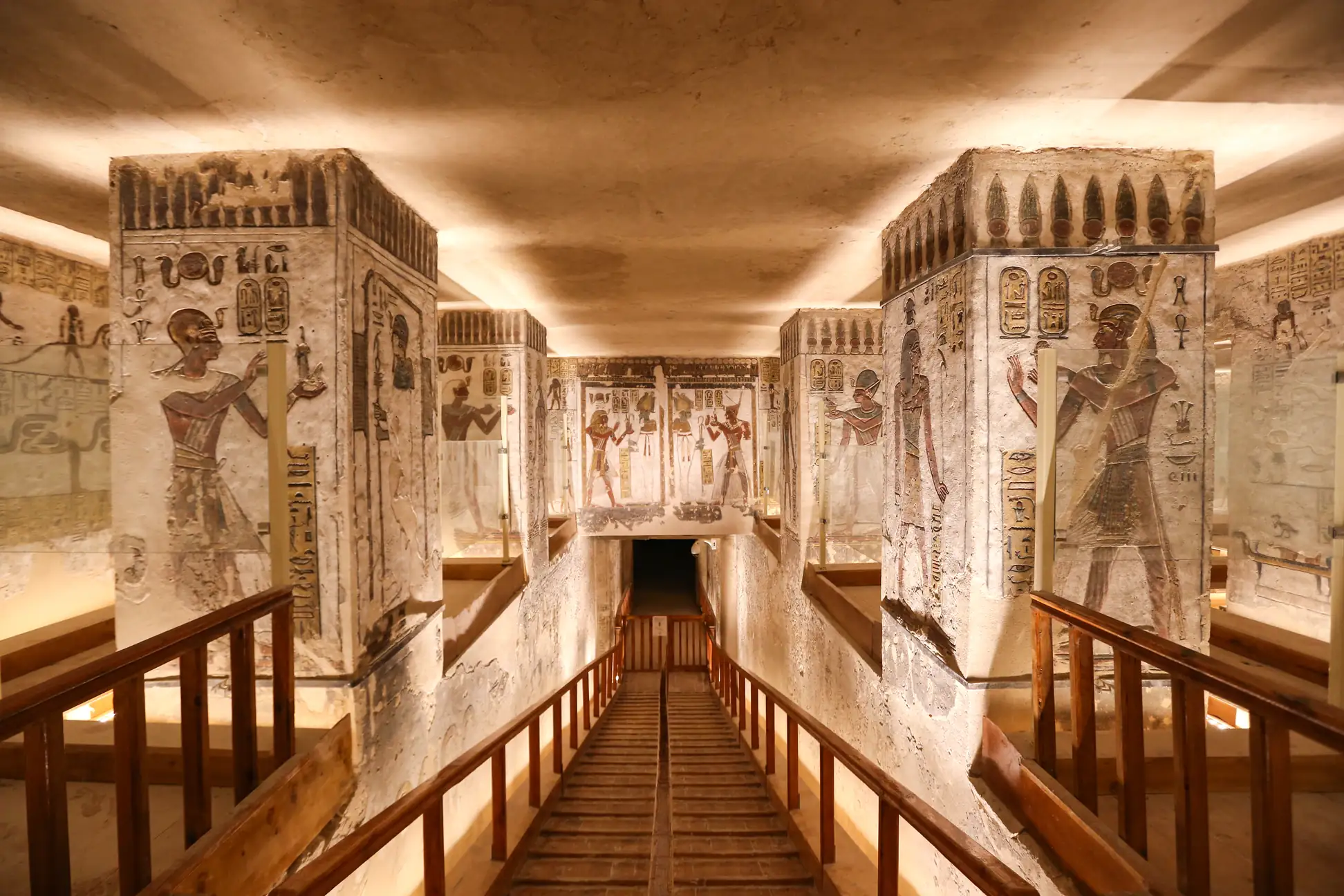
Karnak and the Valley of the Kings both open every day from 6 am (06:00) to 5 pm (17:00); the Valley of the Kings includes over sixty tombs, plus some twenty unfinished ones. The monuments of Philae were moved from the original Philae island to the nearby island of Agilkia during the UNESCO Nubia Campaign in the 1960s, to rescue them from the flooding caused by the Aswan High Dam; the site opens every day from 7 am (07:00) to 4 pm (16:00). The two temples of Abu Simbel were moved from their original location in 1968, after the Aswan High Dam was built, because the dam threatened to submerge them. On two days a year, 22 February and 22 October, the sun's rays enter the temple at Abu Simbel, cross the main hall and light up the innermost statues.
These are structured, guided itineraries with fixed shore excursions rather than open-ended travel; each day follows a set visit schedule between temple stops and time aboard the ship. The pace is rated easy and designed for most fitness levels, but it still involves walking at open-air sites, often starting early to work around opening hours.
Skip the three-night programme if you want to start in Luxor rather than Aswan; the four-night programmes run the other direction. None of these trips sail the river directly from Cairo; the longer ones reach the Nile by flight or overnight train instead. And the dahabiya is not the choice if you want a swimming pool and lounge on board: those facilities belong to the standard cruise ship programme.
There is no official rule; the length comes from each programme's own itinerary. Among the trips suggested here, sailing from Aswan to Luxor runs 4 days with 3 nights aboard, while Luxor to Aswan runs 5 days with 4 nights aboard, including a dahabiya option. A week-long trip adds Giza and the Grand Egyptian Museum before the cruise, and a nine-day trip adds Cairo and an overnight sleeper train before the cruise reaches Aswan.
The cruises suggested here start in Luxor or in Aswan, at city level. Longer trips start in Cairo and reach the river separately: one adds a domestic flight from Cairo to Luxor before joining the cruise, and another takes an overnight sleeper train from Cairo to Aswan before boarding.
In the trips suggested here, the direction changes the length: Aswan to Luxor runs 3 nights aboard, while Luxor to Aswan runs 4 nights aboard. Neither direction is better than the other; they are simply different programmes with different stops built into each one, including which temples come first and which come last along the route.
A dahabiya is a two-masted sailing boat. One of the programmes suggested here uses this traditional vessel, described as smaller than a conventional cruise ship, for its four-night cruise between Luxor and Aswan, pairing it with a private air-conditioned vehicle and an Egyptologist guide for the shore excursions to temples along the way.
None of the trips suggested here sail directly from Cairo to Luxor on the river. One reaches the Nile by taking an overnight sleeper train from Cairo to Aswan, then cruising from Aswan to Luxor, before a flight from Luxor back to Cairo. Another departs from Cairo and joins the cruise between Luxor and Aswan by domestic flight rather than by river.
Karnak, with its forest of columns in the Great Hypostyle Hall, and the Valley of the Kings, with over sixty tombs, both feature across these programmes. Philae, moved to the island of Agilkia to save it from flooding, also appears on several itineraries. Edfu, Kom Ombo, Luxor Temple and the Esna lock appear in the included itineraries of specific programmes, and Abu Simbel's rock-cut temples are included, with transport, only in the Aswan to Luxor programme described here.
On two days each year, 22 February and 22 October, the sun's rays enter the temple, cross the main hall and light up the innermost statues. Among the programmes described here, Abu Simbel with private transport is included only in the Aswan to Luxor cruise; it is not part of the other itineraries.
These programmes were drawn from the catalogue and checked against official facts about the sites themselves, including opening hours and the documented history of Philae and Abu Simbel. They are grouped by direction and length so the programme can be matched to the days available. ToursXplorer sells some of the trips in this guide and earns a commission when you book them. The options are described by type so you can compare them, whoever you book with. About ToursXplorer
Last checked October 2026. Rules checked against: Ministry of Tourism and Antiquities of Egypt (official website, egymonuments.gov.eg): Karnak; Ministry of Tourism and Antiquities of Egypt (official website, egymonuments.gov.eg): Valley of the Kings; Ministry of Tourism and Antiquities of Egypt (official website, egymonuments.gov.eg): Philae; Ministry of Tourism and Antiquities of Egypt (official website, egymonuments.gov.eg): Abu Simbel.