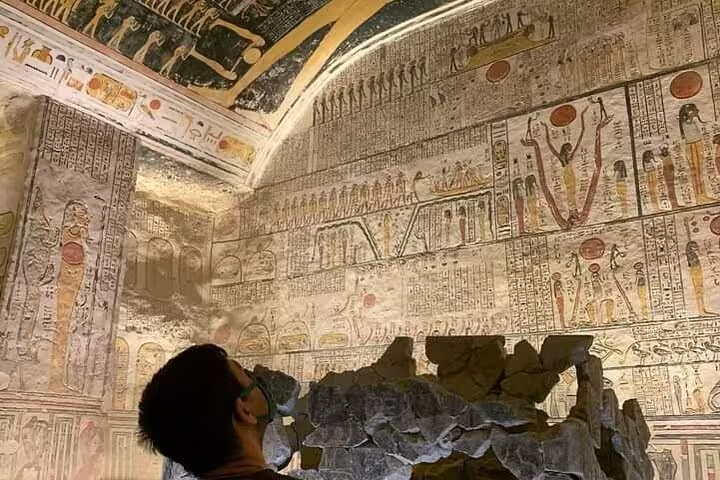
The rulers of the Eighteenth, Nineteenth and Twentieth Dynasties of the New Kingdom (c. 1550–1069 BC) were buried in a dry river valley across the river from the ancient city of Thebes, modern Luxor. Some other members of the royal family and a few very high-ranking non-royal individuals were buried here as well.
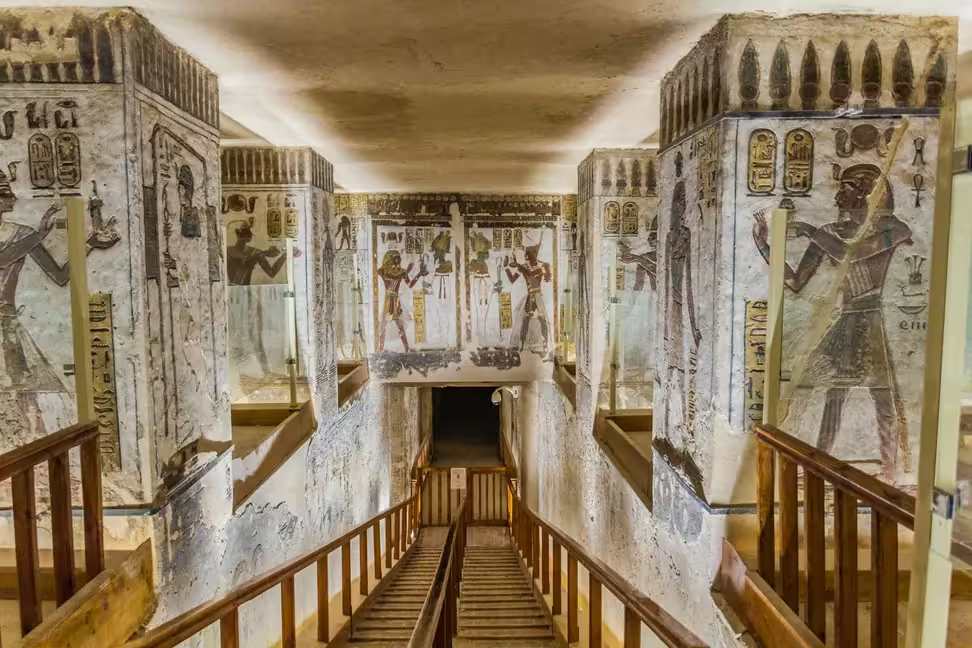
Ancient Egyptian cemeteries were generally on the west bank of the Nile, because the sun god set in the western horizon in order to be reborn in the eastern horizon.
The kings were laid to rest under a pyramid-shaped peak rising out of the cliffs around the valley. The area and the peak were sacred to a funerary aspect of the goddess Hathor, the 'Mistress of the West'.
Tomb robberies happened even in ancient times, so the Egyptians chose hidden, underground tombs in a secluded desert valley.
The first New Kingdom ruler confirmed to have been buried here was Thutmose I (c. 1504–1492 BC), the third king of the Eighteenth Dynasty.
The Valley of the Kings is divided into the East and West Valleys, and the western valley contains only a handful of tombs. In all there are over sixty tombs, plus some twenty unfinished ones.
The Valley of the Kings opens every day from 6 am (06:00) to 5 pm (17:00).
Karnak is on the other side of the river: see our Karnak guide. To choose a cruise between Luxor and Aswan, read Nile Cruise from Luxor to Aswan: How Many Days and Which Cruise.
Every trip that starts or stops here is also on our destination page.
The rulers of the Eighteenth to Twentieth Dynasties of the New Kingdom, with some other royals and a few high-ranking officials.
Over sixty, plus some twenty unfinished ones.
Tombs were robbed even in ancient times, so the kings were buried underground in a secluded desert valley.
Daily, between 6 am and 5 pm (06:00 to 17:00).
Facts from the official website of Egypt's Ministry of Tourism and Antiquities (egymonuments.gov.eg), checked on 13 October 2026.