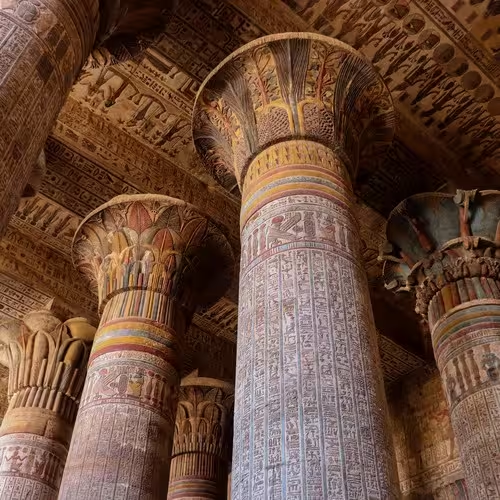
Karnak is one of the world's largest temple complexes, located on the east bank of the Nile River in Luxor, Egypt. This vast archaeological site showcases the monumental architecture and religious devotion of ancient Egypt, featuring towering pylons, colossal statues, and the famous Hypostyle Hall with its forest of massive stone columns.
What to see in Karnak
The Great Hypostyle Hall stands as the centerpiece, with 134 columns soaring toward the sky. Visitors should explore the Sacred Lake, admire the Obelisk of Senusret I, and walk through the Avenue of Sphinxes that once connected Karnak to the Luxor Temple. The Temple of Khonsu and numerous smaller shrines provide insight into ancient Egyptian religious practices.
Things to do in Karnak
Guided tours reveal the temple's historical significance and architectural details. Many visitors combine Karnak with a visit to the Valley of the Kings or explore the site during the sound and light show, which brings the ancient temple to life after sunset. Photography enthusiasts will find endless opportunities to capture the impressive ruins.
Ancient Religious Significance
Karnak was the principal religious center dedicated to the god Amun-Ra during the New Kingdom period. The complex evolved over 2,000 years as successive pharaohs added temples and monuments, making it a living record of ancient Egyptian religious evolution and dynastic power.
Karnak is located on the east bank of the Nile River near Luxor in Upper Egypt. The temple complex sits approximately 4 kilometers north of Luxor Temple and is easily accessible from Luxor's city center. The site spans over 100 acres and can be reached by car, taxi, or guided tour from Luxor, making it a central attraction for visitors exploring Egypt's ancient heritage.
Ancient Egyptian temples, archaeological sites, Nile River destinations, Luxor attractions, UNESCO World Heritage, monumental architecture