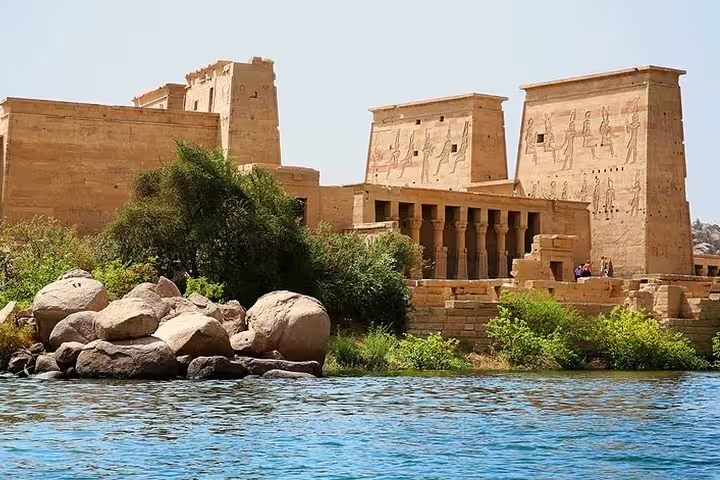
On the island of Agilkia stands the temple of Isis, the most prominent of the monuments of Philae, begun by Ptolemy II Philadelphus (285–246 BC) and dedicated to Isis, the mother of Horus.
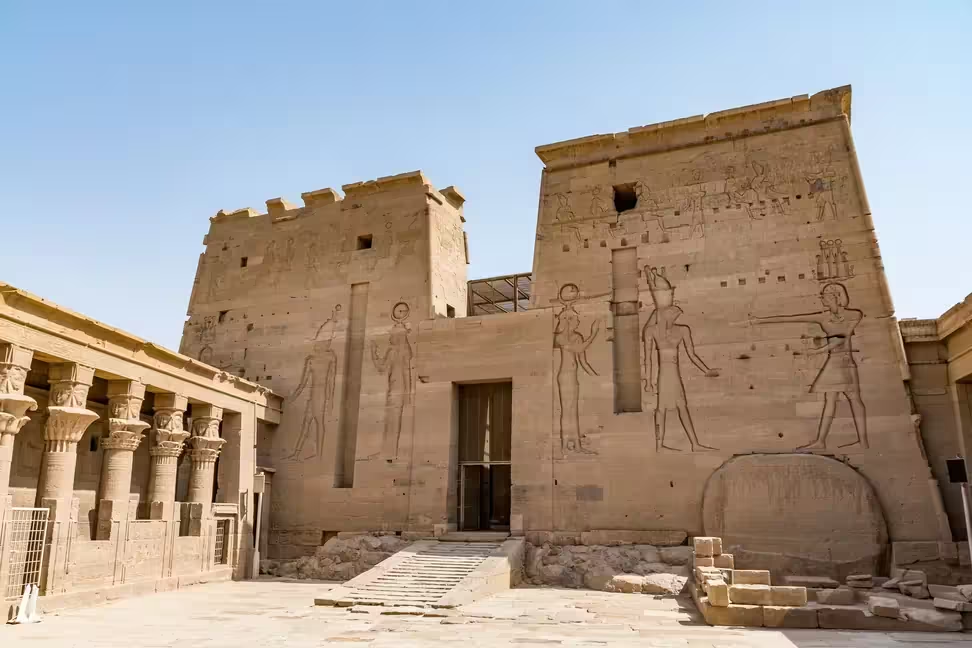
The monuments of Philae were moved from the original Philae island to the nearby island of Agilkia during the UNESCO Nubia Campaign in the 1960s, to rescue them from the flooding caused by the Aswan High Dam.
Philae's monuments date mainly to the Ptolemaic Period. In the mammisi, or birth room, where the birth of Horus was celebrated, a scene shows Isis suckling her son Horus in the marshes.
The temple of Isis was one of the last ancient Egyptian temples to remain active: it functioned until the reign of the Byzantine Emperor Justinian I (527–565 AD). Here a priest of Isis named Esmet-Akhom carved the very last dated hieroglyphic inscription, in 394 AD.
The temple was also converted into a Christian church, and many inscriptions were deliberately destroyed.
Nearby there is a temple dedicated to Hathor, built by Ptolemy VI Philometor and Augustus, the first emperor of Rome.
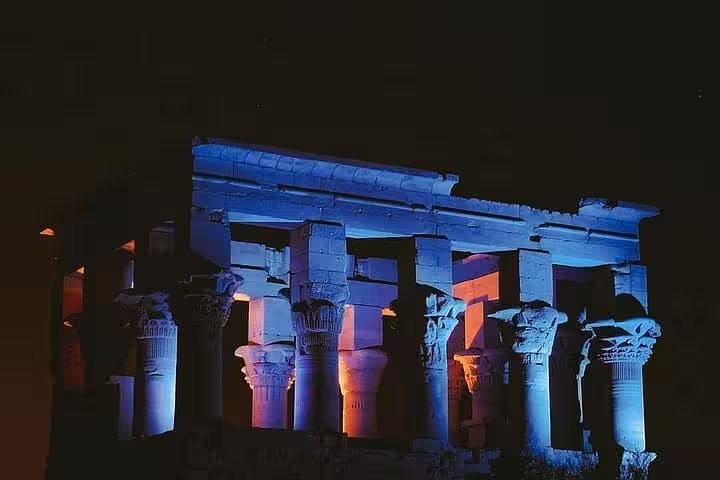
The Kiosk of Trajan (98–117 AD) still stands, although its roof has disappeared. In it the emperor is shown making offerings to Isis, her consort Osiris and their son Horus.
The site opens every day from 7 am (07:00) to 4 pm (16:00).
For Ramesses II's two rock-cut temples in Nubia, see our Abu Simbel guide; to choose a cruise between Luxor and Aswan, read Nile Cruise from Luxor to Aswan: How Many Days and Which Cruise.
Every trip that starts or stops here is also on our destination page.
The Aswan High Dam would have flooded it, so in the 1960s its monuments went to Agilkia, a nearby island.
Isis, the mother of Horus.
Daily, between 7 am and 4 pm (07:00 to 16:00).
Facts from the official website of Egypt's Ministry of Tourism and Antiquities (egymonuments.gov.eg), checked on 13 October 2026.