Last updated:
Pompeii lies in the modern town of Pompei, in the Metropolitan City of Naples, on a plateau that looks over the valley of the river Sarno, where a busy port once stood at the river mouth. The ancient town covers 66 hectares, and about 50 of them have been excavated, suburban areas included. This page follows its story from Roman colony to buried town and to the digs that brought it back, then the tours that visit it, some of them with Vesuvius or the coast.
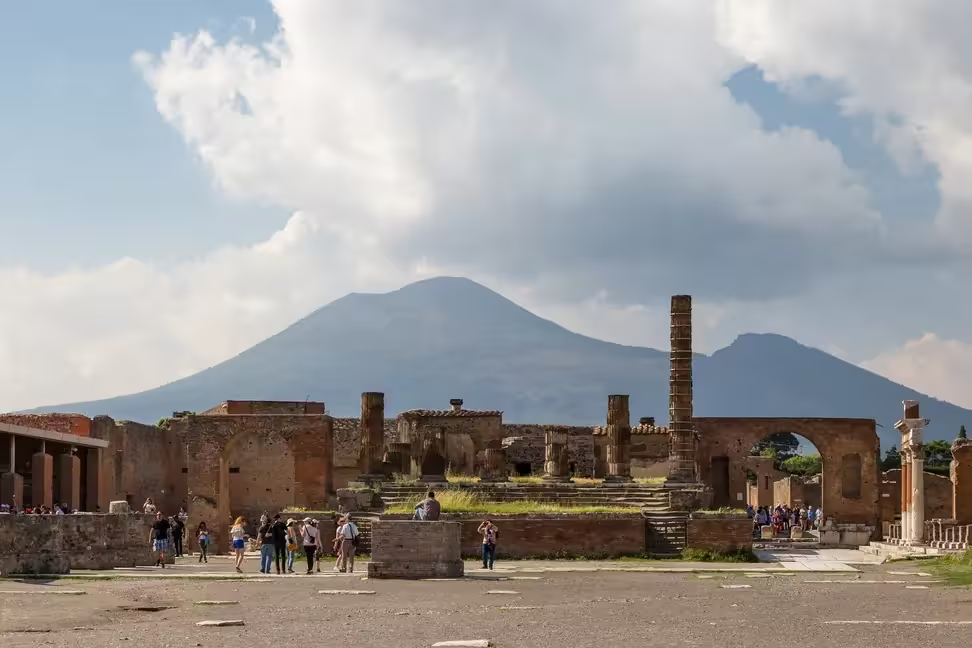
Pompeii rose against Rome in 90-89 BC, together with other Italic peoples. Besieged by Roman troops, it surrendered and in 80 BC became a Roman colony under the name Cornelia Veneria Pompeianorum. In AD 62 a violent earthquake shook the whole Vesuvius area, and seventeen years later the town was still a building site when the volcano woke.
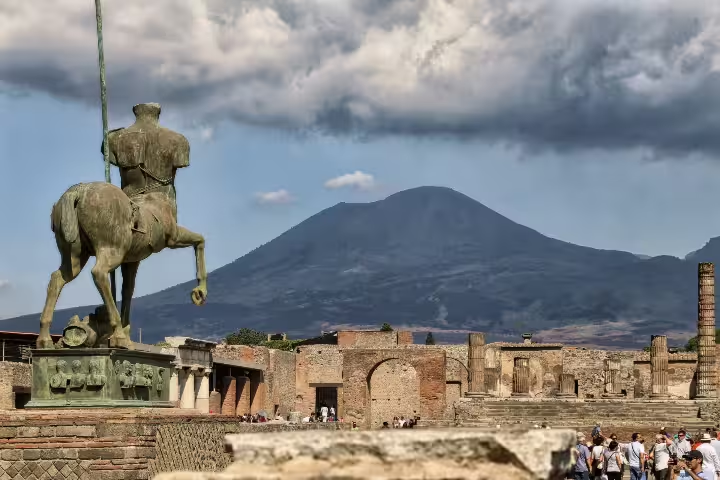
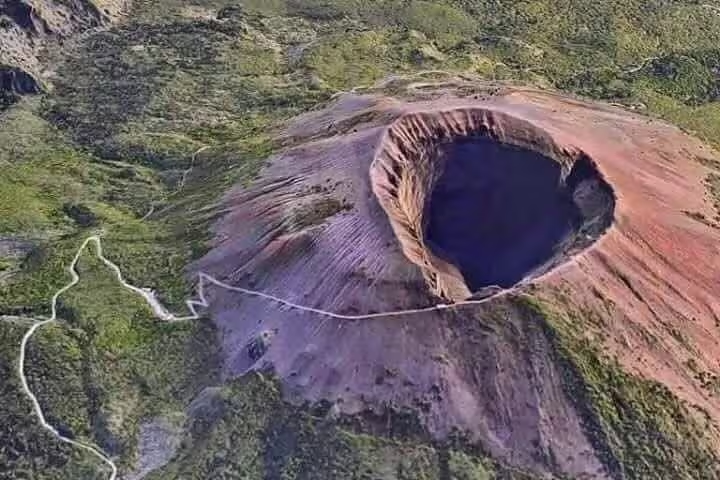
On 24 August AD 79 the eruption of Vesuvius buried Pompeii under ash and lapilli, a story Pliny the Younger told in two famous letters. That same ash kept the town in exceptional condition, and it still gives a vivid picture of how a Roman town was laid out and how its people lived from one day to the next. Vesuvius is an active stratovolcano, part of the Somma-Vesuvius complex, and it rises to 1281 m (4,203 ft).
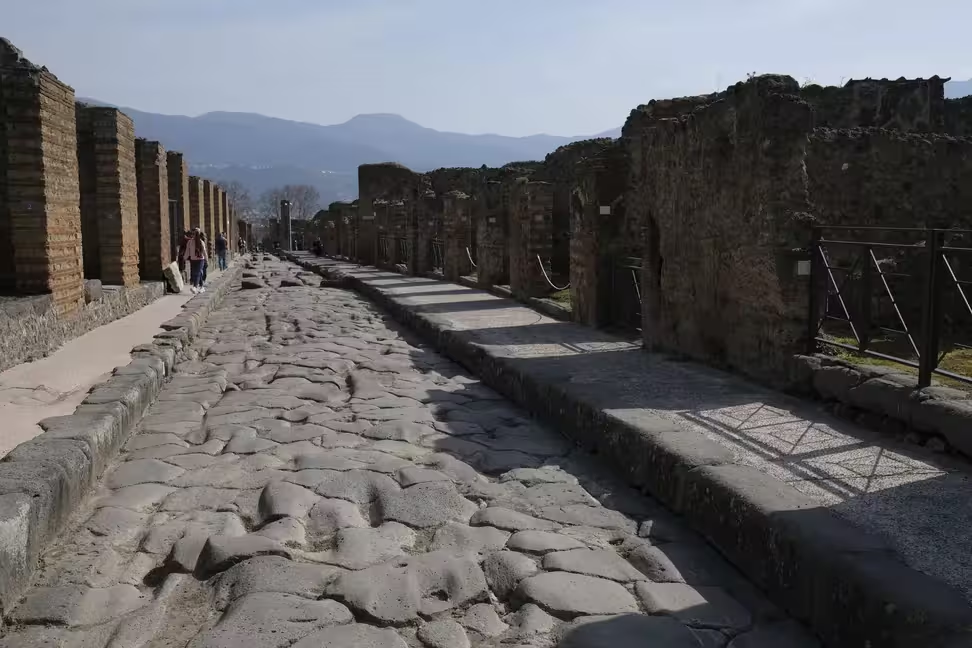
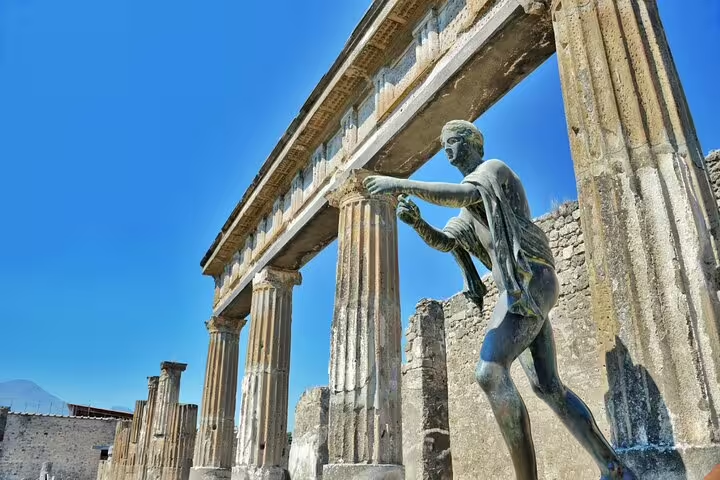
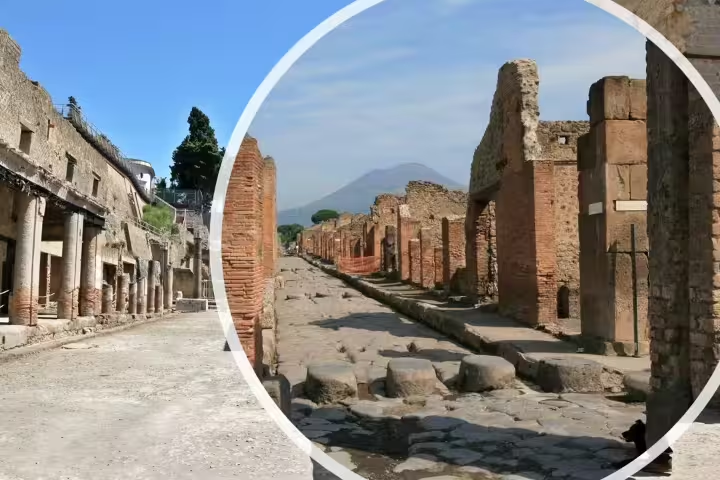
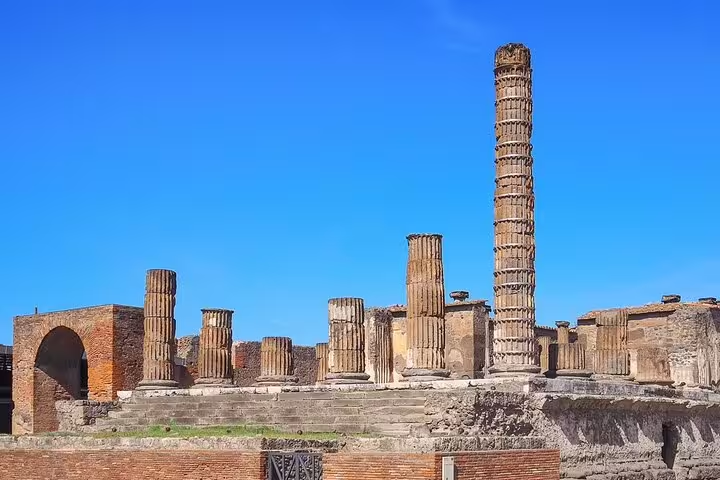
You walk on the old paved streets and look into houses both modest and rich, with their decorated walls and floors, and into the shops along the way. The Forum, with its public spaces, is flanked by imposing buildings such as the Capitolium, the Basilica and temples. Further on come sacred areas, many public baths, the theatre quarter with its two theatres, and the amphitheatre. The House of the Faun and the Lupanar, the ancient brothel, are part of the site too. At its most developed, the Roman house grew into a real mansion with rich decoration and many rooms, and the House of the Chaste Lovers and the House of the Faun are two outstanding examples. Pompeii's walls also stand out for their wealth of graffiti: an election was close at hand when the eruption came, and many political slogans were scrawled on them.Along the route you see the regiones (quarters) and insulae (blocks) into which Giuseppe Fiorelli divided the town in 1858. When the owner of a house is unknown, it carries a name the excavators gave it after a find or some other detail.
Four necropolises line the roads out of the town gates, with monumental tombs of several kinds. Beyond the excavated area you can also visit some of the country houses that stood across the land around Pompeii, first among them the Villa of the Mysteries. This enormous residence just outside the walls began life as a modest house in the 3rd century BC. It owes its name to the wall paintings of its triclinium, which show the initiation rites, the "mysteries", of the cult of Dionysus.
Pompeii was rediscovered in the 16th century, while the Canale del Conte di Sarno was being dug under the direction of Domenico Fontana, but at first the site was taken for Stabiae. Extensive exploration began only in 1748, under Charles III of Bourbon. Later, under the restored Bourbon rule, the discovery of the House of the Faun, with its great mosaic of the battle of Alexander, caused a stir. Once Giuseppe Fiorelli became head of the digs in 1861, paintings stayed on the walls instead of going to the Royal Museum in Naples, and plaster casts recovered the imprint left by the bodies of the victims. Amedeo Maiuri, director from 1924 to 1961, uncovered the Villa of the Mysteries, found the House of the Menander and excavated the necropolis of Porta Nocera.
Two of the tours put Pompeii at the centre. The private half-day trip from Naples takes care of the transport and leaves the visit to you: the Forum, Via dell'Abbondanza, the House of the Vettii, the Amphitheatre, the Street of Tombs and the two theatres, the Teatro Grande and the Odeon. It is rated easy. The full-day group tour of Pompeii and Herculaneum, with pickup in Naples, has a licensed guide in Pompeii for the large theatre, a necropolis, the baths and the houses of the richest citizens, then lunch at a local restaurant and a visit at your own pace to Herculaneum. It is rated moderate.
Two more add the volcano. The group day trip to Pompeii and Vesuvius, from Naples, has a local guide in the ruins, a light lunch and a walk through the Vesuvius nature reserve up to the crater rim, with views over the Gulf of Naples. The private tour of Sorrento, Pompeii and Vesuvius, with pickup in Sorrento, spends time in the historic centre of Sorrento; in Pompeii it covers the Forum, the plaster casts and the Villa of the Mysteries, and on Vesuvius it follows the marked trail to the crater rim. It is rated easy to moderate.
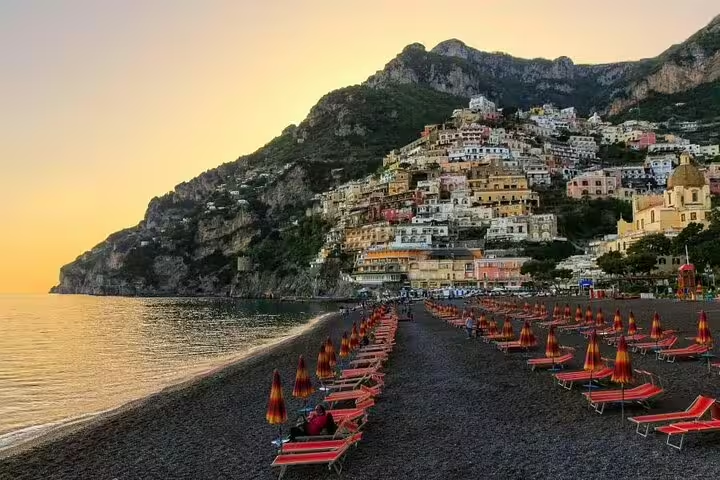
The last two are private tours with pickup in Naples that pair the ruins with the Amalfi Coast. The private day trip to Pompeii, Sorrento and Amalfi goes on from Pompeii to Sorrento, stops at a panoramic terrace above Positano and ends in Amalfi, at the Piazza del Duomo and in the old centre. The private tour of Amalfi and Pompeii drives the coast road and spends time in Amalfi first; in Pompeii it goes from the Forum along Via dell'Abbondanza and past the House of the Vettii to the Stabian Baths and the Lupanar. Both are rated easy.
More trips to the site are listed on the Pompeii destination page.
Yes. On the private half-day trip you explore the site on your own, and on the tour that adds Herculaneum the second site is visited at your own pace.
Two of them: the group day trip from Naples and the private Sorrento tour both continue from the ruins to the volcano and walk up to the crater rim.
Quite a lot, on uneven ancient paving stones. The tours advise comfortable closed shoes with a good grip.
A large Roman residence just outside the walls, named after the paintings of the cult of Dionysus in its dining room. It is part of the private Sorrento and Vesuvius day.
Sources: Ministero della Cultura (cultura.gov.it) (CC BY 3.0): parco-archeologico-di-pompei-area-archeologica-di-pompei, pompeii-herculaneum-and-torre-annunziata; Wikidata (CC0).