Last updated:


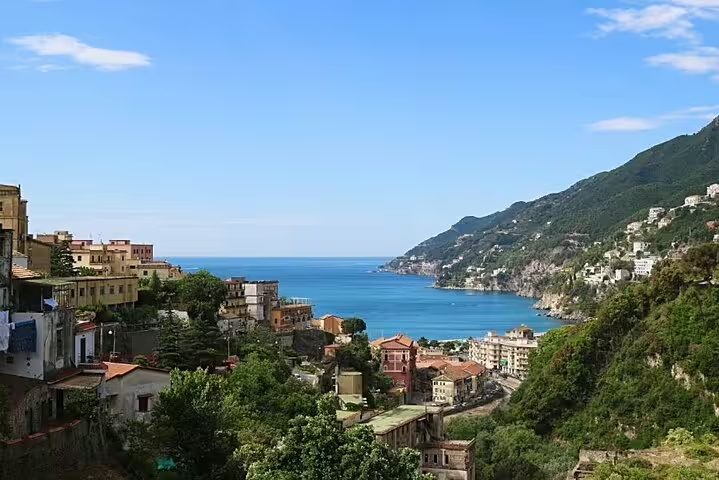
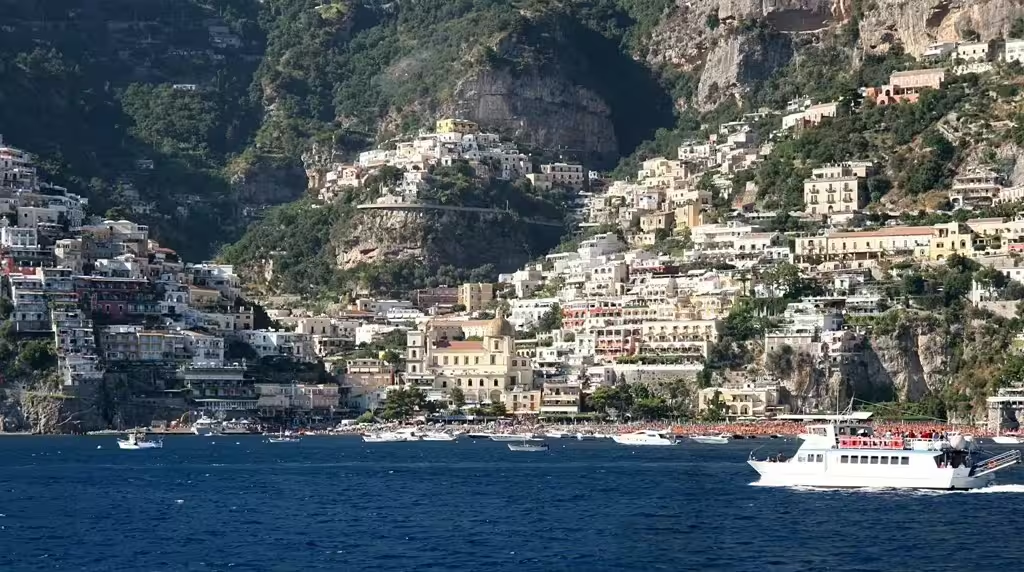
A stay in Positano can combine the shore, the historic centre and a walk above the village. This Amalfi Coast village climbs a rocky site above the sea, with Montepertuso and Nocelle set high above its centre.
Santa Maria Assunta and the Roman remains near Spiaggia Grande give a visit a focus beyond the beach. Yellow, green and blue majolica covers the church dome, while its past is bound up with a Benedictine monastery. Much of the building you see today comes from alterations made between 1777 and 1782.
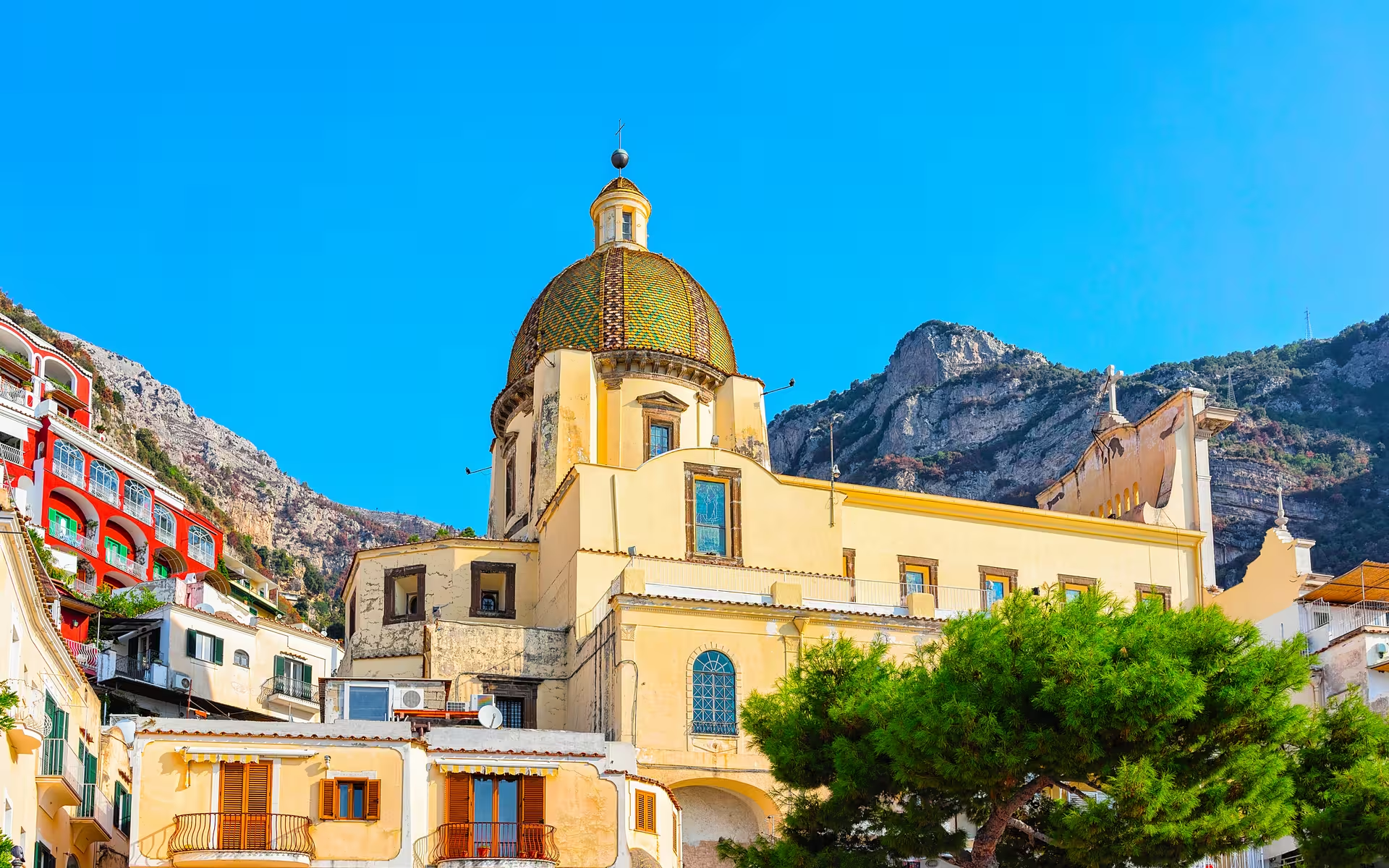
The church and the villa tell different chapters of the same area: a Roman aristocratic residence lies beneath the church and gardens near Spiaggia Grande. Work in the church crypt brought the villa back to light in 2003, and its frescoes belong to the Pompeian Fourth Style. For a walk with architecture to look out for, the village also retains richly decorated Baroque houses from the 17th and 18th centuries, many of them on the eastern side of the village.
Two days is a useful plan for combining the centre with a separate walking day above Positano. Day one can centre on Santa Maria Assunta, the Roman remains near Spiaggia Grande and Fornillo Beach, where the chapel of Santa Margherita faces the shore. Day two can focus on Nocelle and the Path of the Gods, whose views extend towards the Faraglioni of Capri.
A wider coastal itinerary is another way to spend a day. An Amalfi Coast day trip to Ravello, Positano and Amalfi lasts 8 hours and 30 minutes, with free time in each town and an itinerary tailored to your preferences. A private day trip to Positano, Sorrento and Amalfi also lasts 8 hours and 30 minutes, including a private driver, transport by private vehicle and free time in each town.
Plan walks around the height difference between the centre and the upper hamlets. Before the road was built, Nocelle could be reached only on foot, by paths and a long staircase down to Arienzo Beach. Montepertuso is linked to the centre by stepped lanes as well as by road. A long staircase of well over 1,500 steps links Arienzo Beach with Nocelle, where the Path of the Gods ends, so a beach and walking itinerary involves steps.
The path is a mountain outing: it crosses Colle la Serra at 580 metres above sea level. That elevation is a reason to give the walk its own place in your itinerary rather than treating it as a stroll along the shore.
A boat outing offers a coastal alternative to the walking day. The Li Galli islands lie between Positano and Capri. A private boat tour from Sorrento to the Amalfi Coast and Positano lasts 7 hours and includes a traditional gozzo 850 boat for private use, an experienced skipper, snorkelling equipment and an adjustable coastal itinerary.
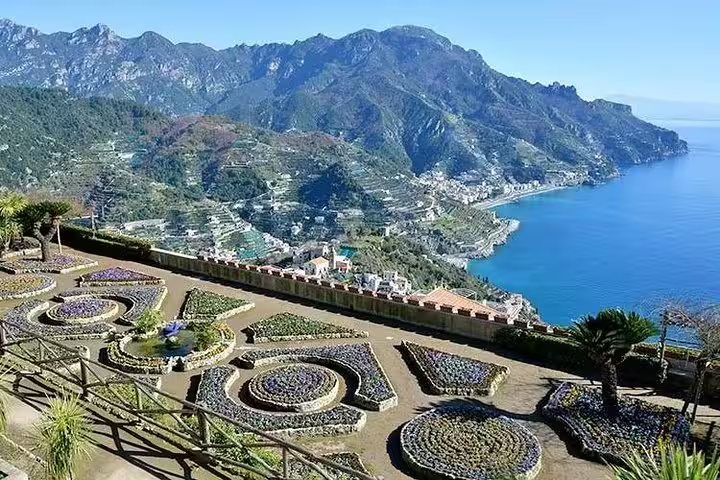
The centre suits a stay focused on the church and Spiaggia Grande; Nocelle, where the Path of the Gods ends, suits a quiet stay for walkers, though it is linked to the centre only by a small shuttle bus and long staircases; most walkers start the path at Bomerano and finish in Nocelle. Montepertuso is another upper hamlet, with a name linked to a hole in the mountain that local legend attributes to the Madonna.
The watchtowers of Sponda, Trasita and Fornillo were built in the second half of the 16th century.
The church has a bas-relief bearing the date 1506, which may once have served as a reliquary for Saint Vitus.
The islets are home to the endemic lizard Podarcis sicula gallensis, alongside Mediterranean scrub.
Sources: Comune di Positano (CC BY 4.0): Rapporto%20ambientale%20preliminare.pdf, chiesa-di-santa-maria-assunta.