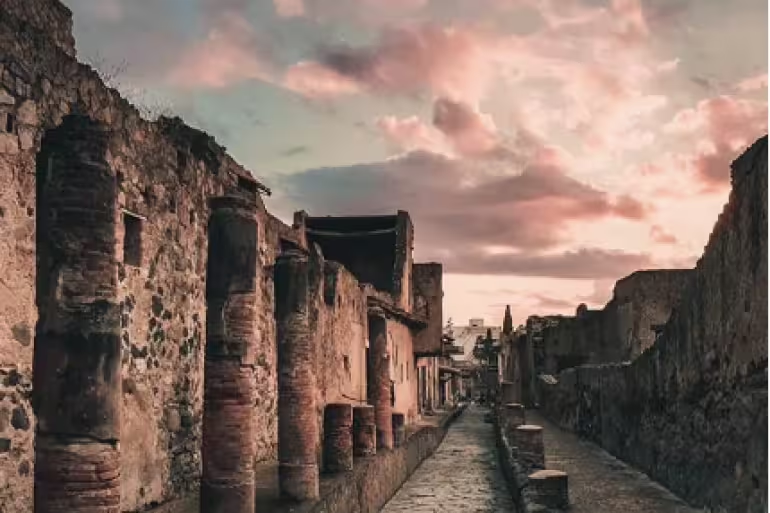
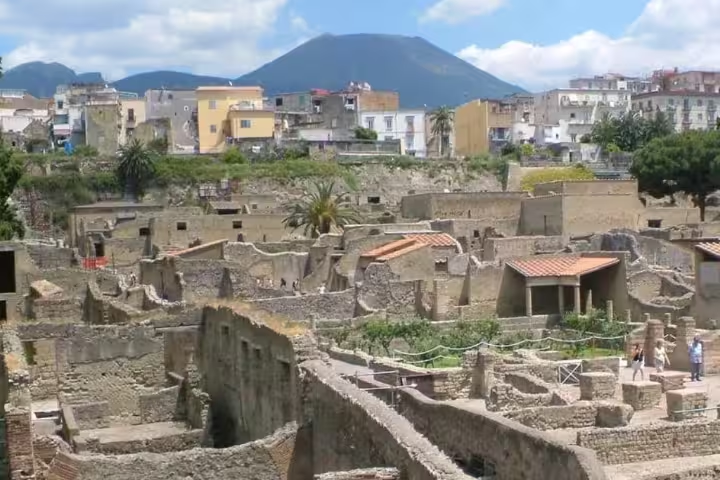
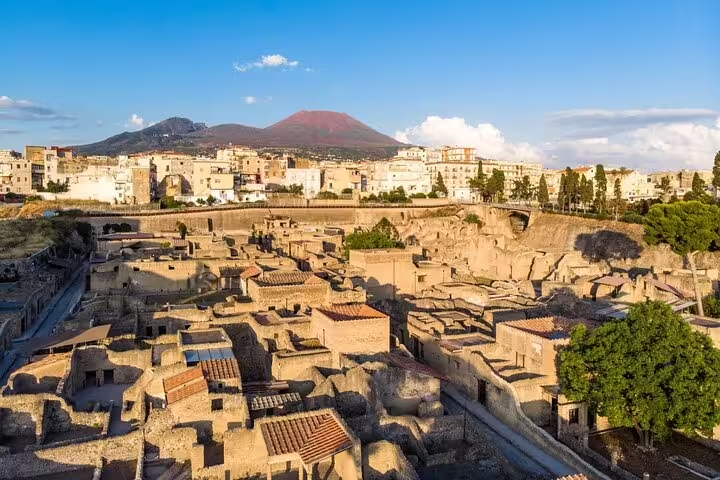
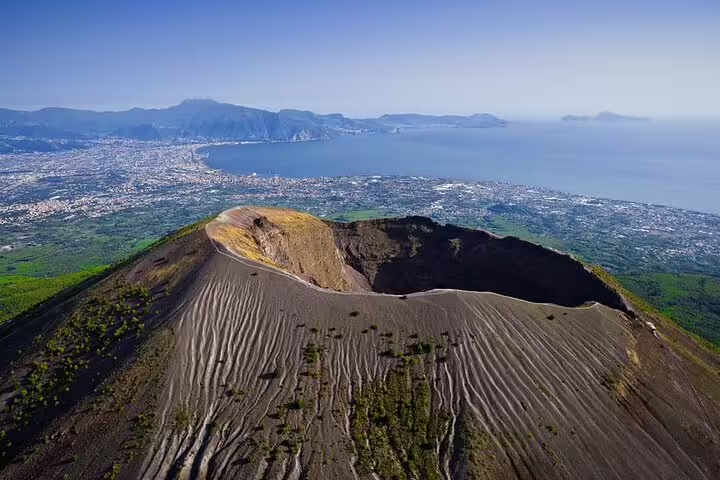
Herculaneum was a Roman town on a volcanic plateau above the sea, at the foot of Vesuvius and between two streams. The eruption of AD 79 destroyed and buried it, and it only came back into history in the 18th century, when the Bourbon kings began to explore it. Smaller than Pompeii, it is also better preserved, and together with Pompeii and Torre Annunziata it has been on the World Heritage list since 1997. This page follows the digs from the well a farmer sank to today's park, looks at what the volcano kept, and walks down to the ancient beach.
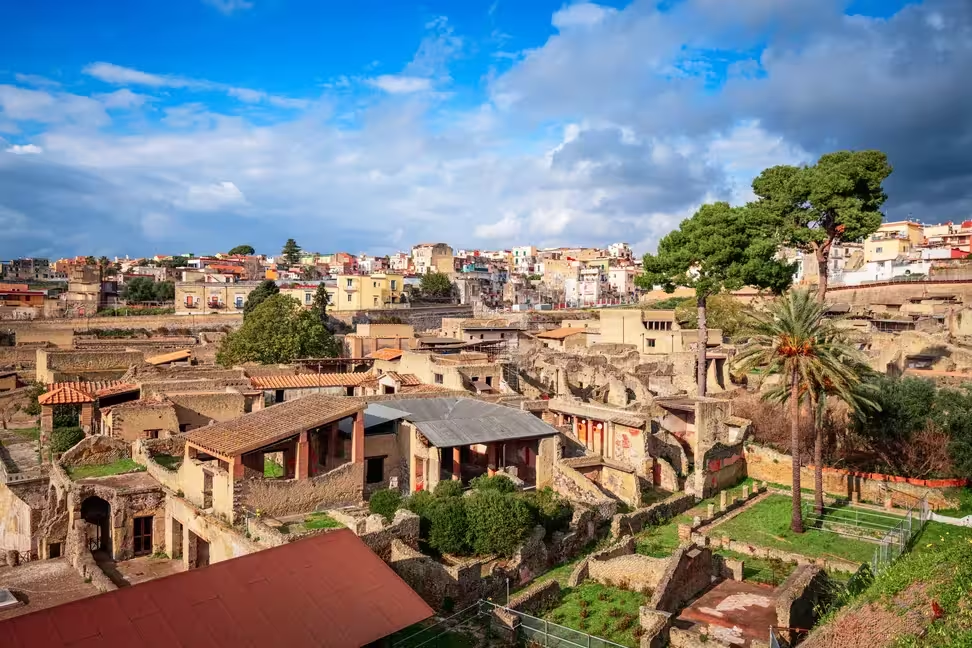
Ancient writers gave the town a heroic past: Dionysius of Halicarnassus said that Heracles founded it on his way back from Iberia. Its real rediscovery was far humbler. In 1710 a farmer digging a well brought up pieces of fine marble which, as people later understood, came from the ancient theatre, and from 1738 King Charles III of Bourbon had the site explored systematically through tunnels.
Digging in the open air started only in 1828 and went on until 1875. Amedeo Maiuri took up the work again in 1927, and by 1942 almost the whole of the present park had been uncovered. During the 20th century Herculaneum was shown to visitors as an open-air museum, perhaps the first in Europe, with buildings rebuilt on the archaeological evidence and original objects left on display inside the site. Since 2001 the Herculaneum Conservation Project, working for the Packard Humanities Institute, has backed the park's work.
Herculaneum vanished beneath pyroclastic surges and flows. That is why its districts and seafront have survived so well, upper floors included, and why the heat turned organic material to charcoal instead of destroying it: food, parts of buildings and wooden furniture have all come down to us. The volcanic deposits also kept hundreds of wax tablets, some of them legal documents, and more than 1,800 papyrus scrolls of Greek philosophy came to light at the Villa of the Papyri.
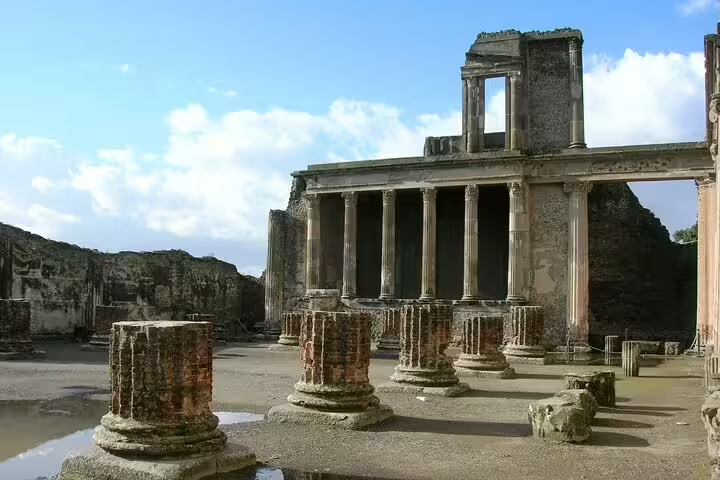
The town was never large. The area inside its walls is thought to have covered about 20 hectares, of which about 4.5 can be seen in the open today, and it may have housed about 4,000 people. Much of it is still underground, including the whole forum and the sacred and civic buildings. Apart from the baths and the palaestra, what you walk through is mostly private houses of the imperial age: traditional homes, blocks shared by several families and large residences looking out to sea.
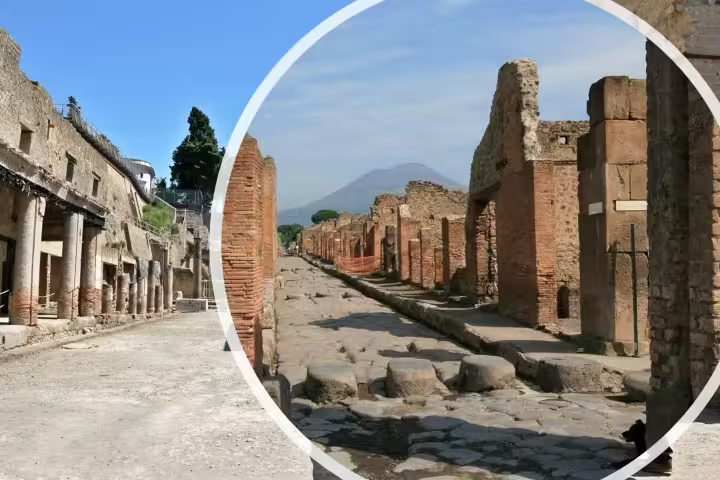
With the reopening of the Decumanus Maximus, the town's main street, all of its Roman streets are open to visitors again. Houses keep coming back too: the House of the Bicentenary in 2019, the House of the Gem in 2022 and, in March 2025, the House of the Tuscan Colonnade and the House of the Wooden Shrine, which had been closed for more than twenty-five years. The park's free Ercolano Digitale app comes in nine languages and offers five routes, chosen by theme, age and the time you have.
The theatre lies outside the excavations, still set in the tuff, and was dug out through a network of tunnels in the 18th century. Statues found in the Prince d'Elboeuf's tunnels once stood in the niches of its stage front, among them the Small and the Large Herculaneum Woman, which are now in a museum in Dresden. For the time being the theatre is closed for maintenance.
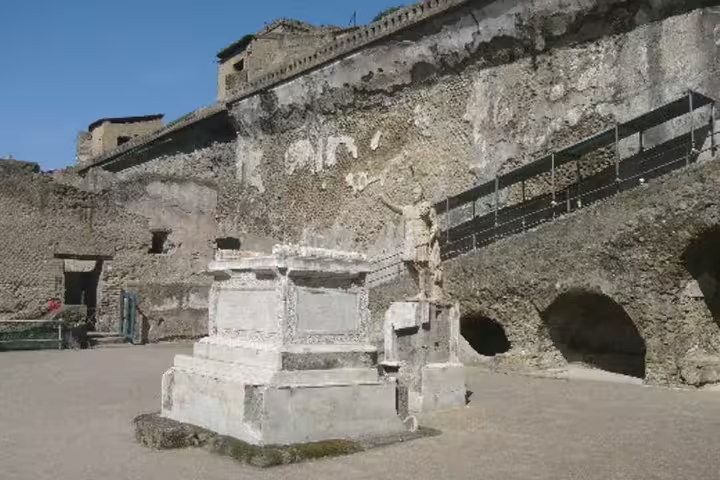
On the old shoreline, twelve arched rooms known as the fornici served as boat shelters and storerooms. When the eruption came, many people of Herculaneum ran there for cover. Research that began in the 1980s found more than 300 victims, most of them inside the storerooms by the landing place. They had brought small hoards of coins and jewellery, oil lamps to see through the darkness and even their house keys.
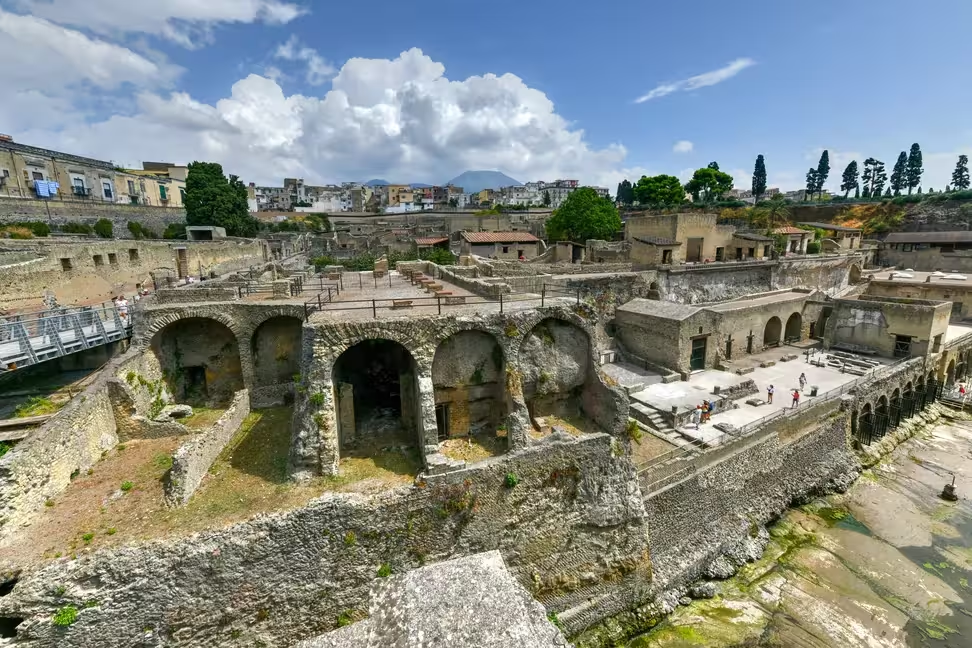
On 19 June 2024 the ancient beach reopened, the first beach inside an archaeological park, and you can now walk across its whole surface. In Roman times it was black volcanic sand; the grey basalt grit of the new path was chosen to recall that dark shore.
To visit the site with a guide, there is a guided tour of Herculaneum's Roman ruins and a private tour of the ruins from Naples or Sorrento. Many trips pair the town with Pompeii: a full-day tour of both with a guide, a full-day guided visit with lunch, a guided tour of Pompeii and Herculaneum or a private tour that adds Vesuvius. Others pair it with the volcano alone, such as a full day at Herculaneum and on Vesuvius or a day trip to Ercolano and Vesuvius with a winery tasting.
Every trip that starts or stops here is also listed on the destination page.
In AD 79, when Vesuvius erupted and covered the town.
It is smaller, but its remains are in better condition, with upper storeys and even carbonised wooden furniture.
Yes. Since June 2024 visitors may stroll freely across it.
Not at the moment: the theatre, buried in the tuff, is shut for maintenance work.
Yes, as part of a single listing with Pompeii and Torre Annunziata, inscribed in 1997.
Sources: Ministero della Cultura (cultura.gov.it) (CC BY 3.0).