Last updated:
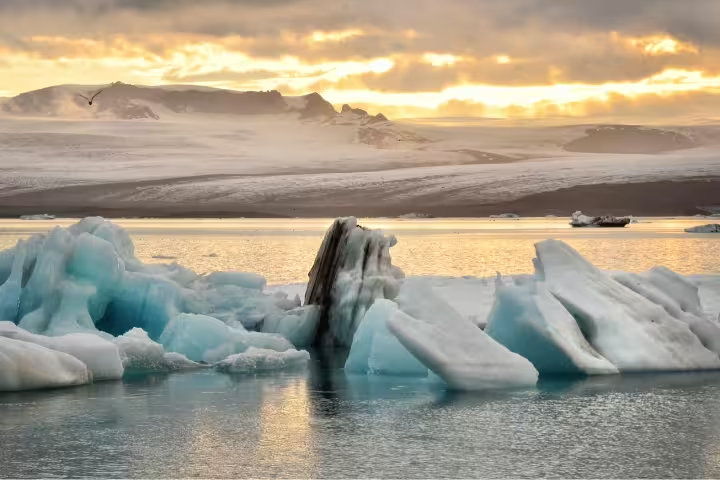
Jökulsárlón is a glacier lagoon in Iceland where blocks of ice that have broken away from Breiðamerkurjökull float on still water before they drift out to sea. Most visitors come on a long day trip from Reykjavík, on a winter visit to an ice cave, or as one stop on a tour around the island.
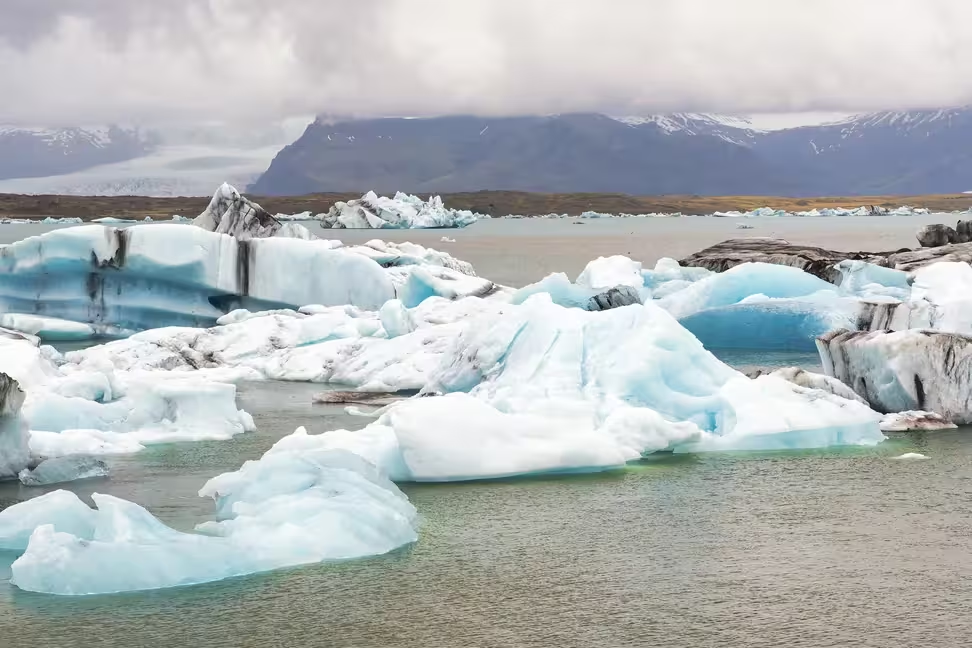
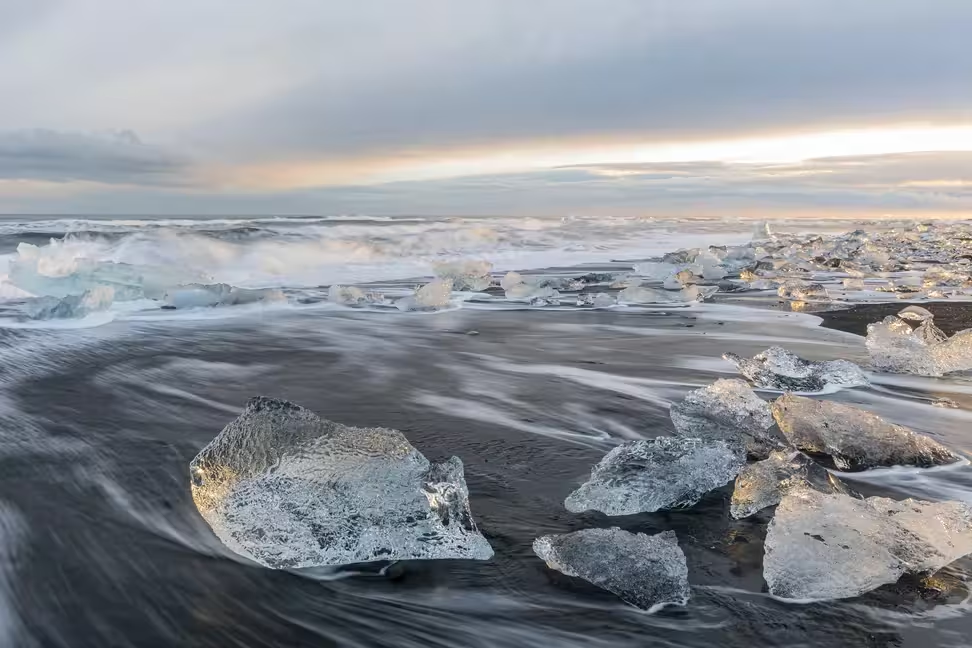
Jökulsárlón is a glacial lake, of the kind known as a proglacial lake, formed in front of a glacier. It belongs to the municipality of Hornafjörður, in the Southern Region of Iceland, and lies inside Vatnajökull National Park. Its water leaves through the Jökulsá, a river that runs from the lagoon into the Atlantic Ocean. Across the road from the lagoon, the tours stop at Diamond Beach, where pieces of ice that have drifted out of the lagoon wash up on the black sand.
The ice in the lagoon comes from Breiðamerkurjökull, a glacier that is part of Vatnajökull, an ice cap that spreads over the Southern, Eastern and Northeastern regions of Iceland. Its size is hard to picture: in 2017 Vatnajökull covered about 7,700 square kilometres and held some 3,000 cubic kilometres of ice, and from end to end it measures 143 km (89 miles).
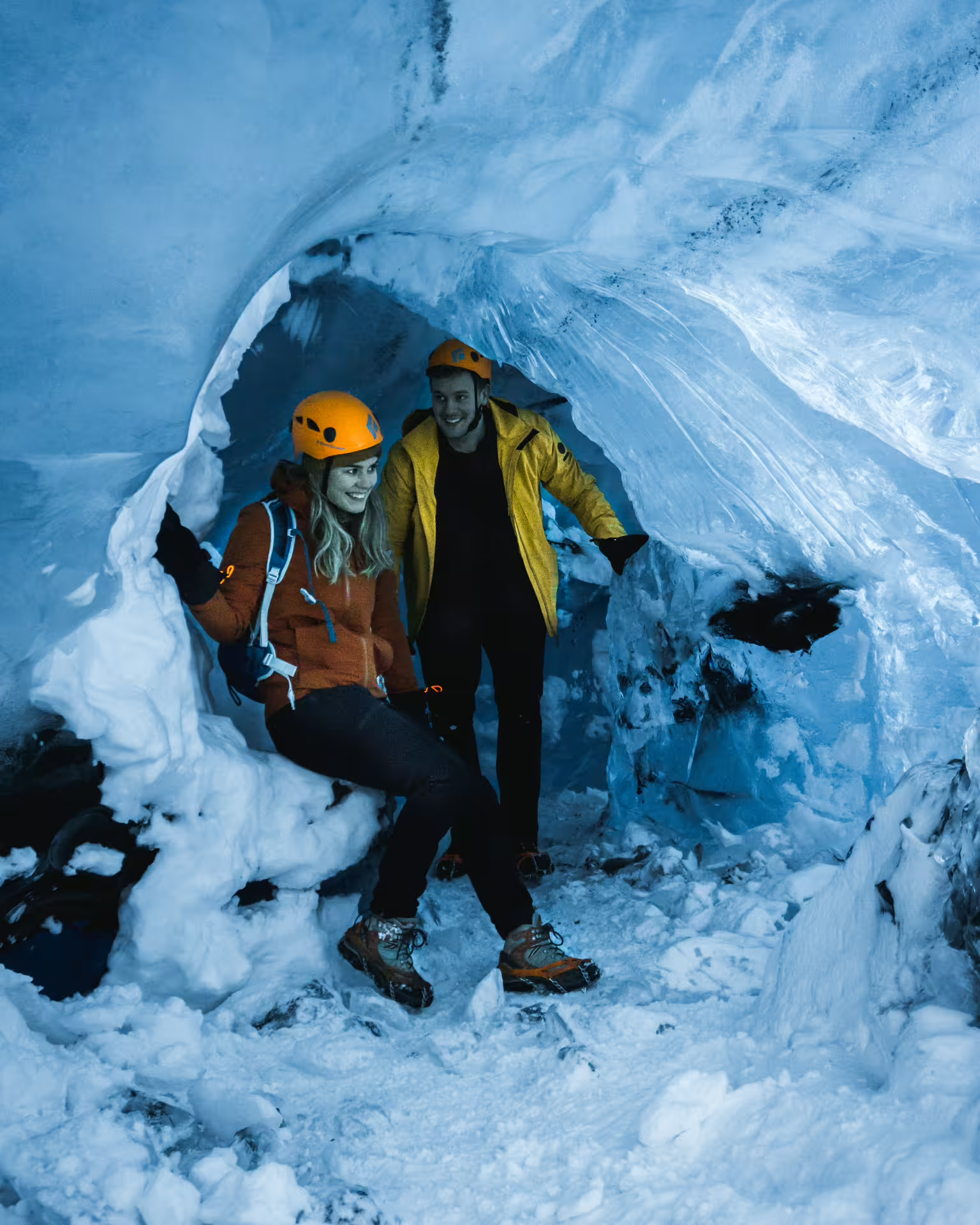
From the shore you watch the icebergs that have calved from the glacier drift slowly across the lagoon towards the river. In winter, guides take small groups onto the glacier itself to step inside caves of blue ice.
Vatnajökull National Park, Vatnajökulsþjóðgarður in Icelandic, covers some 14,700 square kilometres and took the place of two older national parks, Skaftafell and Jökulsárgljúfur. Fjallsárlón, a second proglacial lake, and Skaftafell both lie inside the park and in the same municipality of Hornafjörður, and several of the trips below stop at them on the same day as Jökulsárlón.
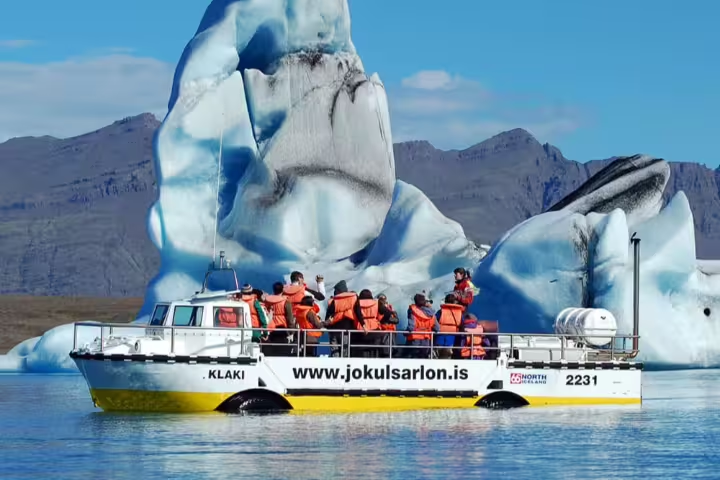
Three of these trips are long days out from Reykjavík. The day trip with a boat ride on the lagoon sails among the icebergs, then visits Diamond Beach and, when conditions allow, Fjallsárlón, with Seljalandsfoss and Vík on the way. The small-group day along the south coast adds Foss á Síðu, the turf church at Hof and, in summer, Fjaðrárgljúfur canyon; it is rated very easy. For your own pace, the private day from Reykjavík picks you up at your hotel in the capital area and stops at Seljalandsfoss, Gljúfrabúi, Skógafoss, Reynisfjara and Fjallsárlón before the lagoon and Diamond Beach.
The blue ice cave tour begins in the Jökulsárlón area. A super jeep drives over glacial terrain that ordinary cars cannot cross, and your guide leads you into a natural cave inside the glacier, with a helmet and crampons provided. It runs in winter only, the guides check the cave before every departure, and the tour is rated easy.
Longer tours take in more of the country. The two-day private tour of the south coast spends the night near Skaftafell and visits Jökulsárlón, Diamond Beach, Fjallsárlón and Fjaðrárgljúfur; in winter it enters an ice cave, in summer it has a glacier hike and a walk to Svartifoss. The five-day winter minibus tour includes a glacier hike in the Skaftafell area and ends at the lagoon with an ice cave.
More trips that stop at the lagoon are listed on the Jökulsárlón destination page.
Yes. One of the trips from Reykjavík includes a sail on the lagoon, close to the floating ice.
Only in winter. The guides look at the cave on the day, so a visit can change or be called off if conditions are poor.
Yes, though it makes for a long day. Three of the trips here go there and back from the capital, with waterfalls and black beaches along the way.
It is the black sand beach opposite the lagoon. Ice carried out to sea is washed back onto it and shines against the dark sand.
Sources: Wikidata (CC0).