Montmartre is the hill in the north of Paris that most visitors know from one white silhouette: the Sacré-Cœur. This page follows the usual order of a visit, the climb, the basilica and its dome, the old village around Place du Tertre, and the walk down past Abbesses to the Moulin Rouge, then lists the tours that include the hill.
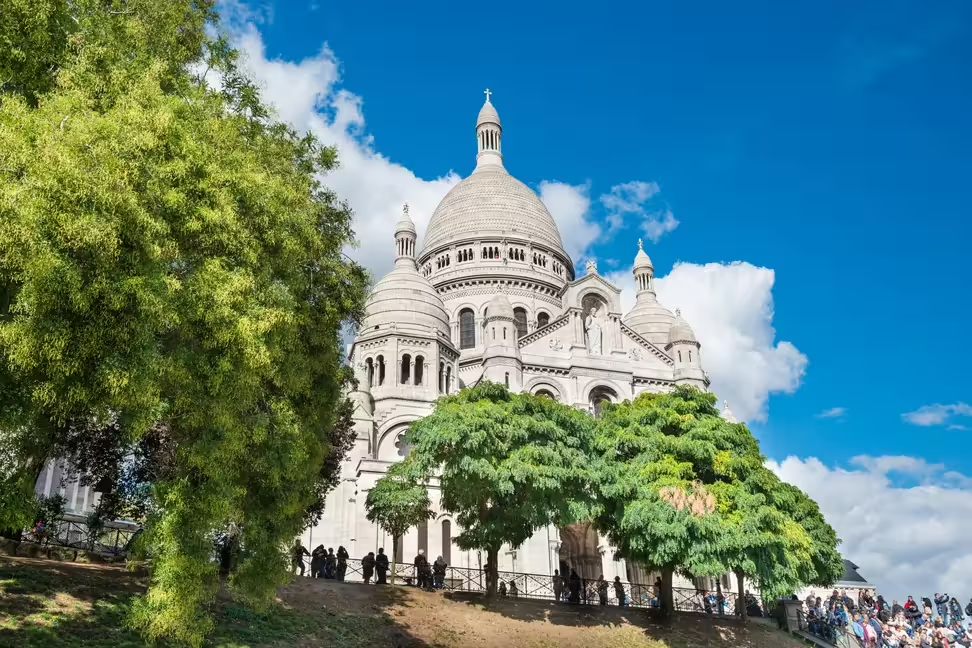
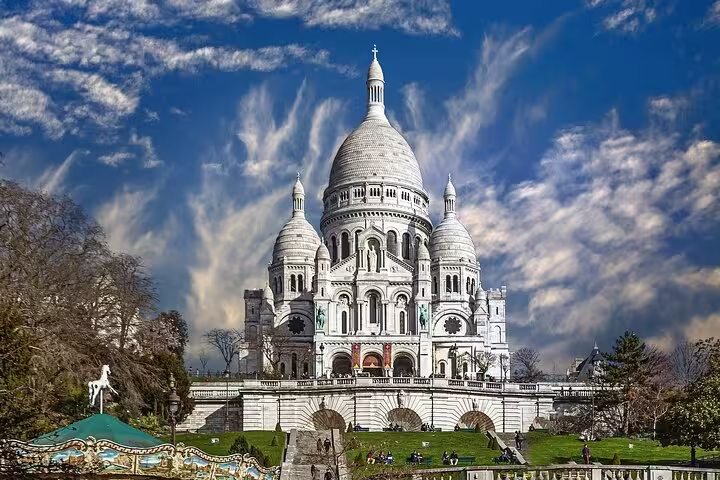
Montmartre owes its fame to the basilica and to the views it opens over the city. The easy way up is the funicular, which costs the price of a metro ticket; if you prefer to walk, 222 steps climb through Square Louise Michel.
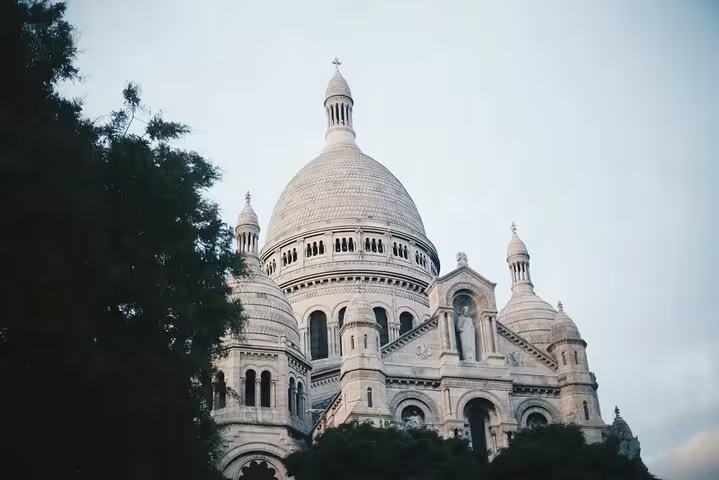
Consecrated in 1919, the basilica crowns the hill at an altitude of 130 m (427 ft). Its Romanesque-Byzantine design and white stone make it easy to spot from far away, and inside the vault carries the largest mosaic in France, 480 m², where Christ welcomes visitors with open arms above the choir. It is first of all a place of prayer: people have prayed here day and night without interruption for almost 140 years.
The basilica opens every day of the year from 6:30 am (06:30) to 10:30 pm (22:30), and entry costs nothing. Between 10:30 am (10:30) and 5 pm (17:00) the queue can mean 10 to 15 minutes before you get in. Because this is a working church, the rector asks visitors to dress suitably, keep their voices down and respect the prayer area at the front of the nave.
For the view, the dome tour climbs 280 steps up a narrow staircase, with no lift, to a 360-degree panorama of Paris. It is not suited to people with reduced mobility or anyone uneasy in tight spaces. Tickets for the dome are bought at the basilica itself, and there is no need to book.
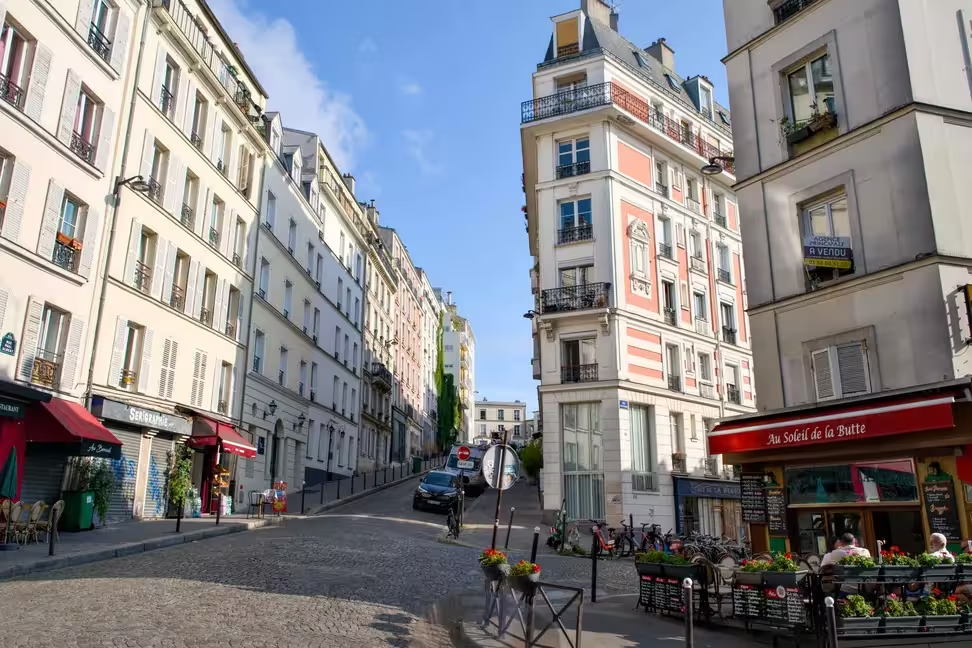
From the basilica, the classic stroll heads for Place du Tertre, where caricaturists sketch passers-by, then past the Espace Dalí and the hill's own vineyards to the Lapin Agile cabaret and the Musée de Montmartre. The museum fills some of the oldest buildings on the hill and tells the neighbourhood's artistic story from Auguste Renoir to Suzanne Valadon. Valadon, Maurice Utrillo and André Utter moved in there in 1912, and their studio-apartment has been rebuilt; the gardens look out on the Sacré-Cœur and the vineyards.
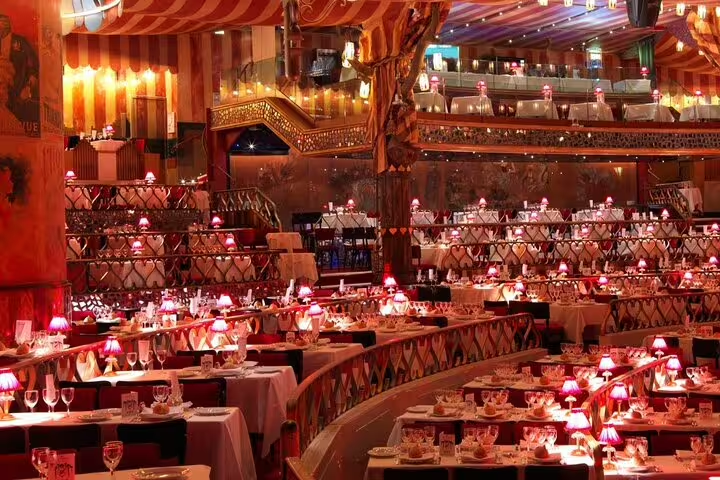
Rue Lepic winds down towards the Moulin de la Galette, and a little further on are Place des Abbesses and the Wall of Love, the Mur des je t'aime. The shops of Rue des Abbesses, Rue Tardieu and Rue Lepic line the way, the Montmartre cemetery lies nearby, and the walk ends at the foot of the hill at the Moulin Rouge.
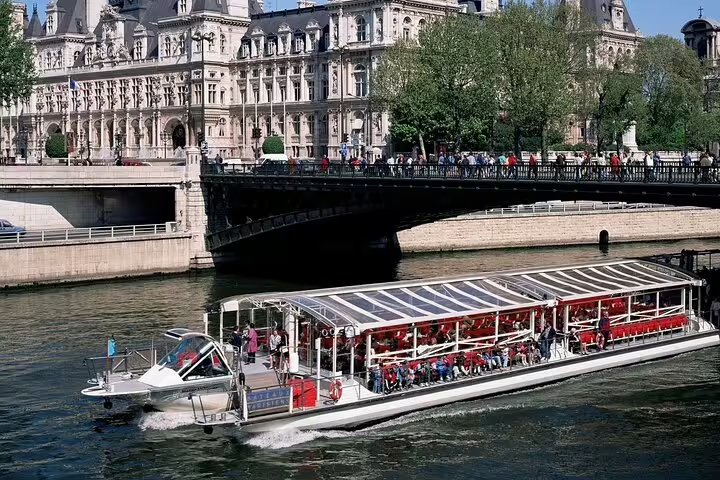
Most tours pair the hill with another part of Paris. A private half-day tour adds the Eiffel Tower, while a private walk combines Montmartre with a Seine cruise and another ends with lunch on the river. For food, a private tour links Montmartre, the Latin Quarter and a French lunch, and in the evening a private tour of Montmartre and the Marais finishes with a dinner cruise.
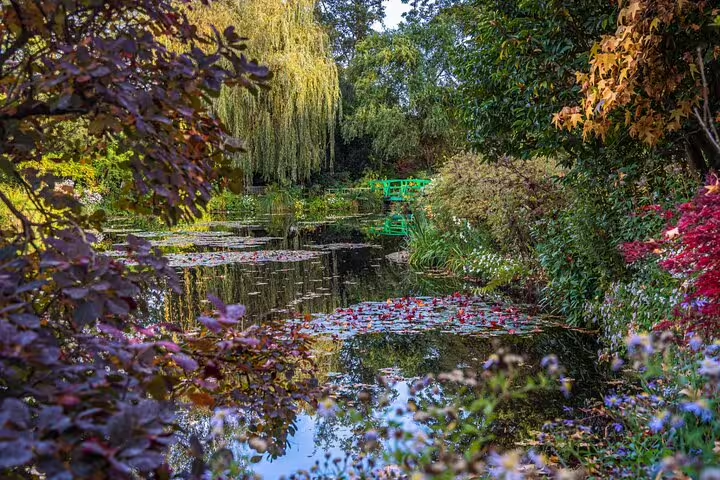
For a whole day, there is a full-day tour of Montmartre, the Marais and the Seine or a panoramic tour that passes the Moulin Rouge. Outside the city, one private tour joins Giverny and Montmartre and another pairs the hill with La Vallée Village.
Every trip that starts or stops here is also listed on the destination page.
Yes, entering the basilica is free; only the dome tour has a charge.
No, you buy the ticket on the spot.
There are 280, on a narrow staircase without a lift.
Yes, the funicular, for the same fare as the metro.
In 1919.