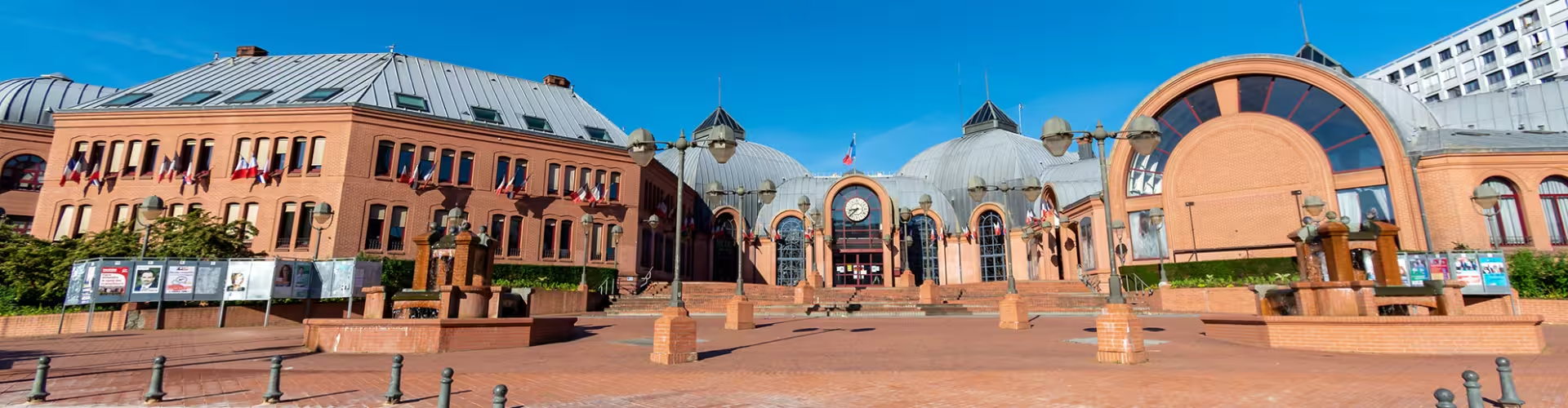
Panoramic view of a historic red-brick landmark building with ornate glass domes, French flags, and a spacious open plaza in Val-de-Marne, Île-de-France, perfect for exploring cultural attractions near Paris.

Val-de-Marne

Val-de-Marne blends medieval heritage, contemporary art, riverside guinguettes, and vibrant street art just south of Paris. An underrated gem in the Ile-de-France region worth exploring.

    logoBlack

    Build your dream
    experience

    dreamimg

    More to know about Val-de-Marne


    Val-de-Marne Travel Guide

    Snapshot

    Val-de-Marne is one of the most rewarding yet underexplored departments in the greater Paris region, sitting just south of the capital with a personality entirely its own. It blends riverside charm, cutting-edge contemporary art, and a rich working-class heritage into a destination that rewards curious travelers. Whether you arrive for the iconic festival scene or simply to escape the crowds of central Paris, this department consistently surprises.


    Geography and Logistics

    Orientation

    Val-de-Marne forms the southeastern corner of the Petite Couronne, the inner ring of suburbs surrounding Paris. The Marne and Seine rivers define much of its landscape, carving through towns such as Vincennes, Nogent-sur-Marne, Vitry-sur-Seine, and Ivry-sur-Seine. The department is compact and easily navigated, covering roughly 245 square kilometers across 47 communes.

    When to Go

    Late spring through early autumn (May to September) offers the most pleasant conditions, with warm temperatures ideal for riverside walks and outdoor festivals. Summer draws visitors for the legendary Fete du Bois de Vincennes events and open-air cinema screenings. Winter remains quiet but atmospheric, especially around the historic Chateau de Vincennes.

    Budget and Currency

    France uses the euro (EUR). Val-de-Marne is generally more affordable than central Paris, with budget-friendly dining options, free parks, and lower accommodation costs. Mid-range travelers can expect to spend between 80 and 130 euros per day including meals, transport, and entry fees.


    Essential Things to Do

    Chateau de Vincennes
    This medieval royal fortress is one of the most impressive and least-visited castles in the Paris region. The keep, the tallest surviving medieval tower in Europe, dominates the skyline and offers panoramic views from its upper levels. The Royal Chapel, inspired by Sainte-Chapelle, features stunning Gothic stained glass. Practical Tip: Book tickets online in advance during summer to avoid long queues.

    Bois de Vincennes
    Covering over 995 hectares, the Bois de Vincennes is Paris's largest public green space and sits squarely within the department. It includes four lakes, cycling paths, a Buddhist temple, a farm, and the Parc Floral de Paris. The atmosphere is relaxed and family-friendly throughout the year. Practical Tip: Rent a rowboat on Lac Daumesnil for a quintessential afternoon experience.

    MAC VAL - Musee d'Art Contemporain du Val-de-Marne
    Located in Vitry-sur-Seine, MAC VAL is France's first dedicated museum of contemporary art outside Paris and holds a permanent collection of over 3,500 works. The building itself is a bold architectural statement, surrounded by a landscaped sculpture garden. Exhibitions consistently champion emerging and mid-career French artists. Practical Tip: Entry is free on the first Sunday of each month.

    La Maison Rouge (Street Art in Vitry-sur-Seine)
    Vitry-sur-Seine has earned a reputation as the street art capital of France, with vast murals covering entire building facades across the city. The walls have been transformed by internationally recognized artists, making a walking tour genuinely rewarding. New works appear regularly, so no two visits are exactly alike. Practical Tip: Pick up a free street art map at the town hall or local tourist office.

    Nogent-sur-Marne Riverfront
    The banks of the Marne at Nogent-sur-Marne recall the golden age of Parisian leisure culture, immortalized in the paintings of the Impressionists. Guinguettes, traditional open-air dance halls and riverside restaurants, still operate here during summer months. The atmosphere is nostalgic, lively, and deeply French. Practical Tip: Visit on a Sunday afternoon when guinguettes are at their most animated.

    Parc du Tremblay
    This large recreational park in Champigny-sur-Marne offers sports facilities, forested walking trails, and open meadows popular with local families. It is an excellent spot to observe everyday Parisian suburban life away from tourist circuits. The park also hosts occasional outdoor concerts and community events. Practical Tip: Combine a visit with lunch at one of the nearby riverside brasseries.

    Musee de la Resistance Nationale
    Based in Champigny-sur-Marne, this museum holds one of the largest and most significant collections related to the French Resistance during World War II. Artifacts, photographs, and personal testimonies bring an important chapter of French history to life. It is a sobering and deeply moving experience. Practical Tip: Allow at least two hours to do justice to the permanent collection.


    Curated Itineraries

    The Highlights (1 Day)

    Begin your morning at the Chateau de Vincennes, spending at least two hours exploring the keep and chapel. Follow this with a long stroll or bike ride through the Bois de Vincennes, stopping for a picnic lunch beside Lac Daumesnil. In the afternoon, head to Nogent-sur-Marne for a riverside walk and an early evening drink at a guinguette. Return to central Paris or your accommodation via the RER A line, which is fast and direct.

    Deep Dive (2 to 3 Days)

    On your first day, follow the one-day highlights itinerary. On the second day, travel to Vitry-sur-Seine to visit MAC VAL in the morning and spend the afternoon on a self-guided street art walking tour. Day three can be dedicated to Champigny-sur-Marne, combining the Musee de la Resistance Nationale with a leisurely walk along the Marne riverbank. Consider booking a table at a traditional guinguette for a farewell dinner with live accordion music.


    Flavors of Val-de-Marne

    Marne-style Fried Fish (Friture de la Marne): A traditional dish rooted in the riverside guinguette culture, featuring small freshwater fish fried until crisp and served with lemon and tartare sauce. Order it as a starter at any of the classic Marne-side restaurants in Nogent.

    Charcuterie Boards: Many local bistros offer generous boards of French cured meats, cornichons, and mustard. These are ideal for a casual lunch paired with a glass of Beaujolais or Sancerre.

    Croque-Monsieur and Croque-Madame: Found in virtually every cafe across the department, these toasted ham and cheese sandwiches are a French classic. Request the Madame version for a fried egg on top.

    Tarte Tatin: This upside-down caramelized apple tart appears on dessert menus throughout the region. Ask if it is made in-house, as the best versions use local butter and seasonal apples.

    Kir and Kir Royal: A glass of white wine or champagne with blackcurrant liqueur is the default aperitif at guinguettes and brasseries along the Marne. It pairs perfectly with the relaxed waterside atmosphere.

    Vietnamese and North African Cuisine: Reflecting the diverse communities settled across the department, towns such as Ivry-sur-Seine and Creteil offer excellent Vietnamese pho houses and Maghrebi restaurants. These represent some of the best-value dining in the entire Paris region.


    Navigation and Transport

    The department is extremely well served by the Ile-de-France public transport network. The RER A line connects Vincennes and Nogent-sur-Marne directly to central Paris in under 15 minutes. The RER D and several Metro lines (notably lines 8 and 7) serve the southern communes including Creteil and Ivry-sur-Seine. Bus routes fill in gaps between rail stations, and cycling infrastructure is steadily improving with dedicated lanes along river corridors. Navigo travel cards and single-use tickets (T+ tickets) are valid across all modes within the Ile-de-France zone.


    Beyond the Center: Day Trips

    Versailles: Accessible in under 45 minutes by RER, the Palace of Versailles and its formal gardens remain one of the world's great heritage sites. Purchase tickets online to skip the entrance queues.

    Fontainebleau: About an hour south by train, the Chateau de Fontainebleau offers a less crowded but equally grand royal palace experience, surrounded by a vast forest ideal for hiking and bouldering.

    Disneyland Paris: Located at the eastern end of the RER A line, Disneyland Paris is a straightforward day trip from anywhere in Val-de-Marne. It is particularly popular with families traveling with younger children.

    Saint-Germain-en-Laye: A charming and affluent riverside town west of Paris with a royal chateau, a museum dedicated to archaeology, and a long forest terrace with views over the Seine valley.


    Insider Tips for Travellers

    • Use a Navigo Decouverte weekly pass if visiting for more than two days. It covers all public transport within the Ile-de-France zones and saves significant money over single tickets.
    • Many of the best street art murals in Vitry-sur-Seine are located on residential streets away from the main thoroughfares. Allow time to explore side streets.
    • Guinguettes along the Marne operate seasonally and are typically open from April through September. Check opening days before visiting, as many are closed on Mondays and Tuesdays.
    • The Bois de Vincennes becomes very busy on sunny weekends. Arrive before 10am or visit on a weekday morning for a more peaceful experience.
    • French restaurants typically serve lunch between noon and 2pm and dinner from 7:30pm. Arriving outside these windows may limit your options significantly.
    • Tap water is safe to drink throughout the department. Requesting a carafe d'eau at restaurants is free and perfectly acceptable.

    Frequently Asked Questions

    How do I get from Paris to Val-de-Marne by public transport?
    The RER A line is the fastest and most direct connection, linking central Paris to Vincennes and Nogent-sur-Marne in under 15 minutes. Several Metro and RER lines also serve the department depending on your destination commune.
    Is Val-de-Marne worth visiting as a standalone destination?
    Val-de-Marne absolutely merits its own visit rather than being treated as a mere day trip. The combination of medieval history, contemporary art, riverside culture, and street art offers a genuinely diverse travel experience.
    What is the best time of year to visit Nogent-sur-Marne?
    Summer is the prime season for the guinguettes and riverside atmosphere that define Nogent-sur-Marne. Late June through August offers warm evenings and the most active social scene along the Marne.
    Are there free attractions in the department?
    Yes, Val-de-Marne offers a number of excellent free experiences including the Bois de Vincennes, the street art districts of Vitry-sur-Seine, and MAC VAL on the first Sunday of each month.
    What language should I speak when visiting local businesses?
    French is the primary language. While some staff in tourist-facing venues may speak English, making a basic effort with French greetings is warmly appreciated and can noticeably improve your experience.
    Val-de-Marne is a department in the Ile-de-France region, forming part of the Petite Couronne south of Paris. It borders the capital to the north and encompasses the confluence of the Marne and Seine rivers. Key communes include Vincennes, Creteil (the prefecture), Vitry-sur-Seine, Ivry-sur-Seine, Nogent-sur-Marne, and Champigny-sur-Marne. The department covers approximately 245 square kilometers and is fully integrated into the Paris public transport network via RER, Metro, and bus services.
    Suburban Paris / Ile-de-France / Cultural Destination / Riverside Heritage / Contemporary Art / Street Art / Day Trip from Paris