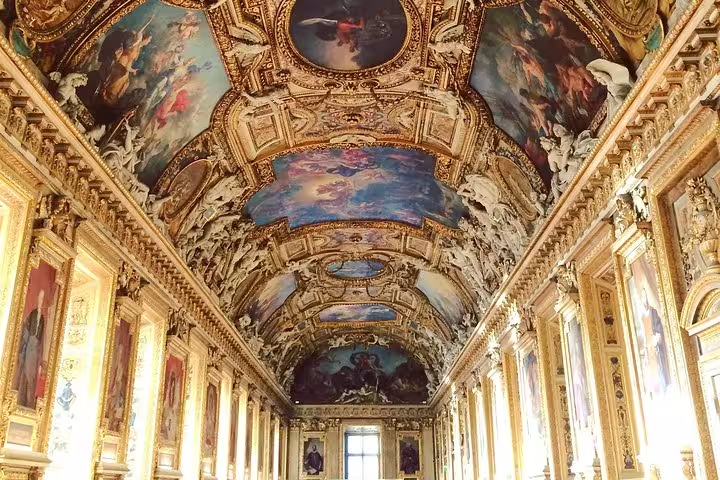
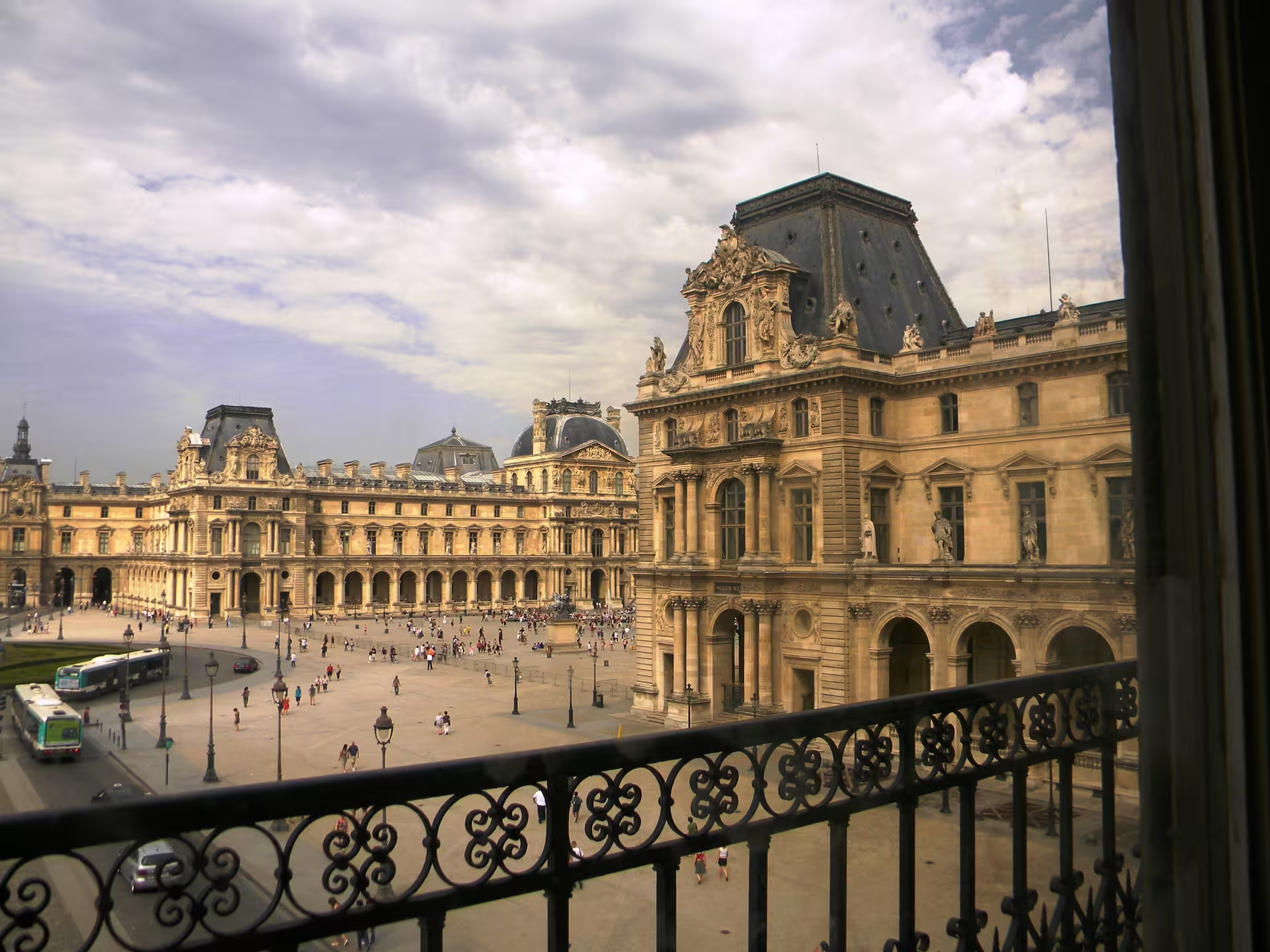
The Louvre is a museum that still reads as a palace: the kings of France lived in it, a ministry kept offices in part of it, and a glass pyramid now marks the way in. France's register of historic monuments places it within the World Heritage property Paris, Banks of the Seine. This page follows the building first, then the works most visitors come for, then the practical side of a visit.
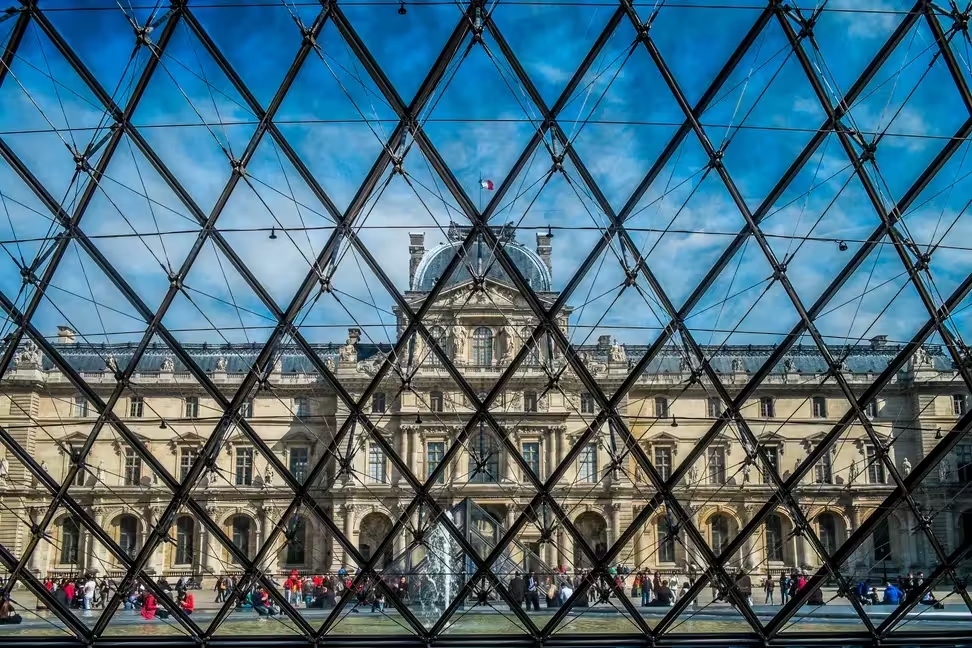
For several centuries the Louvre was a fortress and a seat of power. Official heritage records date the main building campaigns of the palace and the Tuileries Garden to the 12th, 16th, 17th and 19th centuries, and the digs carried out for the Grand Louvre in the Cour Napoléon and the Cour Carrée brought the medieval moats of Philippe Auguste's Louvre back to light.
The former residence of the kings of France opened to the public as a museum in 1793, one of several French royal homes that became national museums. One piece of the old ensemble is missing: the Tuileries Palace, which burned in 1871.
Government stayed in the building long after the art arrived. Until the Grand Louvre project, announced by President François Mitterrand in 1981, the Ministry of Finance still occupied part of the palace. The project handed the whole palace to the museum and doubled its exhibition space, from 31,000 m² to more than 60,000 m².
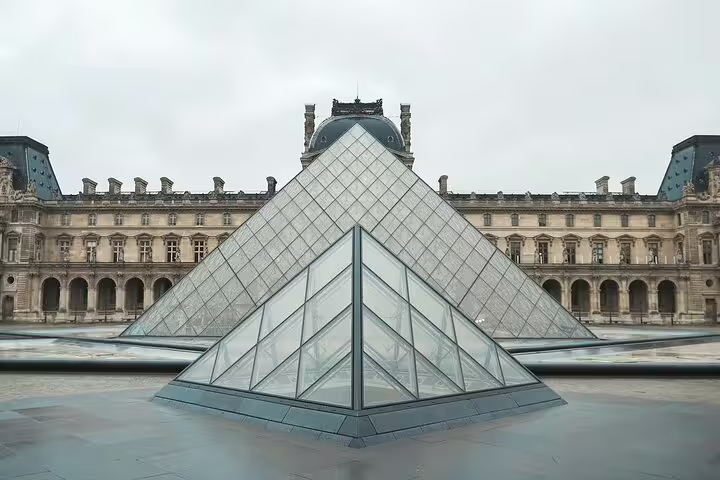
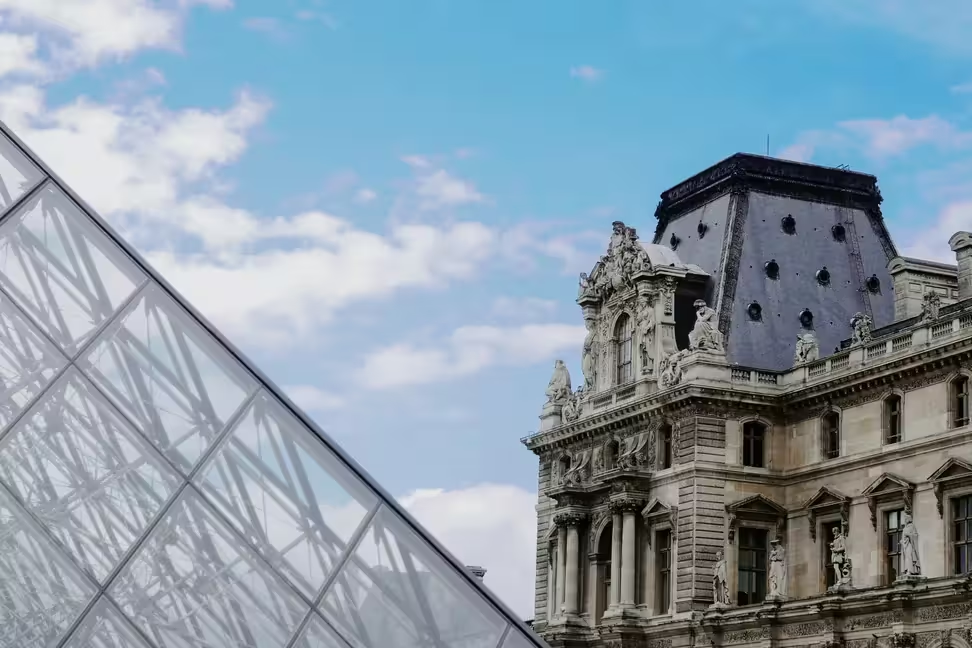
The architect Ieoh Ming Pei designed the new entrance: a glass pyramid 21 m (69 ft) high, set in the centre of the Cour Napoléon. President Mitterrand inaugurated it on 29 March 1989.
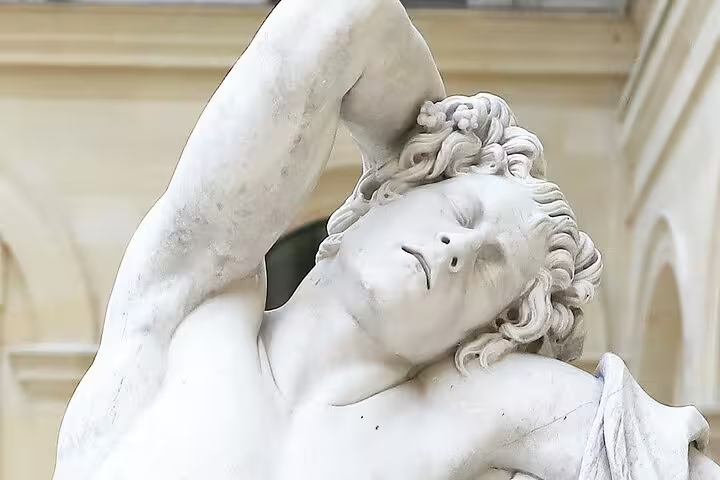
Leonardo da Vinci's portrait of Mona Lisa, painted in the first quarter of the 16th century, is on show here, and so are two famous sculptures, the Winged Victory of Samothrace and the Venus de Milo.
Egyptian antiquities have a department of their own. From 1820 the collections grew with new holdings, among them the Egyptian pieces gathered by Champollion.
The Louvre stands in the 1st arrondissement of Paris. Like France's other national museums, it lets under-18s in free. Check the museum's current opening hours and booking conditions before you go, and allow plenty of time: the palace is vast.
A guide helps in a building this size. A private guided tour of the key masterpieces or a small-group tour of the Louvre highlights covers the famous rooms; the guided tour of mysteries, murders and masterpieces tells the collection through its stories, and an exclusive private guided tour keeps the visit to your own party.
Other tours fit the museum into a wider day in the centre: a half-day tour with a boat cruise, the Louvre and Notre-Dame, a guided half-day with the Louvre, the Eiffel Tower and a cruise, a private Eiffel Tower and Louvre outing with a guide or a private tour of Paris with Louvre tickets and crêpes. Outside the walls, a walking tour of the hidden passages near the Louvre and a cycling tour along the Seine with Louvre access keep you moving.
Every trip that starts or stops here is also listed on the destination page.
In 1793, when the old royal palace first opened its doors to the public.
Yes. Under-18s pay nothing, as in every French national museum.
Among the best known are the Venus de Milo, Leonardo's Mona Lisa and the Winged Victory.
Ieoh Ming Pei; it opened as the museum's entrance in March 1989.
In the city's 1st arrondissement, right in the centre.