Last updated:
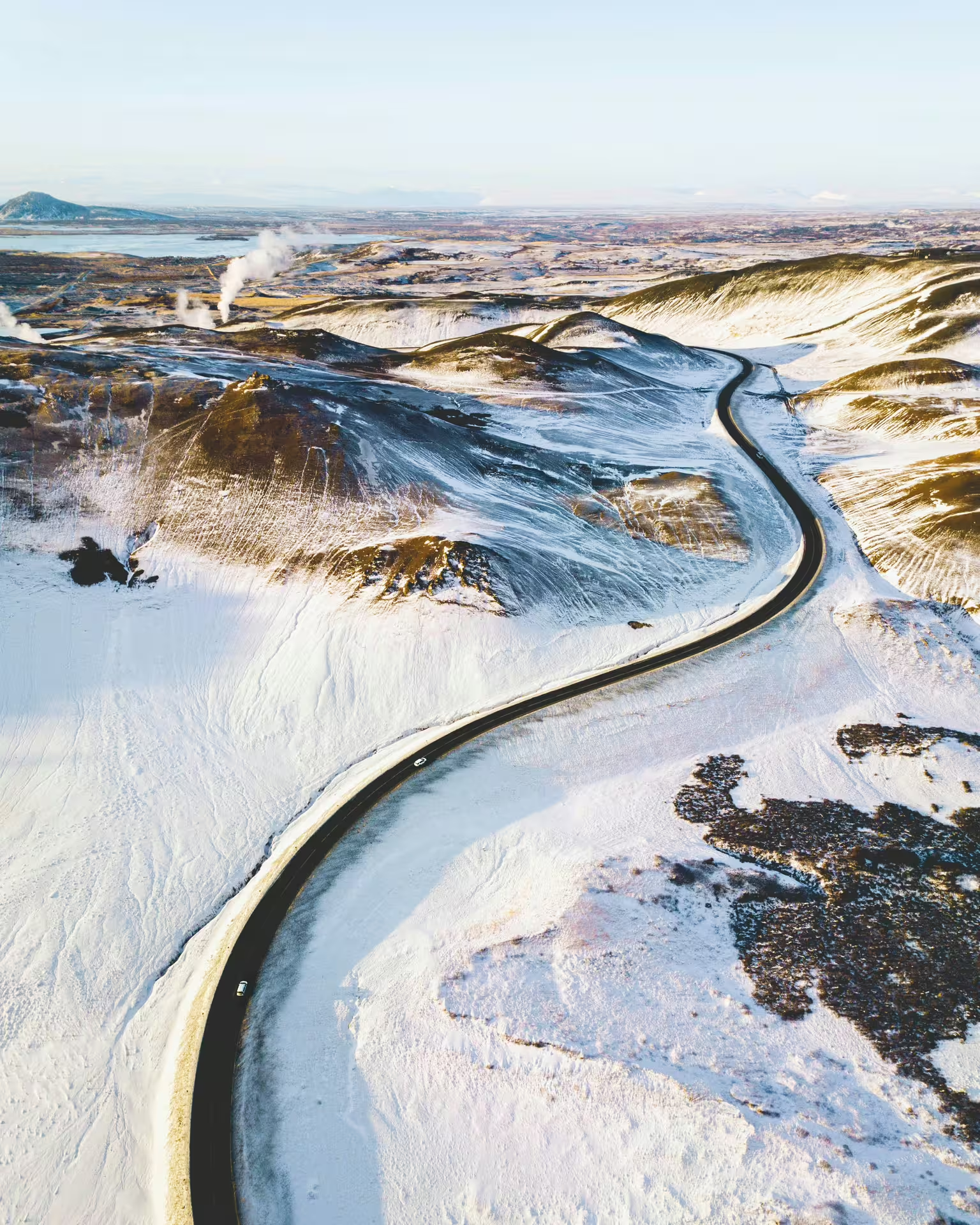
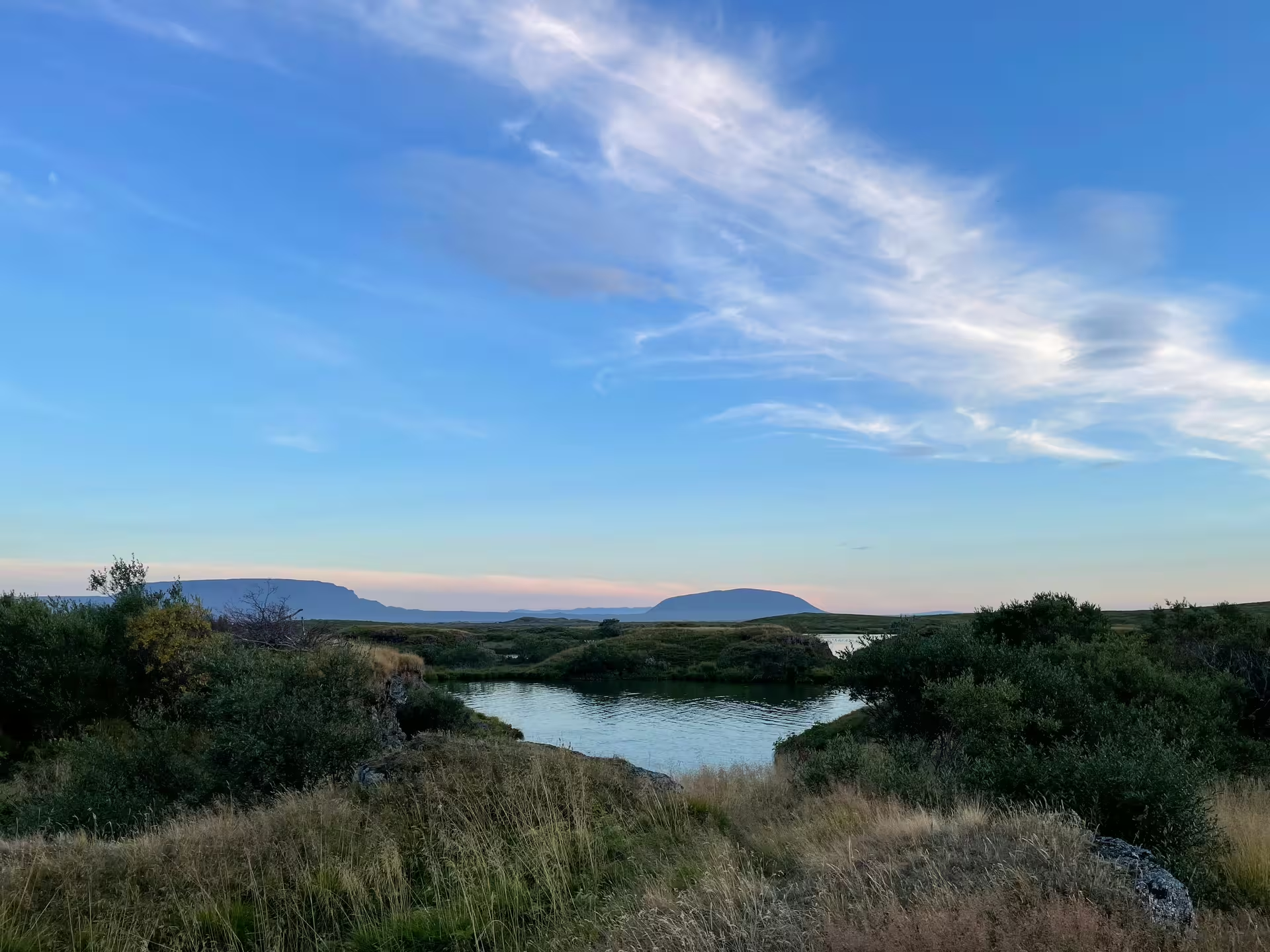
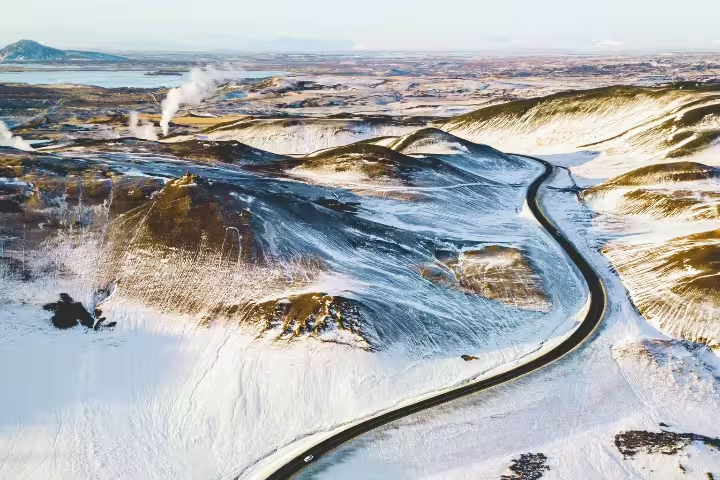
Lake Mývatn lies in the north of Iceland, ringed by craters, lava fields and steaming ground. Most visitors come on a full day from Akureyri that pairs the lake with the waterfall of Goðafoss and, on some tours, with Dettifoss as well.
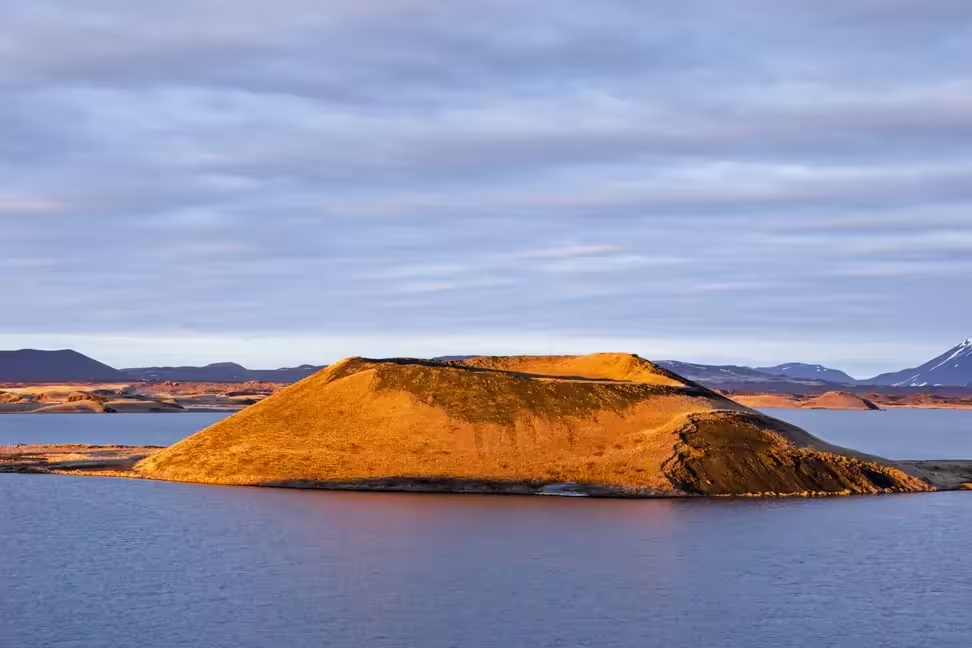
The lake belongs to the municipality of Þingeyjarsveit, part of the Northeastern Region of Iceland. The municipality is huge and thinly populated: it covers 12,021 square kilometres and had 1,453 inhabitants on 1 January 2025. In 2022 it replaced the former municipality of Skútustaðahreppur.
Since 2004 the lake has been protected within a reserve that shares its name, Mývatn, and covers roughly 153 square kilometres of Þingeyjarsveit. The river Laxá flows out of the lake and reaches the sea at Skjálfandi.
Skútustaðagígar lies right beside the water of Mývatn and has been protected since 1973, on about 34 hectares. The tours walk among its pseudocraters, rounded mounds left by steam explosions where lava once flowed over waterlogged ground.
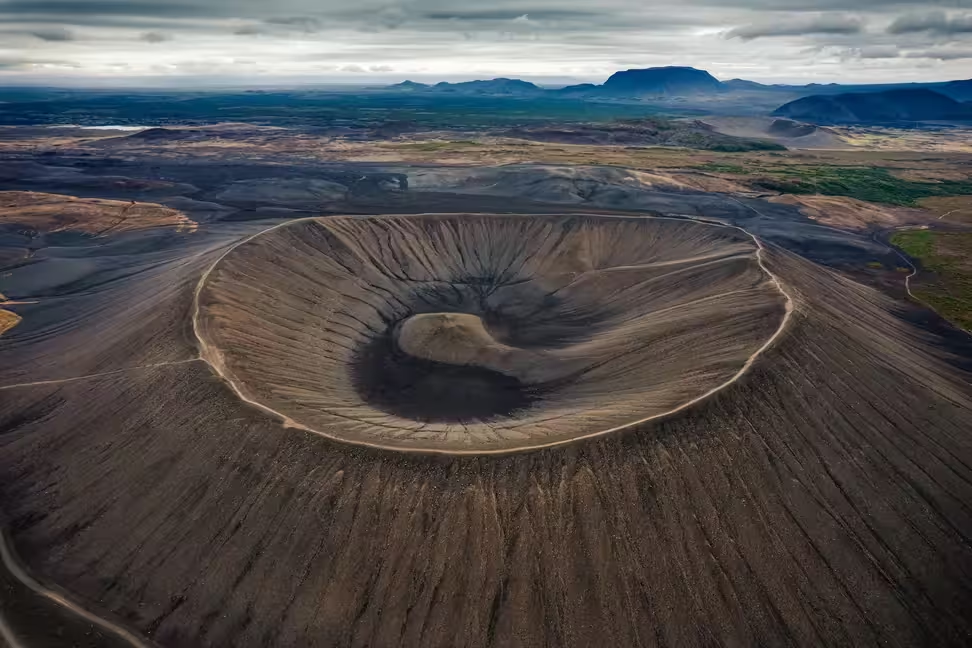
In the lava field of Dimmuborgir, protected since 2011 over about 424 hectares, paths wind between dark towers, arches and caverns of hardened lava. The volcanic crater of Hverfjall has been protected since 2011 as well, on about 313 hectares, under the official name Hverfjall (Hverfell). The Krafla volcano and its caldera are in the same municipality.
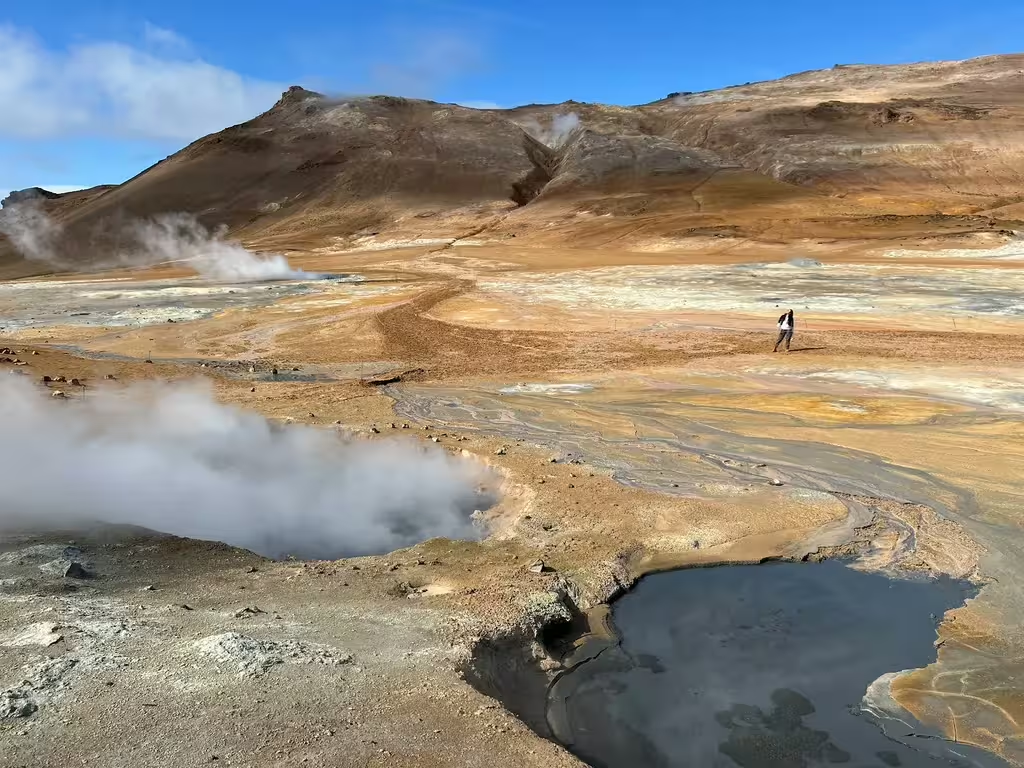
At Námaskarð, the geothermal field of Hverir, also called Hverarönd, is a stretch of bare ground with boiling mud pots, hissing fumaroles and yellow sulphur crystals; visitors keep to the marked paths, because the ground near the vents is very hot. Near the lake, the small lava cave of Grjótagjá holds a thermal spring, which you look at from the edge: bathing there is no longer allowed.
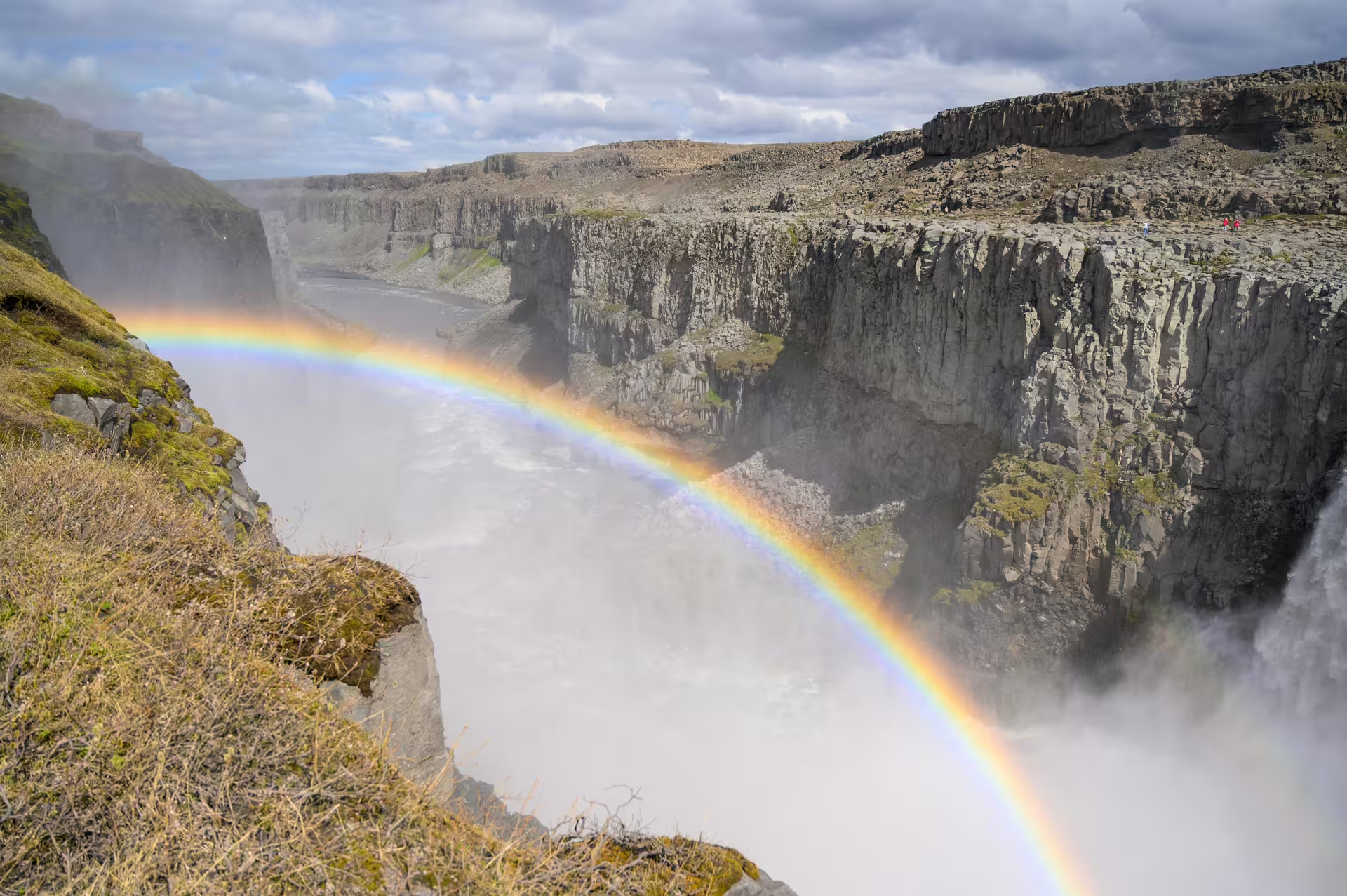
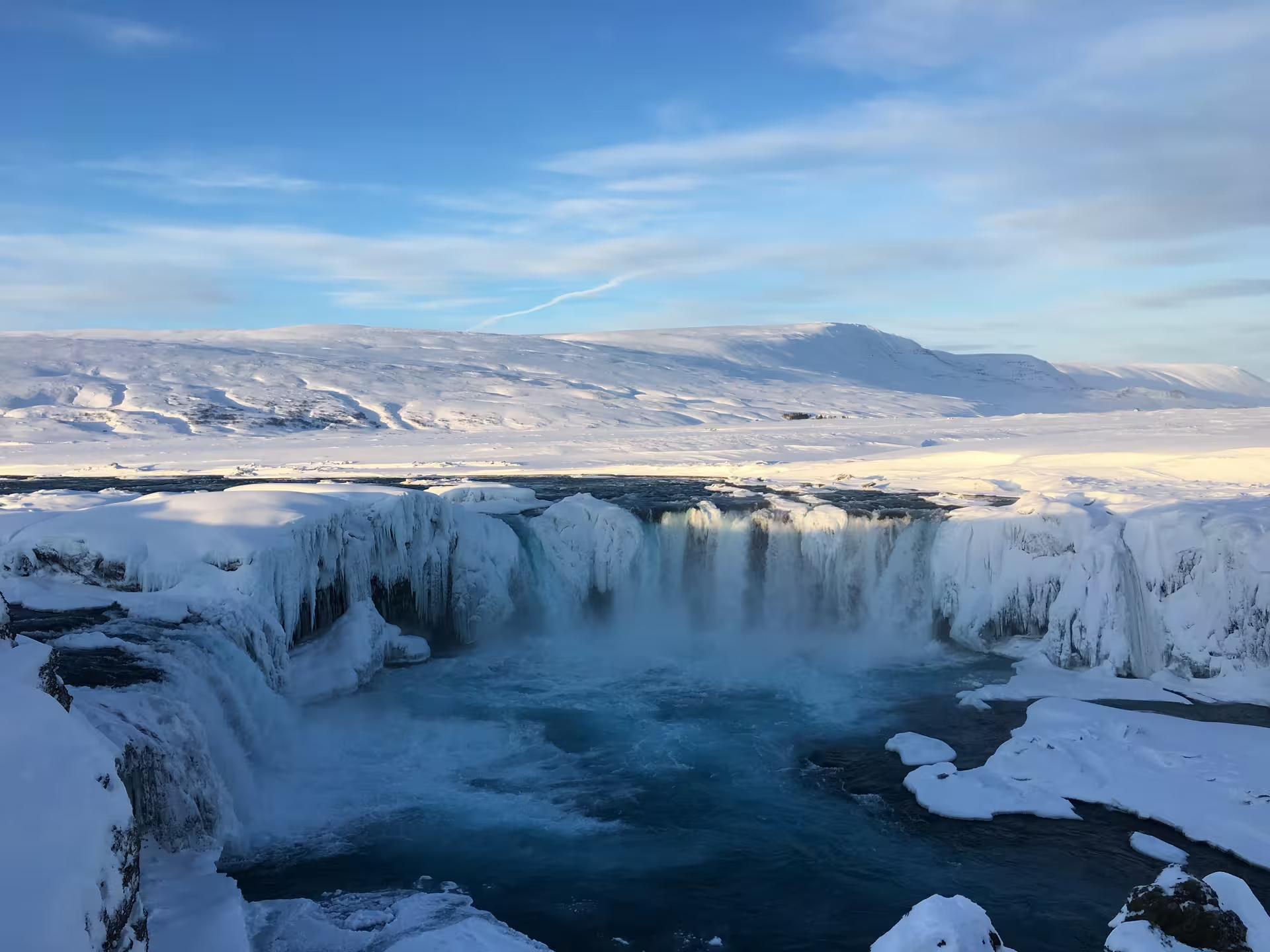
Mývatn, Goðafoss and Dettifoss are all part of the Diamond Circle, and every tour on this page links at least two of them. Goðafoss lies on the river Skjálfandafljót, in Þingeyjarsveit, and has been protected since 2020, on about 21 hectares. All six tours stop there on the drive from Akureyri, and the guides tell the story behind its name, the Waterfall of the Gods.
Dettifoss lies on the river Jökulsá á Fjöllum, at Jökulsárgljúfur, inside Vatnajökull National Park. Three of the tours continue there after the lake; in winter, road and weather conditions can limit access.
Three small-group days leave from Akureyri. The small-group day trip to Mývatn stops at Goðafoss, Grjótagjá, Hverir at Námaskarð, Dimmuborgir and Skútustaðagígar, and ends with a soak in a geothermal lagoon chosen by season; it is rated very easy. The small-group tour of Mývatn and Dettifoss, by jeep or van, adds Dettifoss to Goðafoss, the lake, Hverir, Dimmuborgir and Skútustaðagígar. The day tour of Mývatn, Goðafoss and Dettifoss covers similar ground but is rated moderate, with walking on uneven lava.
For a private day, the private trip to Mývatn and the geothermal baths visits Goðafoss, the lake and Hverir and includes entry to geothermal baths near the lake; it is rated easy. The private Mývatn tour takes in Goðafoss, Grjótagjá, Hverir, Dimmuborgir and Skútustaðagígar at your own pace. The nine-hour private tour adds the Selfoss and Dettifoss waterfalls in the canyon of the Jökulsá á Fjöllum and ends in geothermal baths near the lake, with entry included.
More trips that stop at the lake are listed on the Mývatn destination page.
Yes. All six trips on this page go there and back from Akureyri in one full day.
No. The cave and its thermal spring are only for looking at; bathing there is no longer permitted.
Yes, on the marked paths. The ground near the mud pots and fumaroles is very hot and can be unstable, and the smell of sulphur is strong.
Three of the six: two of the small-group days and the longest private tour. If winter weather affects the road to the falls, the guide explains the change on the day.
Sources: Wikidata (CC0).