Last updated:


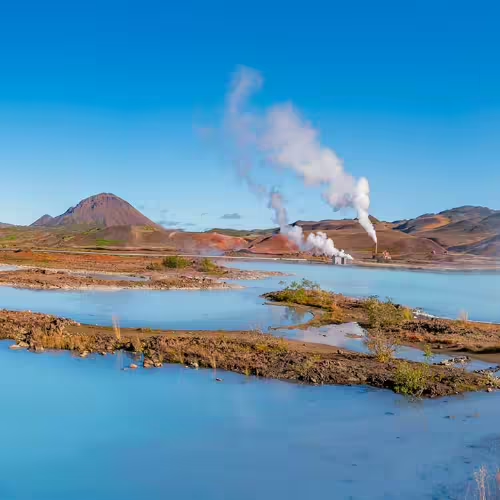
Mývatn suits a trip built around volcanic landscapes and birdlife, with time by the lake as well as among the lava formations. In North Iceland, the lake spreads over 37 square kilometres, with roughly 50 islets and skerries breaking up its waters. The contrast between the lake, craters and lava caves gives you a useful way to organise a visit around your interests.
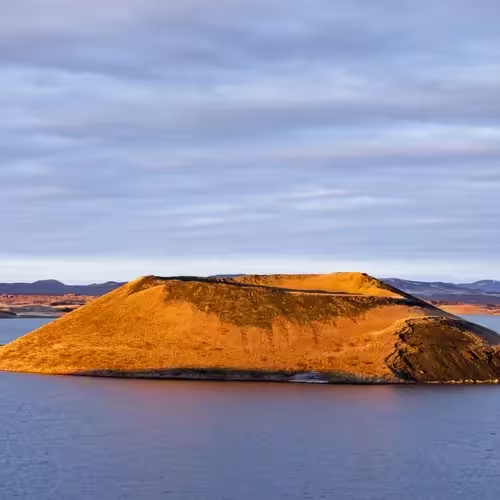
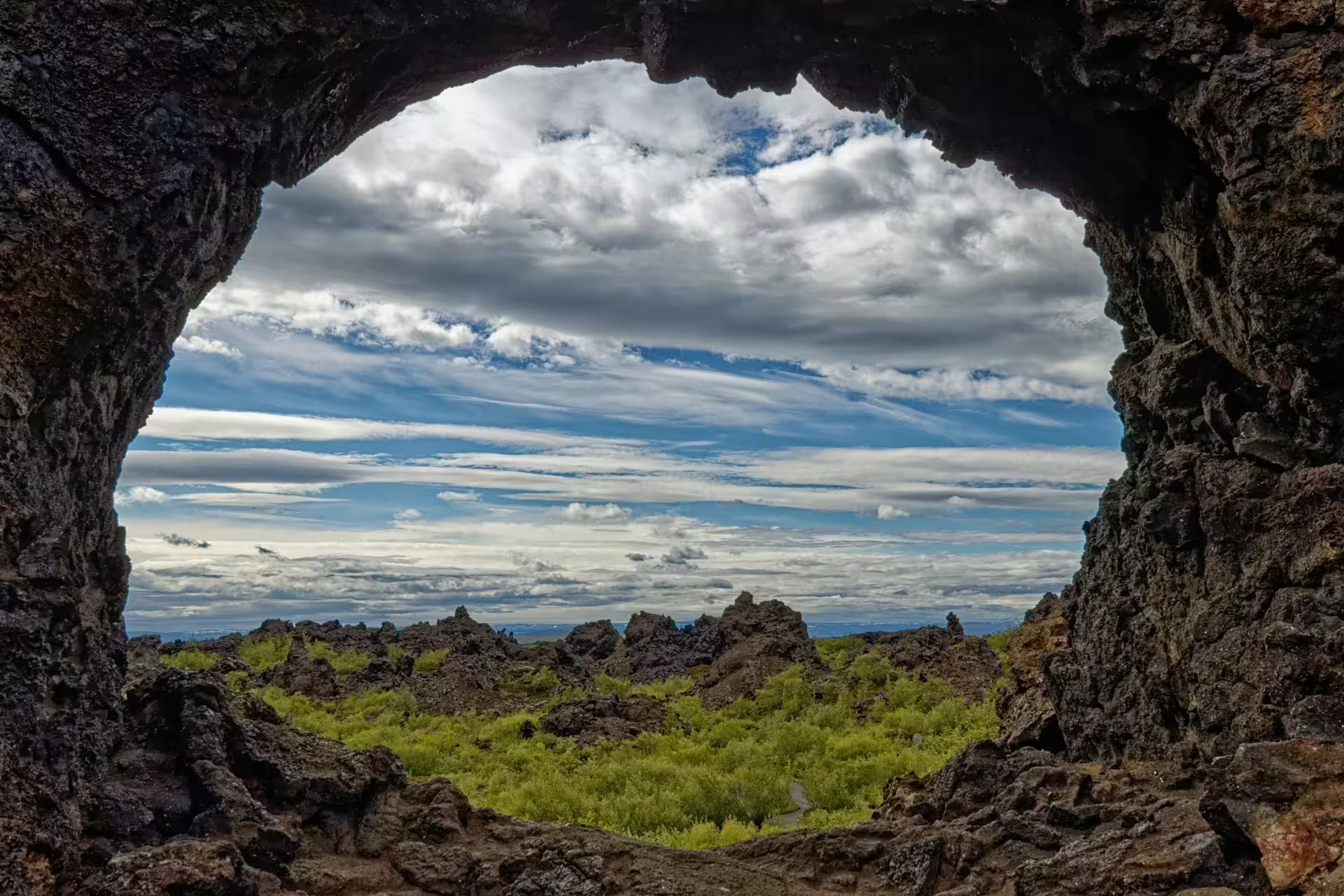
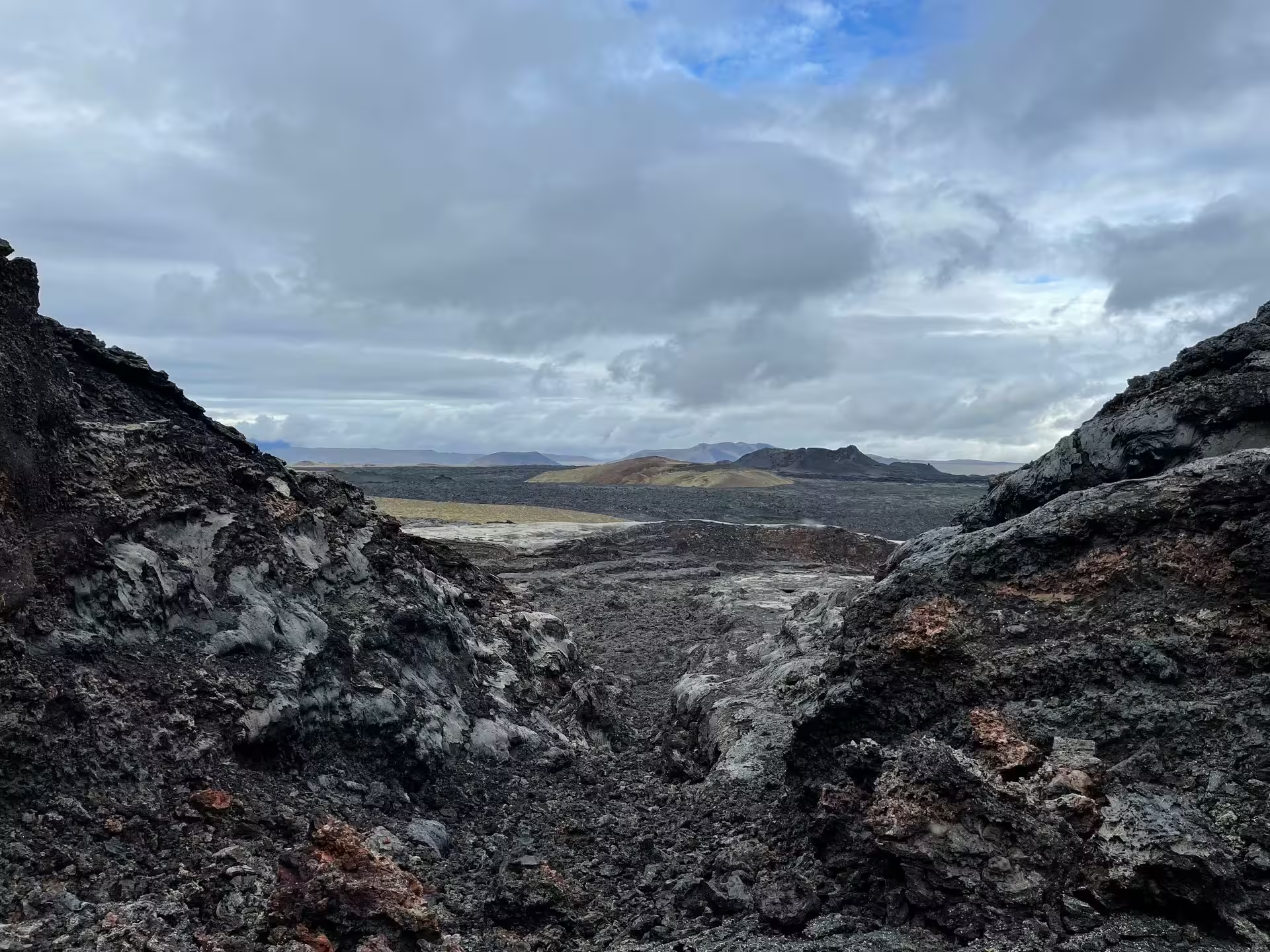
For a visit focused on volcanic scenery, put Dimmuborgir and Skútustaðagígar on your list. At Dimmuborgir, the lava shapes survive from a lava lake that drained after forming around 2,300 years ago. Look for Kirkjan, a lava cave whose cathedral-like appearance and tall, curved roof explain its name. Skútustaðagígar tells a different volcanic story: its pseudocraters were made by gas explosions when hot lava crossed wetlands.
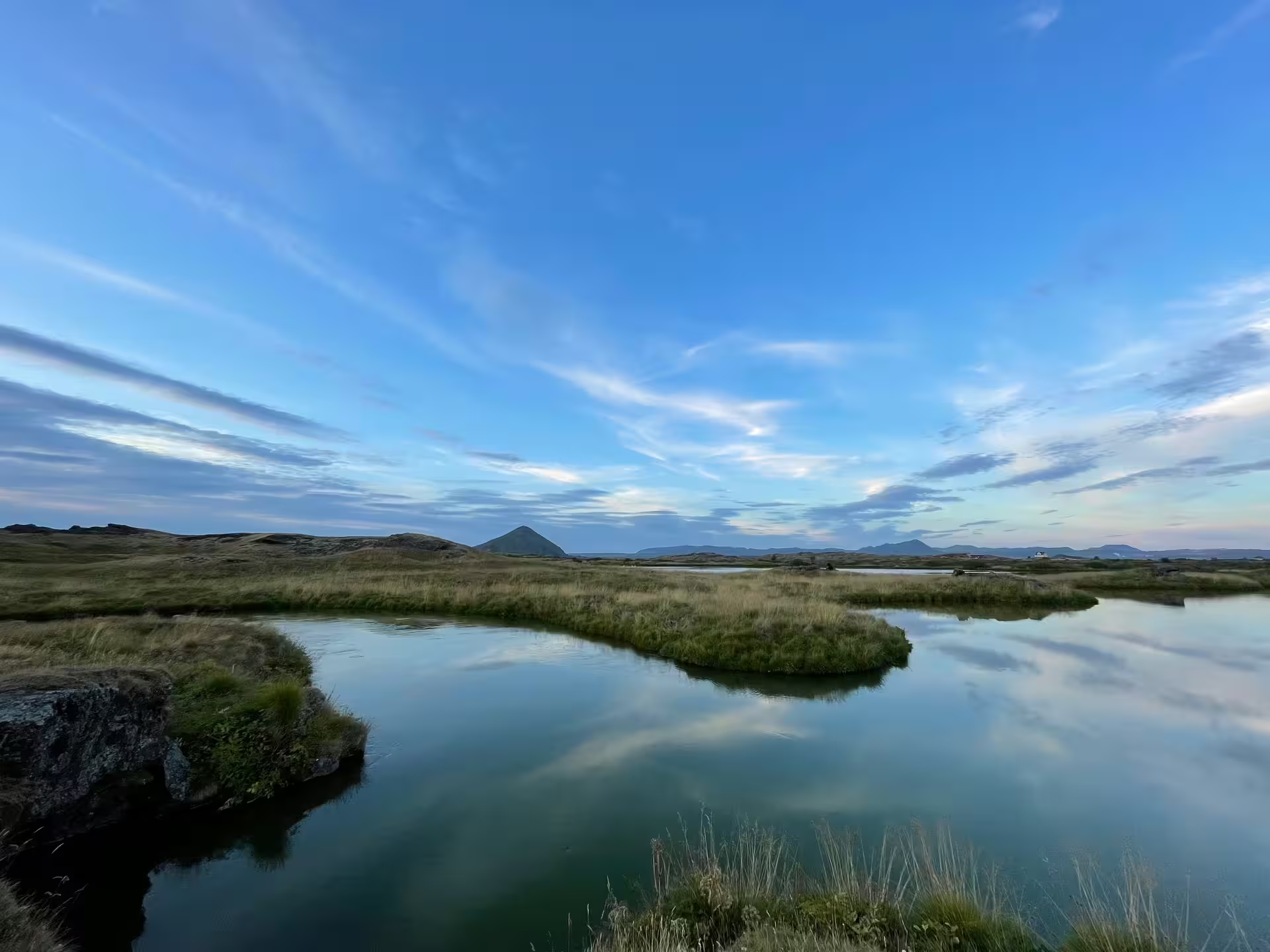
For a lakeside stop, Höfði is a rocky headland reaching out into Mývatn. Birdwatching gives the lake another focus, with ducks such as tufted duck, wigeon and harlequin duck around its shores. Cold springs feed the lake's southern basin and hot springs its northern basin, and the Laxá is the only river that drains the lake.
For another crater visit, Víti near Krafla has a diameter of about 300 metres. Grjótagjá offers a cave stop near the lake; geological activity between 1975 and 1984 raised the temperature of its water. These stops add a crater and a cave to a visit centred on Dimmuborgir's lava formations.
Two days is a suggested split: spend the first at Dimmuborgir and Skútustaðagígar, then devote the second to Höfði and birdwatching around the lake. This separates time among the lava formations from time focused on the water and its birds.
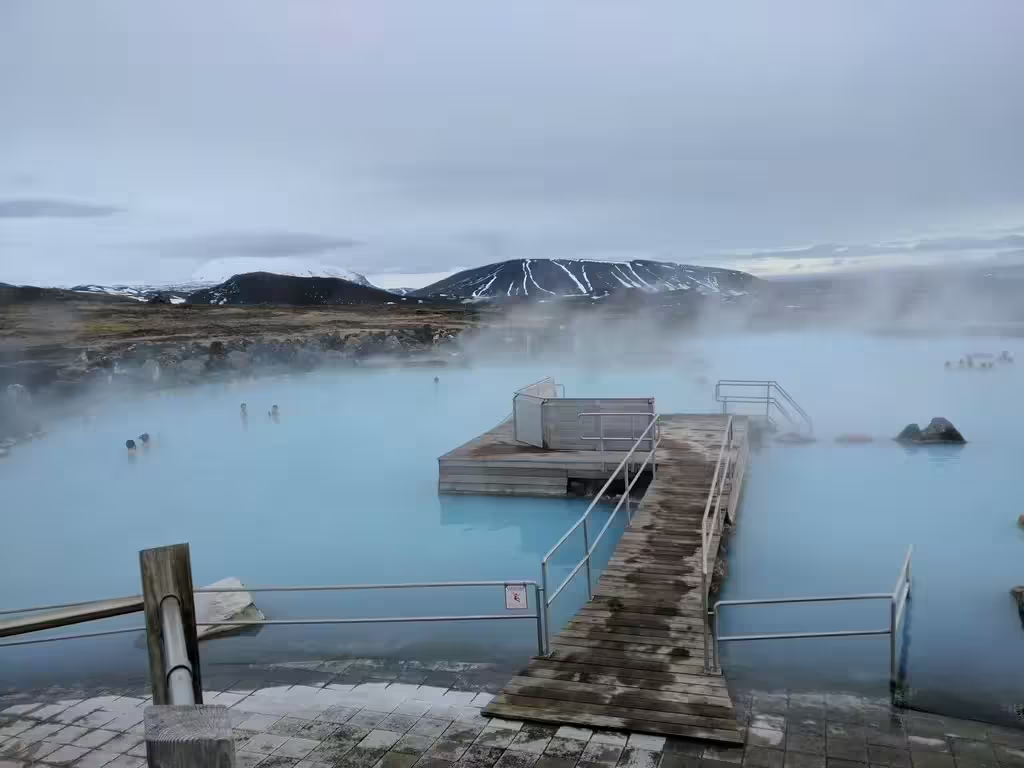
For a day trip from Akureyri, the private Mývatn lake and nature baths trip lasts 7 hours and includes a private vehicle, a driver-guide, commentary, stops at Goðafoss, Lake Mývatn, Hverir and Earth Lagoon Mývatn, and admission to the baths.
The private Mývatn, Dettifoss and nature baths tour from Akureyri lasts 9 hours, with private transport, a professional driver and guide, itinerary stops and admission to the Mývatn Nature Baths bathing experience included.
For a longer guided trip, the private 3-day Akureyri and Mývatn tour from Reykjavík includes private guided transport, the Into The Glacier ice tunnel experience at Langjökull, a monster truck ride to the glacier summit, admission to Jarðböðin Mývatn Nature Baths and two nights of accommodation in Akureyri.
April suits a visit focused on the return of migratory birds. Migrants begin arriving in the lake area in April. For a trip centred on winter events, the Mývatn Winter Festival includes horses on ice in the Mývatn Open and a national dog-sledding competition.
Guided transport is an option for sightseeing, while Strætó route 56, between Egilsstaðir and Akureyri, stops at Reykjahlíð by the lake; under the timetable valid from 2 January 2026 it does not run every day. The small group Lake Mývatn and Dettifoss tour from Akureyri lasts 8 hours and includes jeep or van transport, a professional guide, the listed stops and commentary at each location.
Twice in summer, particularly in early June and August, the lake's midge larvae enter their pupal stage.
You can buy rúgbrauð, a dark rye bread, in the Mývatn region and see how it is made; some people still use geothermal heat to bake bread.
Yes, its displays include equipment once used for fishing in Lake Mývatn.