




Lyon Old Town and Fourvière Basilica Walking Tour
Two millennia of history across one remarkable hillside city
This Lyon walking tour guides you through two thousand years of urban transformation, from a Roman military outpost to one of Europe's most celebrated UNESCO World Heritage cities. In just two hours, you move through layers of time that few visitors ever fully grasp.
Lyon has always been a city of reinvention. It served as the capital of Roman Gaul, rose again as a Renaissance banking powerhouse, and later became the undisputed silk capital of Europe. Each era left its mark in stone, passageways, and the stories carried by its people.
Your guide connects these threads with precision, drawing on the lives of emperors, Florentine merchants, silk workers known as Canuts, and wartime resistance fighters. The city stops being a backdrop and becomes a character in its own right.
The route covers Fourvière Hill and the Renaissance quarter of Vieux Lyon, moving between open-air ruins, a soaring basilica, and narrow hidden corridors. The pace is moderate, with enough time at each site to absorb the context before moving on.
Tour Highlights
Stand inside the ancient Roman theatres on Fourvière Hill, where up to 10,000 spectators once gathered for performances more than 2,000 years ago.
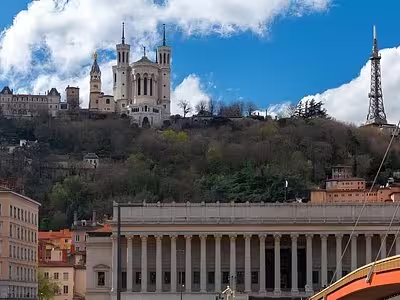
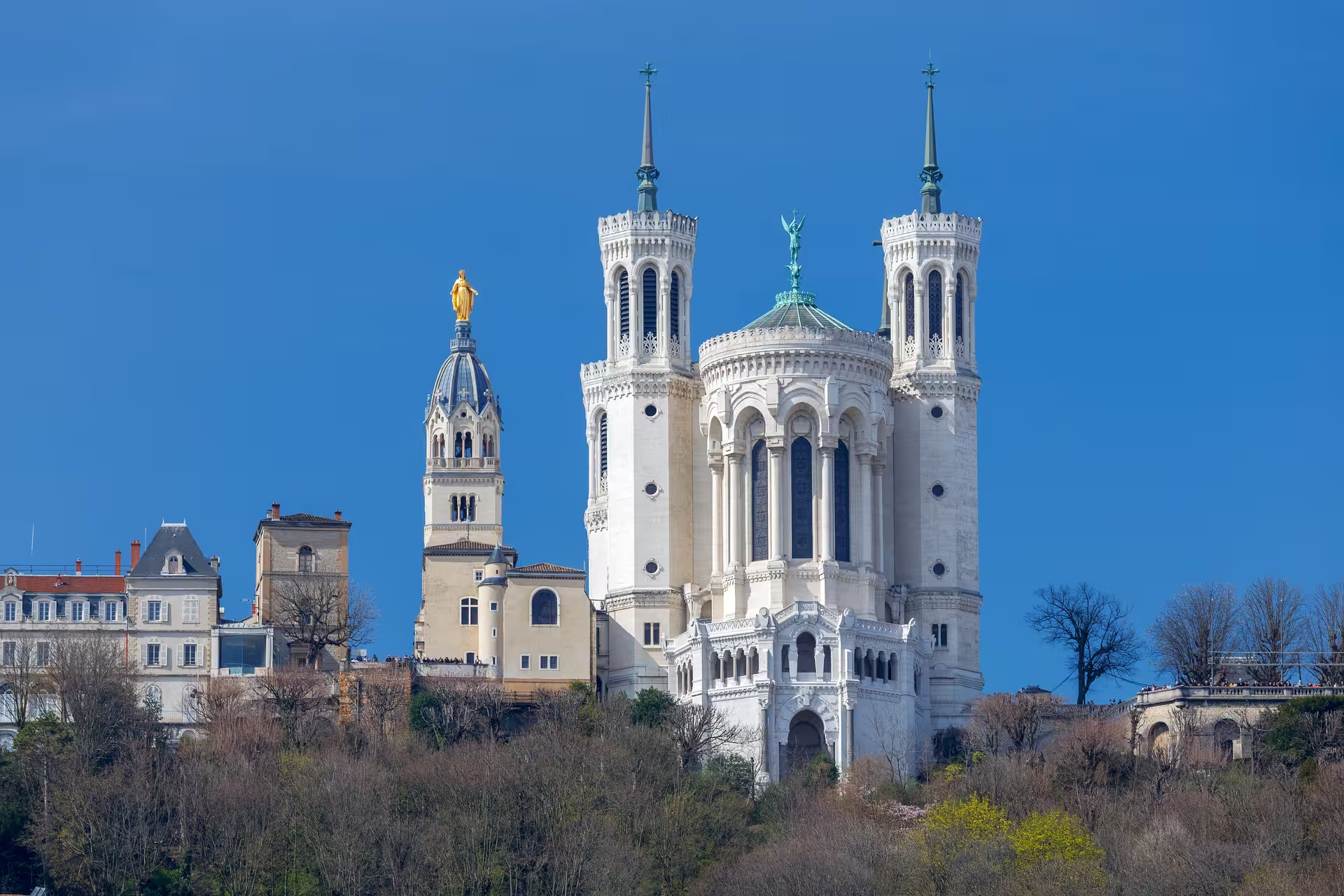
Enter the Basilica of Notre-Dame de Fourvière, a 19th-century architectural marvel blending Byzantine and Romanesque styles with golden ceilings and intricate mosaics.
Explore Vieux Lyon, one of the largest and best-preserved Renaissance quarters in all of Europe, recognised as a UNESCO World Heritage Site.
Navigate the traboules, secret covered passageways first built in the 4th century, later used by silk workers and wartime resistance fighters to move unseen through the city.
Discover the story of the Canuts, Lyon's legendary silk weavers, whose revolts in the 19th century helped shape the history of labour rights across Europe.
Learn how the French Resistance used Lyon's labyrinthine traboules during World War II to evade Nazi patrols and move operatives across the occupied city.
Follow a narrative arc that connects Roman soldiers, Renaissance bankers, silk merchants, and resistance fighters into a single coherent story of one extraordinary city.
Tour Itinerary
The tour begins at the summit of Fourvière Hill, the site of the original Roman settlement of Lugdunum. You visit the ancient theatres where tens of thousands of citizens once gathered, now among the best-preserved Roman remains in France.
From the hill, you enter the Basilica of Notre-Dame de Fourvière, completed in the late 19th century. Its interior is covered with mosaics, marble, and gilded decoration that reflect both Byzantine and Romanesque influences.
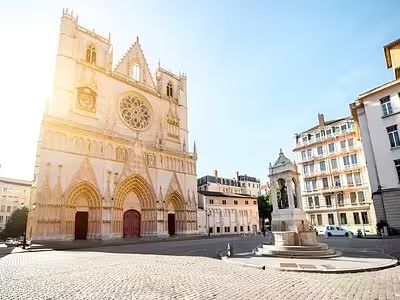
The route descends from Fourvière into Vieux Lyon, the Renaissance quarter at the foot of the hill. The architecture here dates primarily from the 15th and 16th centuries, when Lyon was a leading centre of banking and international trade.
Inside the Renaissance quarter, you enter the traboules, a network of covered passageways connecting buildings and courtyards across city blocks. Your guide explains their origins, their role in the silk trade, and their wartime use by the French Resistance.
The tour concludes with the story of Lyon's silk workers, the Canuts, who once numbered 25,000 and whose revolts in the 1830s left a lasting mark on European labour history. Their legacy is woven into the streets and buildings around you.
What Is Included
Included
- Professional licensed guide
- Access to Fourvière Hill viewpoints
- Guided entry into traboules of Vieux Lyon
- Historical narrative covering Roman, Renaissance, and modern periods
- Small group experience
Not Included
- Entrance fees to the Basilica interior exhibitions
- Transport to and from the meeting point
- Food and beverages
- Gratuities for the guide
Important Information
Reserve Your Place on This Tour
Spaces on this small-group tour are limited. Book in advance to secure your preferred date and explore Lyon's most storied neighbourhoods with an expert guide.
Book Now