Lyon, France: what to see and do
UNESCO added the Historic Site of Lyon to its World Heritage List in 1998. Its core occupies 427 hectares, with a surrounding buffer zone of 323 hectares. The city's heritage service presents Lyon through 2,600 years of settlement, building and urban design.
Things to do in Lyon
Place Bellecour occupies around 62,000 square metres. At Place des Jacobins, the fountain is a work in white marble created by Gaspard André in 1885. The Grand Hôtel-Dieu's origins go back to a 12th-century hospital; its Rhône façade and dome, built from 1741, follow designs by Jacques-Germain Soufflot. On the banks of the Rhône, the Parc de la Tête d'Or extends over 105 hectares around a lake of 16 hectares.
Vieux Lyon
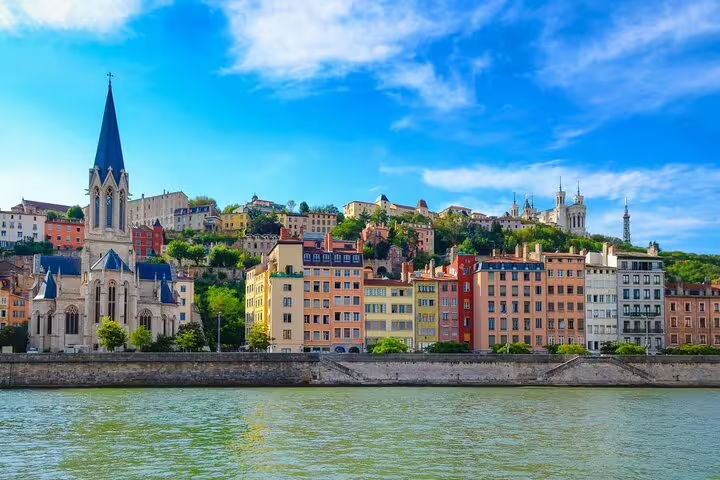
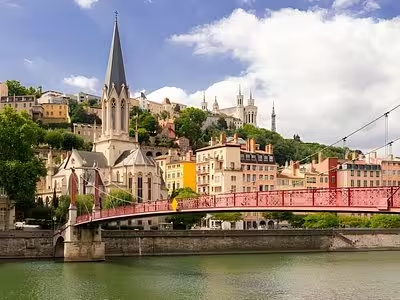
Saint-Georges, Saint-Jean and Saint-Paul are the three districts that make up Vieux Lyon, an area of 24 hectares. Saint-Jean cathedral houses an astronomical clock and serves as the primatial church and seat of the Primate of the Gauls. Across Lyon, around 500 traboules are spread through more than 230 streets, with about 200 in Vieux Lyon, 160 on the Croix-Rousse slopes and 130 on the Presqu'île.
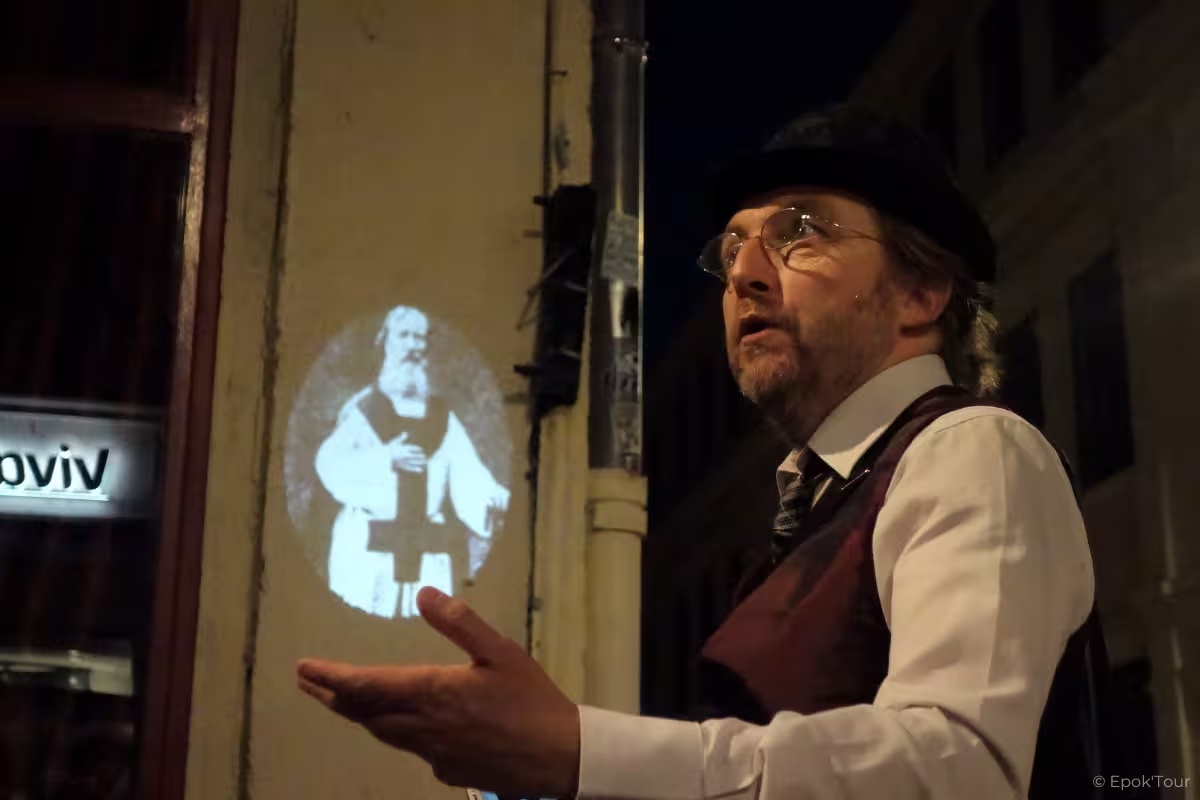
The self-guided walking game through Lyon Old Town traboules lasts 1 hour and 20 minutes and includes digital access to the game, the complete sequence of clues, directions between locations and historical accounts unlocked at each stop.
The guided Old Town tour of food and culture in the UNESCO district lasts 3 hours and includes a professional English-speaking local guide, 6 to 8 food and drink tasting stops, wine, cheese, French bread and pastries, Lyon specialities such as praline brioche, typical dishes at a bouchon lyonnais and bottled water.
Fourvière and Roman Lyon
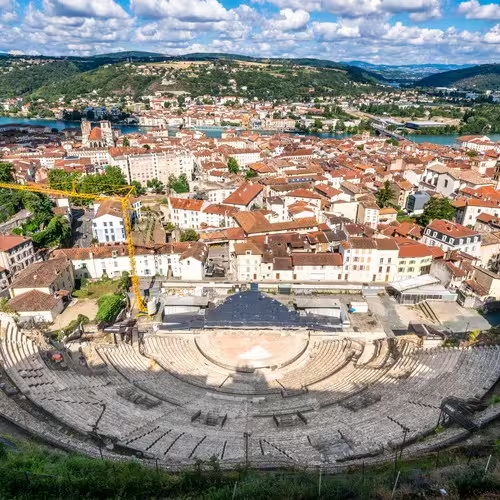
On 9 October 43 BC, Lucius Munatius Plancus established a colony on the hill above the meeting of the Saône and Rhône; he had served as an officer under Caesar and as proconsul in Gaul. The Roman city of Lugdunum, later Lyon, served as the shared capital of the three Gauls. Claudius, who would become emperor, was born in Lugdunum on 1 August 10 BC. Augustus built the Grand Théâtre on Fourvière hill around 15 BC.
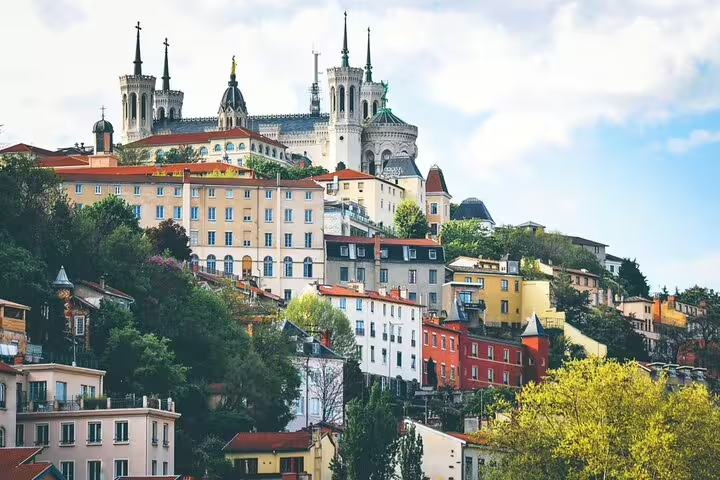
The Basilica of Notre-Dame de Fourvière, begun in 1872 to designs by Lyon architect Pierre Bossan and completed by Sainte-Marie Perrin, was consecrated in 1896. Its four towers symbolise fortitude, justice, prudence and temperance.
The Lyon history walk from Roman ruins to the Renaissance quarter lasts 2 hours and includes a professional licensed guide, access to Fourvière Hill viewpoints, guided entry to Vieux Lyon traboules and an account of Roman, Renaissance and modern history.
Croix-Rousse and silk artisans
The canuts made silk textiles at home using hand looms. Place des Terreaux dates to the 17th century and lies at the base of Croix-Rousse hill.
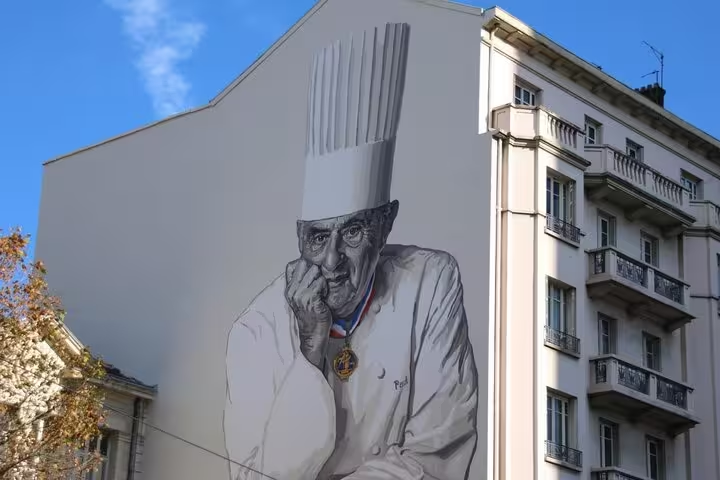
The Lyon walking tour of Croix-Rousse murals and city highlights lasts 2 hours and includes a professional local guide throughout the walk, with commentary about art, history and urban culture.
The Festival of Lights
Lyon's Festival of Lights traces its origins to the inauguration of the gilded Virgin on Fourvière hill, postponed from 8 September to 8 December 1852. Residents spontaneously set small candles, known as lumignons, along their window ledges.
Climate figures for Lyon-Bron
Météo-France lists an annual mean temperature of 13 °C for Lyon-Bron station, which stands at an altitude of 202 m. The station sheet records average annual precipitation of 820.8 mm.
Frequently asked questions
When did Lyon receive UNESCO recognition?
The Historic Site of Lyon joined the World Heritage List in 1998.
Which districts make up Vieux Lyon?
Vieux Lyon consists of Saint-Georges, Saint-Jean and Saint-Paul.
What is inside Saint-Jean cathedral?
Saint-Jean cathedral has an astronomical clock.
What do the Fourvière basilica towers represent?
The four towers stand for fortitude, justice, prudence and temperance.
How did the Festival of Lights begin?
Its origins lie in the inauguration of the gilded Virgin on Fourvière hill, rescheduled to 8 December 1852, when residents spontaneously put lumignons on their window ledges.