Last updated:


Piatra Craiului is a place to build a visit around mountain landscapes, with village life and local food alongside the walking. In the Southern Carpathians, the national park brings together a limestone ridge and the Prăpăstiile Zărneștilor gorges. Zărnești belongs to the Țara Bârsei ethnographic region, putting the town in a cultural setting as well as a mountain one.
The ridge and the gorges deserve separate attention when you plan your walking. Piatra Craiului has a limestone spine stretching 25 km, while the Prăpăstiile Zărneștilor gorge system extends for 3.9 km in total. Those figures describe the landscape, so do not treat them as distances for a single planned walk.
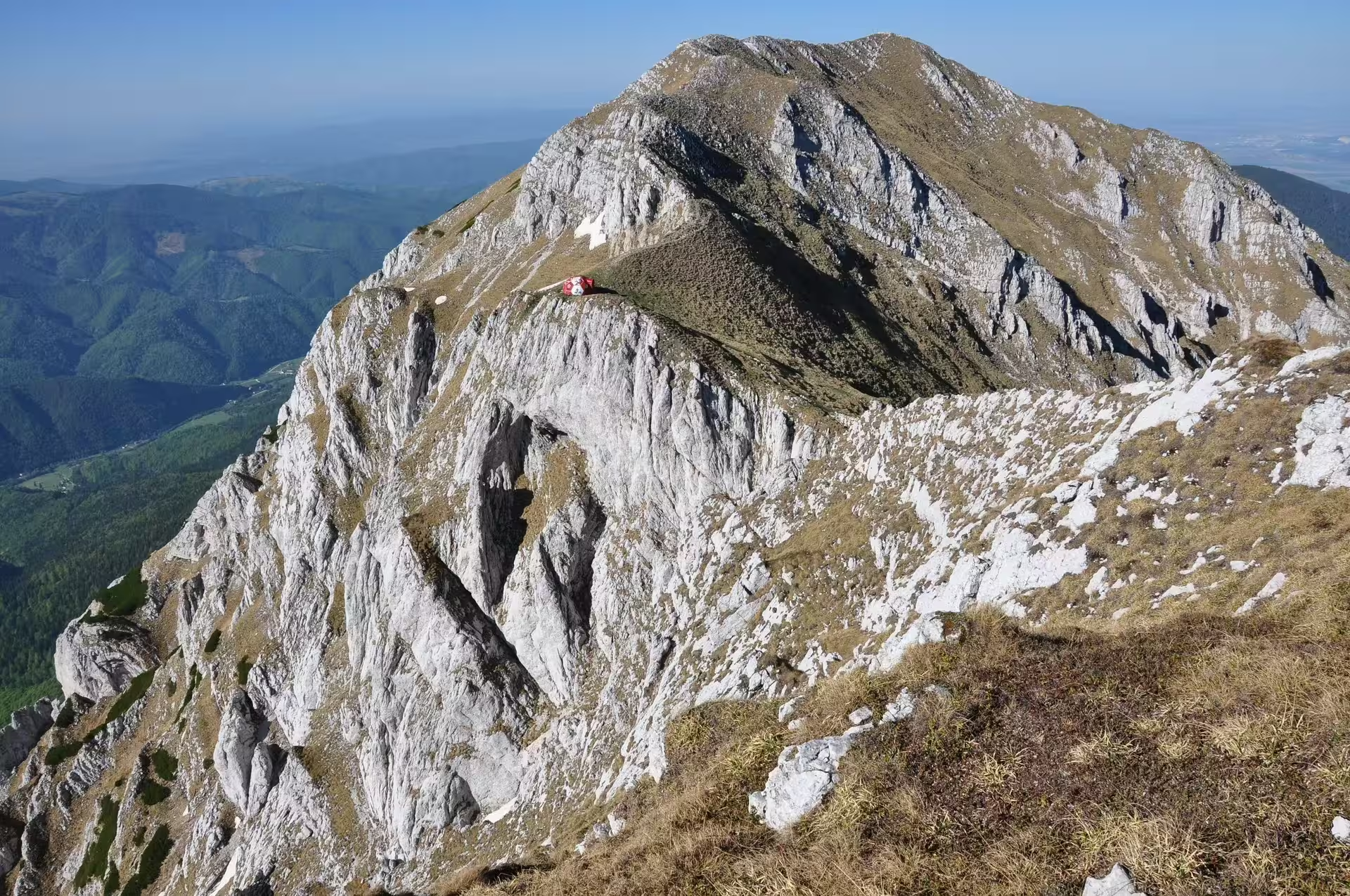
If altitude is part of the appeal, Piscul Baciului rises to 2,238 m, while the detached mountain of Piatra Craiului Mică reaches 1,816 m.
Rock formations can give a walk a particular focus: Zăplaz has a sequence of four arches, and Degetul lui Călineț is a limestone ridge marked by three pinnacles. Marele Grohotiș calls for a different approach to planning because its spread of rock debris is unstable. Its name on an itinerary should prompt attention to the terrain rather than a casual assumption about the walk.
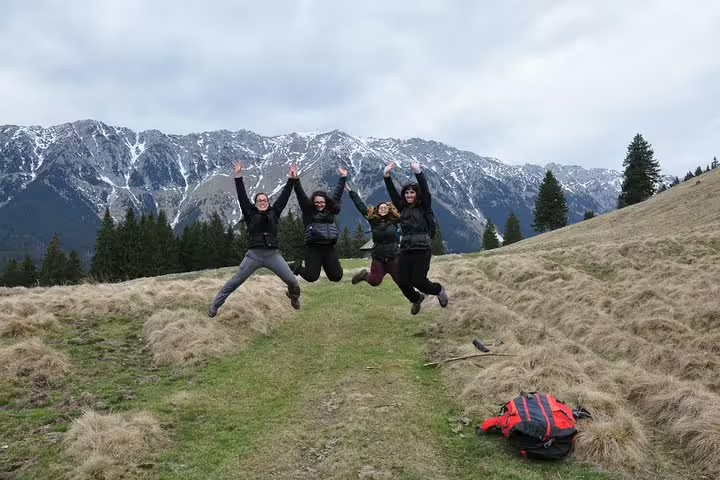
A two-day trek keeps the focus on Piatra Craiului, while a four-day option combines it with the Bucegi Mountains.
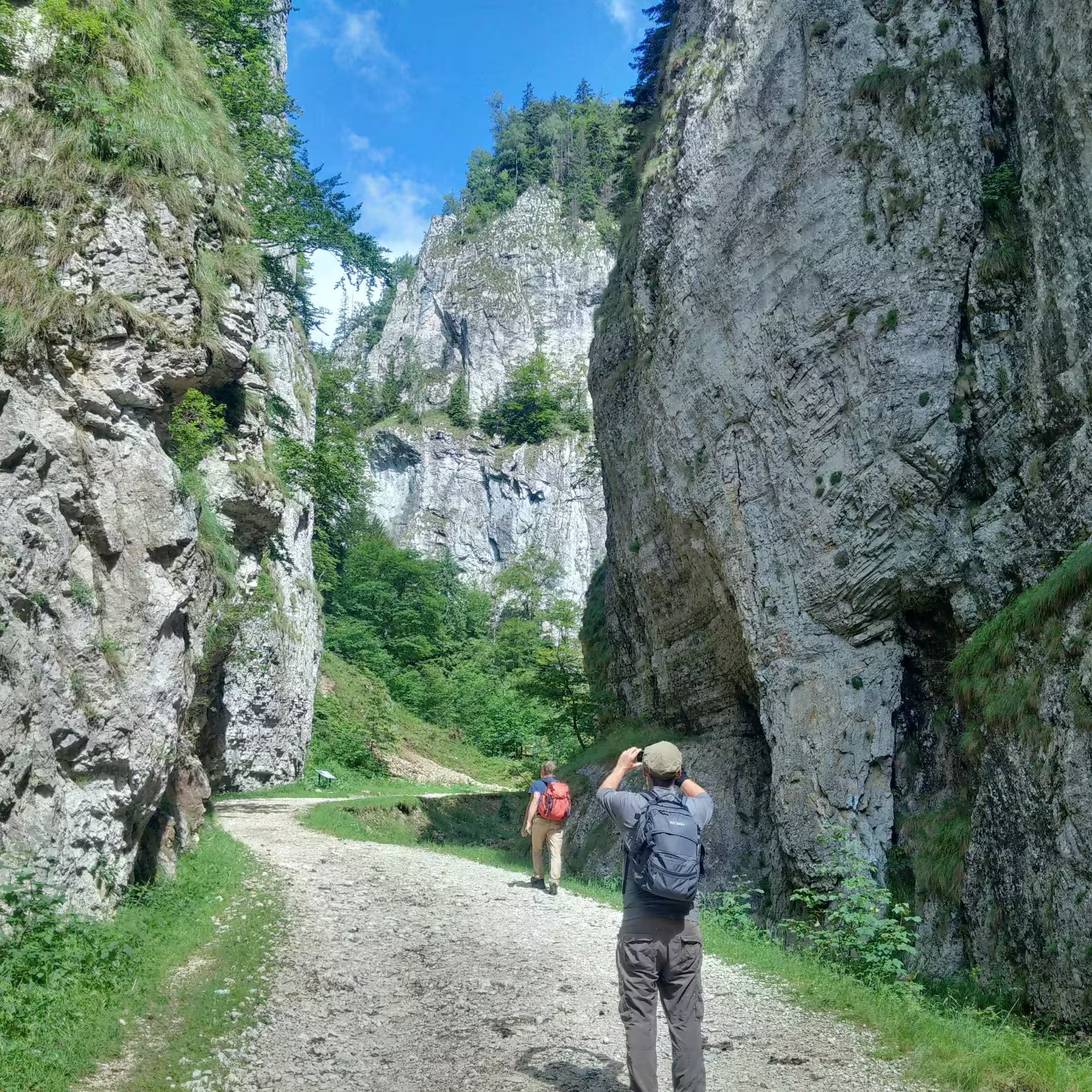
If you want guided walking concentrated on this national park, the two-day Piatra Craiului trek comes with a licensed English-speaking mountain guide.
For walking across both mountain areas, the four-day guided trek in the Bucegi Mountains and Piatra Craiului includes a professional mountain guide.
Măgura and Peștera are places to look closely at traditional houses rather than keeping the whole visit focused on rock formations. Their houses are built with horizontal timber beams, a concrete detail to look for as you explore the villages. The contrast with the limestone landscape makes village architecture worth a place in your plans if buildings interest you as much as mountains.
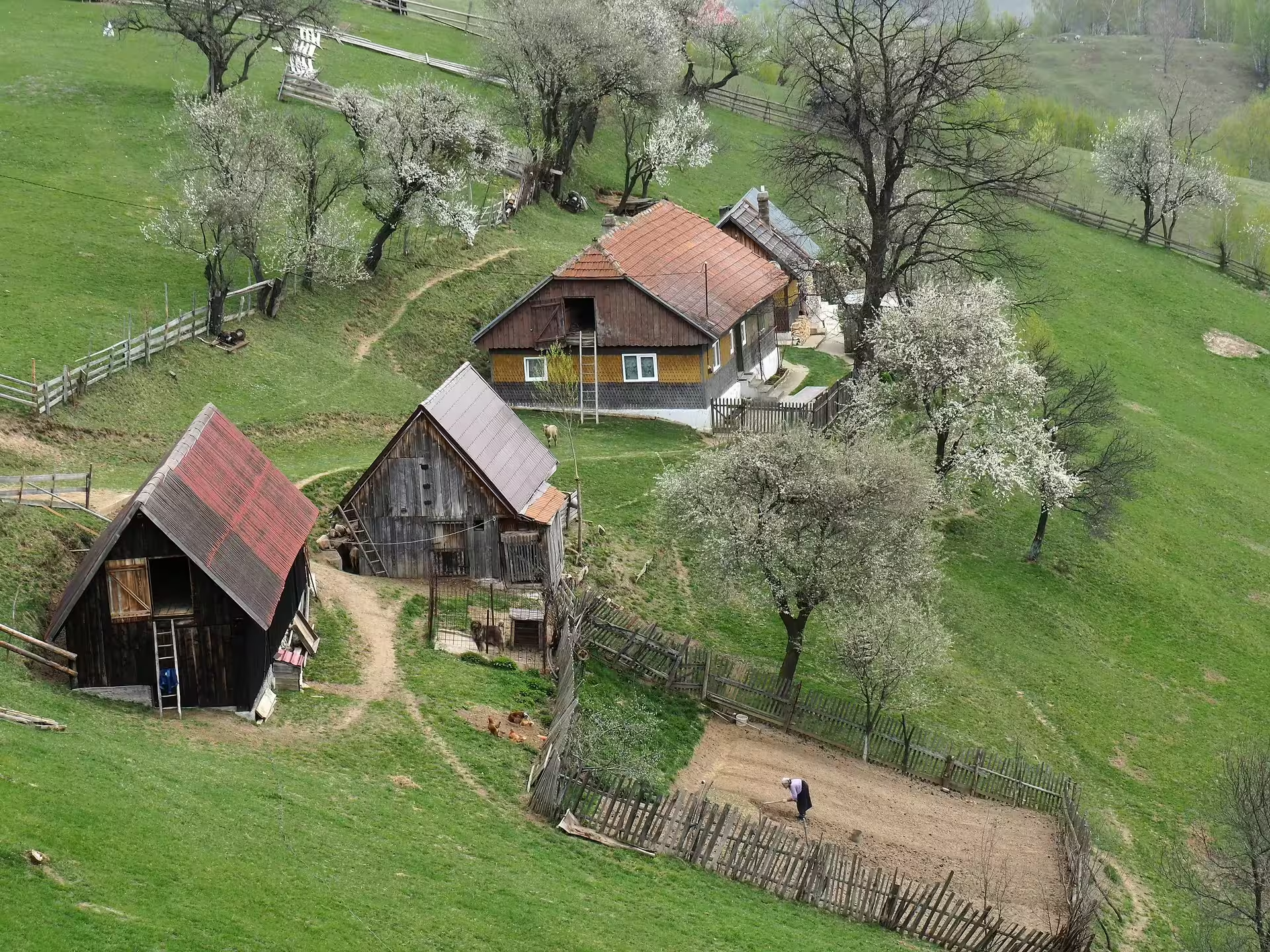
If village life is the main reason for a longer holiday, the eight-day Carpathian mountain tour in Transylvania includes seven nights in guesthouses and village inns.
Cheese from the local flocks is the food to look for alongside the walking. Raising sheep was long a common source of income around Zărnești, and processing pastoral products was one of the area's main traditional activities.
If you want to taste that pastoral tradition on a village walk, the full-day Transylvania village walking tour includes a tasting of local sheep and cattle cheese.
Plants offer a focus beyond the mountain views, particularly the Piatra Craiului pink. Known scientifically as Dianthus callizonus, this flower grows naturally only in Piatra Craiului. Brown bears, wolves and Eurasian lynx also inhabit the national park, making wildlife another part of its natural character.
Rain protection belongs in your walking kit. Average annual precipitation varies with elevation, ranging from 1,000 to 1,300 mm.
Brașov has a bus connection to Zărnești, making public transport an option for reaching the town. Route 140 runs between them. For an arrival by air, the A1 bus links Brașov Airport with Brașov railway station through Livada Poștei.
If you would rather visit mountain villages from Brașov with transport arranged, the small group mountain villages day trip includes vehicle transport to the villages and back.
Yes, it was declared a national park in 1990, after becoming a nature reserve on 28 March 1938.
The park's bird inventory records 112 species, and its bat inventory records 21.
Yes, the Maratonul Pietrei Craiului mountain running competition has been held in the area since 2006.