Last updated:


Wine estates and Huguenot history give a visit to Franschhoek its shape, with Cape Dutch buildings linking the two. This small Western Cape town takes its name from the old Dutch for French Corner.
Give time to both the wine estates and the Huguenot Memorial Museum if you want to understand the town as well as taste its wines. The museum explores the French Huguenots who came to South Africa, and its annex follows the history of Franschhoek. The Huguenot Monument is next door, so the two make a natural pairing.
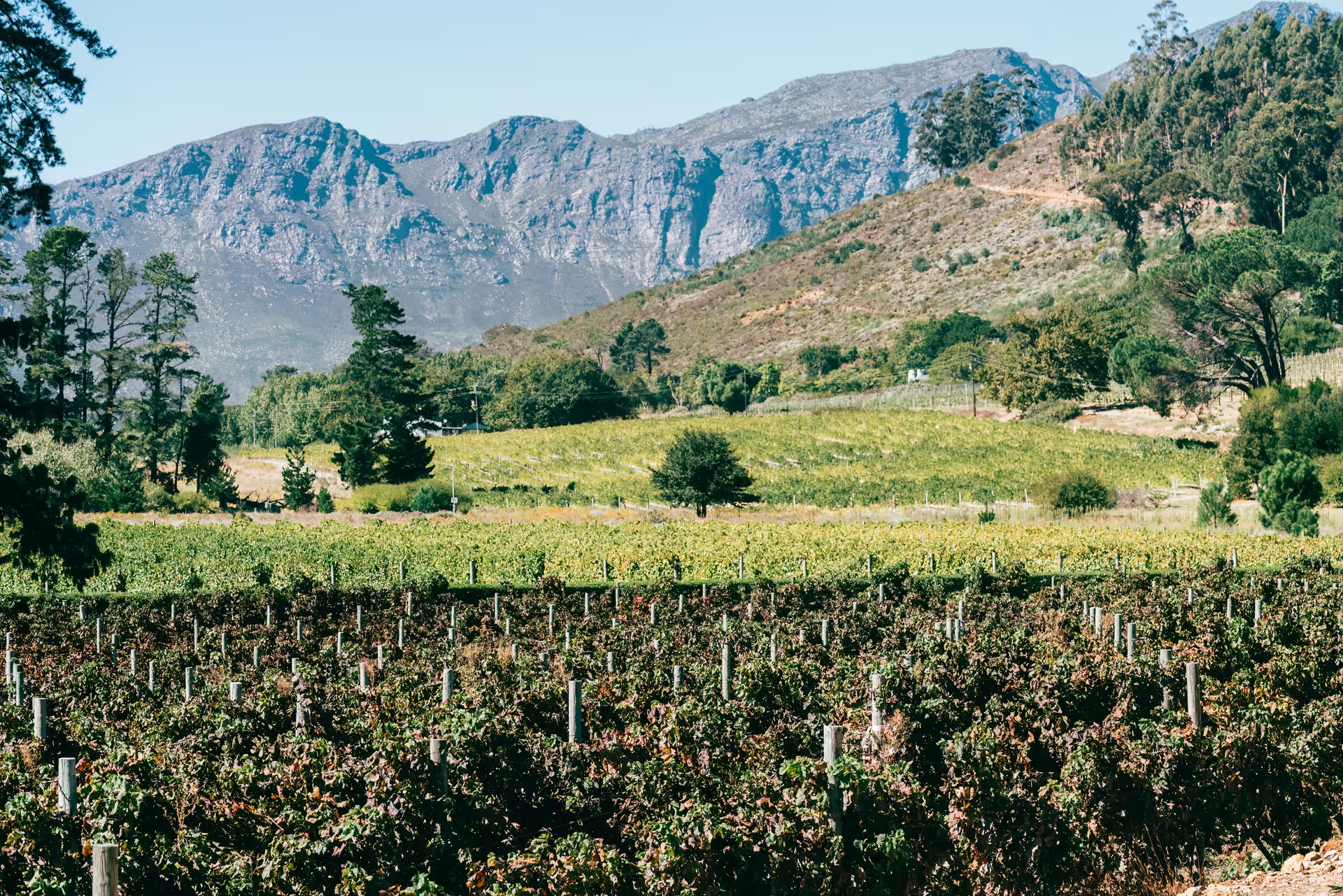
The connection continues at the estates: settlers named many farms after places they had left in France, and some became wineries. Many still have their original Cape Dutch farmhouses, while much of the village also preserves this architecture.
For a different focus, the Franschhoek Motor Museum at L'Ormarins wine estate offers a collection numbering more than 200 vehicles.
Two days would let you give a day to the wine estates and another to the Huguenot Memorial Museum, the monument and the Franschhoek Motor Museum. That keeps the museum visits separate from a full-day wine outing.
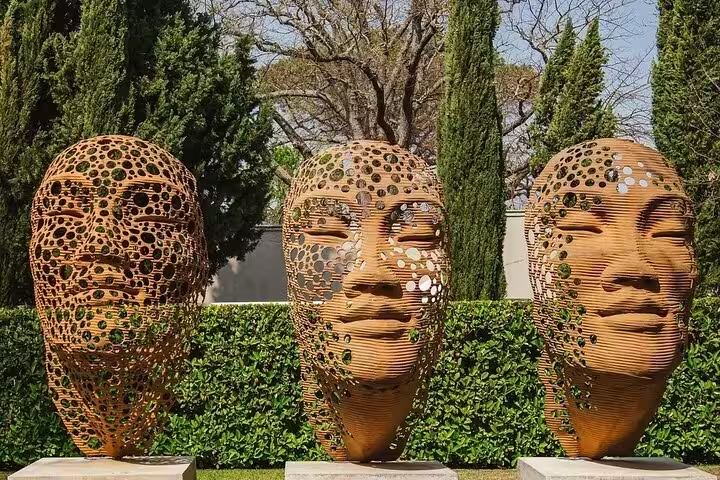
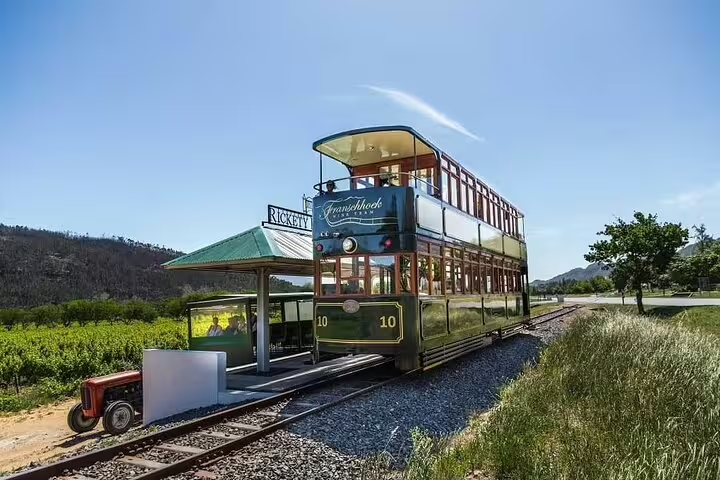
A Franschhoek Wine Tram full-day tour from Cape Town lasts 8 hours. It includes a guide throughout the day, hop-on hop-off access on the Blue Line tram route, entry to participating estates and wine tastings at the estates visited.
For a private day, a Winelands full-day tour with tastings from Cape Town lasts 8 hours. It includes a private air-conditioned vehicle with a driver, a local guide throughout the day, wine tastings at multiple estates, cheese and chocolate tastings, and an a la carte vineyard lunch with vegetarian options.
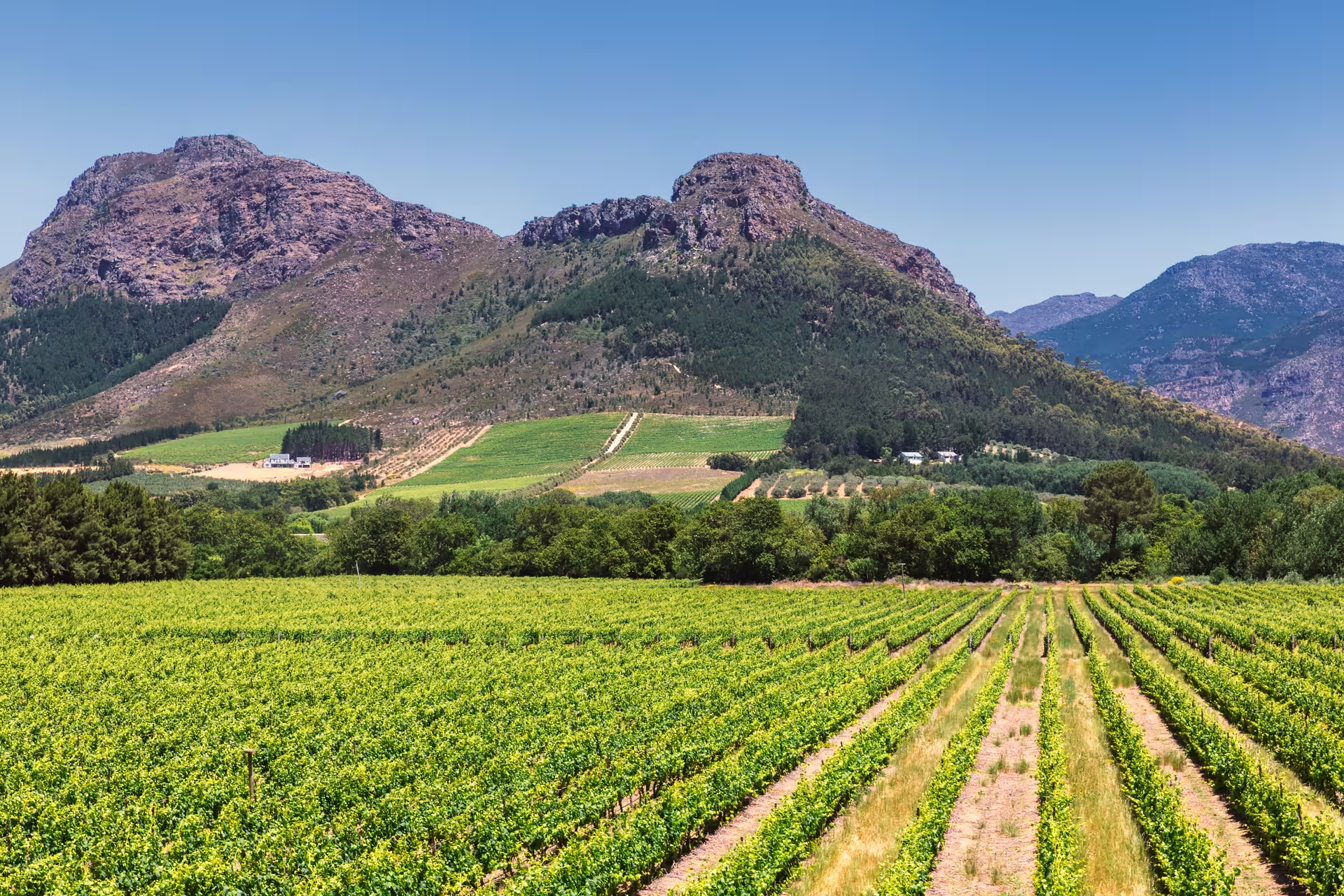
Summer (December to February) suits a trip centred on outdoor estate visits, provided warm weather appeals to you. The Mediterranean climate brings summer heat and dry weather; winter is wetter, with mild to cool conditions. For a winter visit, give the museums a larger part of your plan rather than making every activity outdoors.
July suits travellers interested in the Bastille Festival, which the town celebrates every year in mid July.
The tram is an option for travelling between wine estates.
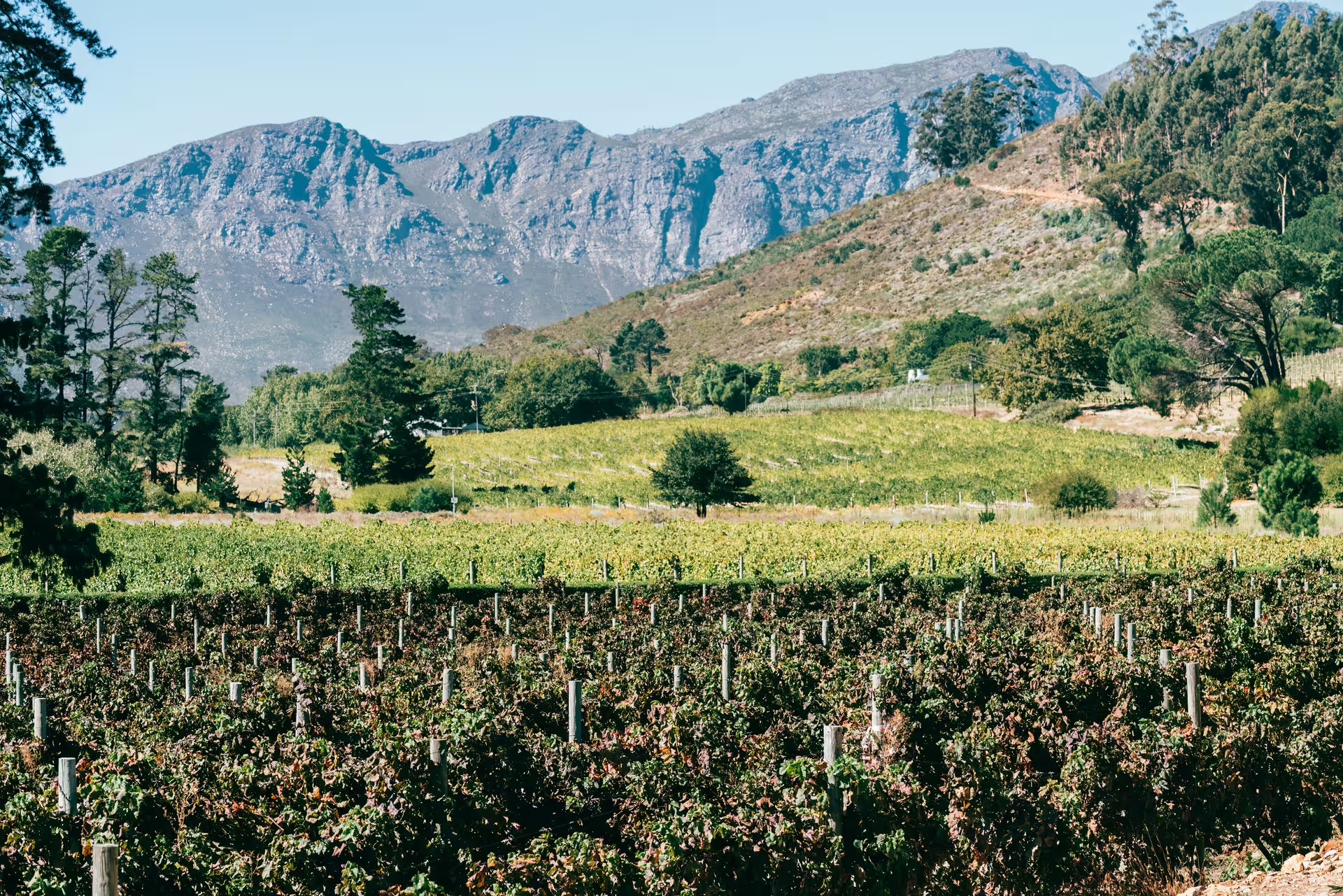
The Franschhoek Tram Explorer guided wine and history tour lasts 8 hours and 30 minutes. It includes tram transport along the valley route, commentary from local guides, access to selected estate stops and tastings at participating estates.
A day trip from Cape Town is a practical alternative to staying in Franschhoek: the journey is around 75 km, or about an hour by car. Cape Town can be your base for a day visit, with Franschhoek about an hour away by car.
A private Cape Winelands day trip from Cape Town with Wine Tram takes 9 hours and 30 minutes. It includes a licensed guide and driver, wine tastings at DeMorgenzon Wine Estate, Mont Rochelle and Delaire Graff Estate, biltong and wine at Marianne Wine Estate, wine and cheese at Fairview Estate, a Franschhoek Wine Tram ride and a photo stop at the Nelson Mandela monument.
The R45 runs over the Franschhoek Pass between Franschhoek and Villiersdorp.
You will find the Huguenot Monument at the edge of town.
Yes, the restored railway operates as a tourism project with double-decker trams built for it.