Last updated:


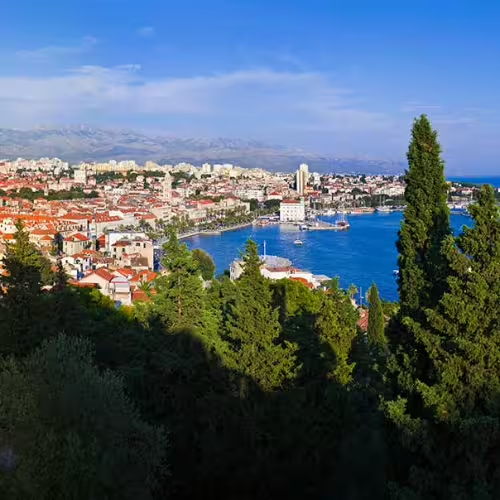
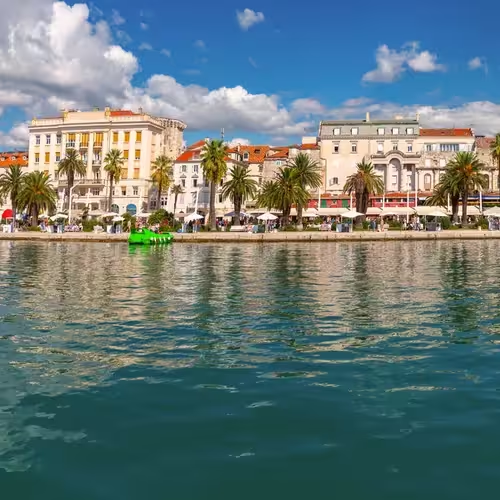
Split suits a trip that pairs palace architecture with time on Marjan. Its historic centre, including Diocletian's Palace, received UNESCO World Heritage status in 1979. Beyond the buildings, Marjan offers views across Split and the coast to Brač, Šolta, Kozjak and Mosor.
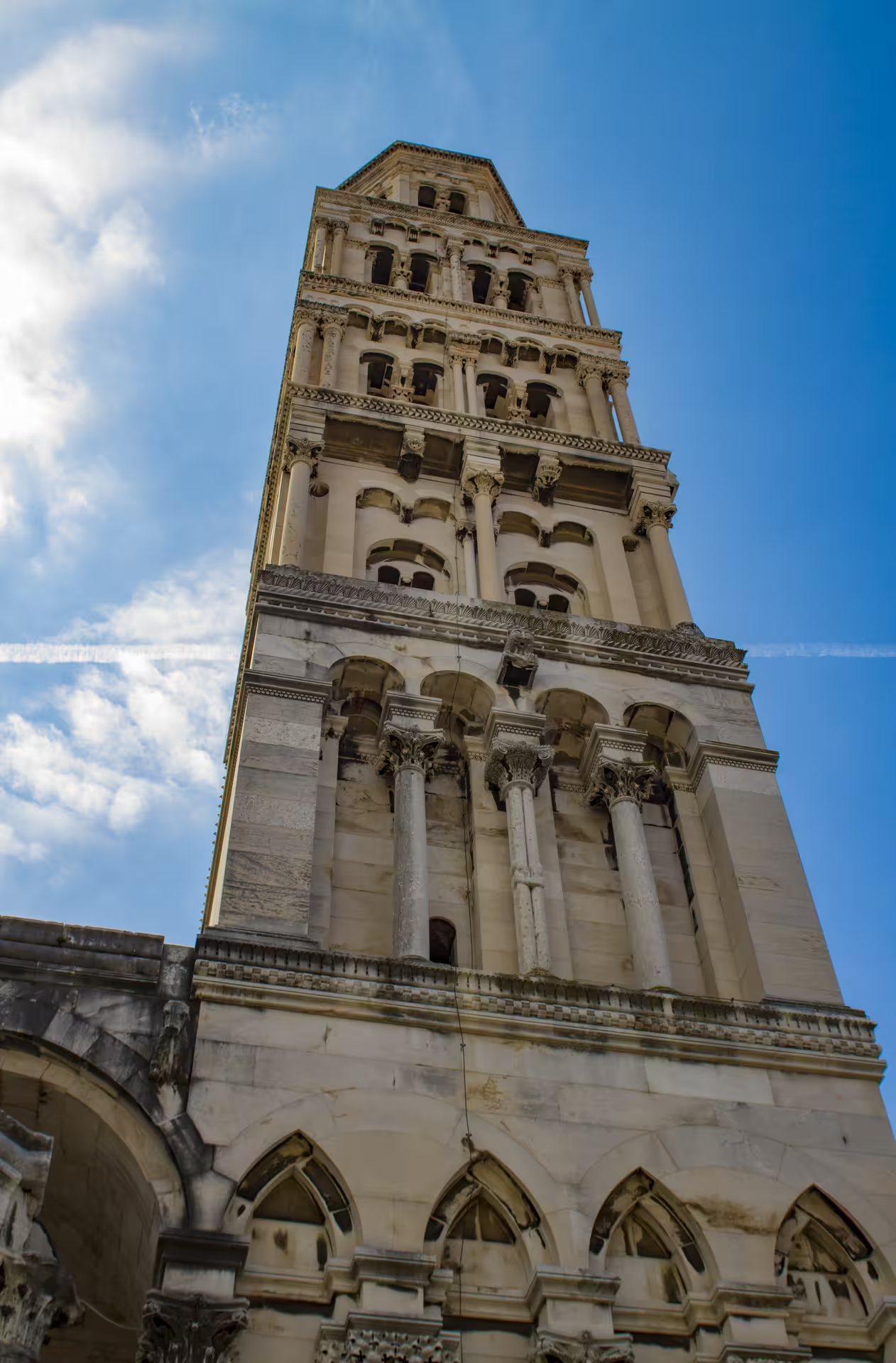
The palace and cathedral suit a visit focused on architecture. Diocletian commissioned his palace around 300; the cathedral later occupied a former mausoleum, whose outer octagonal aisle has 24 columns. At the cathedral, look for the walnut doors carved by local craftsman Andrija Buvina. The Temple of Jupiter adds a different architectural detail: a raised podium and a richly carved doorway beneath a coffered stone vault.
For a walk with puzzles, the self-guided Split scavenger hunt and highlights walk lasts 2 hours and includes app access, audio guidance and written historical information. Marjan gives the visit a change of scene, with dense pine woodland across the hill and views towards the islands.
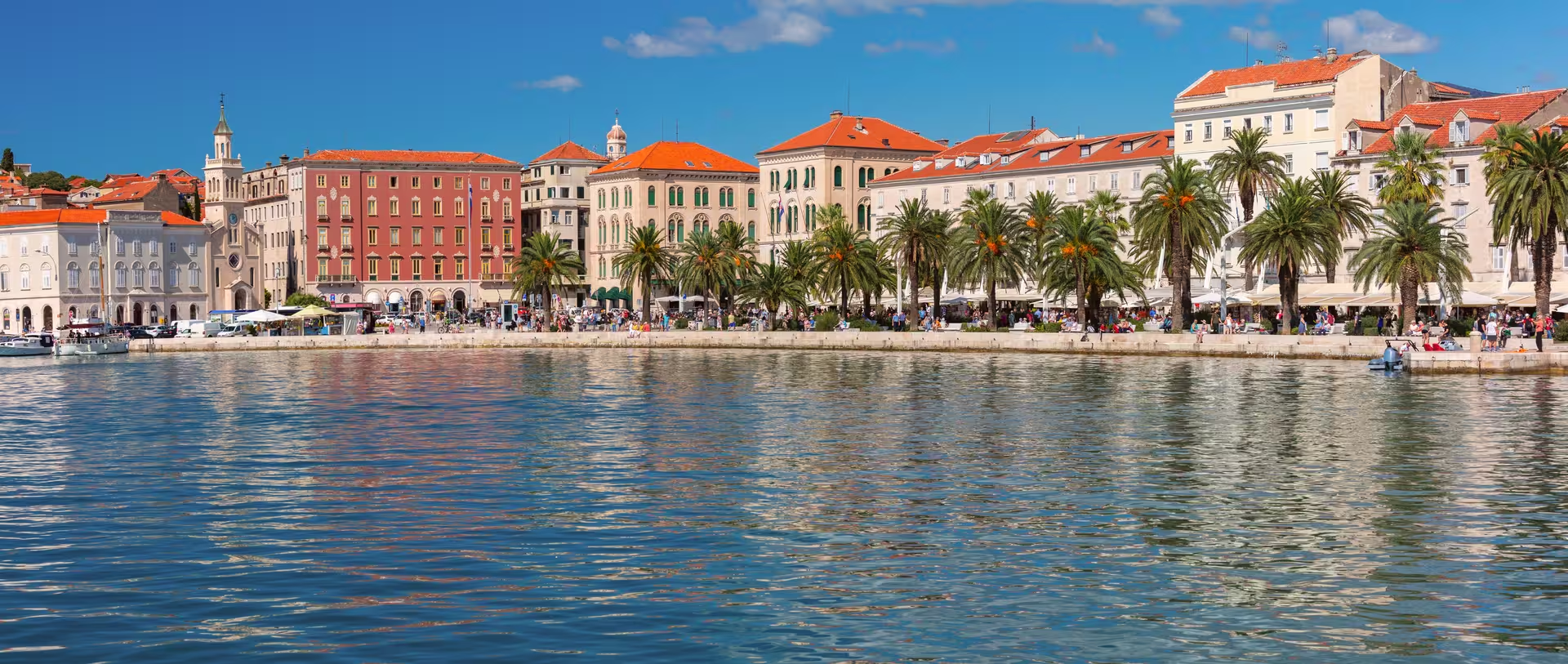
Two days are a sensible plan for the palace and Marjan; allow a third if you want an excursion. Day one can centre on the palace, cathedral and Temple of Jupiter, keeping the architectural sights together. Day two can pair Marjan with the Riva, whose waterfront layout goes back to French rule under Marshal Marmont about two centuries ago.
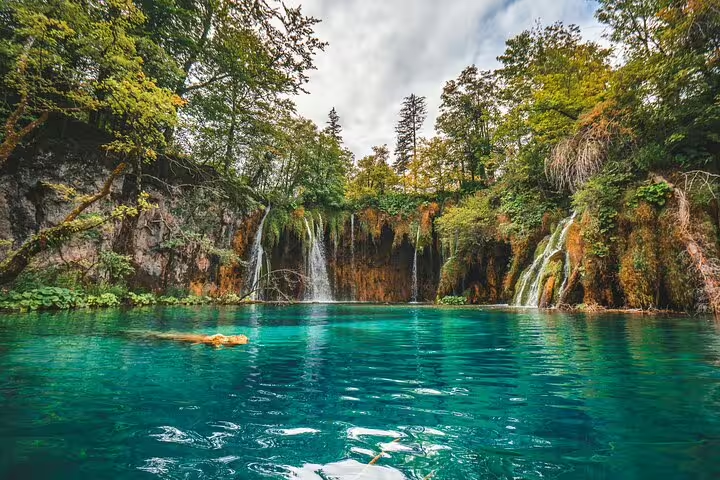
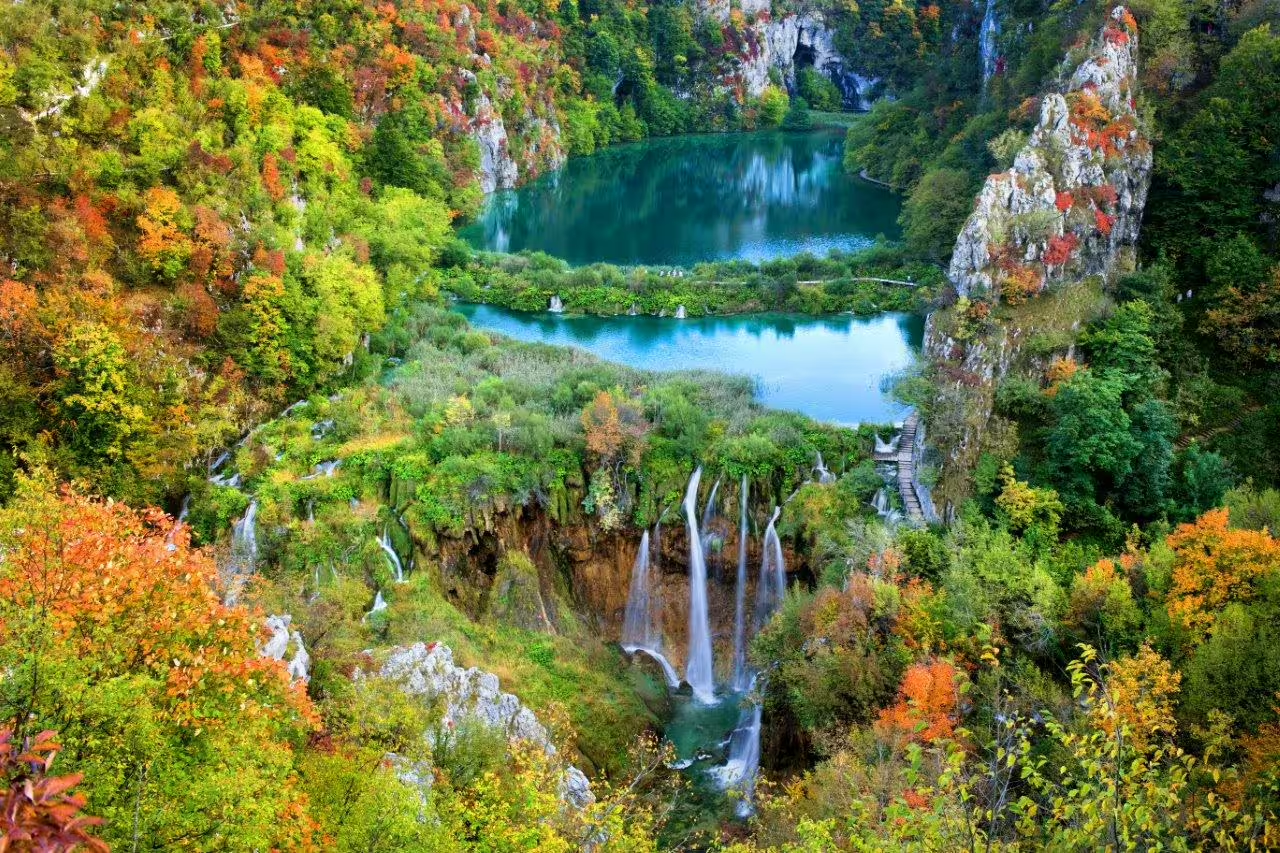
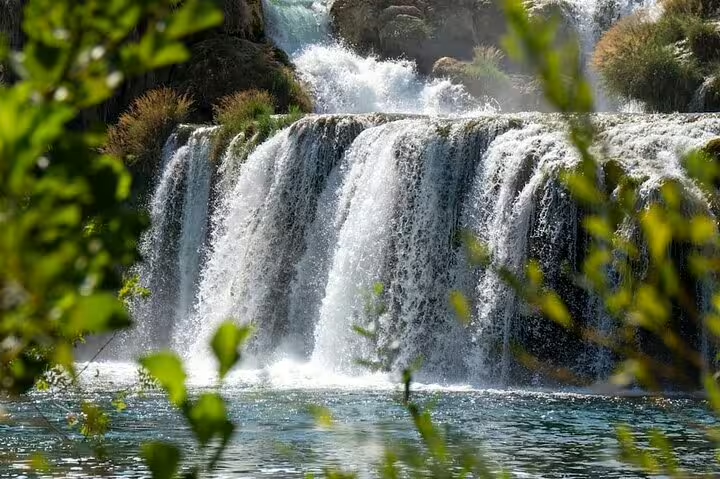
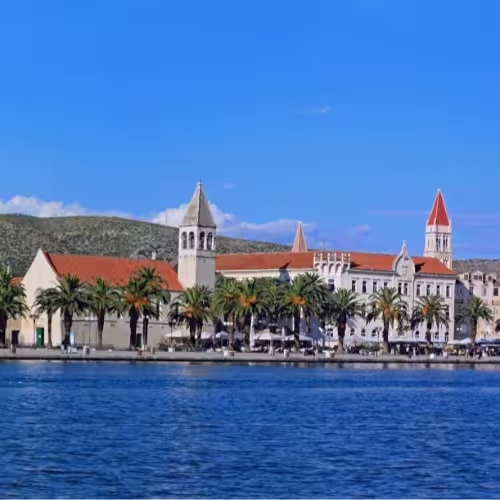
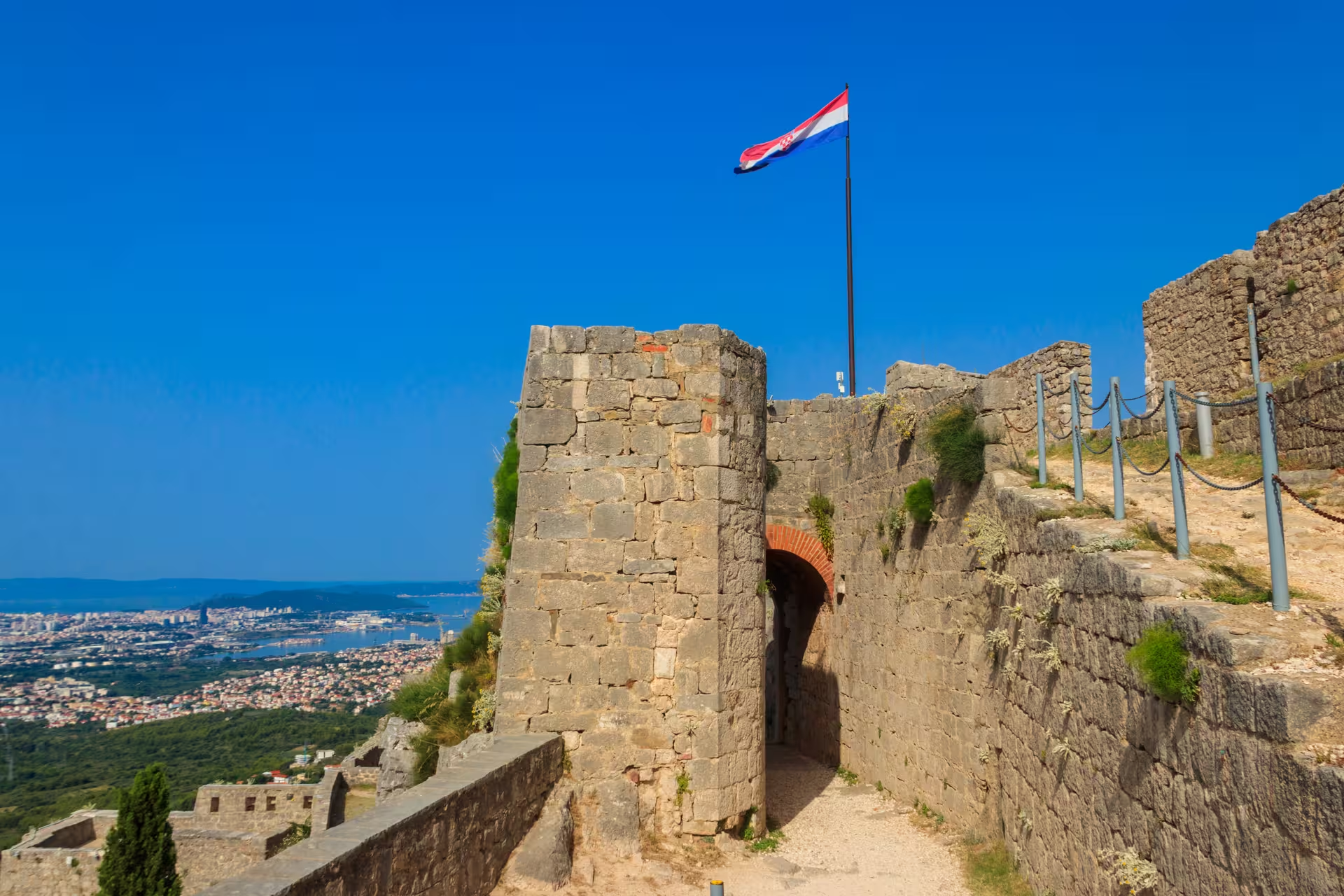
For the extra day, Klis Fortress offers a history-focused option on a hill between Mosor and Kozjak, about 15 km from Split. The guided tour of Trogir old town and Klis Fortress takes 5 hours and includes a vehicle and driver, a licensed guide, guided visits to both sites and a visit to the Cathedral of St. Lawrence. The Krka National Park day trip from Split with swimming takes 9 hours and includes return bus transport, a licensed guide, park entry and a boat ride from the park to Skradin.
July suits a visit planned around lower rainfall, August suits warmer sea temperatures, and May offers a city celebration. July receives about 25 mm of rain, compared with about 120 mm in November, within an annual total of about 800 mm. The sea is warmest in August, at roughly 24 °C, and coolest in February, at around 12 °C. For an event-led visit, Sudamja brings fairs, concerts and a procession to the city centre around 7 May, the feast of Saint Domnius and Split's City Day.
A self-guided walk suits an old-town visit, and the historic centre is a sensible base if the palace is your priority. The Split walking tour with a smartphone app lasts 1 hour and 30 minutes and includes old-town route directions, a mission with clues, location-based puzzles and historical context. For arrival planning, Split airport is at Kaštel Štafilić, about 20 km west of the city.
Trogir is 28 km west of Split, on the shore of Kaštela Bay.
Split averages roughly 2,690 hours of sunshine annually.
Marjan reaches an elevation of 178 m.