Last updated:


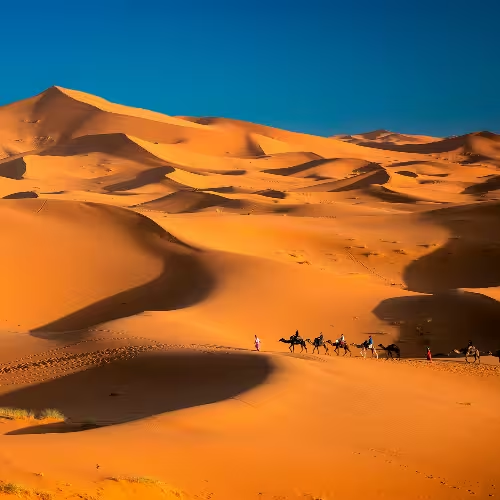
Errachidia rewards a visit that leaves room for both local history and the desert landscape around Merzouga. In south-central Morocco, the province brings together the heritage of the Alaouite dynasty and the dunes and palm groves of Erg Chebbi. A museum stop and time among the dunes offer different experiences, so give each its own place in your plans.
The Resistance Museum is worth your time if you want to understand the region through objects, documents and manuscripts. Its documents and manuscripts relate to the protectorate period, while clothing and uniforms connect that history with former fighters from the region. Those exhibits offer a concrete focus for a city visit before you turn to the surrounding landscapes.
If local traditions interest you more than military history, the pharmacy of medicinal plants at the Ksar El Kherbat Museum offers another focus.
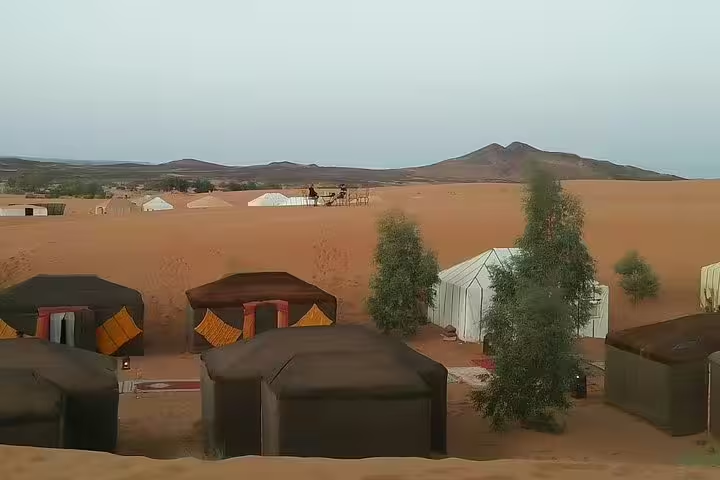
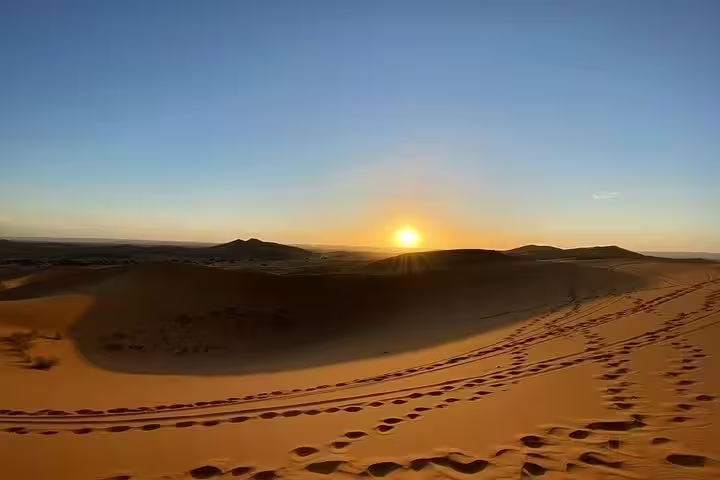
Merzouga belongs on your itinerary if dunes and palm groves are what draw you to the desert. Nearby Erg Chebbi brings those landscapes together, making it a natural counterpart to the museum displays in Errachidia.
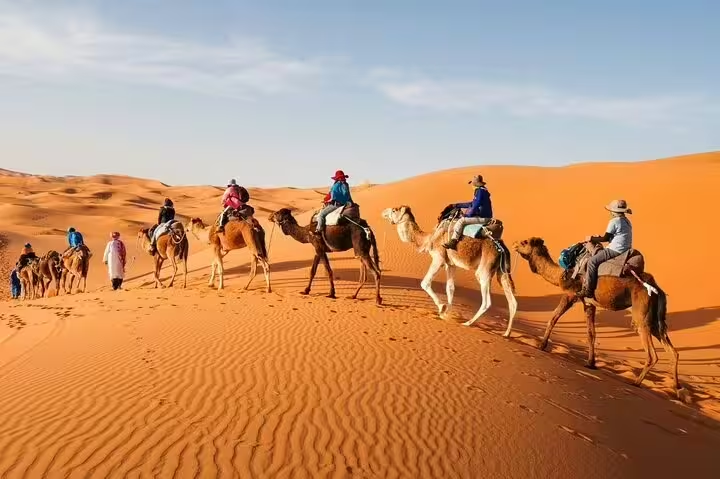
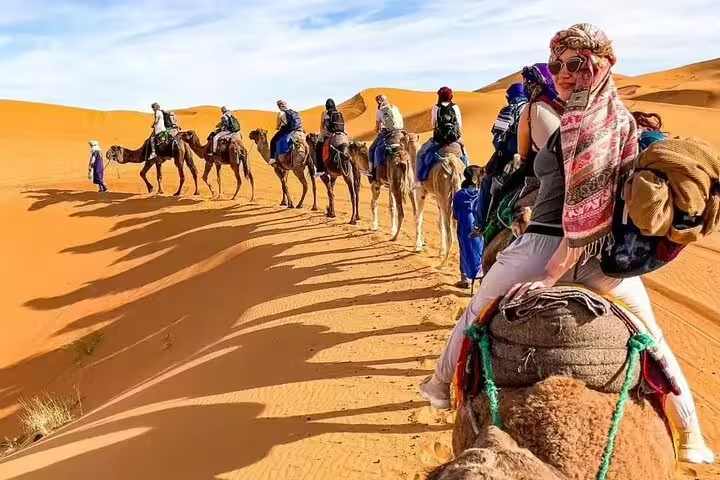
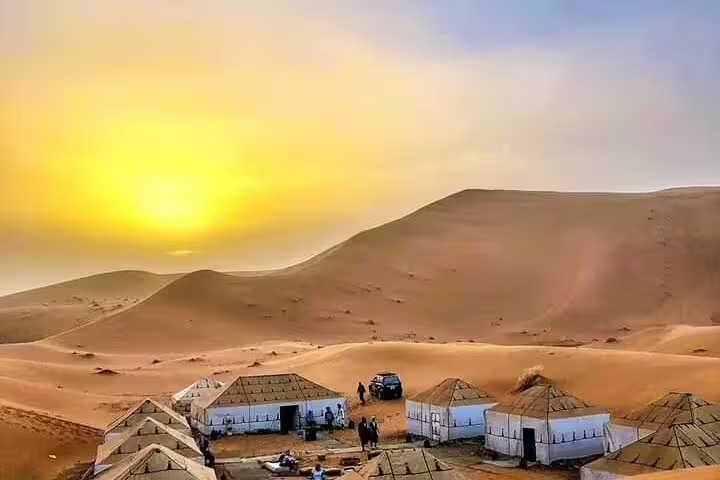
If you want Merzouga within a four-day journey from Marrakech, the Marrakech to Merzouga tour via Ait Ben Haddou includes a camel ride to and from the desert camp. For a longer guided journey focused on desert and kasbahs, the nine-day Morocco tour from Marrakech includes an overnight stay in a desert camp under nomadic tents.
Two sightseeing days provide a simple division: one for the Resistance Museum and Meski, and another for Erg Chebbi near Merzouga. This separates the documents and uniforms of the city visit from the dunes and palm groves, rather than squeezing every interest into the same day. A stronger interest in local heritage could put the Ksar El Kherbat Museum on your list as well, particularly for its medicinal plant collection.
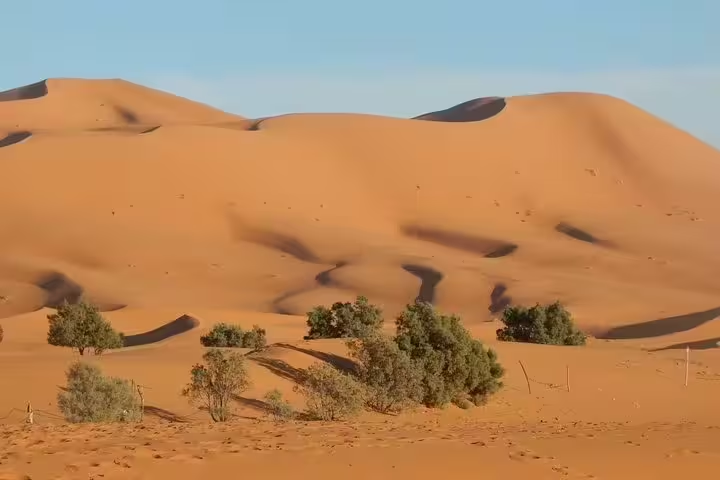
If your onward destination is Fes, the three-day guided desert tour from Marrakech to Fes includes a night in a standard Berber desert camp in Merzouga.
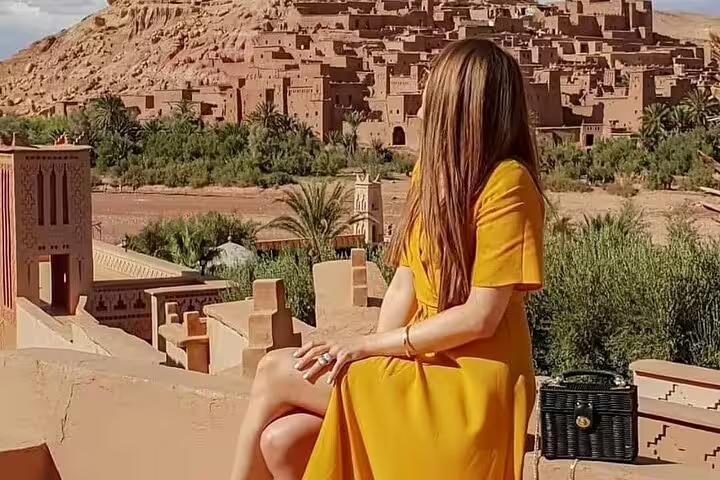
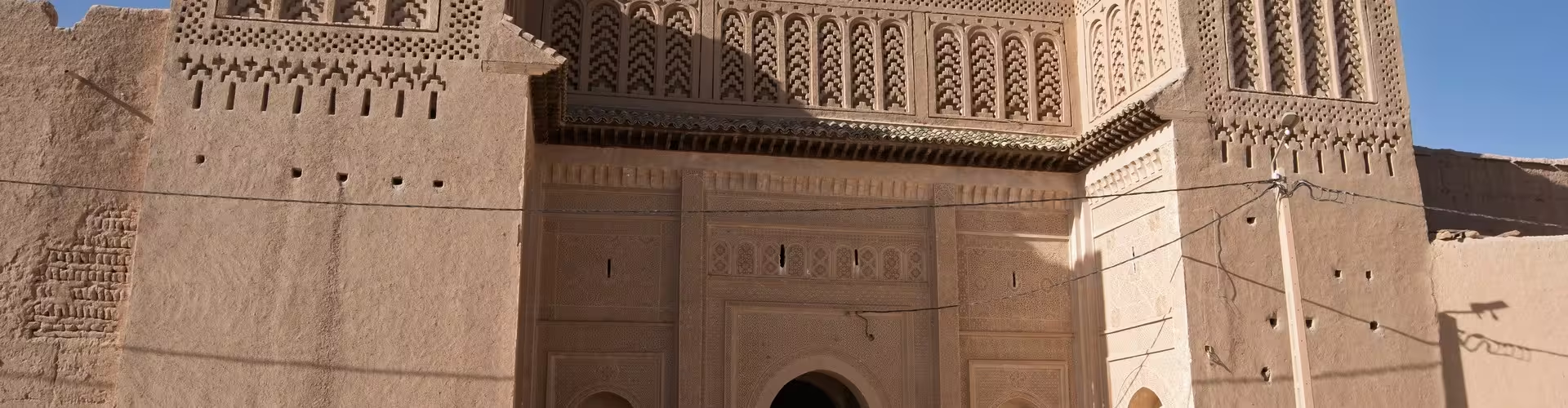
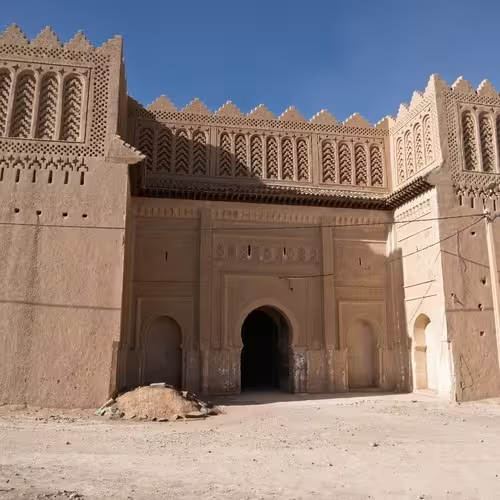
Tafilalet deserves attention beyond the dunes if fortified villages interest you. The region has over 400 ksours, so this form of settlement can be a focus for exploring rather than a passing detail. The Oasis du Tafilalet also belongs to a UNESCO Biosphere Reserve, offering another reason to give the oasis landscape attention alongside the built heritage.
July calls for caution with plans built around walking, while January calls for warm clothing. The province's semi-desert climate brings a July average of 31.5°C, so a schedule dominated by long walks would put heat at the centre of the visit. January averages 5°C, making layers a sensible part of your packing rather than treating a desert journey as a warm-weather trip throughout the year.
Medfouna is a dish to look for if you want a local food focus alongside the sights. The Tafilalet version is bread filled with meat, eggs, almonds, chopped onions and spices, giving you something specific to look for rather than simply asking for a regional speciality.
Flying is an option for reaching Errachidia, which has Moulay Ali Chérif International Airport. For a journey centred on the Resistance Museum, Meski and Merzouga, that gives you an arrival option to investigate before settling on a longer guided desert itinerary.
Errachidia was formerly called Ksar es-Souk, and the city was founded at the beginning of the 20th century.
Yes, Merzouga hosts an international festival of world music, and nearby Erfoud hosts the International Date Fair.
Yes, Oasis du Tafilalet was designated a Ramsar site on 15 January 2005 and covers 15,300 hectares.