Last updated:
Fogo is the Cape Verde island of the volcano. Almost all of it is one great mountain rising out of the Atlantic, crowned by the cone of Pico do Fogo. People come to walk on the lava of Chã das Caldeiras, to climb to the summit, to taste wine grown in volcanic soil and to stroll through the old streets of São Filipe, the island's capital.
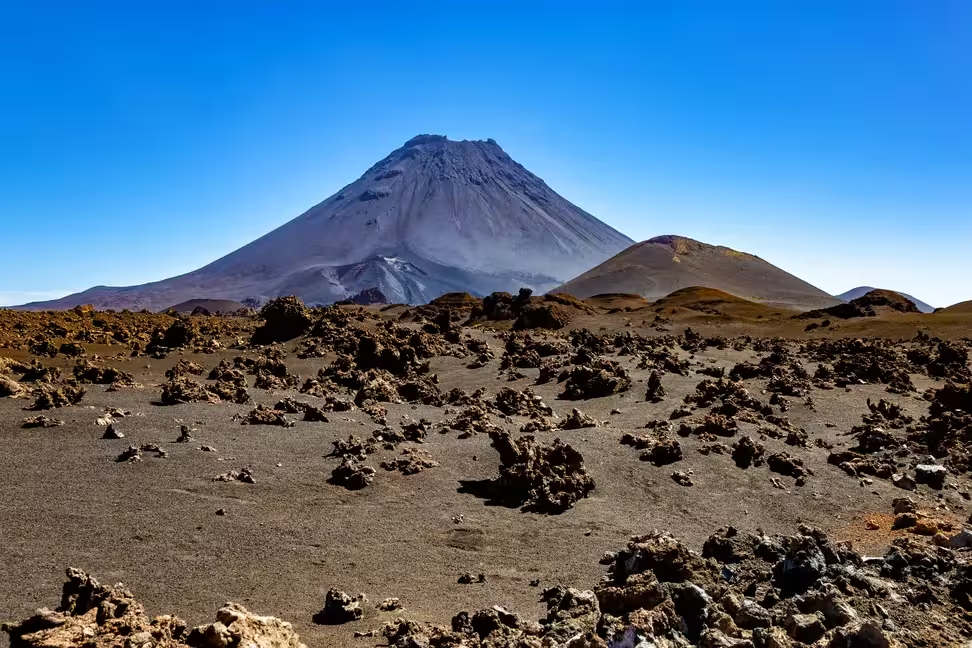
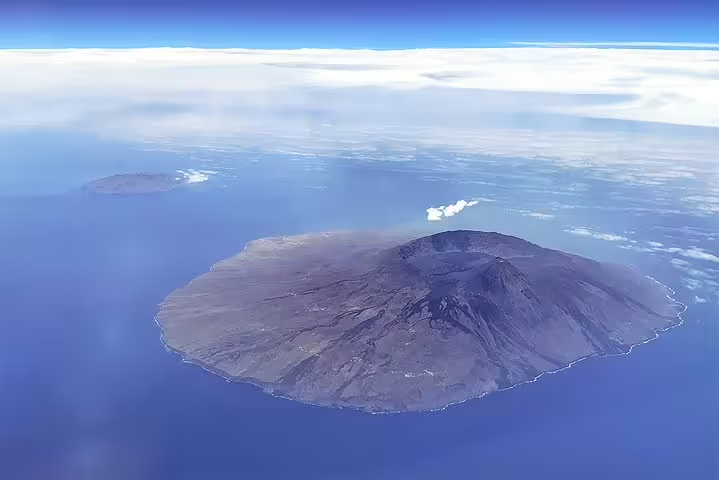
Fogo belongs to Cape Verde and, like the other islands in the south of the archipelago, to the Sotavento Islands. From the air it looks nearly round, because the whole island was built by a single volcano. It is shared by three municipalities: São Filipe, whose town of the same name is the capital of the island; Santa Catarina do Fogo, with its seat at Cova Figueira and the great caldera within its borders; and Mosteiros, on the north-eastern side.
High in the middle of the island lies Chã das Caldeiras, a wide caldera closed off on three sides by a tall wall of rock called the Bordeira, with Pico do Fogo rising from its floor. The village that lives inside it carries the same name. On this plain of black lava and ash, families grow vines and fruit trees in the volcanic soil, and the grapes go into the wine Fogo is known for.
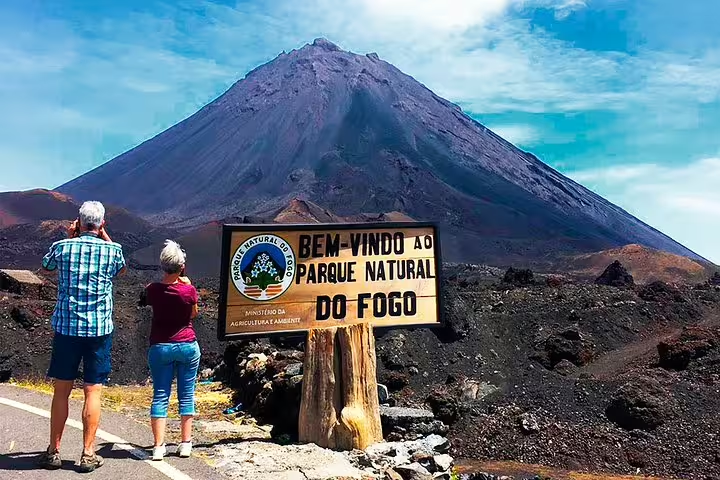
The most recent eruption sent lava over part of the village and its fields, and the people of the caldera came back and rebuilt among the new flows. As you walk, you pass houses half swallowed by the lava next to new ones built from the same dark stone. The caldera and the slopes around it are protected as the Parque Natural do Fogo.
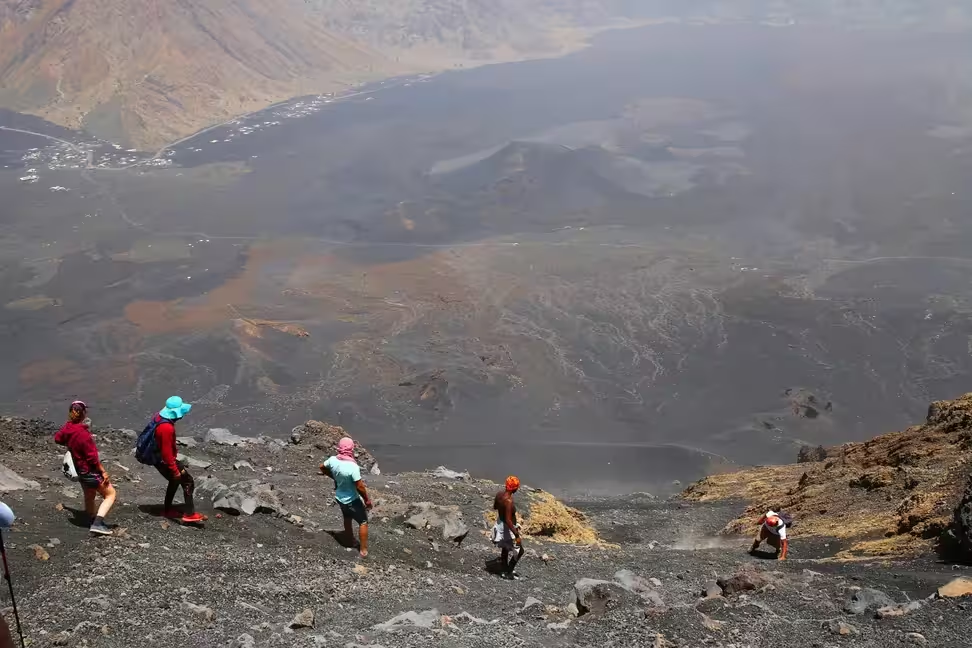
Pico do Fogo is a stratovolcano and the highest point in Cape Verde. The climb starts in Chã das Caldeiras and is always made with a local guide. The path first runs through vineyards and orchards, then turns steep over loose rock and cinder on the way to the crater rim. On a clear day the view from the top stretches across the sea to other islands of the archipelago. The descent is the part most people remember: a fast slide through deep volcanic ash back down to the caldera floor.
BirdLife International lists Pico do Fogo as an Important Bird Area, so keep an eye on the sky on the way up. The summit hikes below are rated challenging and call for a good level of fitness. Wear sturdy boots, and bring warm layers and plenty of water.
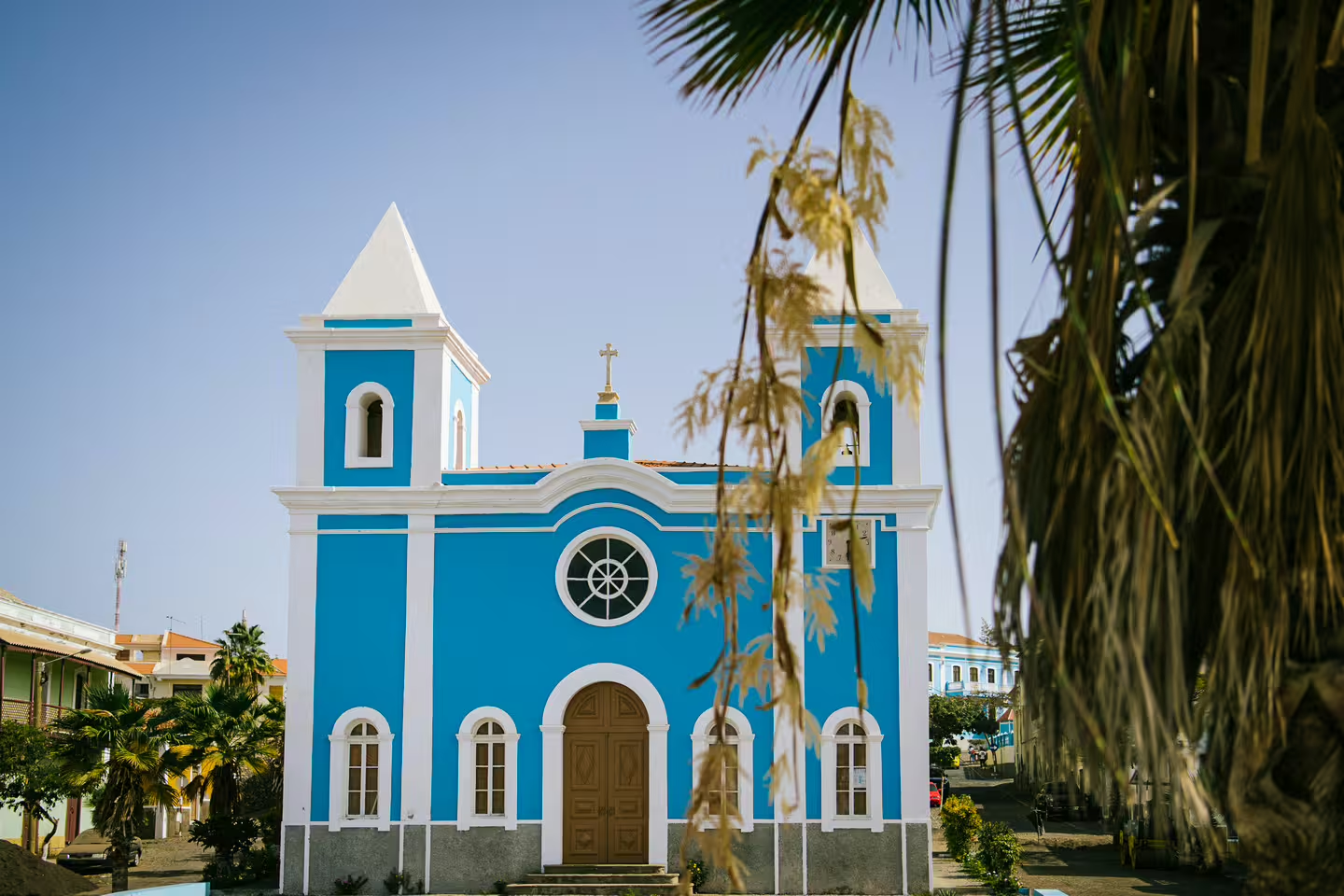
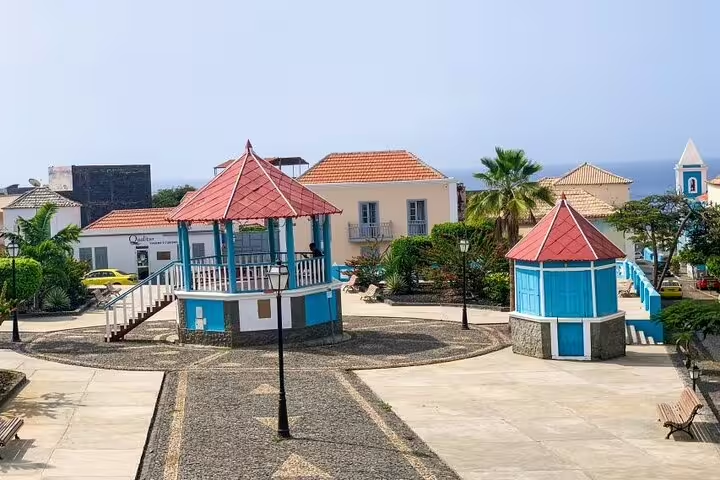
São Filipe is the capital of Fogo and the seat of the municipality that shares its name. The town stands on a cliff above the sea, with a beach of black volcanic sand below. Its historic centre is known for its sobrados, two-storey colonial houses painted in soft colours, many with wooden balconies. Around the main square you will also find the municipal museum, which tells the story of the island, and a lively market piled with fruit and vegetables from the island's farms.
Most of Fogo is dry, but on the north-eastern slopes the clouds carried by the trade winds gather and the land turns green. This is the side of Mosteiros, the town at the head of the third municipality, and of the coffee plantations that climb the hillside between the coast and the caldera.
Four of these trips begin on the island itself and one comes over from Santiago. The volcano day trip from São Filipe is the gentlest way in. After pickup in town, the road climbs through the villages of Patim, Achada Furna and Cabeça Fundão, with stops for photos, to Chã das Caldeiras, where your guide leads you across the lava. Lunch is taken in the caldera, a good moment to try the local wine; lunch and drinks are paid separately. The trip is rated easy and needs no hiking experience.
For the summit, a guided hike with transfers from São Filipe takes you up to Chã das Caldeiras, on to the top of Pico do Fogo for a picnic, and back down through the ash fields. A second summit hike starts and finishes in the village of Chã das Caldeiras, with no transfers, and also includes the picnic at the top. Both are rated challenging.
From Santiago, a private full day from Praia includes the return flights to Fogo: a walk through the historic centre of São Filipe with a visit to the municipal museum, the drive through the villages to Chã das Caldeiras, a walk over the lava fields and a wine and cheese tasting with a local family. If you are staying in town, a guided walk around São Filipe covers the main square, the sobrados, the museum and the market.
Every trip that passes through here is also listed on the Fogo destination page.
Yes. Hikers go up with a local guide, and both summit options listed here come with one.
It is long and steep, and both are rated challenging, so you should be fit. For something gentle, the trip to Chã das Caldeiras is rated easy.
Yes. The grapes grow in the volcanic soil of the caldera. The volcano day trip stops there at lunchtime, and the private tour from Praia adds a tasting at a family home.
Yes. The private tour from Praia flies you to the island and back, taking in São Filipe and Chã das Caldeiras on the way.
Sources: Wikidata (CC0).