Last updated:


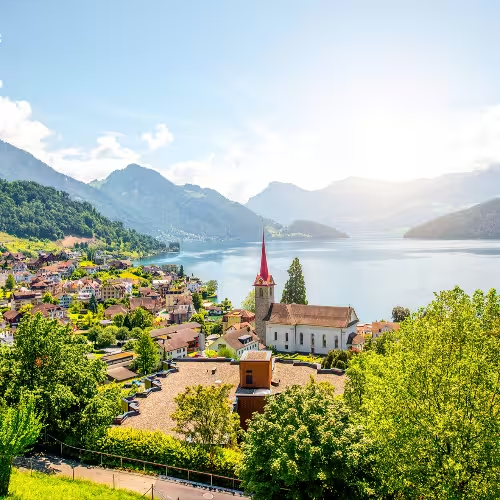
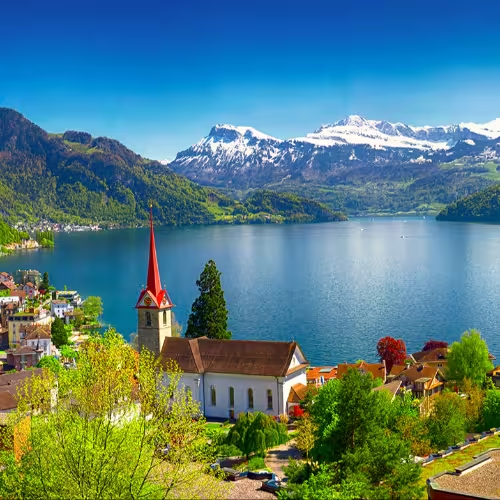
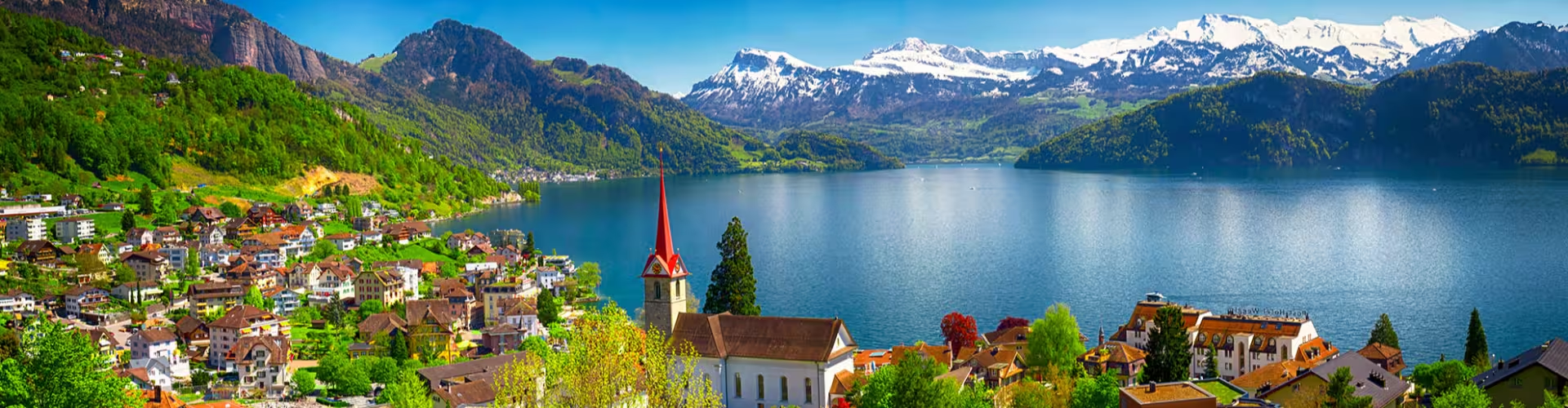
A Lucerne visit can balance covered bridges and museums with time beside the lake, rather than trying to fit every interest into a single outing. The city stands in central Switzerland at the point where Lake Lucerne becomes the Reuss, with Mount Pilatus and Rigi visible in the Swiss Alps.
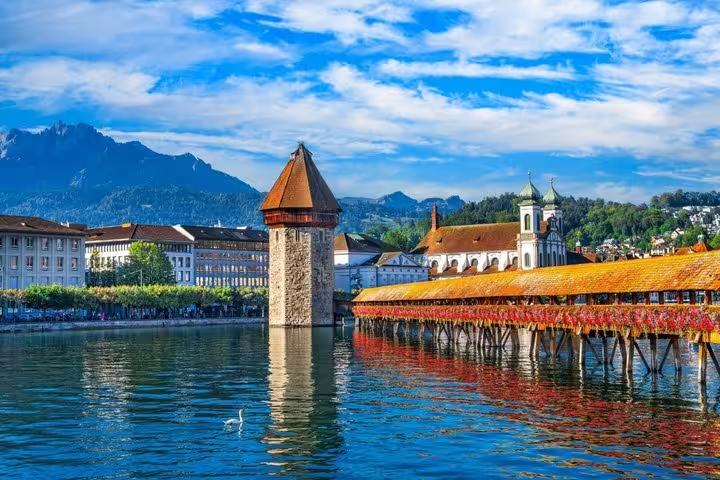
The covered bridges make a useful focus for a visit centred on history and art. The wooden Kapellbrücke dates from the 14th century and extends about 204 metres. Its interior paintings reach back to the 17th century, although the fire on 18 August 1993 destroyed two thirds of them. The neighbouring octagonal Water Tower was built around 1300 as part of the town's fortifications.
For another look at painted bridge interiors, add the Spreuer Bridge, whose paintings were produced between 1616 and 1637 under Kaspar Meglinger. The Lion Monument offers a different encounter with history: it remembers the Swiss Guards killed in 1792. Bertel Thorvaldsen designed it, and Lukas Ahorn carved it in 1820 and 1821.
Museum time can follow your interests: art at the Rosengart Collection, or trains, cars, ships, aircraft and communication technology at the Swiss Museum of Transport. The transport museum also has a planetarium and a large-format cinema. For a visit focused on music, the Richard Wagner Museum at Tribschen is dedicated to the composer and stands beside the lake.
Two days would let you separate the bridges and monuments from a museum and lakeside day. The first day could centre on the Kapellbrücke, Spreuer Bridge and Lion Monument; the second could pair your preferred museum with the lake. That division leaves the museum choice to your interests instead of treating every collection as compulsory.
An organised visit from Zurich is another way to allocate a day: the private full-day tour to Mount Titlis and Lucerne lasts 8 hours and includes a luxury vehicle with a chauffeur and transport between destinations.
Mid-August to mid-September suits a trip built around classical music, while the end of winter suits a carnival visit. The main summer edition of the Lucerne Festival runs during that August-to-September period; Fasnacht brings carnival into the old town's streets, alleyways and squares towards winter's end. Rain occurs throughout the year, so keeping a museum visit in your plans makes sense whatever the season.
Rail is an option for local journeys: Lucerne railway station serves the Lucerne S-Bahn as well as national and international trains. For a day without carrying bags, Lucerne luggage storage includes secure storage for the day and an email booking confirmation.
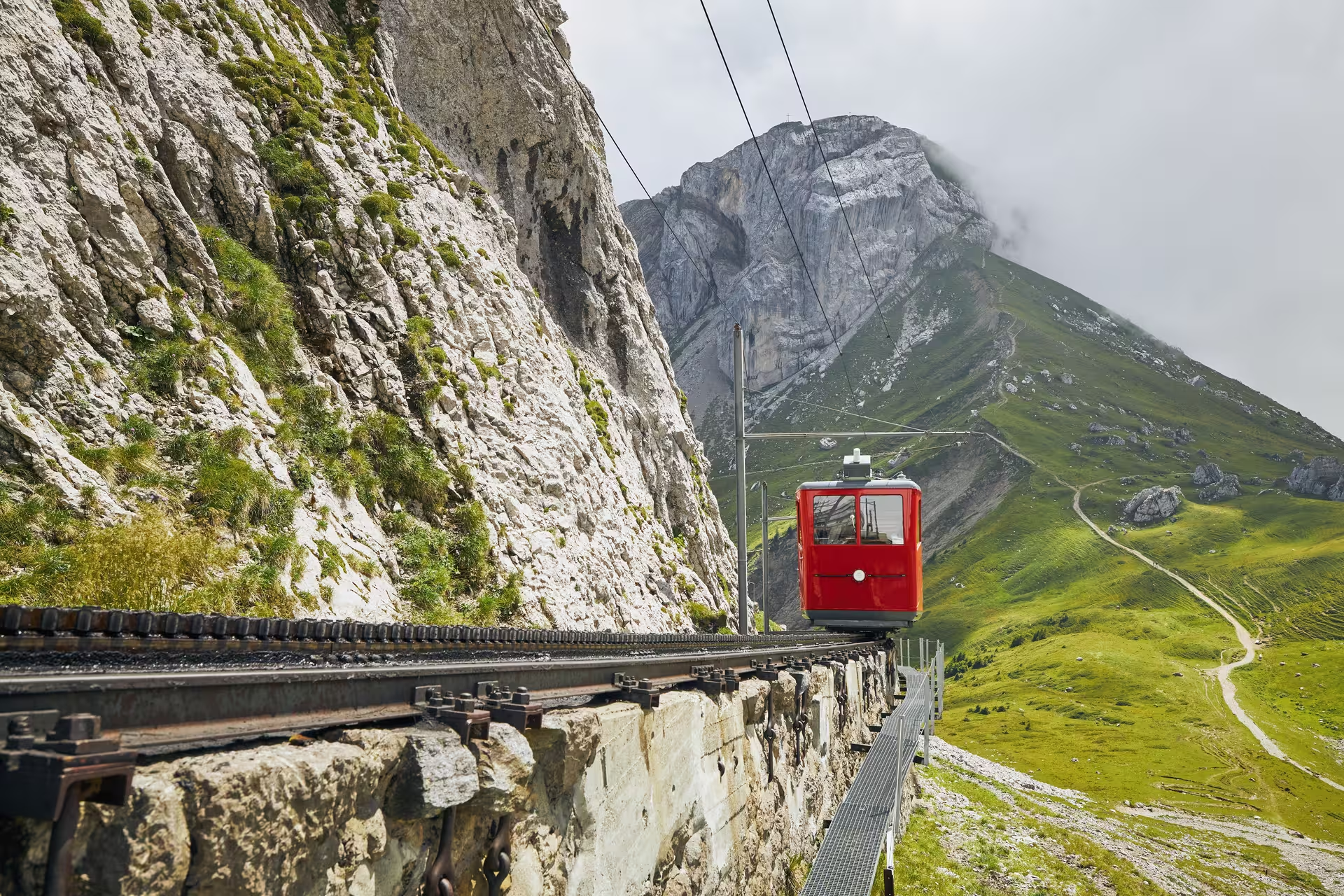
Pilatus is an option for a mountain excursion by cogwheel railway, with the line ascending from Alpnachstad. For a guided rail-and-water outing departing from Zurich, the Swiss Alps day trip by train, boat and cogwheel railway lasts 10 hours and includes a professional local guide, the Mount Rigi cogwheel ascent and a Lake Lucerne cruise.
On the hill above Lucerne, the surviving town walls include eight watchtowers.
Rigi Kulm has an elevation of 1,797 metres above sea level.
Jean Nouvel designed the KKL, which stands beside the lake.