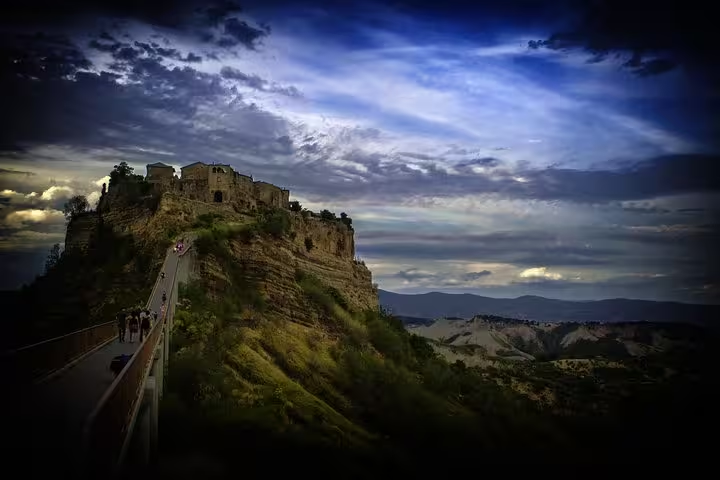
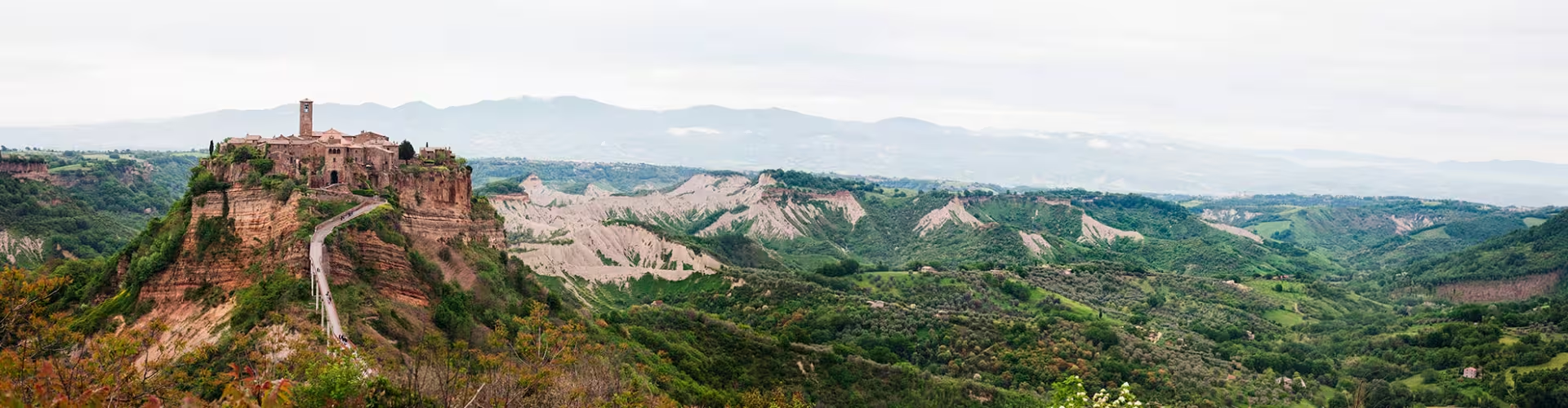
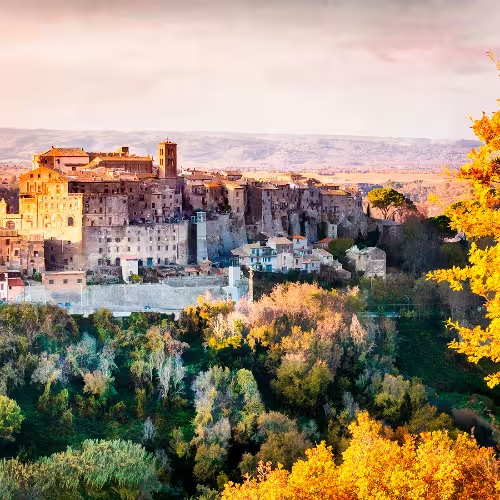
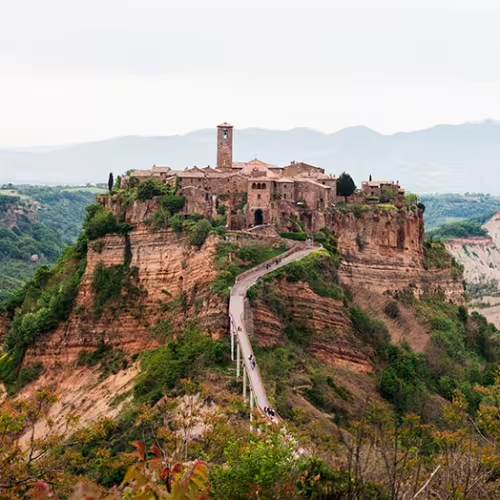
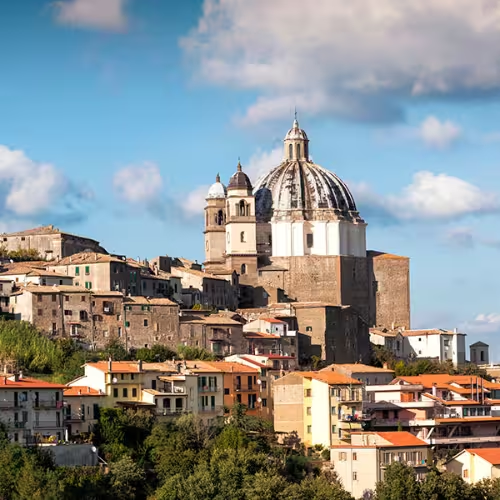
Caprarola is a charming hilltop town in the Lazio region of central Italy, situated about 50 kilometers north of Rome. This picturesque village is renowned for its Renaissance architecture and stunning views across the Roman countryside.
What to see in Caprarola
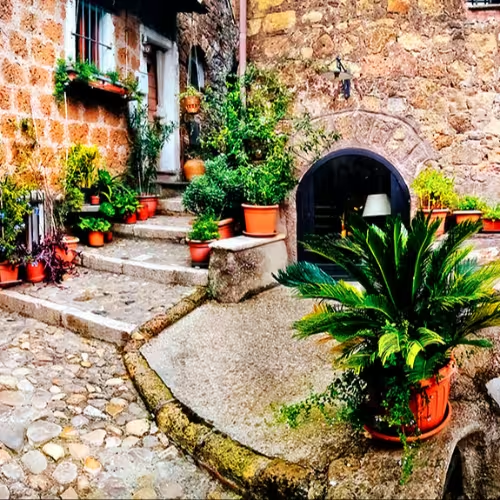
The Palazzo Farnese is the principal attraction, an extraordinary pentagonal palace built in the 16th century that showcases exceptional Renaissance design and artwork. The palace features magnificent gardens, ornate frescoes, and historical chambers that reflect the opulence of the Farnese family. The town itself preserves a medieval character with its narrow cobblestone streets and traditional stone buildings.
Things to do in Caprarola
Visitors can explore the palace's interior through guided tours and wander through its landscaped gardens. The surrounding countryside offers opportunities for walks and day trips to nearby Viterbo and Lake Bolsena. The town provides an authentic Italian village experience away from major tourist crowds, making it ideal for those seeking quieter cultural exploration.
Renaissance Heritage and Artistic Significance
Caprarola serves as an exceptional showcase of Renaissance art and architecture, with the Palazzo Farnese considered one of Italy's finest examples of 16th-century palatial design. The elaborate frescoes and decorative elements throughout the palace reflect the artistic patronage of the Farnese dynasty. Art historians and architecture enthusiasts frequently visit to study the distinctive pentagonal structure and its influential design principles.
Caprarola is located in the province of Viterbo in the Lazio region of central Italy, positioned approximately 50 kilometers north of Rome. The town sits on a hilltop at an elevation that provides panoramic views of the surrounding Roman countryside and nearby Lake Bolsena. Its proximity to Rome and other Lazio attractions makes it accessible for day trips while maintaining a quiet, authentic village atmosphere away from major urban centers.
Caprarola is a Renaissance destination highlighted by world-class palatial architecture, notable for the Farnese family's influence on Italian culture, and characterized as a peaceful alternative to crowded tourist destinations in central Italy.