Last updated:


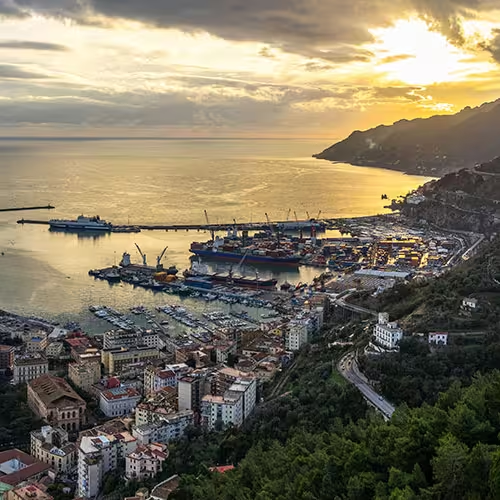
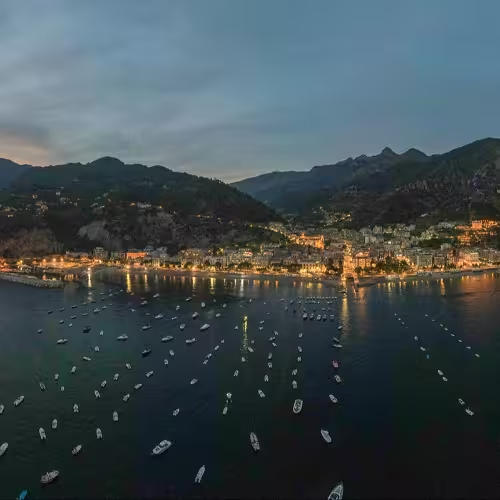
Ceramics and the waterfront make a natural pairing for a visit to Vietri sul Mare, between the Amalfi Coast and the edge of Salerno. The town belongs to the UNESCO-listed Amalfi Coast landscape, but its tiled church dome and ceramics museum give you concrete places to focus on within that wider setting.
San Giovanni Battista Church is a natural first stop if you want to see local ceramics as part of the town itself. Blue, green and yellow majolica covers its dome, so look up before turning your attention to individual ceramic pieces.
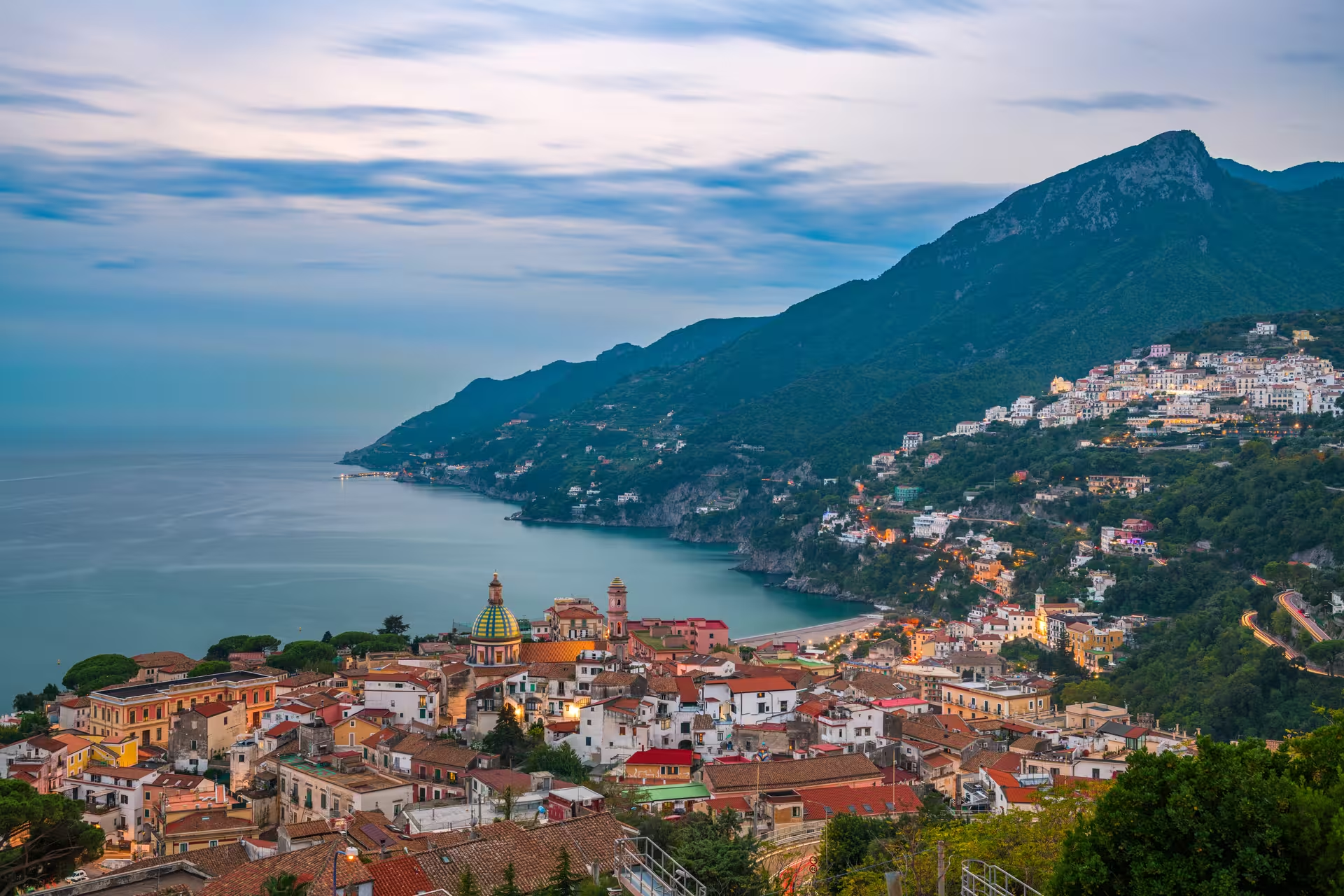
The Provincial Ceramics Museum at Villa Guariglia is the next stop to build a visit around if ceramics are your main interest. For an interest in design, the Solimene ceramics factory offers another focus: its architect was Paolo Soleri.
The term German period helps make sense of another strand of Vietri ceramics: it refers to production from the 1920s onwards, when artists from abroad worked in the local factories.
Marina di Vietri is worth including for its sea stacks and Roman remains, while Crestarella offers a beach setting with a tower above it. The Due Fratelli are the small rock stacks offshore from Marina di Vietri; the surviving rooms of a Roman bath complex provide a reason to look beyond the water.
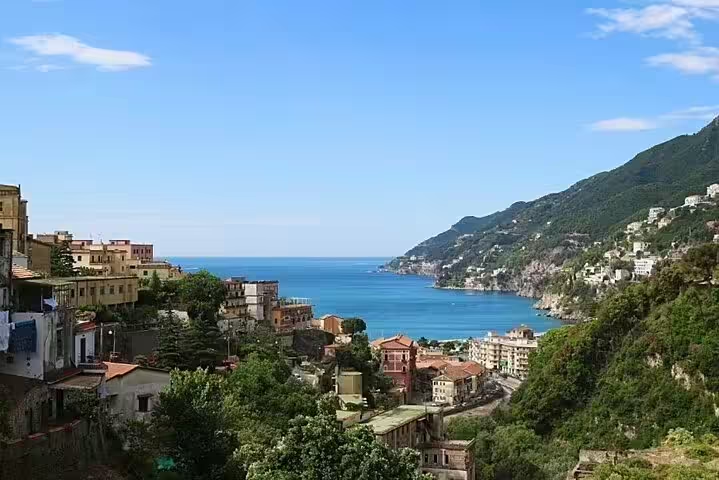
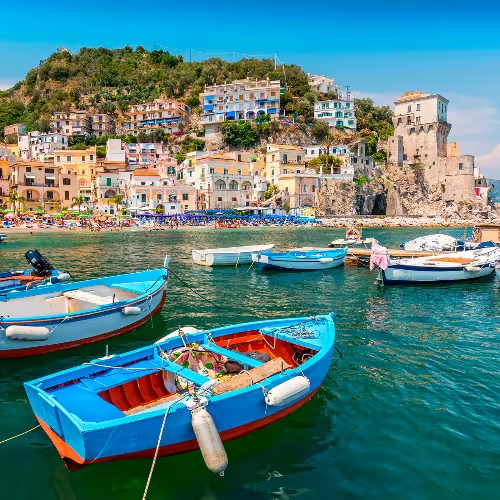
Crestarella Beach has an old viceregal tower overlooking it, making this a different subject for a waterfront photograph. A visit centred on ceramics can therefore have a waterfront chapter too, with rock formations, Roman remains and the tower changing the focus.
One day is a reasonable plan for San Giovanni Battista, the ceramics museum and Marina di Vietri; two days would leave a separate day for the hamlets. On the first day, put the dome and museum together as the ceramics part of the visit, then turn to the waterfront.
Albori and Molina offer contrasting settings for the second day: Albori stands above sea level, while Molina occupies a valley beneath the Monti Lattari. The wider landscape has chestnut and holm oak woods, vineyards and citrus groves, and Vietri sul Mare falls within the Monti Lattari Regional Park. This makes the extra day a chance to shift your attention from ceramics and the shore to the landscape around the town.
A public bus lets you include Amalfi in the same wider itinerary: route 5120 links it with Vietri sul Mare. The route also serves Atrani, Minori, Maiori, Cetara and Salerno, so these are places to weigh up when deciding which stops belong in your coastal visit.
If you want Pompeii and Vietri sul Mare together from Naples, a six-hour tour provides a chauffeur-driven vehicle for the trip. If Amalfi belongs in that plan too, an eight-hour tour from Naples covering Pompeii, Amalfi and Vietri sul Mare includes transport from Naples and back.
For an arrival by public transport, Vietri sul Mare is also served by the bus linking Salerno Airport with Maiori and Amalfi. A ferry connection from the port of Salerno offers a sea alternative for reaching Vietri sul Mare.
Late June is worth considering if a local feast matters to your visit: Vietri sul Mare honours Saint John the Baptist on 24 June. Mèvesa 'mbuttunata and spumone are linked to the beginning of summer in local food traditions, giving a food interest to that seasonal choice too.
July offers another date to plan around in Albori, where the feast of Saint Margaret falls on 20 July.
Yes, it forms part of the Amalfi Coast landscape inscribed on the UNESCO World Heritage List in 1997.
Yes, ferries from Salerno's port connect with Vietri sul Mare.
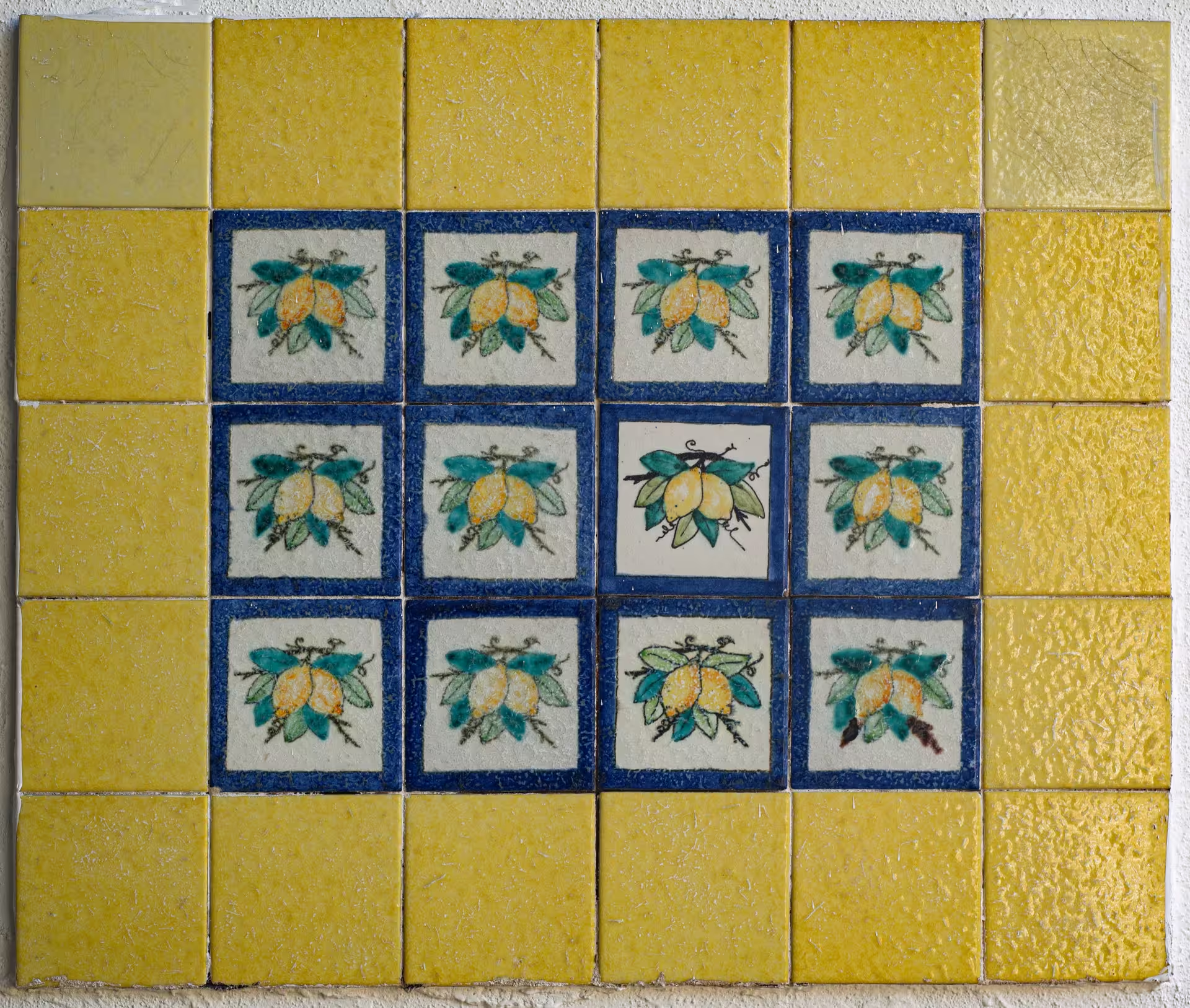
It is a majolica tile, and riggiole are among the traditional forms of Vietri sul Mare ceramics.