Last updated:


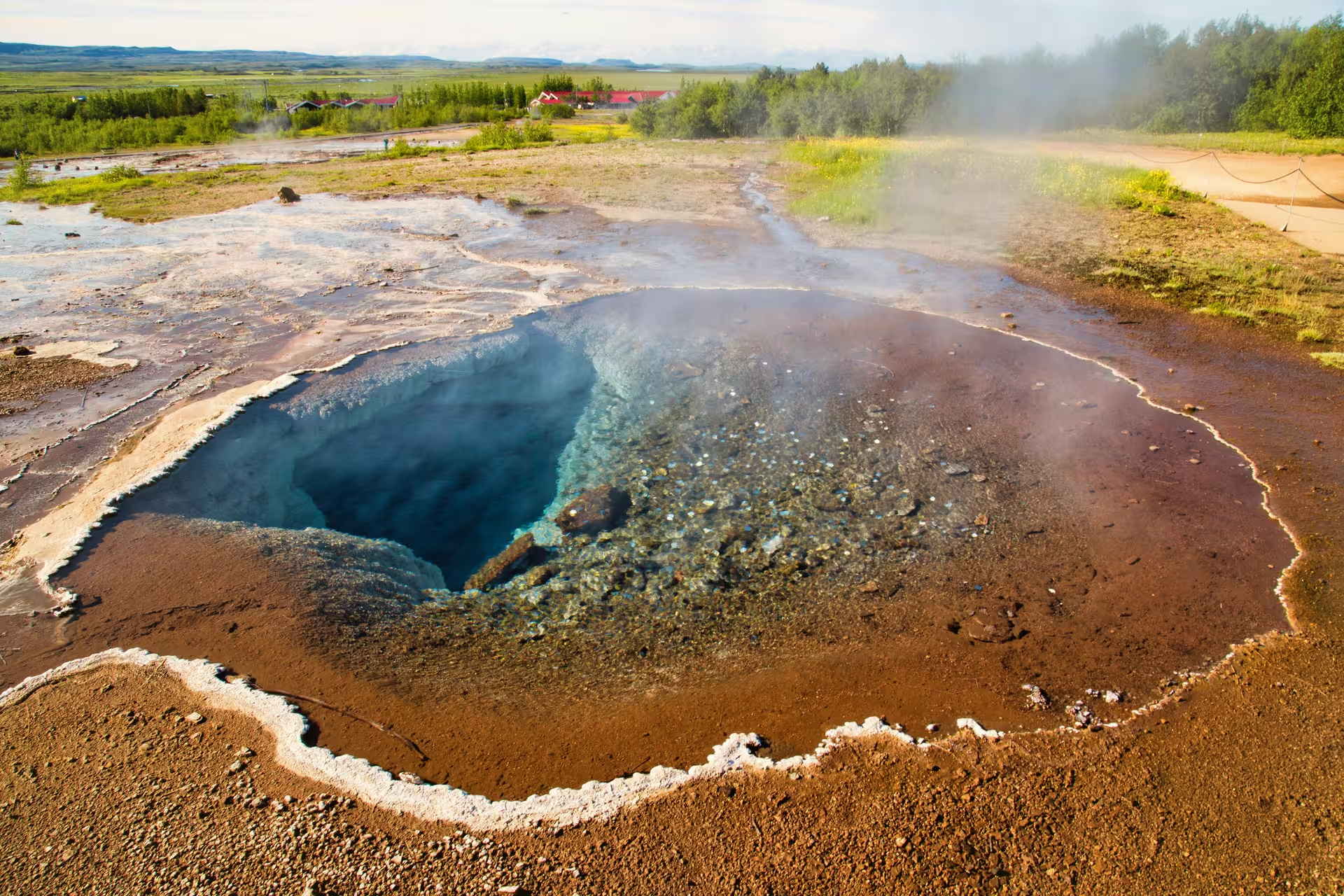
Geysir suits a visit built around geothermal activity and a wider Golden Circle trip through southwest Iceland. The spring sits on the slopes of the Laugarfjall lava dome in the Haukadalur valley, and the geothermal field is known as both Geysir and Haukadalur. That distinction helps when planning: Geysir names a spring as well as the surrounding area.
Strokkur is the spring to watch, because Geysir now erupts only rarely. Its usual interval is 6 to 10 minutes, and the water generally rises 15 to 20 metres. Geysir is about 50 metres away, so these springs belong together in your visit.
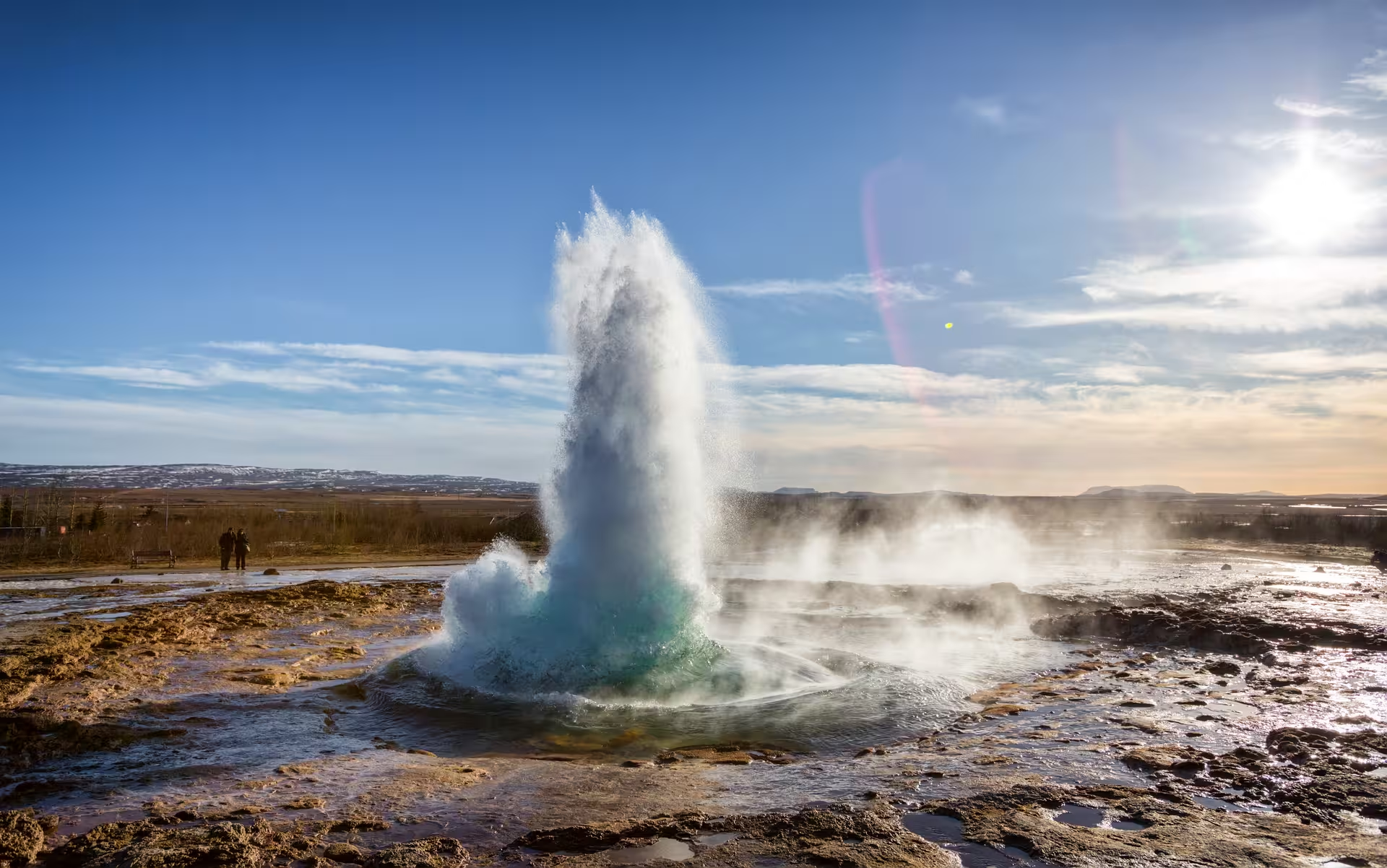
When Geysir erupts, it can send boiling water up to 60 metres high, but its eruptions are now rare and irregular. Its activity has varied over time: earthquakes revived it in 1896 and again in 2000, but it has been mostly dormant since. Those changes are a reason to centre an eruption-watching visit on Strokkur rather than expect the same pattern from both springs. The name adds another reason to notice Geysir: it gave English the word geyser and comes from geysa, the Icelandic verb for gushing.
One day is a practical plan for Geysir, Gullfoss and Þingvellir on a Golden Circle outing. Gullfoss waterfall and Þingvellir National Park are principal stops on this route, while Kerið volcanic crater is another common stop.
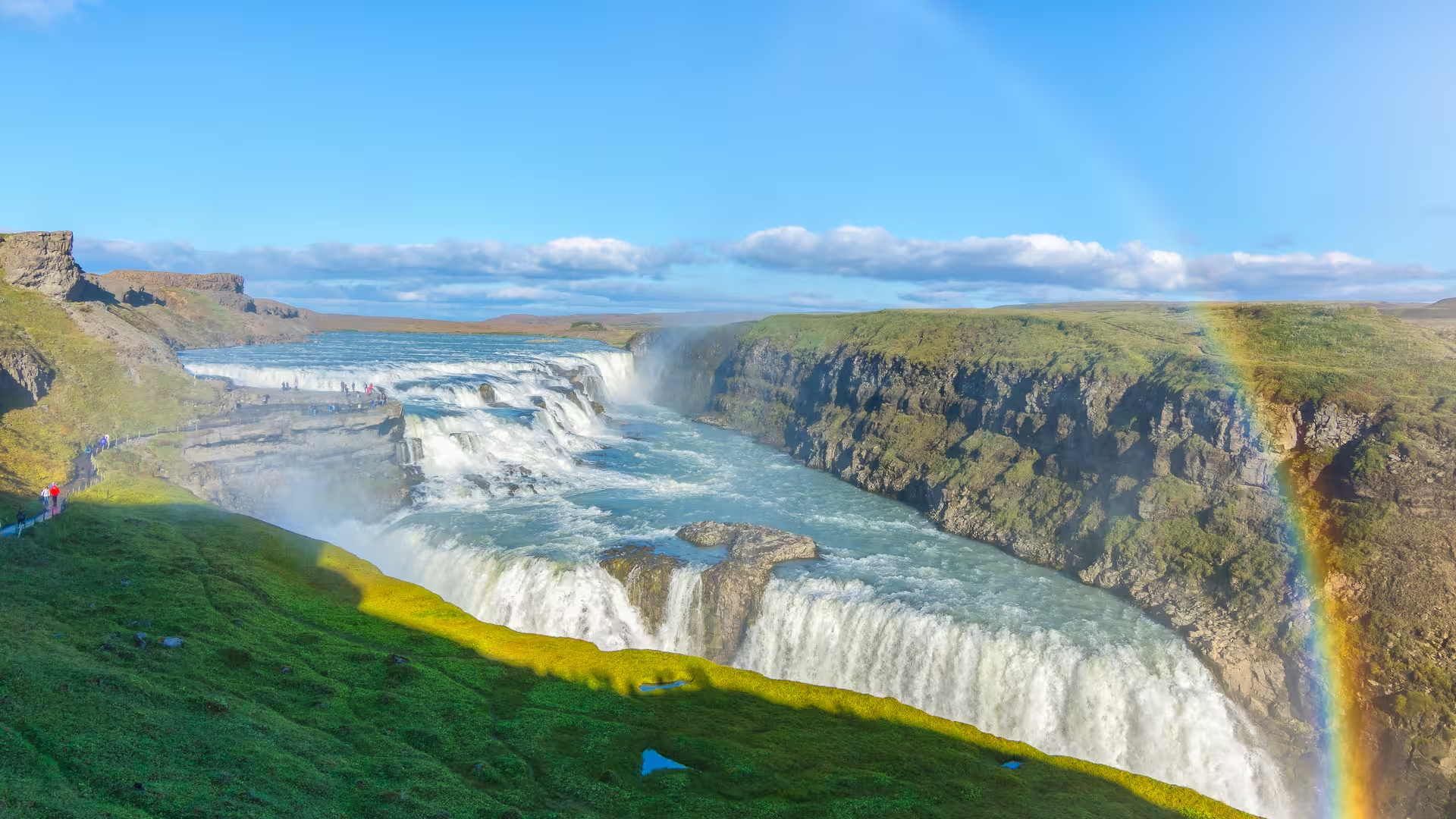
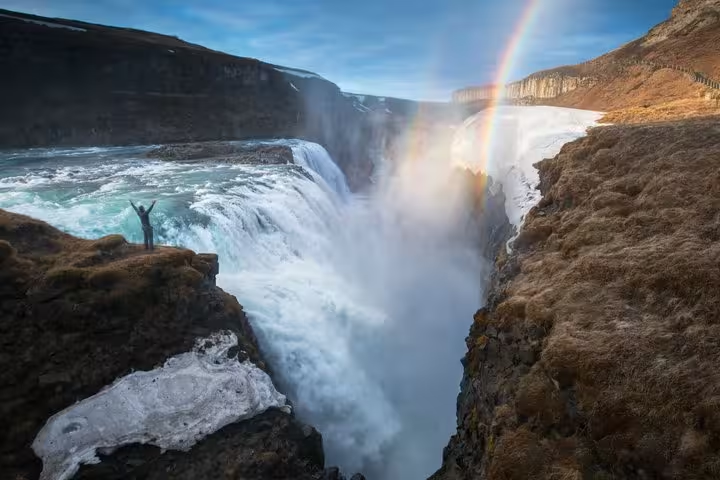
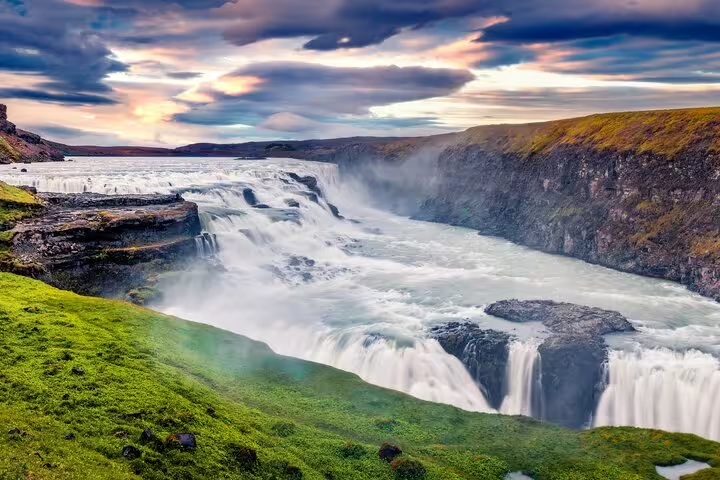
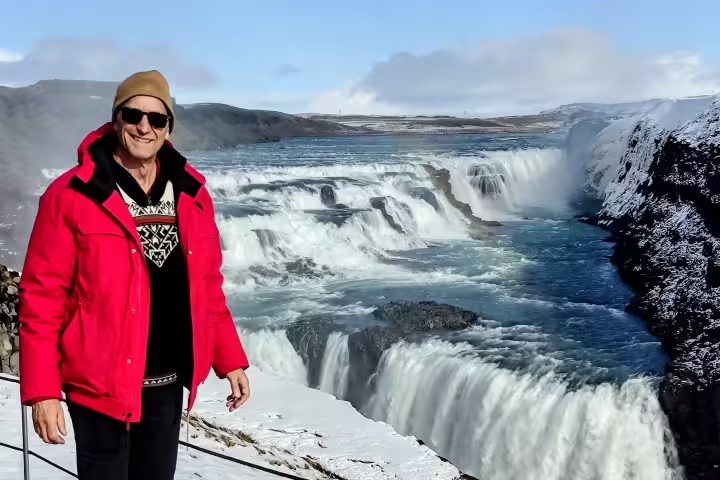
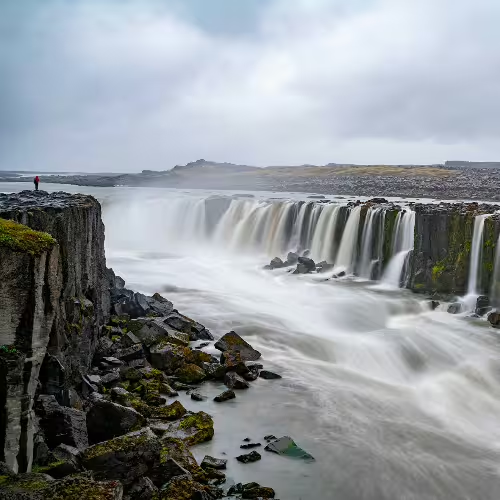
Gullfoss adds a waterfall to the geothermal visit: in the Hvítá canyon, its water descends in stages of 11 and 21 metres. At Þingvellir, the reason to stop shifts to heritage: the park received World Heritage status in 2004. Together, these stops give the day variety without making the whole outing depend on watching eruptions.
The private full-day Golden Circle tour in Iceland lasts 8 hours and includes private transport, an English-speaking guide, entry to Kerið crater and stops at Þingvellir, Geysir, Gullfoss, Brúarfoss and Efstidalur, with an itinerary adapted to the group.
For a farm visit alongside the circuit, the small group Golden Circle tour with a farm visit and Kerið crater lasts 9 hours and includes return minibus transport from Reykjavík, an English-speaking guide and stops at Þingvellir, Geysir, Gullfoss, Efstidalur, Friðheimar and Kerið.
July is worth favouring over winter if warmer conditions matter to your trip, judging by the regional averages. Southern Iceland averages 10 to 13 °C in July; the coastal southern lowlands average around 1 °C in winter. These figures describe the wider region, so they give seasonal context rather than a temperature forecast for Geysir.
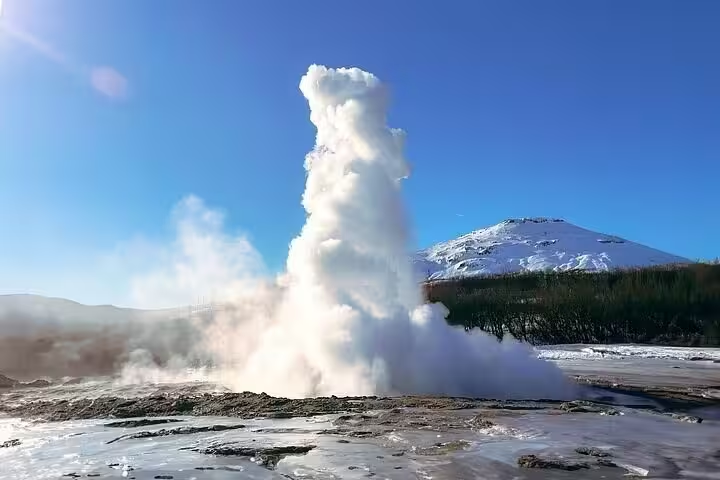
Walking between Geysir and Strokkur makes sense for the springs themselves; the wider Golden Circle calls for a road trip or a tour with transport. The springs are about 50 metres apart, while the Golden Circle runs for roughly 300 kilometres from Reykjavík into the southern uplands and back.
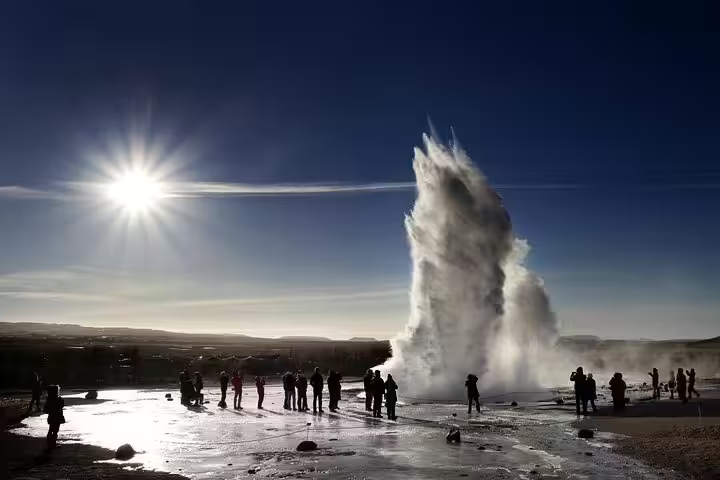
The small group private Golden Circle tour from Reykjavík lasts 6 hours and 30 minutes, with a private vehicle, a local guide, Icelandic snacks and refreshments, lunch at Geysir Restaurant, and activities and snacks for children included.
The geothermal area where Strokkur stands is next to the Hvítá River.
Þingvellir is roughly 40 kilometres northeast of Reykjavík.
The water at Gullfoss falls into a crevice with a depth of 32 metres.