Last updated:


Ephesus suits a visit built around Roman streets, decorated houses and monuments that still form a coherent townscape. Once a prosperous Roman port and provincial capital in Asia Minor, it now stands several kilometres inland from Turkey's Aegean coast. Its ruins became a UNESCO World Heritage Site in 2015.
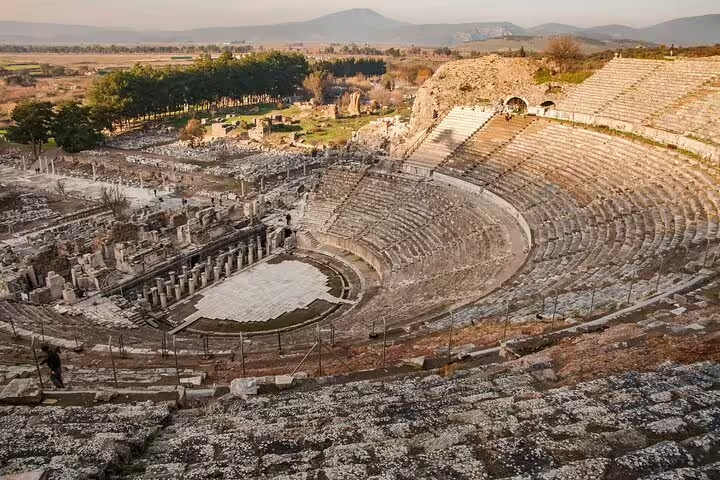
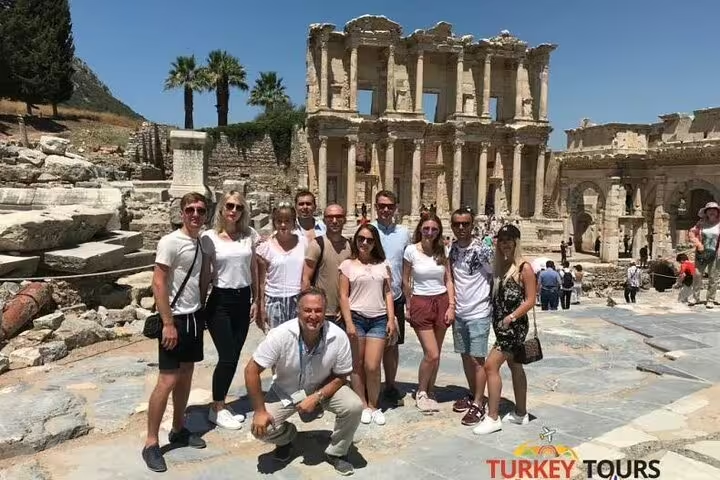
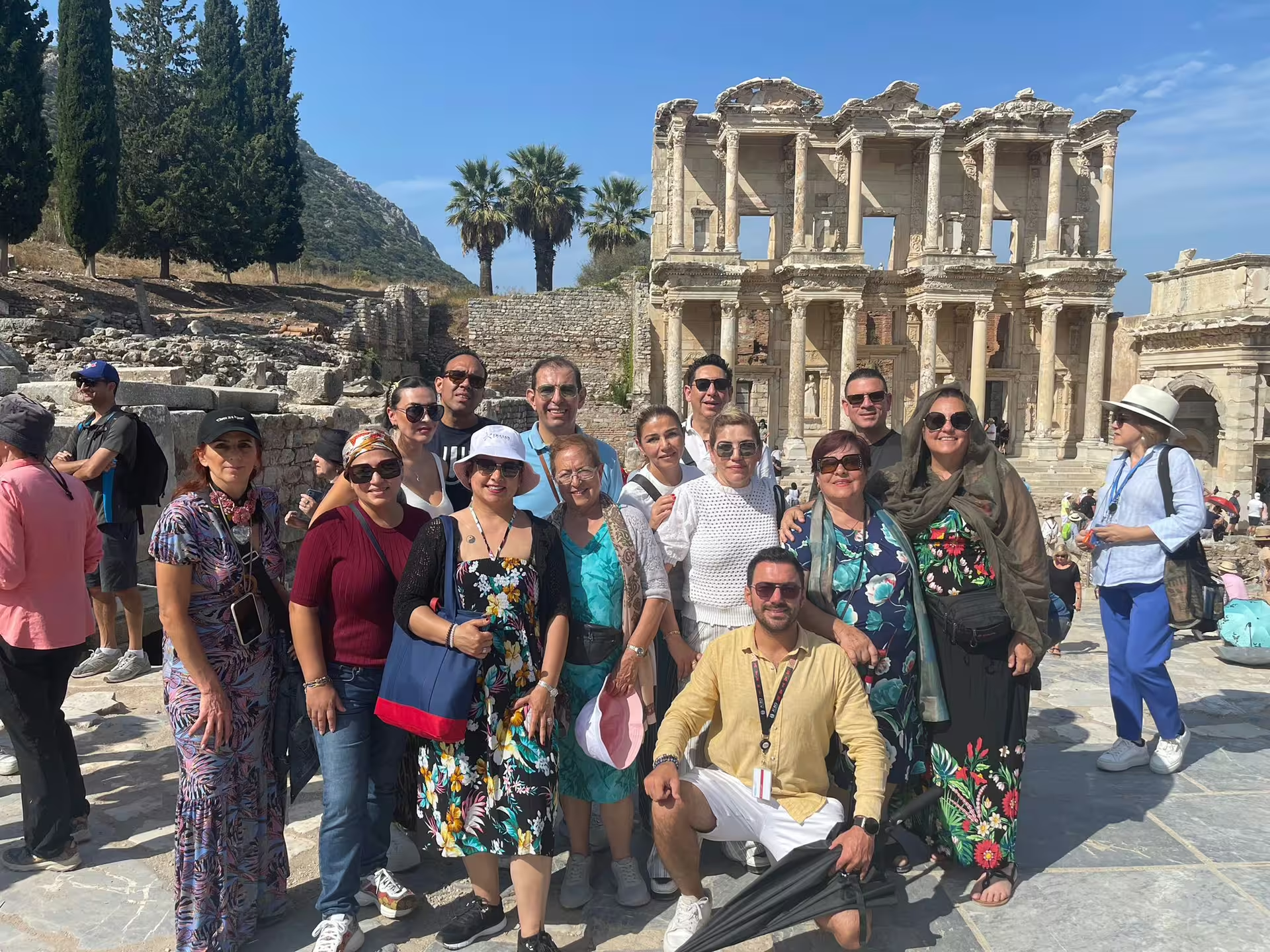
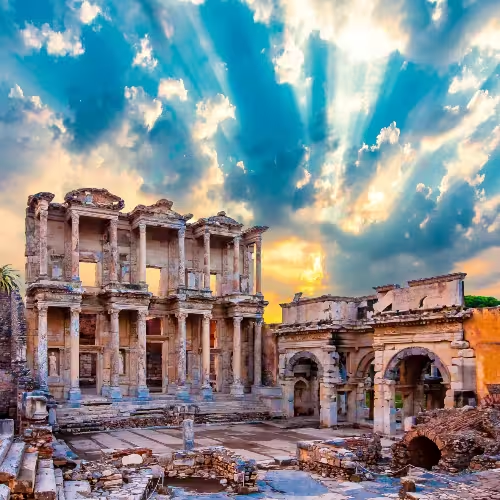
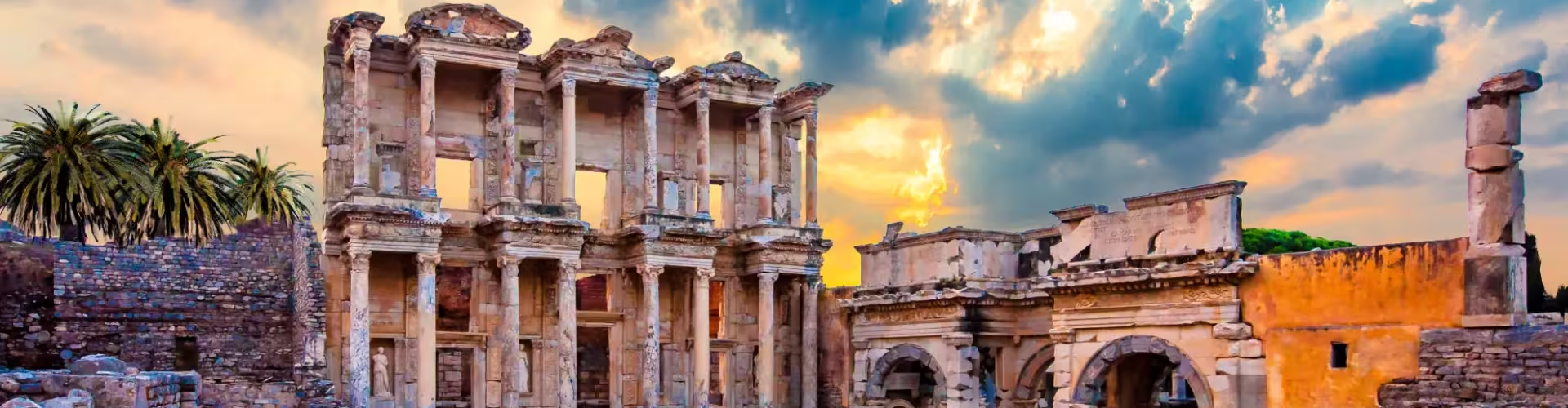
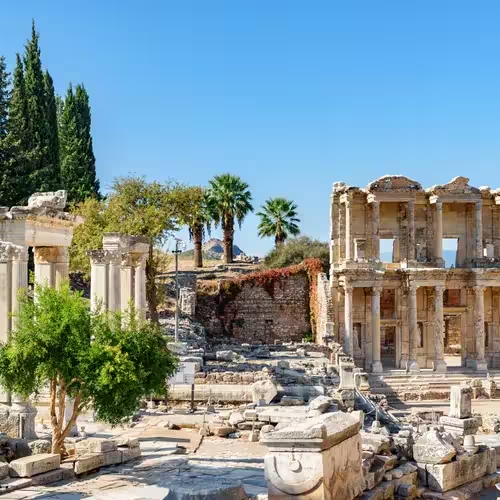
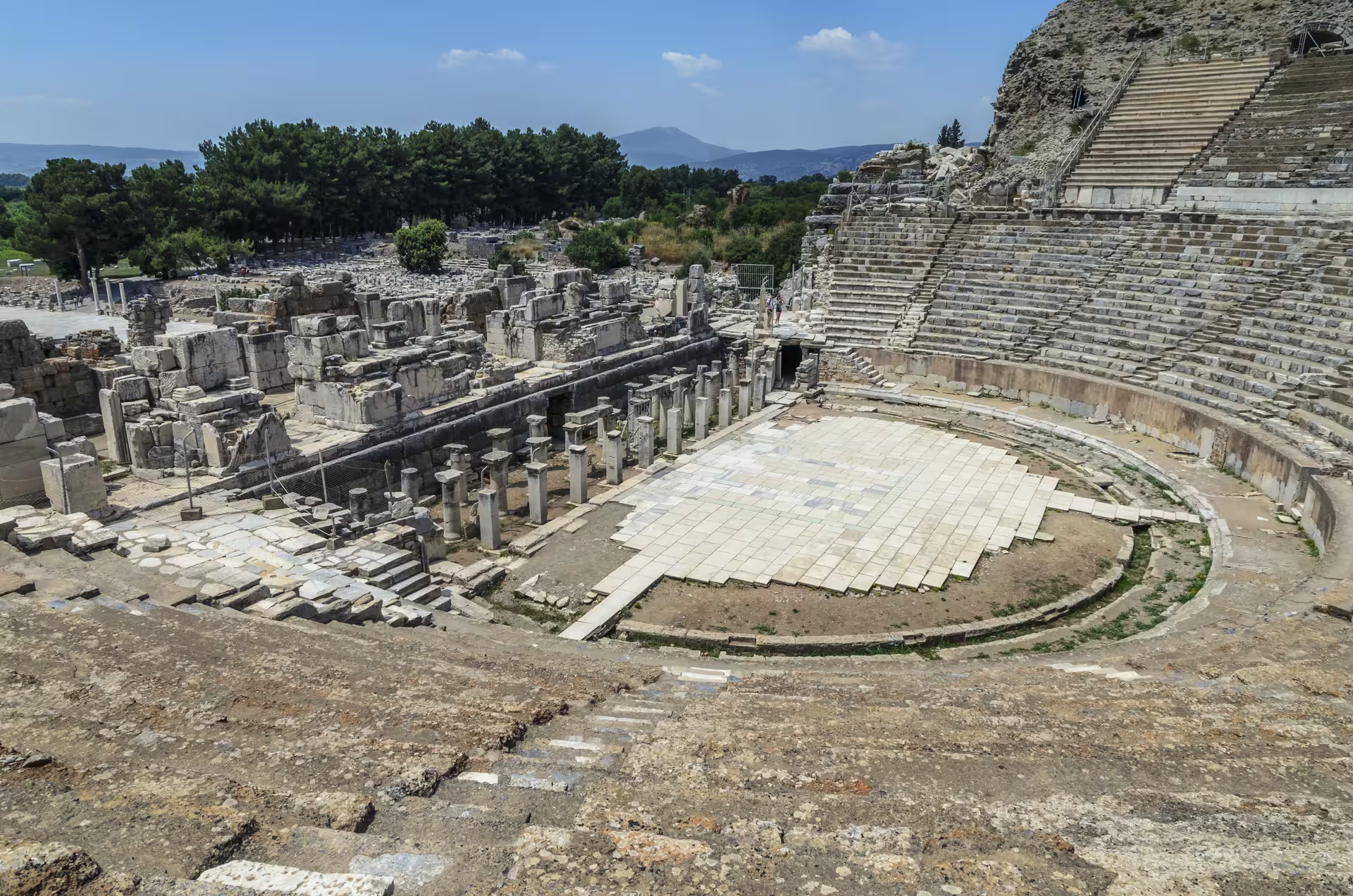
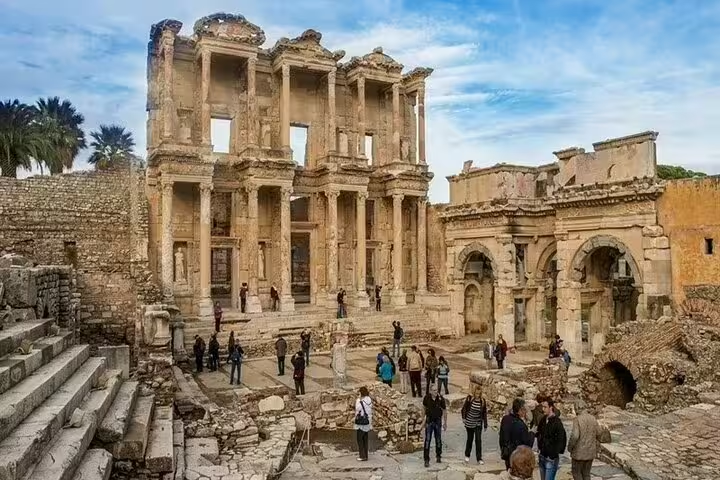
The Library of Celsus, the Great Theatre and the excavated houses give your visit a clear focus. Curetes Street and Marble Street follow an older processional route that leads down to the library and on to the theatre, so these monuments make sense as parts of the same walk. The theatre could accommodate an estimated 25,000 spectators. In the residential remains, wall paintings and mosaics shift the focus from public monuments to the decoration of people's homes.
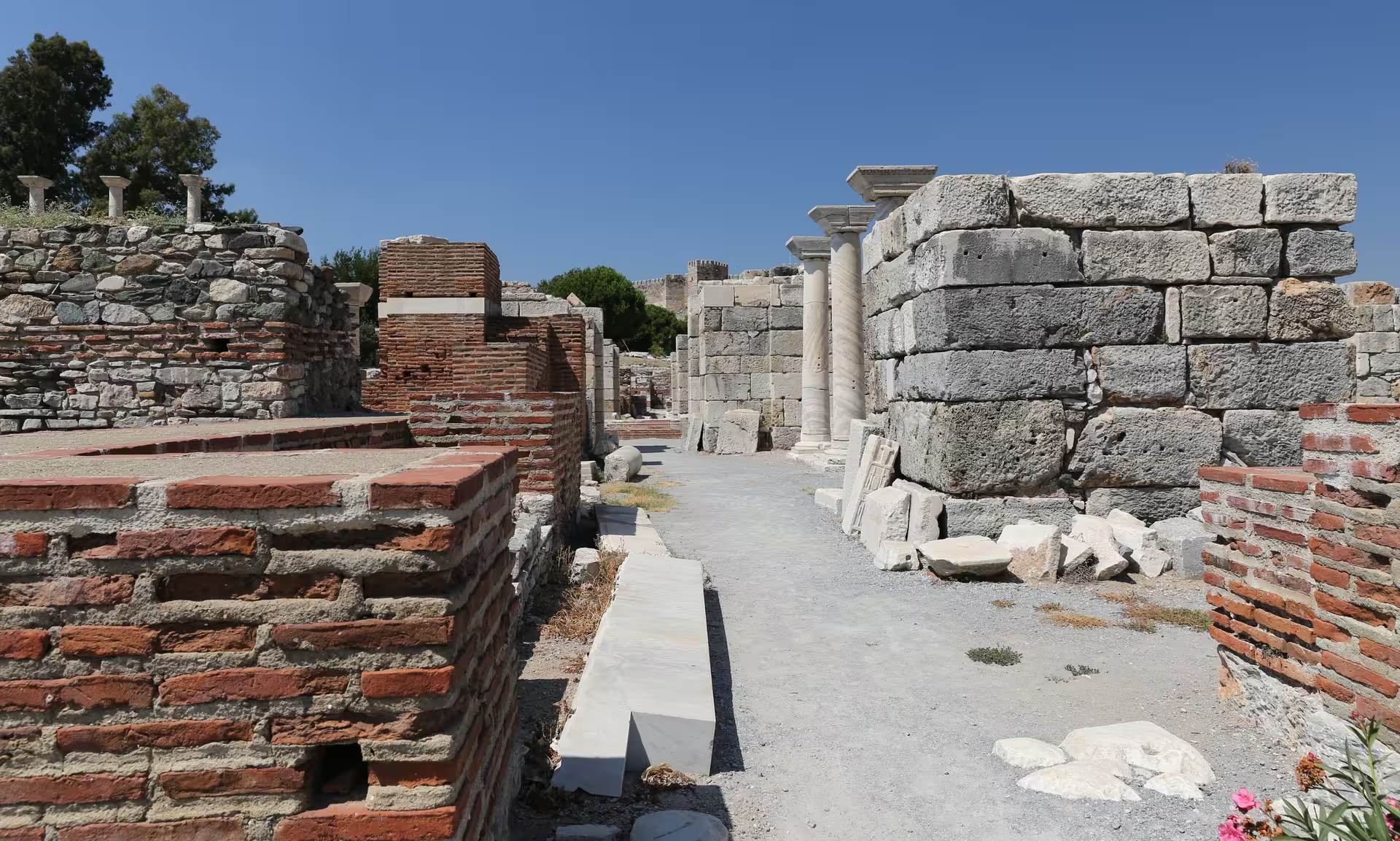
The Temple of Artemis works as an additional stop if you are interested in what survives of an ancient sanctuary. Expect a paved area around the altar and a single reconstructed column, rather than a standing temple. For Christian history, the Basilica of St John on Ayasuluk Hill adds another focus to the visit. Its extensive ruins reflect the importance of Ephesus to Christianity.
One day is a reasonable plan for a visit centred on the ancient city: walk down Curetes Street to the Library of Celsus and on to the Great Theatre, then spend time with the excavated houses. A second day can focus on Ayasuluk Hill and the House of the Virgin Mary if Christian heritage is central to your trip. At Meryemana, the House of the Virgin Mary is a domed chapel with a cross-shaped plan, 7 km from Ephesus.
For a wider itinerary, the small group Ephesus and Pamukkale tour from Kuşadası lasts 2 days and includes a licensed guide, ground transport, entry to the House of the Virgin Mary and the Temple of Artemis, and visits to the Pamukkale terraces and Hierapolis. The Ephesus and Pamukkale day trip from Kuşadası takes 13 hours, with a licensed guide, lunch and an air-conditioned vehicle included.
For a walking-focused visit, July and August call for caution about heat: in nearby Selçuk, average daily highs reach 34.6°C in both months. Spring and autumn are more comfortable for walking the site, with milder temperatures than midsummer. Selçuk has a Mediterranean climate with hot summers. For a pilgrimage-focused trip, 15 August has a specific significance at the House of the Virgin Mary, when pilgrims mark the Assumption of Mary.
A tour from Kuşadası port is an option for cruise visitors who want transport included. The private Ephesus tour from Kuşadası port for cruise passengers lasts 5 hours and includes van or minibus transport, a licensed guide and visits to Ephesus, the Temple of Artemis and the House of the Virgin Mary.
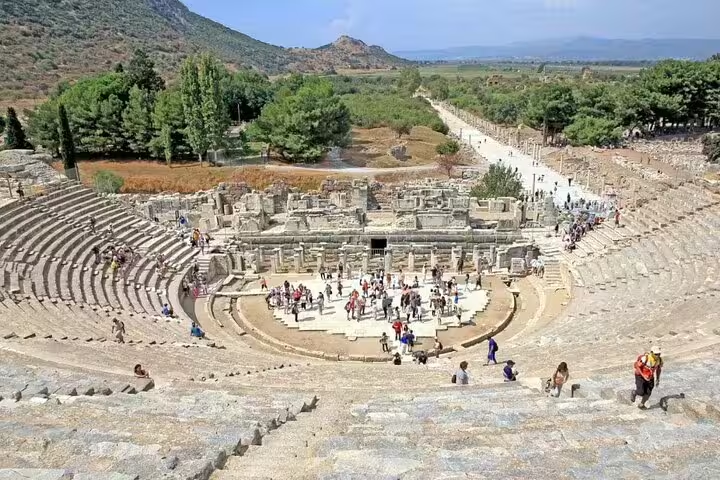
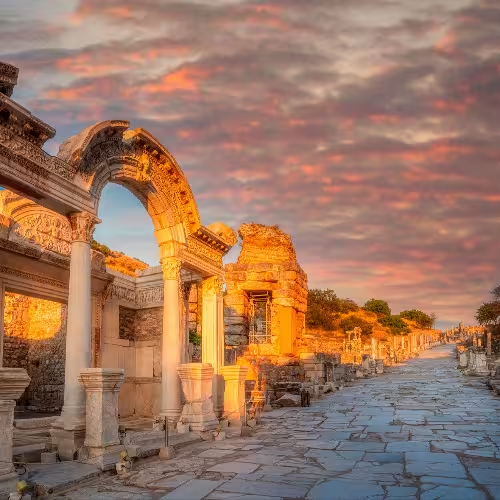
Within the ancient city, Curetes Street provides a route between the upper and lower areas along the old ceremonial way. Selçuk is worth considering as a base for its proximity: it lies about 3 km northeast of ancient Ephesus.
Çukuriçi Höyük lies 200 m southeast of Ephesus.
The beach at Pamucak extends for 12 km.
Yes, a steel roof completed in 2000 covers the excavated remains of Terrace House 2.