
Explore Tours

Build your dream
experience

More to know about Pergamon
Pergamon Travel Guide
Pergamon rewards travelers who like their history big, dramatic, and easy to visualize. This ancient city, known today around Bergama in Türkiye’s Aegean region, layers hilltop ruins, sacred healing traditions, and a living market town atmosphere into one compelling stop. Come for the monumental archaeology, stay for the slower rhythms of local cafés, scenic viewpoints, and the sense that every stone has a story.
Snapshot
Pergamon feels like a stage set built for epic ideas, a steep acropolis above town, a sanctuary of healing, and a legacy tied to learning and culture. It is a strong choice when you want a destination that mixes outdoor walking with museum style discovery, without needing a huge city schedule. Go now if you want a rewarding day trip or a short base that pairs well with the wider Aegean coast and İzmir’s transport connections.
🗺️ Geography and Logistics
📍 Orientation: Where is it within İzmir Province and ?
Pergamon sits in İzmir Province in western Türkiye, associated with the modern town of Bergama. For most travelers, İzmir is the main regional hub, especially for onward connections by road into the interior and toward the Aegean coastline. Plan your routing around İzmir’s intercity transport options, then allocate enough time for uphill and downhill walking once you arrive.
🕒 When to Go: Seasonal breakdown
Seasonality here is mainly about heat, daylight, and how comfortable it feels to explore open air ruins. Warmer months can make the exposed hilltop areas feel intense at midday, while cooler months make longer walks more pleasant and photography easier. Crowd levels typically follow broader Aegean travel patterns, so aim for earlier starts on popular days and build in breaks when the sun is strongest.
💰 Budget & Currency: Practical money tips
Türkiye uses the Turkish Lira, and it is smart to carry some cash for small purchases, snacks, and local transport. Cards are common in many places, but having cash reduces friction in smaller shops and quick stops. Budget for transport between sites and for food breaks, then treat any shopping as a bonus, local markets and small crafts can be tempting.
⭐ Essential Things to Do
Explore the Acropolis of Pergamon
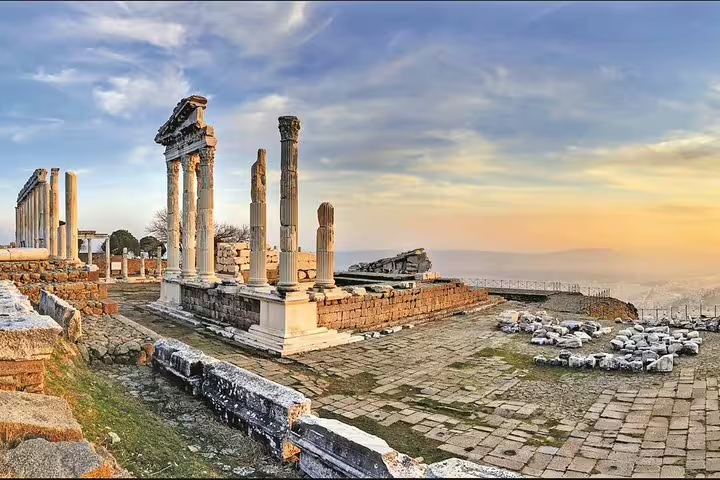
The acropolis is the visual signature of Pergamon, a hilltop complex that helps you understand how power, defense, and spectacle worked in the ancient world. The setting turns history into a landscape experience, with steep slopes and wide views that make the city’s scale feel real. Practical tip, start earlier in the day for softer light and a more comfortable climb.
See the Theater Viewpoints
Pergamon’s theater setting is famous for its dramatic positioning, and even without rushing, the angles and terraces make for memorable photos. It is one of those places where you can pause and imagine how crowds once moved and gathered. Practical tip, bring stable footwear, the terrain can be uneven, and take your time on steps.
Visit the Asclepieion
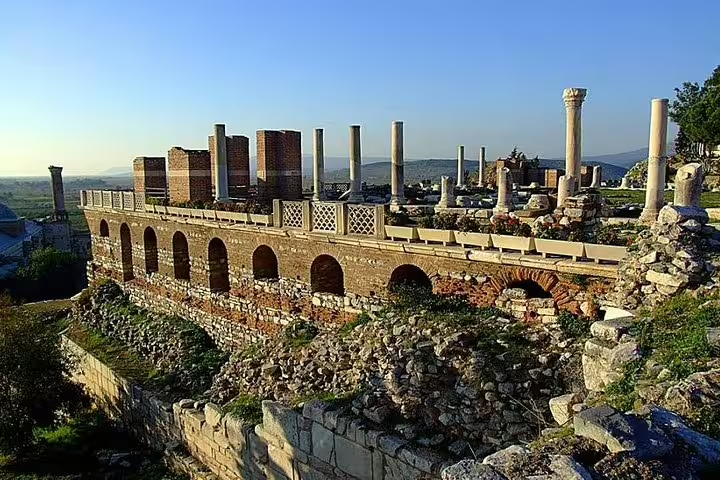
The Asclepieion connects Pergamon to ancient healing traditions, giving your visit a different theme than politics and monuments. It adds a human dimension, how people sought cures, comfort, and ritual support. Practical tip, pair it with a slower pace and a water break, it is easier to appreciate when you are not rushing.
Walk Through Bergama’s Town Center
Modern Bergama adds daily life to the ancient backdrop, with local shops, cafés, and a smaller town rhythm that contrasts with the grand ruins. This is where you reset between sites and pick up essentials. Practical tip, plan a short café stop and watch how the town moves, it helps you feel the destination beyond the ticketed areas.
Focus on the Library Legacy
Pergamon is strongly associated with learning and culture, and the idea of its library is part of its global identity. Even if only traces remain, it is worth visiting with context in mind, thinking about knowledge networks in the ancient Mediterranean. Practical tip, read a quick overview before you go, then look for interpretive signs and site maps that connect the fragments.
Photograph Panoramic Aegean Landscapes
One of the quiet joys of Pergamon is how the ruins sit within a broader landscape, hills, plains, and distant horizons. The scenery helps you understand why the location mattered strategically. Practical tip, keep your camera or phone accessible, viewpoints appear suddenly as you change elevation.
Slow Down at a Local Tea Garden
A simple tea break is a practical and cultural experience, it is how many travelers recover between walking segments. It also gives you a chance to plan your next move without pressure. Practical tip, carry small cash and be ready to linger, service can be relaxed in a pleasant way.
Build a Mini Route Between Key Zones
Think of Pergamon as a set of zones rather than one single site, hilltop, sanctuary, and town. Planning a route reduces backtracking and makes the day feel calmer. Practical tip, mark your must see spots first, then connect them with the least strenuous walking sequence.
🚶 Curated Itineraries
⏰ The Highlights (1 Day): A fast paced Best Of route
Start with the acropolis while energy is high and temperatures are more manageable, then spend time at the most scenic viewpoints and terraces. After that, shift to town for lunch and a short rest, this helps you avoid turning the day into one long uphill push. Finish with the Asclepieion for a different perspective on the city’s identity, then return to Bergama for a relaxed evening meal.
⏰ Deep Dive (2-3 Days): Adding local texture
On day one, focus on the acropolis slowly, giving yourself time to read signage and absorb the layout. On day two, explore the Asclepieion and spend more time in Bergama, including local shops and quieter streets, which helps you understand the modern community tied to the ancient site. If you have a third day, use it for a flexible pace, revisiting your favorite viewpoints, adding a longer meal, and planning a nearby outing in the wider İzmir Province region.
🍽️ Flavors of Pergamon
Food around Bergama reflects the broader Aegean and western Anatolian palate, with an emphasis on fresh ingredients and satisfying, simple plates.
- Grilled meats and kebab style plates, savory and filling, often served with bread and sides. Ordering tip, ask what is freshest that day, then choose based on the house specialty.
- Meze style small dishes, bright, tangy, and herb forward, good for sharing. Ordering tip, pick a mix of creamy and acidic options to balance the table.
- Soup for a light reset, comforting and practical between walking sessions. Ordering tip, consider soup as a starter when you have an afternoon site visit planned.
- Seasonal vegetables in olive oil, typical of the Aegean approach, clean flavors and a gentle richness. Ordering tip, look for what is listed as seasonal, it is usually the best value and taste.
- Fresh bread and local dairy, simple but satisfying, especially with tea. Ordering tip, combine with small plates for a flexible meal if you are short on time.
- Turkish tea, strong and warming, ideal for breaks. Ordering tip, use tea stops to pace your day and recheck your route.
🚌 Navigation & Transport
Getting around Pergamon is a mix of walking and short rides between zones, especially if you want to connect the acropolis, the Asclepieion, and the town center efficiently. Walking is rewarding but can be demanding due to elevation and uneven surfaces, so plan footwear and pacing accordingly. For longer hops, use local transport options available in town and keep a flexible buffer in your schedule for waiting times. Safety is generally about footing and sun exposure, watch your step, carry water, and take breaks when the terrain gets steep.
🌄 Beyond the Center: Day Trips
- İzmir, a practical hub for transport and a change of pace, with urban energy and coastal atmosphere. Travel time varies by route and traffic, so plan it as a full day if you want to explore beyond transit.
- Aegean coast drives, for sea views and relaxed meals, pairing well with archaeology focused days. Travel time depends on your chosen stop, so pick one coastal target rather than trying to do too much.
- Other heritage sites in western Anatolia, ideal if you are building a broader ruins itinerary. Travel time varies, so cluster sites by direction from Bergama to reduce time on the road.
✅ Insider Tips for Travelers
- Start earlier for more comfortable walking and clearer photos on exposed hilltop areas.
- Wear shoes with grip, uneven stones and slopes are part of the experience.
- Carry water and a sun hat in warmer months, shade can be limited at key viewpoints.
- Use Bergama as your reset point, plan a café stop between major zones to avoid fatigue.
- Keep some cash for quick purchases and local transport, it speeds up small transactions.
- Do not try to see everything at the same pace, choose a few priority areas and give them time.
❓ Frequently Asked Questions, FAQ
How much time do I need to visit the main sites?
A focused visit can fit into one full day if you plan your route and start early. Add extra time if you want longer breaks in Bergama or more time for viewpoints.
Is Pergamon suitable for travelers who prefer a slower pace?
Yes, but plan fewer zones per day and build in café breaks in town. The elevation changes mean pacing matters more than distance.
What is the easiest way to organize a first visit to Pergamon?
Prioritize the acropolis first, then shift to the town center for lunch, and finish at the Asclepieion. This sequence balances effort and keeps your day feeling structured.
Do I need cash, or can I rely on cards?
Cards are common, but carrying some Turkish Lira is helpful for small shops, snacks, and short rides. Cash also reduces delays when you are moving between sites.
Can I combine Pergamon with İzmir in the same trip?
Yes, many travelers use İzmir as a hub, then plan Pergamon as a day trip or short stay. Keep a time buffer for transport so you are not rushing the hilltop sections.
This guide is written by Toursxplorer.com to help travelers plan a practical visit to Pergamon and Bergama in İzmir Province, Türkiye. It focuses on on site routing, pacing, and connections to the wider western Anatolia region.
Asia > Turkey Republic of Turkey > Western Anatolia Region > Izmir Province > Pergamon