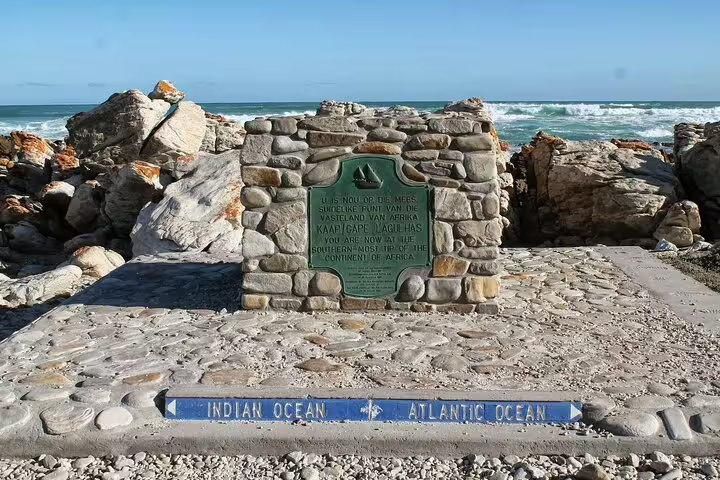
Cape Agulhas is the southernmost point of Africa, located on the rugged Western Cape coast of South Africa. This dramatic headland marks the official meeting point of the Atlantic and Indian Oceans, drawing visitors seeking to experience one of the world's most geographically significant coastal landmarks and its windswept, untamed landscapes.
What to see in Cape Agulhas
The Cape Agulhas Lighthouse, built in 1848, stands as the second-oldest lighthouse in South Africa and offers panoramic views of the turbulent waters below. Visitors can explore the rocky shoreline, examine the bronze marker indicating the exact southern tip, and observe the dramatic clash of ocean currents that create the distinctive meeting point of two major seas.
Things to do in Cape Agulhas
Hiking trails crisscross the coastal landscape, providing opportunities to spot marine wildlife and seabirds. Fishing enthusiasts can arrange guided excursions, while photography tours capture the dramatic coastal scenery at sunrise and sunset. The nearby village offers local restaurants serving fresh seafood and opportunities to connect with the region's maritime heritage.
Marine Conservation and Ocean Currents
Cape Agulhas is renowned for its powerful ocean currents and rich marine biodiversity. The convergence of warm Indian Ocean waters with cold Atlantic currents creates a unique ecosystem that supports diverse whale and shark populations, making it a significant area for marine research and whale watching during migration seasons.
Cape Agulhas is situated on the Western Cape coast of South Africa, approximately 240 kilometers southeast of Cape Town. The region features rugged, windswept terrain and is accessible via the N2 highway connecting to local roads. The nearest town, L'Agulhas, provides accommodation and dining options for visitors exploring this remote coastal destination.
Cape Agulhas represents a unique geographical and oceanographic convergence point, making it distinct from other southern African coastal destinations. The area's significance stems not from tourism infrastructure but from its natural and scientific importance as the meeting point of major ocean currents and its role in marine research.