




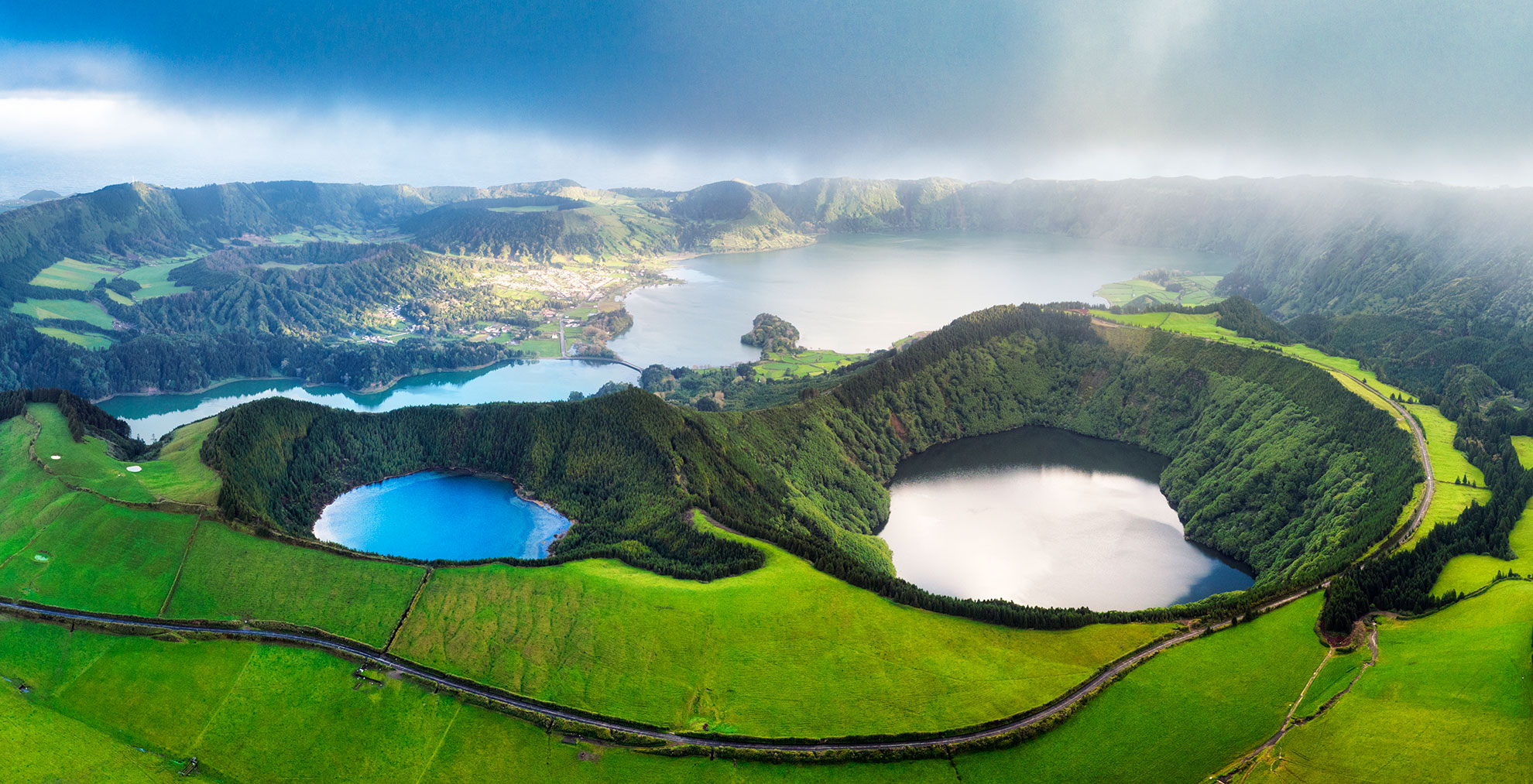
The twin lakes of Sete Cidades — one green, one blue — fill a volcanic caldera 5 km wide in the western tip of São Miguel.
The Green Jewel
Earth, Fire, and Ocean: Why São Miguel Is the Ultimate Island Adventure in the Atlantic
Volcanic craters draped in prehistoric ferns, a steaming valley where lunch is cooked underground, and an open ocean patrolled by sperm whales — this is what adventure looks like on Europe's most elemental island.
São Miguel does not ease you in gently. The largest island in the Azores archipelago announces itself in layers of impossible green, a landscape so saturated it reads like overexposed film. Below that surface, the earth is still very much alive — geothermal vents exhale sulfurous mist above Furnas, thermal springs stain the rocks ochre and rust, and the Atlantic churns with cetaceans that have tracked these waters for millennia. This is not a beach destination. It is a place for people who need to feel the ground shift beneath them.
Roughly 750 kilometres west of the Portuguese mainland, São Miguel sits on the Mid-Atlantic Ridge, the tectonic boundary where the Eurasian and North American plates pull apart. That restless geology explains everything: the twin crater lakes of Sete Cidades, the boiling mud pools of Caldeiras da Ribeira Grande, the tea plantations of Gorreana clinging to basalt cliffs above a cobalt sea. For the traveller who measures a trip not in sunbeds claimed but in terrain covered, São Miguel offers a density of natural spectacle that is rare even by island standards.
"The caldera rim at Sete Cidades sits above the cloud line before noon. When the mist clears, the green lake and the blue lake appear below like two pupils staring up at the sky."
On Foot, On Wheels, and Into the Water
Adventure on São Miguel does not demand a single mode of transport or a single level of fitness. The island's terrain ranges from muddy caldera trails navigable by most walkers to technical canyoning descents that require prior experience with ropes and rappelling. Offshore, the options are equally varied: a leisurely whale-watching boat sits at one end of the spectrum; a scuba dive pack for certified divers at the other. What connects all of it is the quality of the natural setting — there are very few places on earth where you can rappel a lava-carved gorge in the morning and watch a sperm whale surface at dusk.
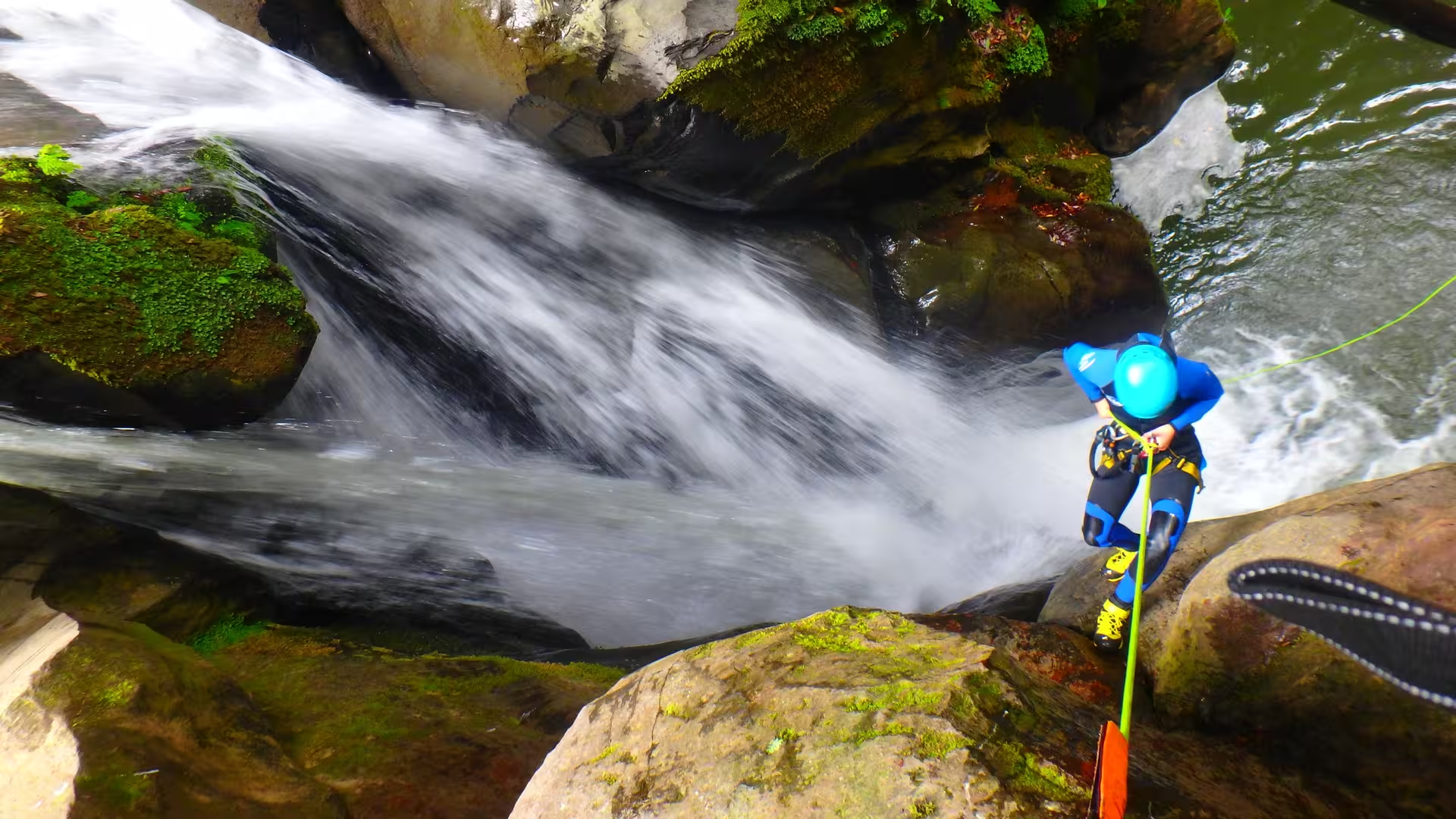
The Salto do Cabrito canyon cuts through laurisilva forest — a remnant of the subtropical woodland that once covered much of the Macaronesian islands.
Off-Road & Wheels — Sete Cidades & Beyond
On Foot — Crater Trails & Valley Walks
São Miguel holds more outdoor experiences than most visitors can fit into a single trip. Browse the full list of available tours — from whale watching to scuba diving — and filter by date, group size, and activity type.
Explore all São Miguel tours →Canyoning — Into the Lava Gorges
Ocean — Whales, Dolphins & Diving
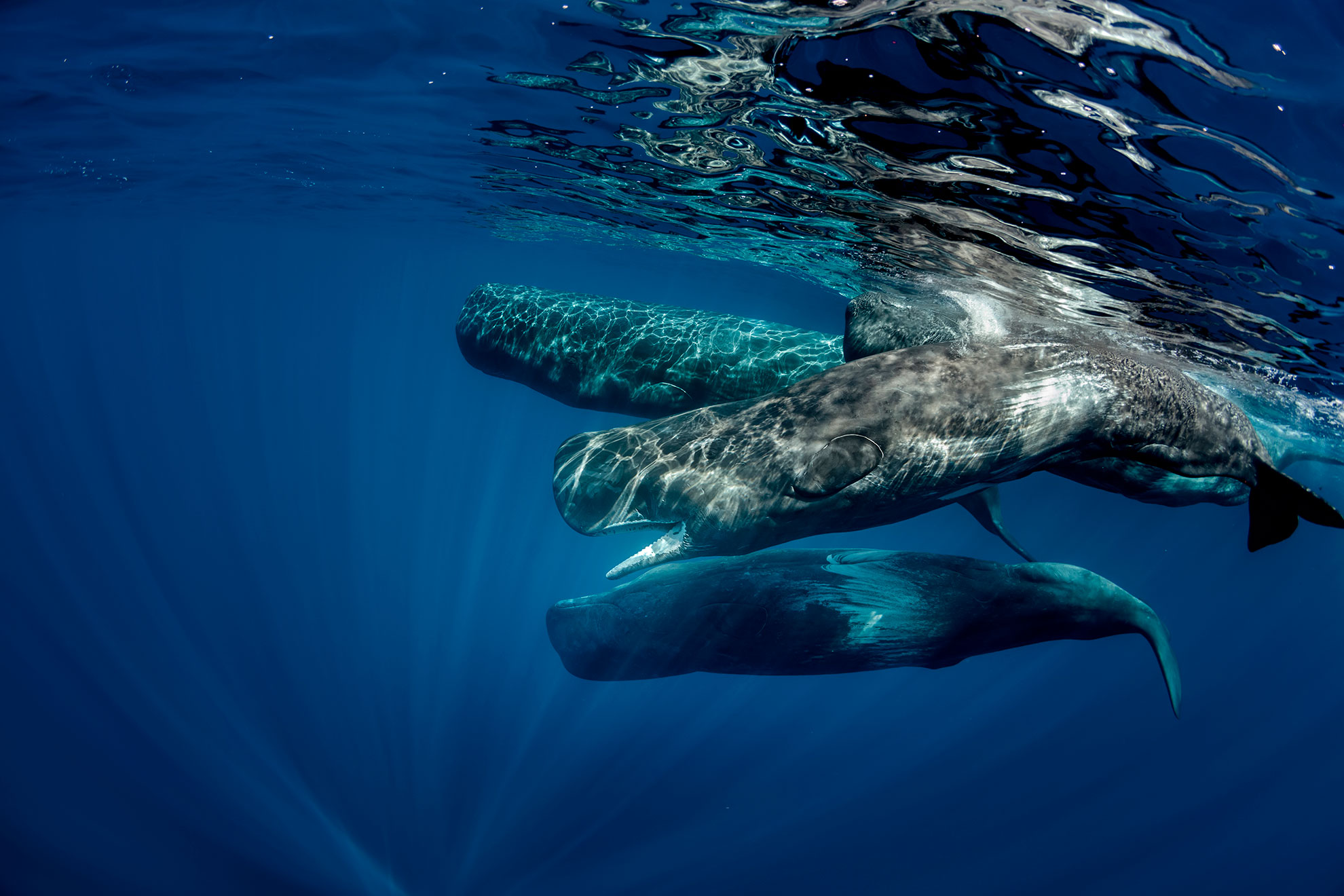
Sperm whales are year-round residents of the deep waters off São Miguel's south coast — the island sits above a submarine canyon that concentrates their squid prey.
The Geothermal Interior: Furnas as the Island's Beating Heart
No visit to São Miguel is complete without time in Furnas. The valley sits inside a collapsed volcanic caldera and is one of the few places in Europe where geothermal activity is woven directly into daily life. Locals lower pots of cozido das Furnas — a slow stew of smoked meats, blood sausage, and root vegetables — into holes in the ground at 6 a.m. and return six hours later to retrieve the finished dish. The caldeiras that perforate the valley floor bubble at temperatures approaching 100°C, ringed by bright mineral deposits of sulphur yellow and iron red. Terra Nostra Garden, planted in the eighteenth century around the main thermal spring, contains one of the most botanically diverse collections of tree ferns and cycads in the Atlantic world. Swimming in the iron-rich thermal pool — a dense, tannin-brown 39°C — is not elegance, but it is genuine.
"Furnas operates on geological time. The steam that rises from the caldeiras this morning rose yesterday and will rise tomorrow, indifferent to seasons and schedules."
Sete Cidades: Reading the Crater from the Rim
The Sete Cidades caldera is the most photographed geography on São Miguel, and for reasons that are not immediately obvious from ground level. The twin lakes — Lagoa Verde and Lagoa Azul — share a narrow channel but appear as different colours depending on the angle of light and the algal composition of each basin. From the rim at Vista do Rei, the effect is clean: one lake holds green, the other blue, and the crater walls descend sharply on all sides into a bowl of hydrangea and laurel forest. The viewpoint itself is accessible by road, but the real measure of the caldera comes on foot, following the PR1 trail that circumnavigates the crater rim over four to five hours. At certain points the path narrows to a cattle track above sheer drops. The local legend that gives the caldera its name — Sete Cidades, or Seven Cities — tells of a submerged kingdom drowned when the volcano last erupted. The trails wind through what feels, in the right weather, exactly like the edge of something ancient and unresolved.
Whether you're planning a half-day in the saddle or a full week of island exploration, São Miguel's tour calendar fills quickly during summer. Check availability now and secure your preferred dates.
See all available tours on São Miguel →Frequently Asked Questions
What is the best time of year to visit São Miguel for adventure activities?
May through September offers the most reliable conditions for most outdoor activities. Whale watching peaks between April and October. Canyoning is possible from April to October, though water levels are higher and faster after heavy rain in spring. The island is accessible year-round, but winter months bring more frequent mist and rain in the interior.
Do I need prior experience for the canyoning tours?
It depends on the specific canyon. Ribeira dos Caldeirões is designed as a beginner route and requires no prior experience. Ribeira da Salga sits at an intermediate level. Salto do Cabrito is the most technical and requires prior canyoning experience with rappels. Each listing specifies the required level clearly before booking.
Is swimming with dolphins guaranteed?
In-water dolphin encounters are never guaranteed, as animals are wild and their behaviour cannot be controlled. The spotter network significantly improves encounter rates, and most tours operate a rebooking or partial refund policy if conditions prevent an in-water session. Check the specific tour's terms before booking.
How physically demanding is the Full-Day Walking Tour of Seven Cities?
The full caldera circuit covers approximately 12 to 14 kilometres with cumulative elevation changes of around 400 to 500 metres. It is suitable for walkers with a reasonable base fitness level. Trail surfaces include compacted dirt, grass, and occasional rocky sections. Proper walking shoes with ankle support are recommended.
Can children participate in the tours listed?
Several tours welcome younger participants — the whale watching boat, the Furnas Valley guided tour, and the electric bike experience in Sete Cidades all have options for families. Canyoning tours, scuba diving, and open-water dolphin swims have minimum age requirements that vary by operator and are listed on each tour page.
How do I get from Ponta Delgada to the main activity areas?
Most guided tours include hotel pickup from Ponta Delgada, which is the main city and hub for most accommodation on the island. If you are travelling independently, car rental is the most practical option — public buses serve the main towns but run infrequently to the crater and valley areas. Driving times range from 20 minutes to Sete Cidades to around 45 minutes to Furnas.