Five days is enough to see the best of Madeira without hiring a car, if you sleep in Funchal and let the day trips come to you. Spend the first day in the city, give the west coast and the high peaks a full day each, walk a levada on the fourth day and keep the last one for the sea. The order can change with the weather: save the mountains for the clearest morning.
Cristiano Ronaldo Madeira International Airport, in Santa Cruz, is the main gateway to the island, and the journey from the airport to Funchal by Aerobus, taxi, transfer or rental car takes around 20 to 25 minutes.
Renting a car is not necessary in Madeira: if you prefer not to drive or plan to stay mostly in central areas, you can use public transport, taxis, ride-hailing services such as Uber and Bolt, or organised tours. For the days outside the city, a tour with hotel pickup is the simplest way to reach the north and the mountains.
Mountain weather changes quickly, so check the forecast each evening and swap days if you need to. Our guide to the best time to visit Madeira explains the seasons and the festivals month by month.
Funchal sits in a natural amphitheatre facing the Atlantic; its streets are lined with trees, flowers and exotic plants, and their liveliness is an invitation to discover the city on foot. Start at the market, then let the old streets lead you down towards the sea.
The Mercado dos Lavradores, the farmers' market in the centre of Funchal, opened on 24 November 1940; it closes at 2 pm (14:00) on Saturdays and does not open on Sundays. If your first day falls on a Sunday, swap it with another city morning later in the week.
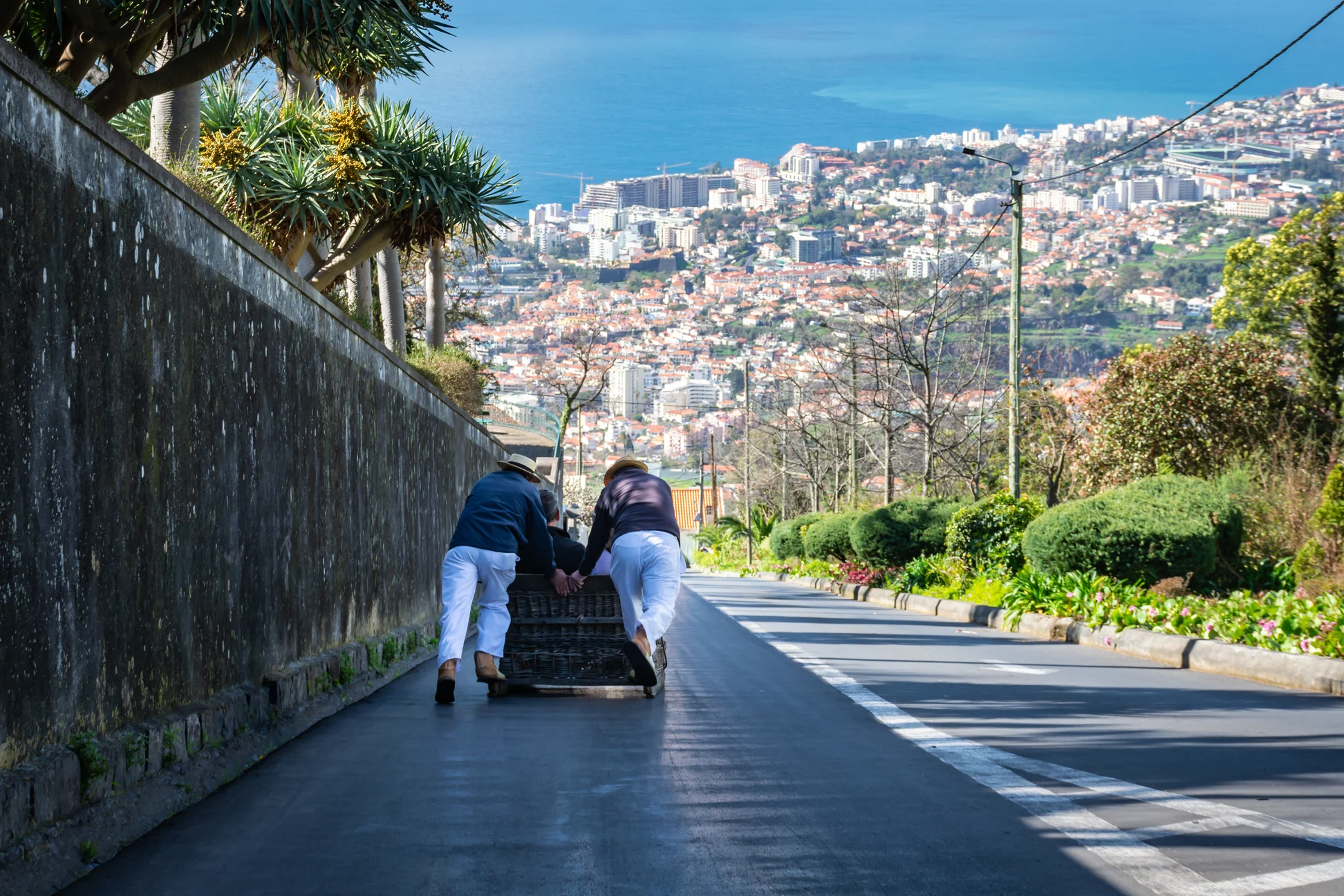
After lunch, ride up the hill. The Funchal Cable Car makes a 3,200-metre trip between the centre of Funchal and the parish of Monte. The Monte sledges were created in the 19th century as public transport for the people of Monte, a parish at an altitude of about 500 m (1,640 ft), to get down to Funchal more quickly.
Hand-made from wicker and wood and pushed by two drivers called carreiros, the sledges cover a two-kilometre route from Monte towards Funchal in about 10 minutes; they run from Monday to Saturday and stop on Sundays and public holidays.
A second cable car links Largo das Babosas to the Botanical Garden, on a 1,600-metre route of 18 minutes over the valley of the Ribeira de João Gomes. The Madeira Botanical Garden, created in 1960 in Funchal, covers about eight hectares and houses more than 2,000 exotic plants from all continents.
If you prefer company, the Guided Walking Tour in Funchal with Local Guide & Tasting is a short introduction to the old town with a local tasting, and the Monte & Botanical Garden Guided Tour in Madeira puts the toboggan ride and the garden into one half day.
End the day with a glass of the island's wine. Madeira wine was already being exported only 25 years after colonisation began; the varieties most commonly used today are the noble four, Sercial, Verdelho, Bual and Malvasia, as well as Terrantez and Tinta Negra.
Head west along the south coast first. Câmara de Lobos was the first settlement created in Madeira, and its bay, with its colourful fishing boats, is the scene Winston Churchill chose to paint during his visit to the island.
Cabo Girão, in Câmara de Lobos, stands at an altitude of 580 m (1,903 ft); it is the highest cape in Europe and is famous for its suspended glass platform. Madeira's west coast, with the municipalities of Ribeira Brava, Ponta do Sol and Calheta, is considered the sunniest part of the island.
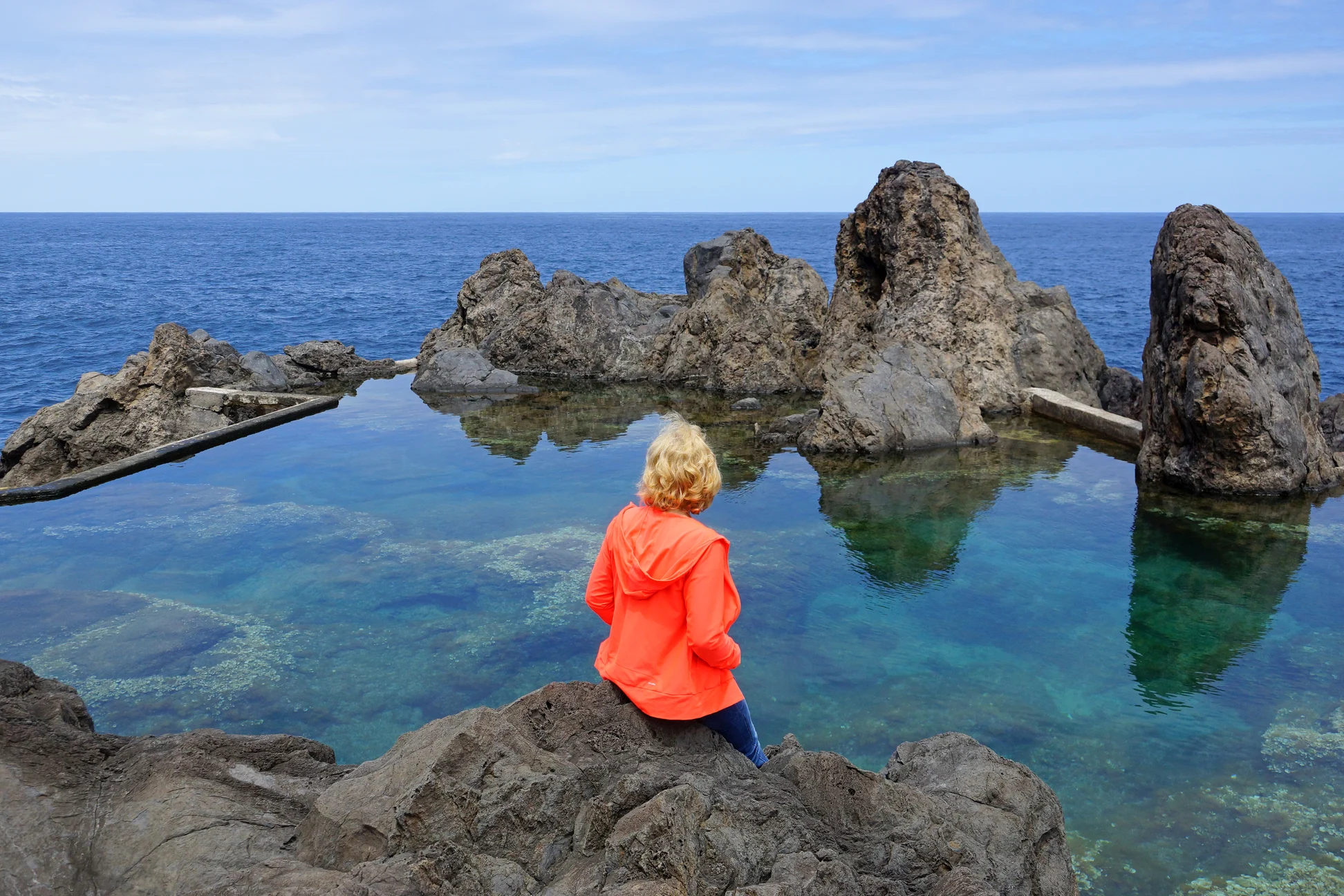
In the far north of the island, the natural pools of Porto Moniz are formed by volcanic rock that lets the seawater in naturally, so the water is constantly renewed. Pack a swimsuit and a towel. On the way back over the high ground, Fanal is known for its woods of centenary Madeira laurels, some dating back to before the discovery of the archipelago, and for its mystical landscape.
The Madeira West Side Full-Day Tour: Cabo Girão, Seixal & Fanal covers this whole loop in a small group, with pickup from your hotel in Funchal.
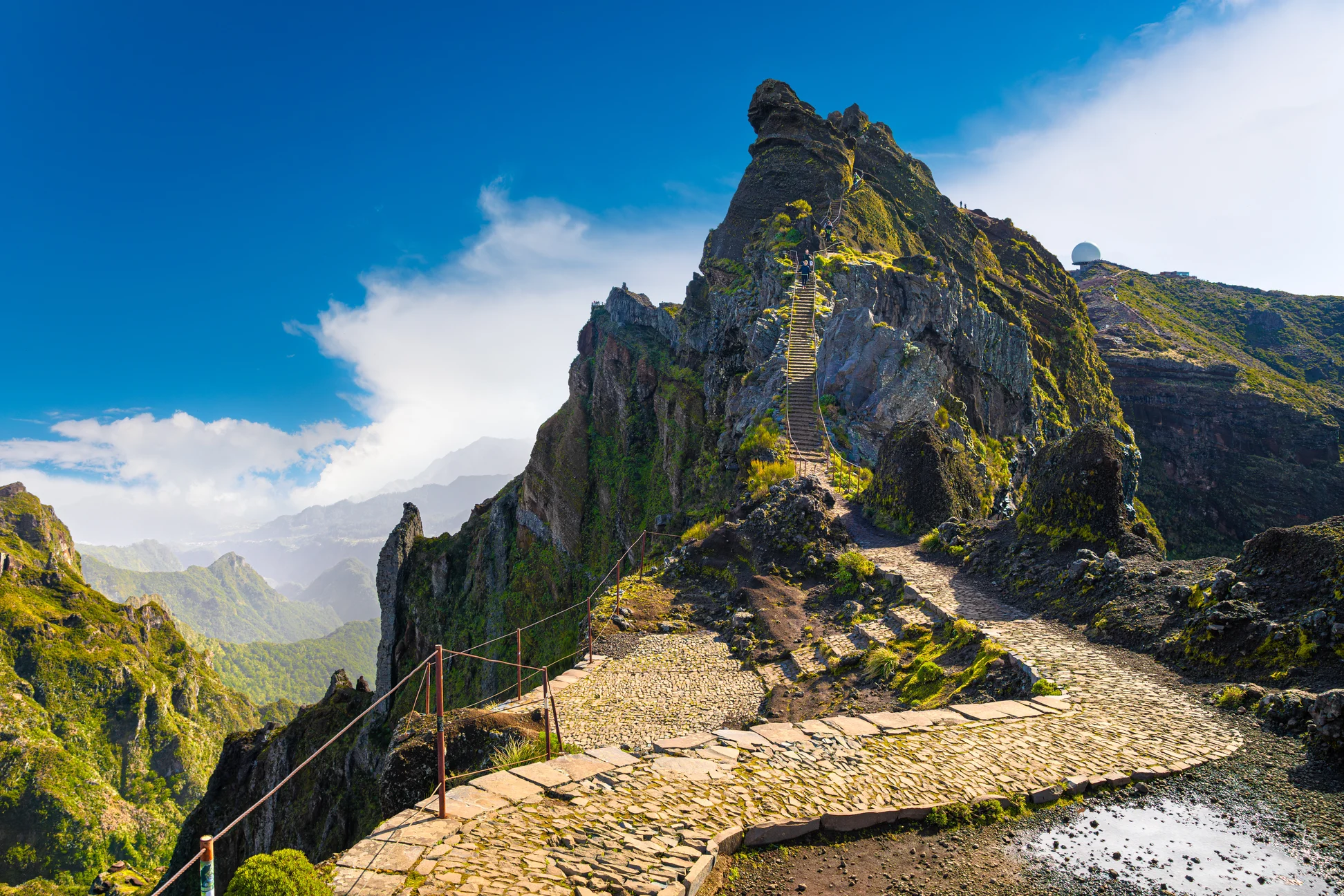
Pico do Areeiro, at 1,818 m (5,965 ft) the third-highest point on the island, is one of the most visited places in Madeira, and its sunrise, weather permitting, draws more and more visitors. Bring a warm layer for the summit and set off early.
From Pico do Areeiro, the PR1 Vereda do Areeiro crosses Pico das Torres and ends at Pico Ruivo, at 1,862 m (6,109 ft) the highest peak in the archipelago; it is a moderate trail of about 3 hours, and access is booked and paid in advance on the SIMplifica portal. If you only want the view, the viewpoint at the top is enough.
Continue to the north coast. The triangular, thatched houses of Santana are the symbol of this north-coast municipality, which UNESCO named a Biosphere Reserve in 2011. Further east, Ponta de São Lourenço, the easternmost tip of the island, is a nine-kilometre peninsula classified as a Partial Natural Reserve, its cliffs shaped by a semi-arid climate and the north winds.
Two tours with hotel pickup cover this day: the Full-Day Guided Tour Pico do Arieiro & Santana with Pickup adds a short levada walk and lunch in Santana, and the Full-Day Guided Tour of East Madeira: Mountains & Forest goes on to the eastern tip.
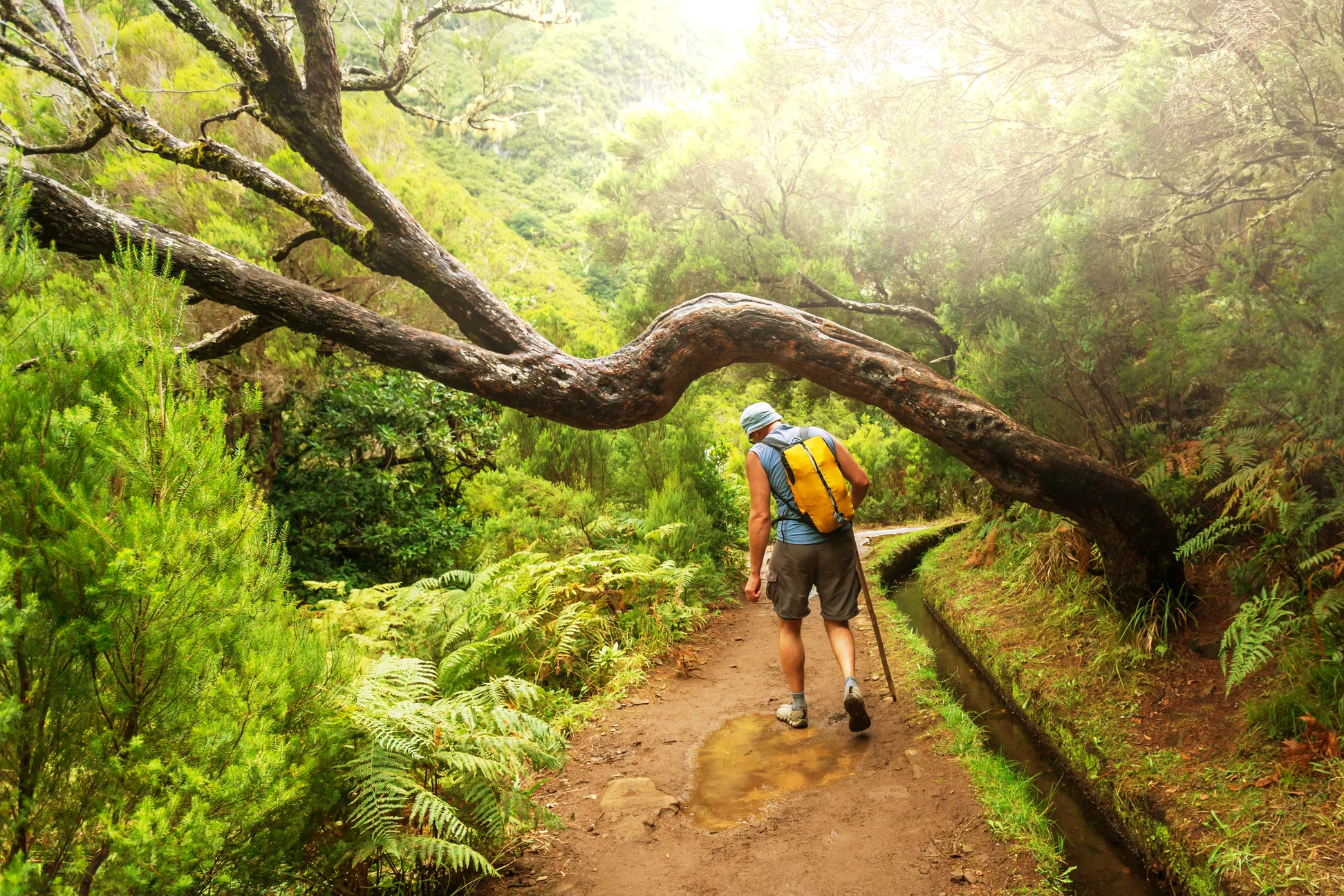
Give one day to walking beside a levada, one of the water channels that cross the island. The Levada das 25 Fontes (PR 6) starts in Rabaçal and is one of the most popular walks with visitors and locals alike: about 4.3 km (2.7 miles) each way, of moderate difficulty and roughly 3 hours, to a lagoon fed by 25 springs.
Every classified walking trail needs a time reservation made online on SIMplifica, the Regional Government's portal, before you start; pay in advance, as internet coverage in the mountains may be limited.
Without a car, a guided walk with transport is the easy option: the Guided Tour to Rabaçal 25 Fountains Trail in Madeira takes you to the trailhead and back. Our guide to Madeira's levada walks compares easier and longer routes and explains the trail rules in detail.
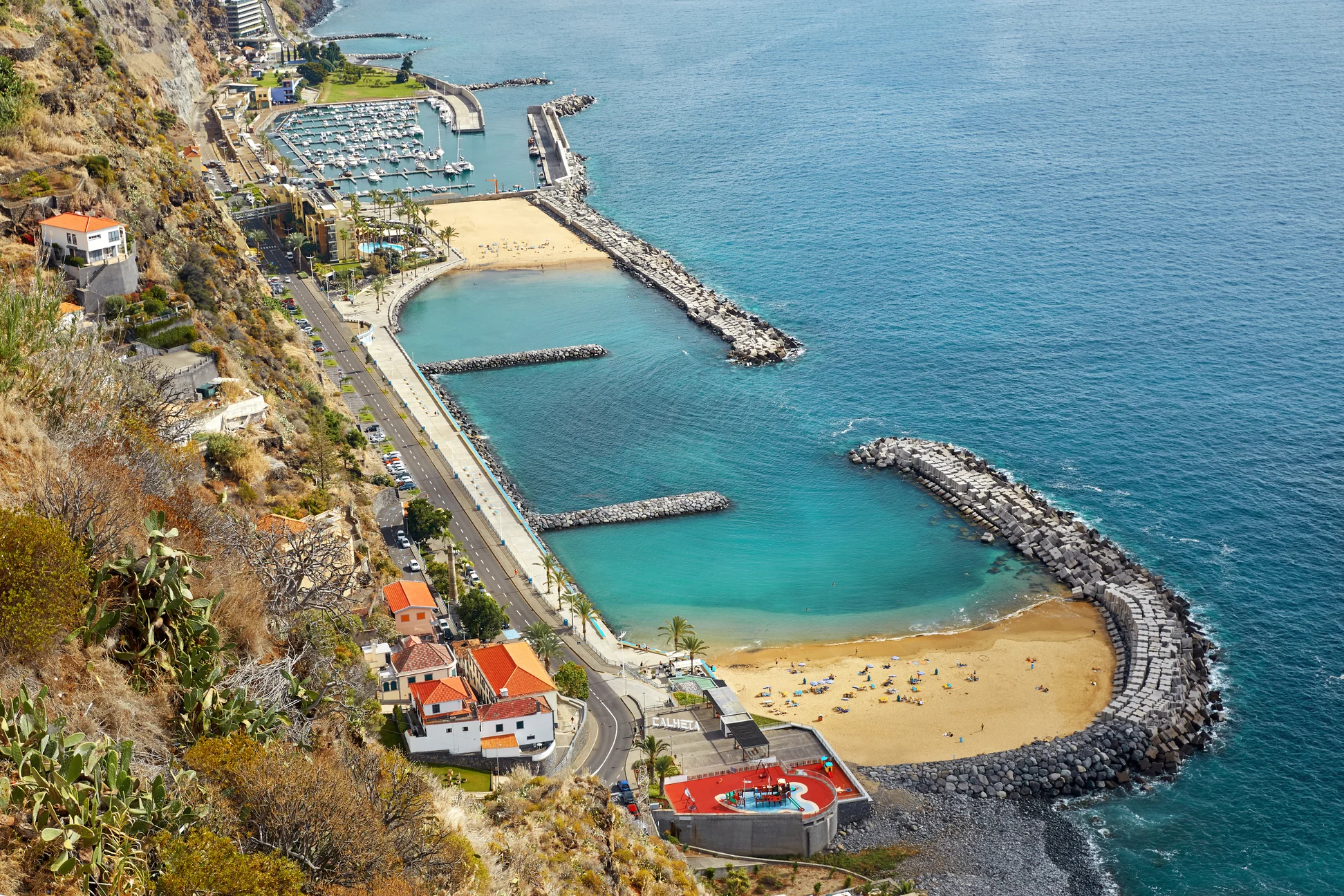
After four days on land, look at the island from the water. The Funchal Boat Tour: Cabo Girão & Coastal Sightseeing follows the coast west from Funchal's marina to the cliffs of Cabo Girão and Câmara de Lobos, with a stop for a swim when the sea allows. For a slower day, the SeaBus Boat Tour: Funchal to Calheta Roundtrip sails from Funchal to Calheta and back, with free time ashore.
If you would rather look for dolphins and whales, our whale and dolphin watching guide explains the species, the seasons and the rules at sea.
Porto Santo, the smallest inhabited island of the archipelago, is famous for its nine-kilometre sandy beach; from Madeira it is a 15-minute flight or around 2 hours 30 minutes on the ship Lobo Marinho. The crossing is long for a single day, so it suits a longer stay better than a five-day plan.
Yes, for a first visit. Five days gives you the capital, the west, the mountains, a levada and a morning on the water, with time to move a day if the weather turns.
No. Staying in Funchal and joining day tours that pick you up at your hotel covers the main sights, and the city itself is easy to explore on foot and by cable car.
Funchal is the most practical base: the Aerobus from the airport, the cable cars and the hotel pickups of the tours in this plan all start there.
Yes, the classified trails need a reservation on the SIMplifica portal before you set off, and a guided walk usually takes care of the logistics for you.