Whale & Dolphin Watching Madeira: Complete 2026 Guide | ToursXplorer

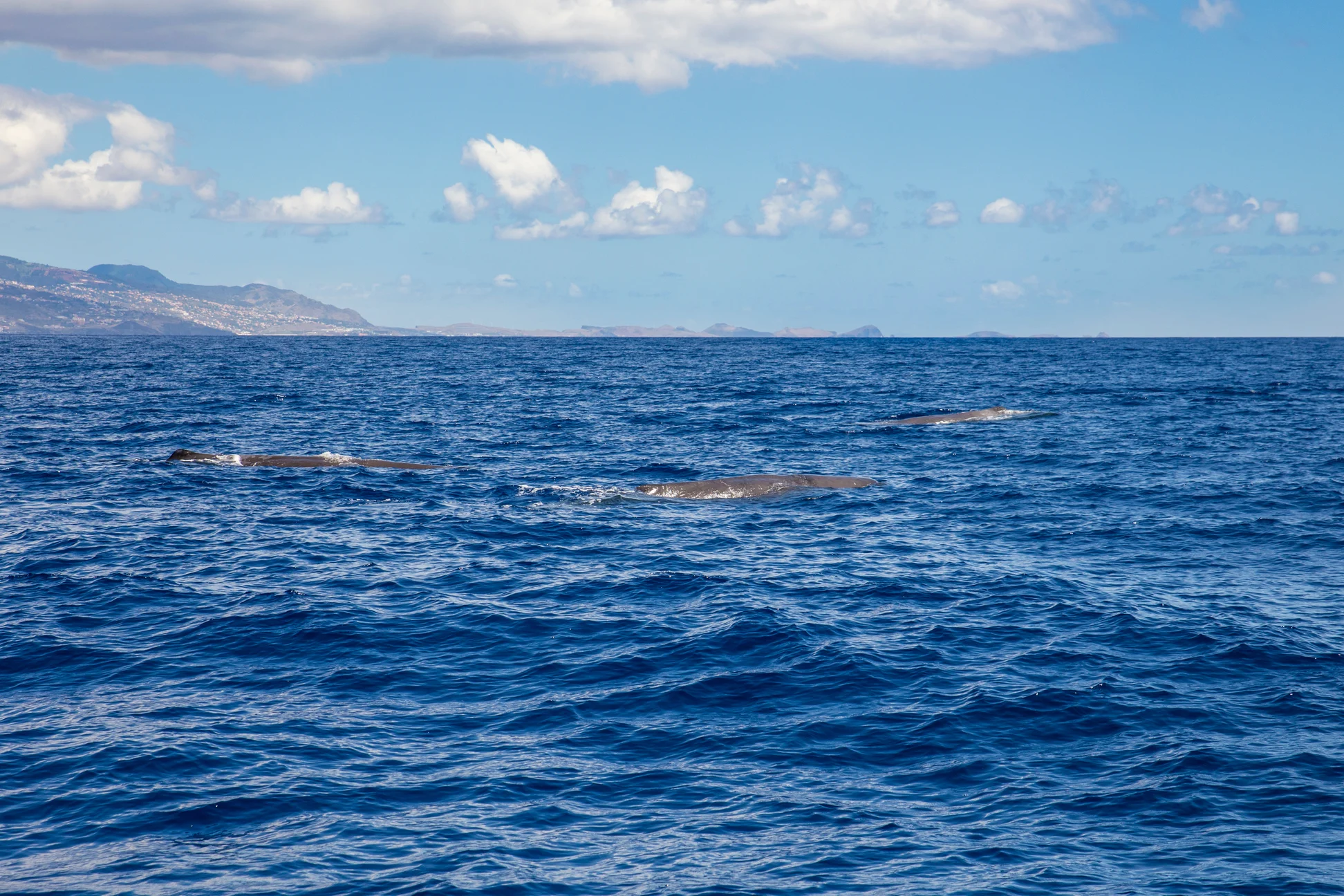
Sperm whale surfacing off Madeira Island coast with blue Atlantic waters
THE DEEP BLUE ENCOUNTER · Madeira Island · 2026

Whale and Dolphin Watching in Madeira: The Complete 2026 Guide

From the ancient Vigia lookout tradition to ethical 2026 regulations, everything you need to plan a responsible and rewarding encounter with Madeira's cetaceans.


Positioned in the deep waters of the North Atlantic, Madeira Island sits above submarine canyons that plunge to over 3,000 metres, creating one of Europe's most productive cetacean habitats. Up to 28 species of whales and dolphins move through or reside in these waters year-round, making whale and dolphin watching in Madeira a genuinely credible wildlife encounter rather than a speculative boat trip.

What Is the Vigia System and Why Does It Matter?

Before any boat leaves Funchal Marina, a spotter is already at work on the cliffs above the sea. The Vigia system is a centuries-old Madeiran tradition, originally developed by shore-based whalers who scanned the ocean with high-powered binoculars from elevated clifftop stations called vigias. Today, those same stone lookout posts serve a radically different purpose: locating cetaceans before boats even leave the harbour, reducing search time, minimising engine disturbance to pods, and dramatically increasing sighting success rates.

Madeira's topography makes the Vigia approach unusually effective. The island's central ridge rises to 1,861 metres at Pico Ruivo, and the southern coastal cliffs provide sightlines stretching 20 to 30 kilometres over open water. A trained Vigia spotter can detect the characteristic 'blow' of a sperm whale (Physeter macrocephalus) at distances that would be invisible from sea level. Once an animal or pod is located, the spotter communicates directly with the boat captain by radio, guiding the vessel efficiently toward the sighting.

The Vigia system is not a tourism gimmick. It is a piece of maritime heritage repurposed as a conservation tool, giving Madeira's whale watching operators a meaningful advantage over destinations that rely solely on open-water searches.

This land-based coordination system is one of the primary reasons Madeira consistently records sighting success rates above 95 percent on organised tours, a figure that few Atlantic destinations can match with comparable honesty.

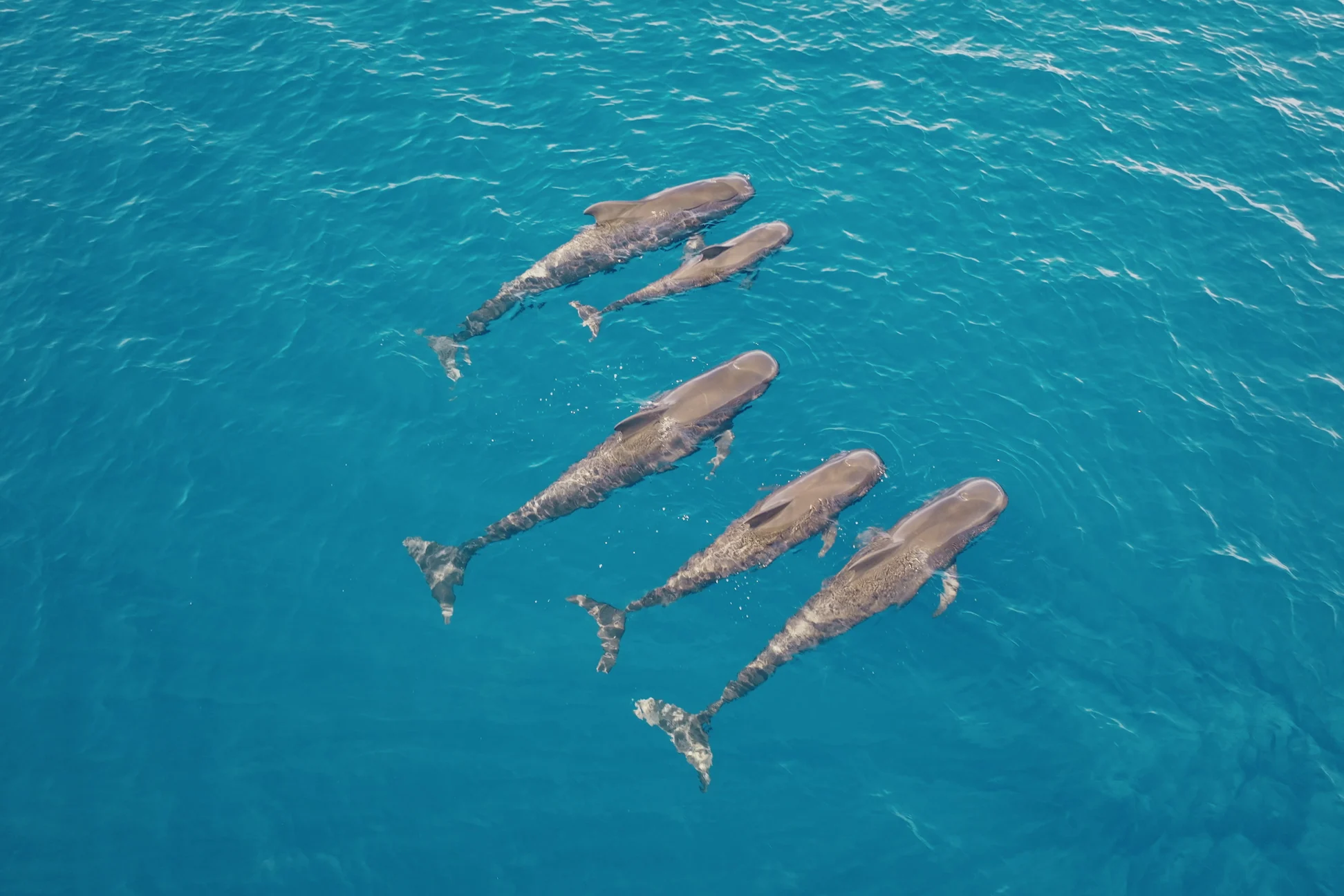
Short-finned pilot whale pod surfacing in Atlantic waters south of Madeira Island
Pilot whale families maintain stable social groups of 10 to 30 individuals and are among the most consistently encountered cetaceans in Madeiran waters year-round.

Which Species Can You Encounter in Madeira's Waters?

Madeira's position above the Mid-Atlantic Ridge and at the convergence of warm subtropical and cooler northern currents creates conditions that attract an exceptional range of cetaceans. Marine biologists have recorded 28 species in Madeiran waters, ranging from the smallest dolphins to the largest toothed whales on the planet.

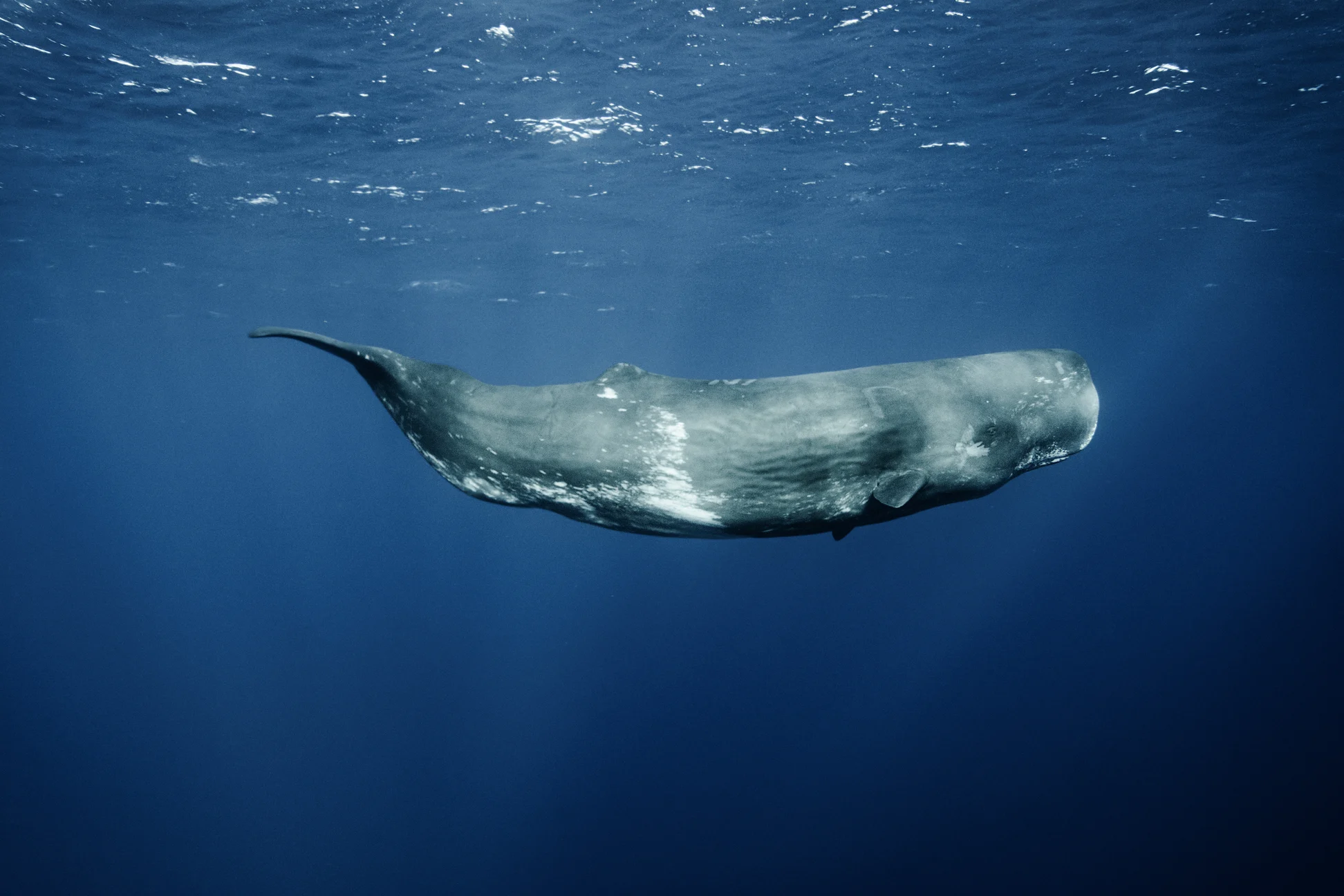
The most reliably encountered resident species include the Sperm Whale (Physeter macrocephalus), which inhabits the deep submarine canyons south of the island year-round, and the Short-finned Pilot Whale (Globicephala macrorhynchus), frequently seen in family groups of 10 to 30 individuals. Common Dolphins (Delphinus delphis) and Bottlenose Dolphins (Tursiops truncatus) are present throughout the year, often riding the bow waves of tour vessels or engaging in what observers describe as an aquatic ballet just metres from the hull.

Migratory species expand the roster considerably between April and October. Fin Whales (Balaenoptera physalus), the second-largest animal on Earth at up to 27 metres, pass through during spring and autumn migrations. Bryde's Whales (Balaenoptera edeni) appear in summer months, while Atlantic Spotted Dolphins (Stenella frontalis) arrive in warmer conditions. Humpback Whales (Megaptera novaeangliae), known for their breach and blow displays, are occasional visitors primarily in winter and early spring.

Sperm whales in Madeira are not transient visitors. Family groups of females and calves maintain territories in the deep water south of the island, meaning a sighting involves animals that recognise these waters as home.

Rarer encounters include False Killer Whales (Pseudorca crassidens), Risso's Dolphins (Grampus griseus), and on exceptional occasions, Blue Whales (Balaenoptera musculus). Keeping a personal species list is a rewarding way to engage with multiple tours across a week-long visit.

When Is the Best Time to Go Whale Watching in Madeira?

The honest answer is that there is no bad month for whale watching in Madeira, but the composition of species changes meaningfully across the calendar. The island's position at approximately 32 degrees north latitude keeps surface water temperatures between 18 and 24 degrees Celsius year-round, which supports both resident and migratory populations.

April through October represents the peak season for species diversity. Fin whales are most reliably seen during their April to June northward migration and again in September and October as they return south. Common dolphins form large superpods of several hundred individuals in summer, creating dramatic surface displays. Water visibility is at its clearest in July and August, improving underwater observation for snorkel-equipped tours.

November through March brings calmer sea conditions on average, with the prevailing northeasterly trade winds less pronounced. Resident sperm whale families and pilot whale pods remain active, and the reduced tourist volume means smaller groups and more attentive guides. Humpback whales are occasionally sighted during this window. Sea conditions do vary, and trips can be cancelled due to swell above 2 metres, but Madeira's sheltered southern coast and Funchal Bay provide a more protected departure point than northern Atlantic alternatives.

For travellers with a single opportunity, May and June offer the most consistent combination of calm seas, high species diversity, and good natural light for photography. June also marks the beginning of the traditional Madeiran festivity season, making it an ideal time to combine a marine excursion with cultural experiences in Funchal.

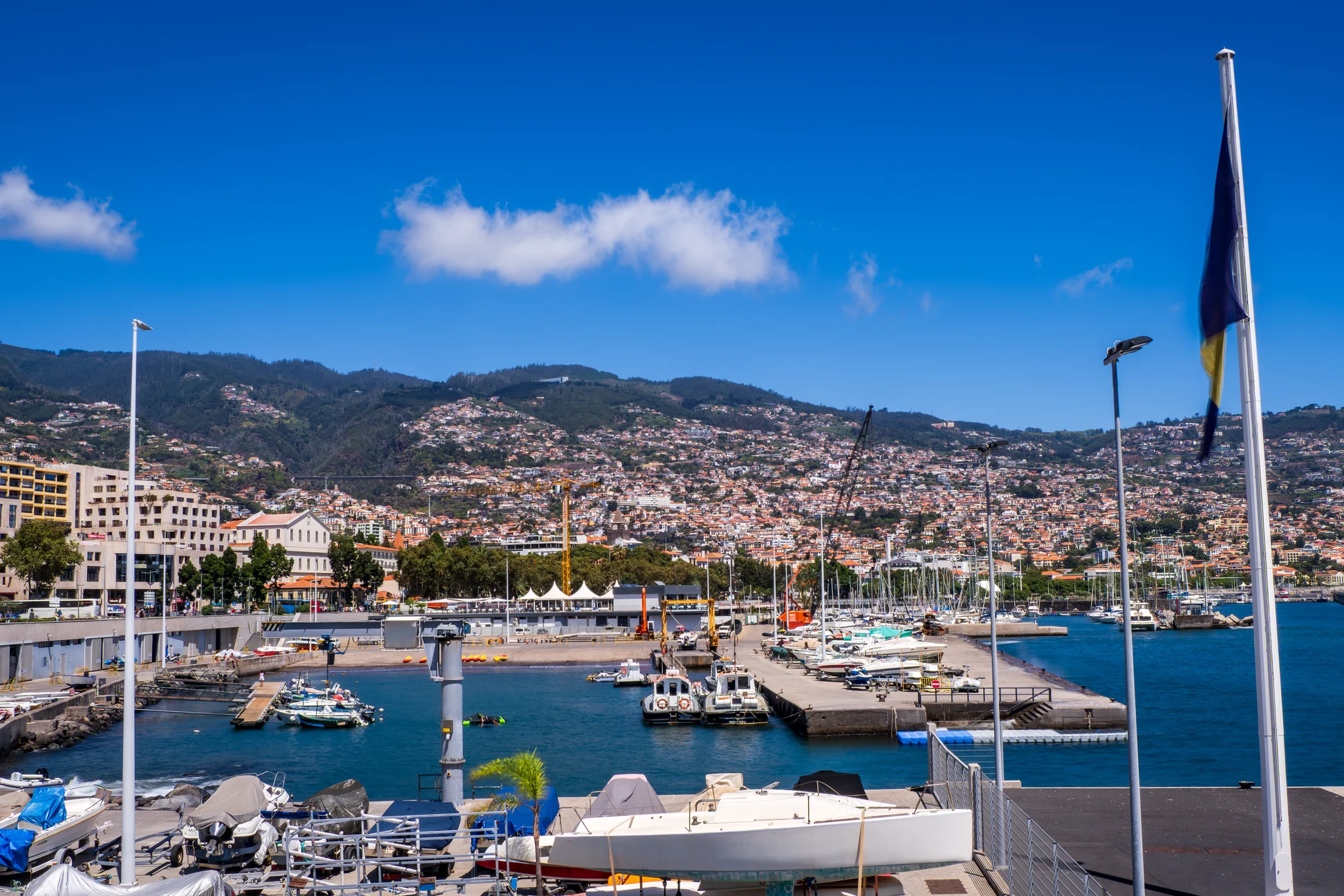
RIB zodiac and catamaran whale watching boats moored at Funchal Marina Madeira
Funchal Marina serves as the primary departure point for most cetacean tours, with Calheta offering a quieter alternative for boutique operators on the island's southwest coast.

Zodiac (RIB) vs. Catamaran: Which Boat Is Right for You?

Tour operators departing from Funchal Marina and, increasingly, from the quieter marina at Calheta on the island's southwest coast, offer two distinct vessel types. Choosing between them shapes the character of the experience as much as the species sighted.

RIB (Rigid Inflatable Boat) or Zodiac tours seat between 8 and 12 passengers close to the waterline, typically 30 to 40 centimetres above the surface. The ride is fast, reaching speeds of 35 to 45 knots to intercept sightings quickly, and physically engaging. Spray, engine noise, and the rolling sensation of the azure depths beneath you create an immersive encounter. Photographers favour RIBs for the low shooting angle and proximity to animals. However, they are unsuitable for guests with limited mobility, young children under approximately 6 years, pregnant travellers, or those prone to seasickness.

Catamaran tours accommodate 20 to 40 passengers on a stable twin-hulled platform with seating areas, shade, and onboard facilities including toilets and a small bar. They approach cetaceans more slowly and maintain larger distances, but the elevated deck provides a panoramic view ideal for watching pilot whale pod behaviour or monitoring the rhythmic swells for a sperm whale's blow. Families with young children and travellers seeking a more relaxed pace consistently choose catamarans.

Both formats typically run for 2.5 to 3 hours from Funchal, covering an area roughly 5 to 15 kilometres offshore. Most reputable operators offer a 'sighting guarantee' in the form of a complimentary repeat trip if no cetaceans are observed, though this is rarely needed given the Vigia system's effectiveness.

Recommended Whale and Dolphin Watching Tours in Madeira

WILDLIFE Whale & Dolphin Watching Boat Tour in Madeira – 3 Hours A structured 3-hour marine excursion departing from Funchal, using the Vigia land-based spotter system to locate cetaceans before departure. Suitable for families and general travellers, the tour covers resident sperm whales, pilot whale pods, and dolphin species in a comfortable boat setting. Guides provide species identification and contextual information on Madeiran marine ecosystems throughout the trip. Book this experience →
ADVENTURE Swim with Dolphins & Whale Watching RIB Boat Tour A RIB-based tour combining high-speed cetacean encounters with the option to enter the water alongside common or bottlenose dolphin pods under supervised conditions. The low-profile inflatable vessel places participants close to the ocean surface, providing an immediate physical connection to the marine environment. Snorkel equipment is provided, and the experience is designed for swimmers comfortable in open ocean conditions. Book this experience →
WILDLIFE Whale & Dolphin Watching Boat Tour in Madeira – 3 Hours This Funchal-based 3-hour tour employs the traditional Vigia spotter network to coordinate sightings across a 15-kilometre offshore area. The itinerary adapts in real time to confirmed animal locations, prioritising resident species such as sperm whales and short-finned pilot whales while also pursuing dolphin pods when surface activity is detected. A biologist or trained naturalist guide accompanies most departures. Book this experience →

Ready to encounter Madeira's cetaceans? Browse all whale and dolphin watching tours on ToursXplorer and compare boat types, departure points, and availability for your travel dates.

Click here

How to Choose a Responsible Whale Watching Tour in Madeira

Madeira has implemented a framework of marine wildlife regulations that came into full effect in 2026, establishing enforceable standards for all commercial cetacean watching operations. Understanding these rules helps travellers identify compliant operators and avoid those cutting corners at the animals' expense.

The 2026 regulations specify a minimum approach distance of 50 metres for dolphins and 100 metres for large whales, with a strict prohibition on any vessel manoeuvring to intercept an animal's path. No more than three commercial vessels are permitted to observe the same pod or individual simultaneously, preventing the aggregation of boats that can cause stress behaviours including altered diving patterns and pod fragmentation. The regulations also maintain a clear no-swim rule for whales of all species, permitting supervised in-water encounters only with certain dolphin species under controlled conditions and within defined areas.

When evaluating operators through ToursXplorer or any booking platform, look for the following indicators of responsible practice. The operator should use the Vigia system or an equivalent land-based spotter network. Guides should be trained naturalists or hold a recognised marine biology qualification. The vessel should carry a maximum number of passengers consistent with the boat's size, generally no more than 12 on a RIB and 40 on a catamaran. The operator should be registered with the Instituto das Florestas e Conservação da Natureza (IFCN), the Portuguese authority overseeing protected marine areas around Madeira.

ToursXplorer lists only operators who meet these criteria, and all tours linked from this guide have been reviewed against the 2026 regulatory framework. The Marine Protected Area of the Selvagens Islands, located approximately 280 kilometres south of Funchal, provides a broader conservation context: these uninhabited islands and their surrounding waters form one of the Atlantic's most strictly protected marine zones, and awareness of this regional commitment to ocean conservation shapes the standards expected of tour operators closer to the main island.

Travellers should also consider time of day. Morning departures between 7:00 and 10:00 tend to encounter calmer sea conditions and animals that have completed overnight dives, making surface time more predictable. Afternoon tours offer different light quality for photography and sometimes access to species that move inshore during the heat of the day. Both windows are valid; the choice depends on personal schedule and photographic priorities.

Practical Information for Whale Watching in Madeira

Most whale and dolphin watching tours in Madeira depart from the Marina do Funchal, located in the centre of Funchal's waterfront and accessible on foot from the main hotel district. A smaller number of boutique operators depart from the Marina da Calheta, approximately 30 kilometres west of Funchal via the Via Expresso motorway, offering a quieter embarkation experience and access to slightly different offshore zones.

Tour duration is typically 2.5 to 3 hours for standard whale and dolphin watching trips. Extended tours of 4 to 5 hours exist for travellers seeking a broader geographic range or the chance to encounter offshore species not frequently seen on shorter routes. The swim-with-dolphins RIB format generally runs for 3 hours, incorporating both high-speed transit to dolphin locations and time in the water.

What to bring: seasickness medication taken at least one hour before departure if you are susceptible, sunscreen rated SPF 30 or above (reef-safe formulations are encouraged by responsible operators), a windproof layer even in summer as conditions at sea are cooler than on land, and a camera with a zoom lens of at least 200mm equivalent for meaningful cetacean photography. Binoculars with a magnification of 8x42 or 10x50 significantly enhance the experience between active sightings.

Prices for whale watching in Madeira typically range from 45 to 75 euros per adult for standard 3-hour tours, with RIB experiences sometimes priced slightly higher due to smaller group sizes. Children under 12 generally receive discounted rates, and some operators offer free places for children under 4. All prices listed on ToursXplorer reflect the full tour cost without hidden fees, and cancellation policies are clearly stated at the time of booking.

Frequently Asked Questions

What is the best month for whale watching in Madeira?

May and June offer the best combination of species diversity, calm sea conditions, and good natural light. Resident sperm whales and pilot whales are present year-round, while migratory fin whales pass through most reliably in April to June and again in September and October. August provides the clearest water visibility for snorkel-based dolphin encounters.

Are dolphin watching tours in Funchal worth it?

Yes, with sighting success rates consistently above 95 percent thanks to the land-based Vigia spotter system, Funchal dolphin tours deliver reliable wildlife encounters rather than speculative searches. Common Dolphins and Bottlenose Dolphins are resident in Madeiran waters year-round. Tours run 2.5 to 3 hours and depart from Marina do Funchal, priced typically between 45 and 75 euros per adult.

How do I choose a responsible whale watching tour in Madeira?

Look for operators registered with Portugal's Instituto das Florestas e Conservação da Natureza (IFCN), using the Vigia land-based spotter system, with naturalist-trained guides. The 2026 regulations require minimum approach distances of 50 metres for dolphins and 100 metres for whales, a limit of three boats per pod, and a no-swim rule for all whale species. ToursXplorer lists only compliant operators.

Can you swim with dolphins in Madeira?

Yes, but only in supervised conditions with certain dolphin species, typically Common or Bottlenose Dolphins. The 2026 regulations prohibit in-water encounters with whales of any species. RIB-based tours that include swimming require participants to be confident open-water swimmers. Snorkel equipment is generally provided. Children and non-swimmers should book standard boat-based observation tours instead.

How many whale and dolphin species can you see in Madeira?

Marine biologists have recorded up to 28 cetacean species in Madeiran waters. Commonly sighted species include Sperm Whales, Short-finned Pilot Whales, Common Dolphins, and Bottlenose Dolphins. Seasonal visitors include Fin Whales, Bryde's Whales, Atlantic Spotted Dolphins, and occasionally Humpback Whales. Rarer sightings include Risso's Dolphins, False Killer Whales, and Blue Whales.

What is the difference between a RIB and catamaran whale watching tour?

RIB (Zodiac) tours seat 8 to 12 passengers close to the waterline, travel at speeds up to 45 knots, and provide an immersive, physically active experience preferred by photographers and adventure seekers. Catamarans accommodate 20 to 40 passengers on a stable deck with facilities, approaching animals more slowly. Catamarans suit families, those with mobility limitations, or anyone preferring a relaxed pace. Both depart primarily from Funchal Marina.

whale watching madeira dolphin watching funchal sperm whale madeira vigia system madeira marine life madeira island responsible whale watching boat tours funchal pilot whale madeira fin whale madeira cetacean watching atlantic madeira adventure tours swim with dolphins madeira