Last updated:
The climate averages for Luxor come from the Egyptian Meteorological Authority and cover the years 1981 to 2010. The mean daily maximum in Luxor is 24.3 °C (76 °F) in December, 23.0 °C (73 °F) in January, 25.1 °C (77 °F) in February and 29.5 °C (85 °F) in March. In June, July and August the mean daily maximum is 41.3 °C (106 °F), 41.4 °C (107 °F) and 41.0 °C (106 °F) respectively.
Winter nights are cool. The mean daily minimum is 7.8 °C (46 °F) in both December and February, 5.9 °C (43 °F) in January and 11.8 °C (53 °F) in March, so pack a warm layer for early starts. From November to March, Luxor averages no more than 0.3 rain days a month.
Ancient Thebes, the city of the god Amun, served as Egypt's capital in the Middle and New Kingdoms. You find it on both banks of the Nile, about 700 km (435 miles) south of Cairo.
The east bank holds the living city and fourteen temples, among them Luxor and Karnak, while UNESCO describes the west bank as the City of the Dead. Plan your days by bank: Karnak and Luxor Temple stand in the modern city, and the royal tombs and mortuary temples are across the river.
Karnak, on the east bank, is the site of many temples and chapels, and the cult of Amun of Thebes was conducted in its Great Temple of Amun. The Great Hypostyle Hall of the Temple of Amun has 134 columns: the twelve central ones stand 21 m (69 ft) tall and the rest 15 m (49 ft).
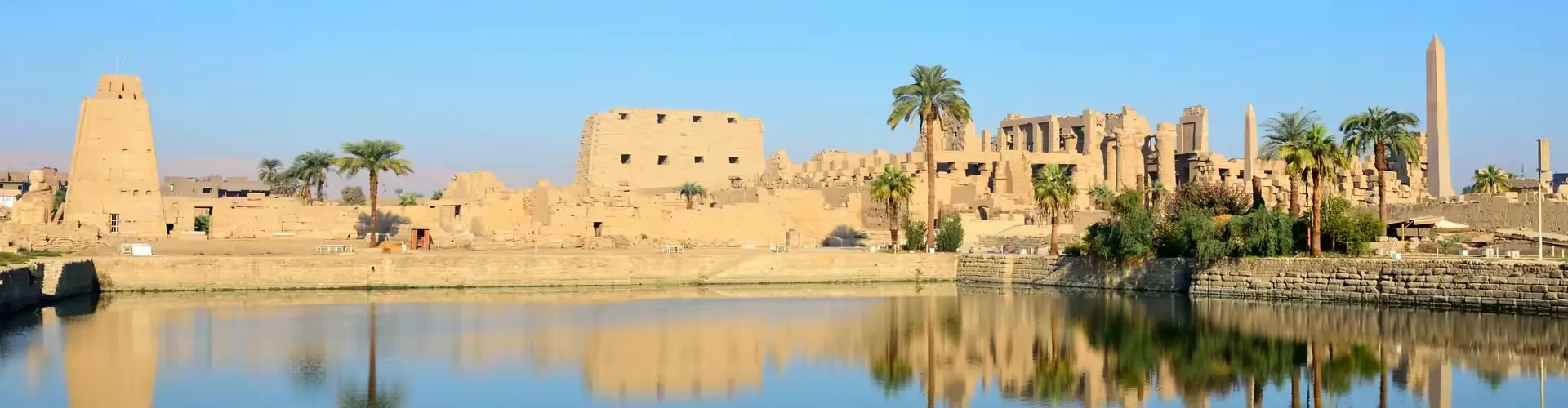
Nearby stand two obelisks; the larger, erected by Hatshepsut, is almost 30 m (98 ft) high. You can still see the sacred lake, where the priests cleansed themselves before performing the temple rites. Karnak is open every day from 6 am (06:00) to 5 pm (17:00).
An avenue of sphinxes once joined Karnak to Luxor Temple, and processions followed it during the Opet Festival. The Luxor East Bank Day Trip: Karnak and Luxor Temples Tour is a private tour of both temples with an Egyptologist guide, starting from your hotel in Luxor. After dark, the Karnak Temple Night Show: Ancient Egypt Sound and Light Tour takes you to Karnak for its sound and light show, which, as the operator describes it, ends with the audience seated by the sacred lake.
Luxor Temple lies about 3 km (1.9 miles) south of Karnak Temple. Amenhotep III built the heart of the temple and also the Great Colonnade, two rows of seven colossal columns.
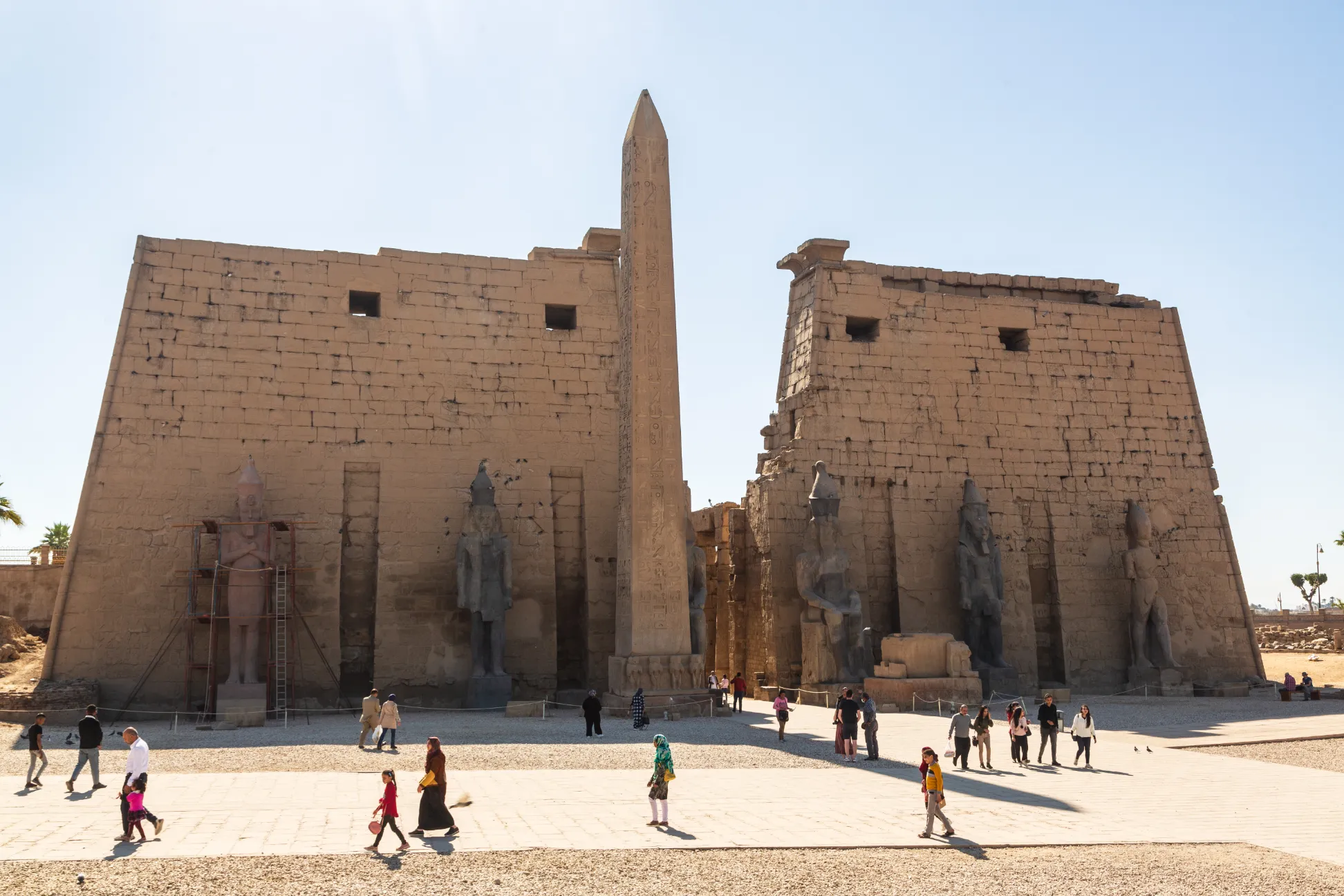
Ramesses II fronted his pylon with a pair of obelisks 25 m (82 ft) high: only one remains in place, and the other has stood in the Place de la Concorde in Paris since 1836. Luxor Temple stays open later, from 6 am to 8 pm (06:00 to 20:00), which leaves room for a visit late in the day.
The Mummification Museum in Luxor explains how the ancient Egyptians preserved the body, a process believed to have taken around 70 days. The museum is open every day from 9 am to 2 pm (09:00 to 14:00) and again in the evening from 5 pm to 9 pm (17:00 to 21:00). The Guided Half-Day Tour of Luxor and Mummification Museum pairs it with the Luxor Museum, with a guide and transport to and from your hotel.
Because the sun god set in the western horizon to be reborn in the east, the west came to have funerary associations, and Egypt's Ministry of Tourism and Antiquities notes that ancient Egyptian cemeteries were generally on the west bank of the Nile.
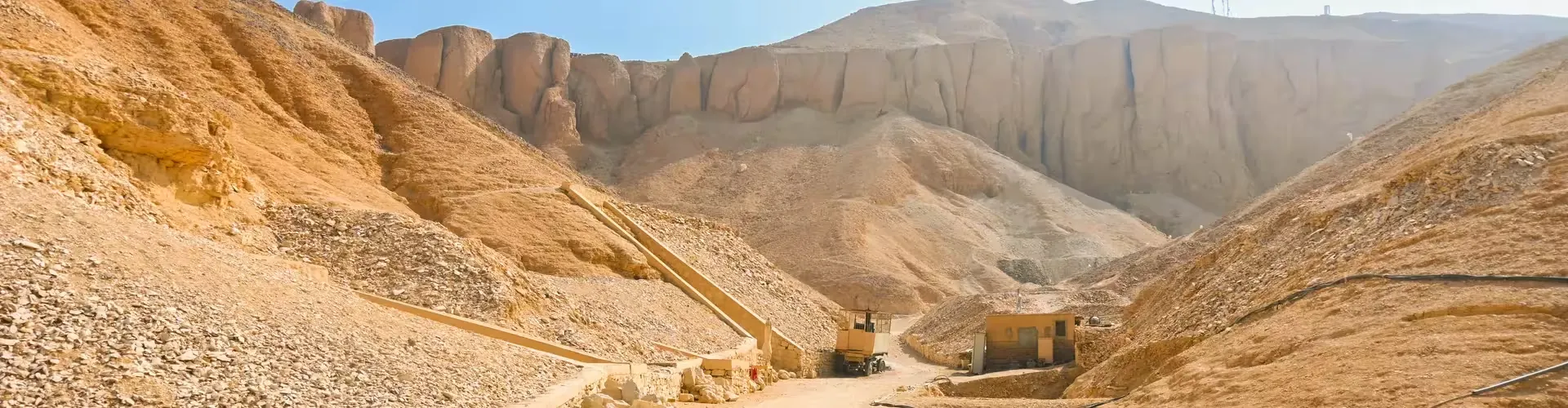
The valley splits into an East and a West Valley, with over sixty tombs and another twenty left unfinished, barely more than pits. The kings were laid to rest under a pyramid-shaped peak rising out of the cliffs around the valley. The valley is open from 6 am to 5 pm (06:00 to 17:00), the same hours as Karnak.
According to Egypt's Ministry of Tourism and Antiquities, the tomb of Tutankhamun is the only royal tomb in the Valley of the Kings that was found relatively intact. Howard Carter discovered it in 1922. The tomb, numbered KV62, is modest in size and decoration compared with the other royal tombs there, and only the walls of its burial chamber are decorated.
The Valley of the Kings Tour with King Tut Tomb collects you at your Luxor hotel, crosses to the west bank and centres on the tomb of Tutankhamun; the operator's page also lists a stop at Howard Carter's house. The Luxor Day Trip Valley of the Kings and Hatshepsut Temple combines the Colossi of Memnon and Hatshepsut's temple with the Valley of the Kings.
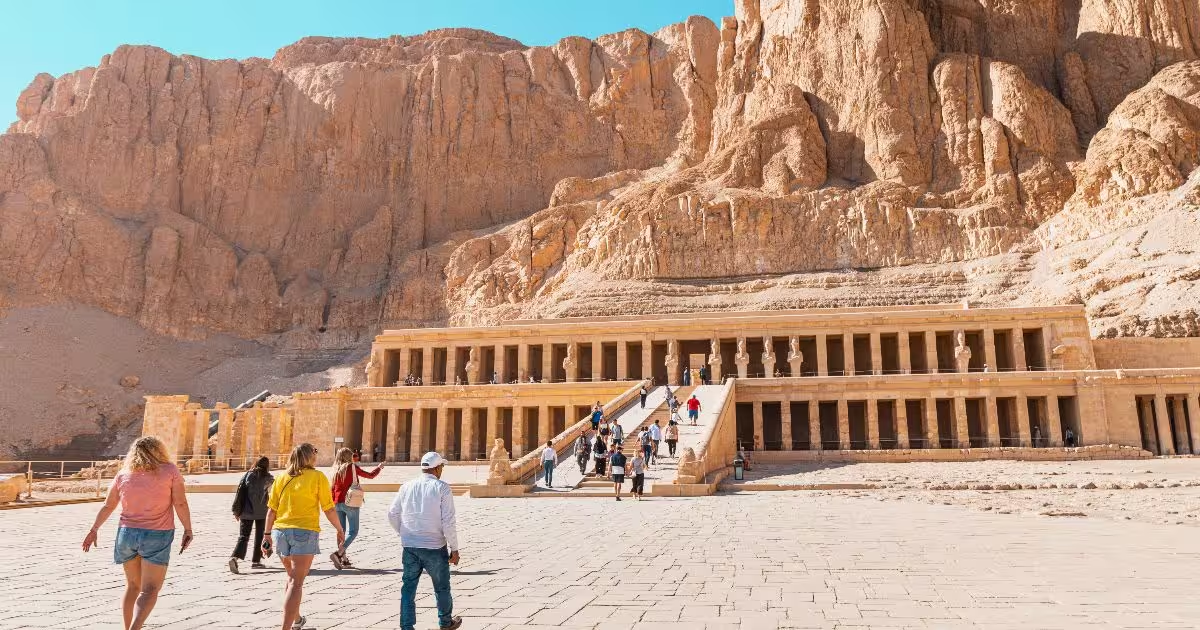
Hatshepsut's temple at Deir al-Bahari lies directly across the Nile from Karnak Temple. The temple has three levels, each with a colonnade at its far end. Reliefs in the portico of the Middle Platform show Hatshepsut's expedition to Punt, believed to be near modern Eritrea. It keeps the same hours as the Valley of the Kings and Karnak.
On the west bank, the Theban Necropolis covers about 10 km² (3.9 square miles), and archaeologists have found thousands of tombs and scores of temples there. The Valley of the Queens holds the tomb of Nefertari, wife of Ramesses II.
The Luxor Private Tour: Valley of Queens & Medinet Habu is a private day with an Egyptologist guide at the Valley of the Queens, Medinet Habu and Deir el-Medina, which the operator presents as the village of the craftsmen who built the royal tombs. Pickup is arranged at your hotel.
The west bank sites open early and Luxor Temple stays open into the evening, so a single day can start across the river and end on the east bank. The Full-Day Guided Tour of Luxor East and West Bank Sites follows that order: the Valley of the Kings, Hatshepsut's temple and the Colossi of Memnon in the morning, then Karnak and Luxor Temple in the afternoon. Hotel pickup in Luxor is included.
For time on the river itself, the Felucca Boat Tour on the Nile in Luxor at Sunset sails a traditional felucca from the corniche in Luxor.
Read the current GOV.UK travel advice for Egypt, or your own government's current advice, before you book. The UK Foreign, Commonwealth and Development Office (FCDO) advises against all but essential travel west of the Nile Valley and the Nile Delta, but that advice does not cover Luxor, Aswan, Abu Simbel or the Valley of the Kings. GOV.UK warns that terrorists are likely to attempt attacks in Egypt, and that these could be indiscriminate, also in places foreign visitors go. If you need to report a crime, call the tourist police on 126.
GOV.UK advises checking with your tour company ahead of booking a hot air balloon flight. It also reports that some UK operators no longer sell these flights, as they could not confirm the safety standards.
Dress modestly, above all in mosques, souqs (markets) and rural areas. GOV.UK notes that, under Ministry of Tourism regulations, you need written permission from an Egyptian citizen before you photograph them. It is illegal to use drones to take photos near sensitive sites, and drones may not be imported or used without the prior permission of the Egyptian Ministry of Defence. During Ramadan, check the opening hours of shops and restaurants and follow local dress codes.
Your passport needs at least one blank page and must stay valid for at least 6 months after the day you arrive in Egypt. British passport holders usually need a visa for Egypt, and an e-visa arranged in advance can save delays. To enter Egypt you need a yellow fever vaccination certificate if you are coming from a country listed as a transmission risk. The GOV.UK health advice for Egypt advises checking the latest vaccine recommendations for Egypt at least 8 weeks before your trip, and lists dengue among the health risks.
If you are continuing south by river, see the guide to Nile cruises from Luxor to Aswan.
For daytime sightseeing, yes. January averages highs of 23.0 °C (73 °F) and lows of 5.9 °C (43 °F) in Luxor, against highs of 41.4 °C (107 °F) in July, and rain days are rare from November to March. Bring a warm layer for the early mornings.
Yes, with an early start: begin with the tombs and temples across the river and finish at Luxor Temple, which stays open into the evening. Two days leave more time inside each site.
Yes. Howard Carter found it in 1922. The Ministry of Tourism and Antiquities describes it as the only royal tomb found relatively intact in the valley. It is smaller and plainer than the other royal tombs there, with decoration only in the burial chamber.
GOV.UK advises talking to your tour company before you book one, because some UK operators stopped selling balloon flights when they could not verify safety standards. Read the current advice before you decide.