Last updated:
Óbidos lies north of Lisbon, in the Oeste region, with Caldas da Rainha and Peniche as its neighbours. Walls still ring the old town, and the castle and the streets inside them are recorded together as one historic ensemble. This page enters through the main gate, climbs onto the ramparts, looks into the church where Josefa de Óbidos left her paintings and ends outside, by the aqueduct.
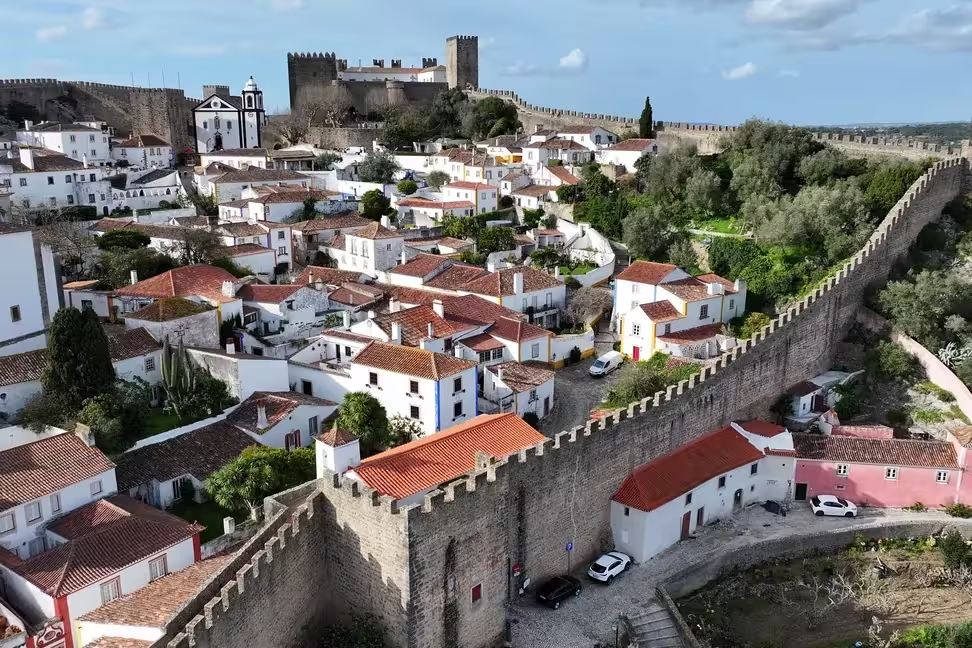
The castle passed from Moorish to Christian hands in the twelfth century. In the late thirteenth century King Dinis gave Óbidos to his bride, Queen Isabel, and later kings went on handing it to their own queens. That custom is why Portuguese still call it the town of the queens, Vila das Rainhas.
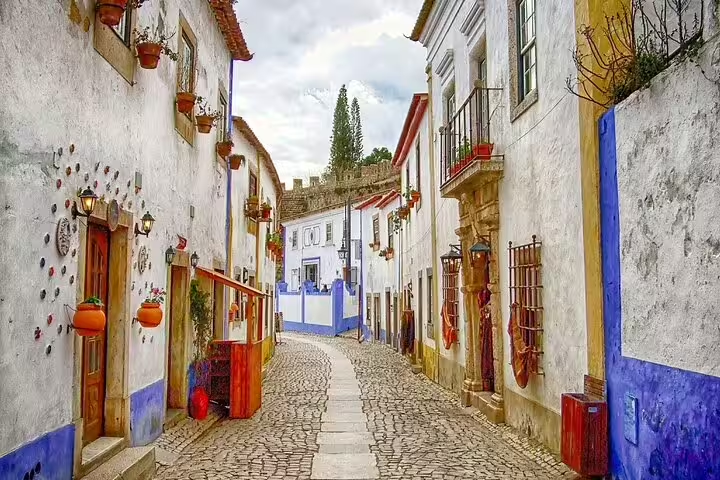
Most people arrive by the Porta da Vila, the main gate. Stop inside the passage and look up: blue and white tiles cover its walls around a small oratory. Beyond it, Rua Direita, the main street, rises between whitewashed houses trimmed in blue and yellow all the way to the castle, with cobbled lanes branching off on both sides. Along the way you will notice ginjinha, also called ginja, the local cherry liqueur, which Óbidos traditionally serves in a small chocolate cup.
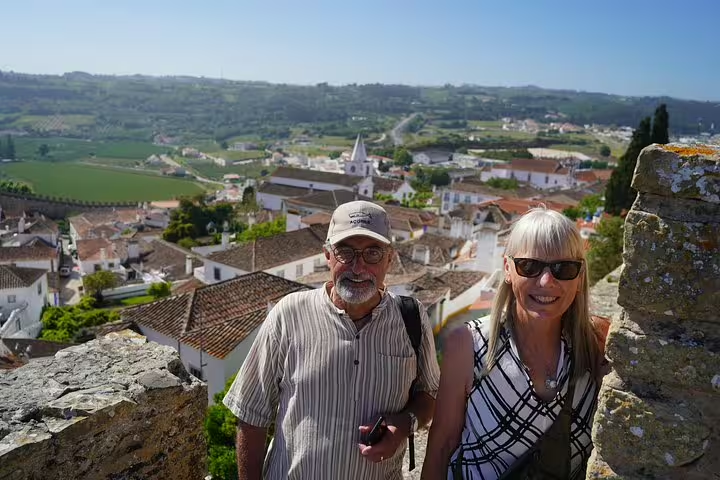
Stairs close to the gate lead onto the walkway along the top of the walls, and it is possible to follow it right round the town, looking down on red roofs and narrow streets. The path is tight, with a drop on one side and no railing for most of the way, so wear shoes with a good grip, give it a miss if heights trouble you and keep children close.
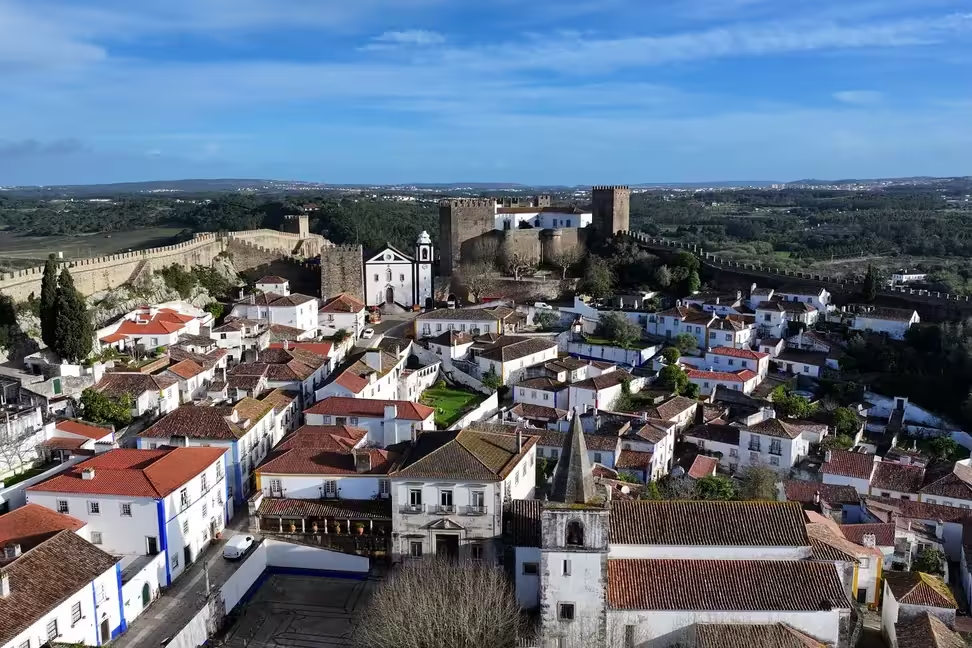
Inside the walls stands the Igreja de Santa Maria. King Afonso V was married here in the fifteenth century, and the church keeps the tomb of João de Noronha the Younger. Among its paintings are works by Josefa de Óbidos, an artist born in Seville around 1630 who was working in Óbidos by 1653 and died here in 1684. Her art shows the influence of Francisco de Zurbarán.
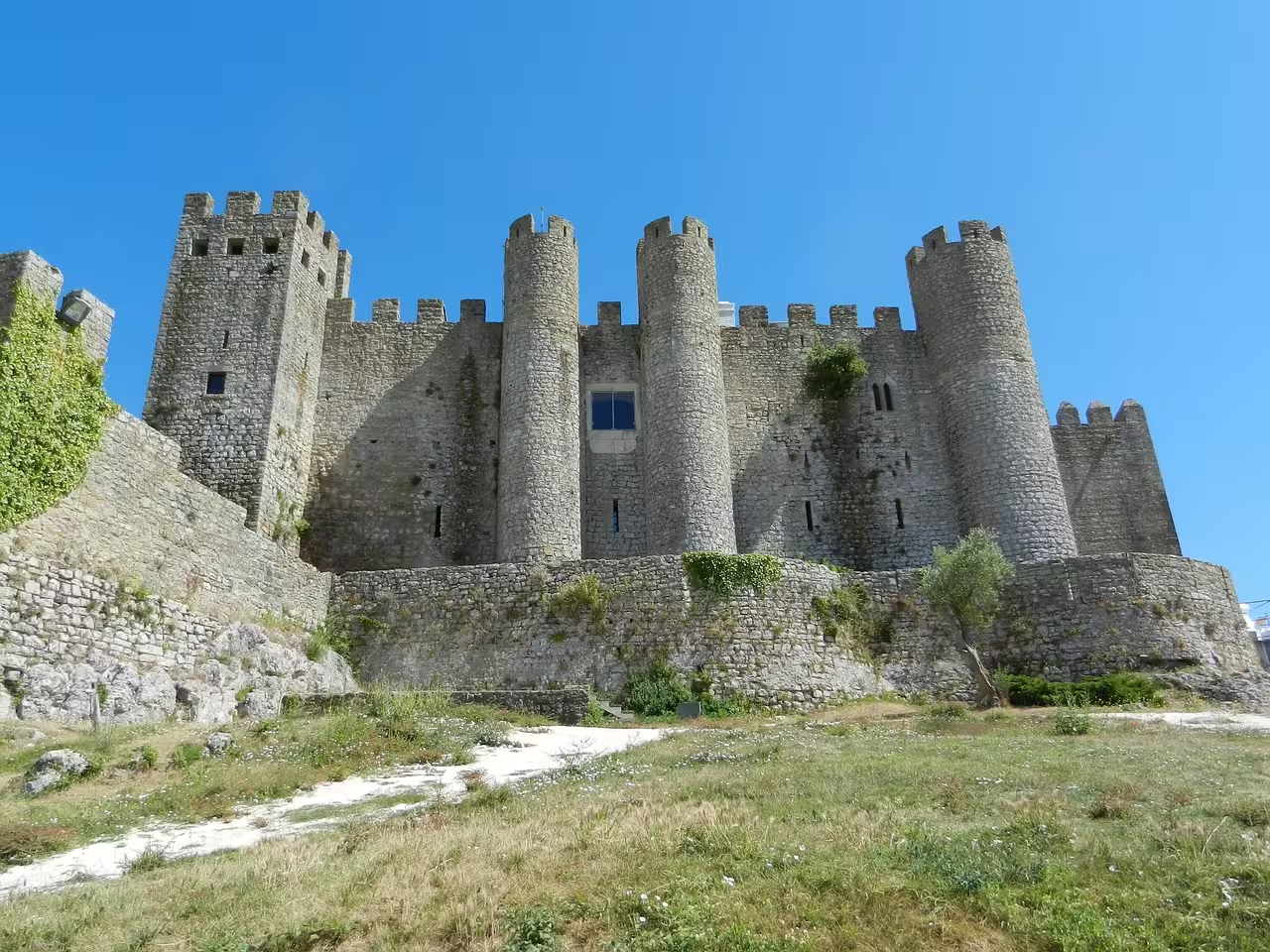
At the far end of Rua Direita rises the Castelo de Óbidos. It is now a hotel, so most visitors admire it from the street and from the ramparts. Beyond the walls, close to the main road into town, stand the arches of the aqueduct. It was built in the sixteenth century under Queen Catherine of Austria to carry water to Óbidos.
Five private tours let you set the pace. A half day from Lisbon joins Óbidos and Nazaré, while a day that begins in Sintra keeps its second half for the walls, the Porta da Vila and Rua Direita. Also from Lisbon, one private day adds Fátima and Nazaré to a walk through the walled town and a visit to the Igreja de Santa Maria, another, with pickup in Lisbon or Cascais, ends here with time on the castle ramparts, and a longer one starts in Óbidos before Nazaré, Alcobaça, Batalha and Fátima.
Small groups follow set routes from Lisbon. The shortest pairs Óbidos with Nazaré, entering by the main gate and climbing onto the ramparts. Three full small group days, one, a second and a third, visit Fátima, Batalha and Nazaré first and finish the day inside the walls of Óbidos.
More trips through the town are on the Óbidos destination page.
Yes. The way up is by the Porta da Vila, but take care: there are few handholds and the drop is real.
It works as a hotel today, so it is mostly seen from outside.
From King Dinis onwards, Portuguese kings often gave it to their queens as a gift.
A painter of the seventeenth century who lived and worked in the town; several of her works hang in the Igreja de Santa Maria.
Sources: Wikidata (CC0).