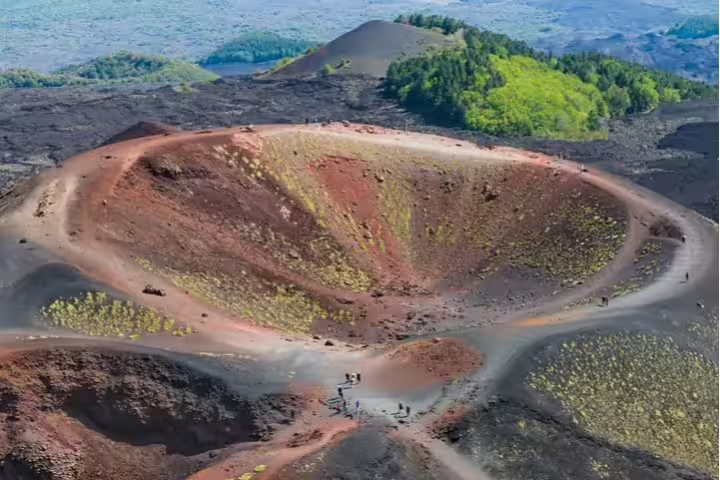
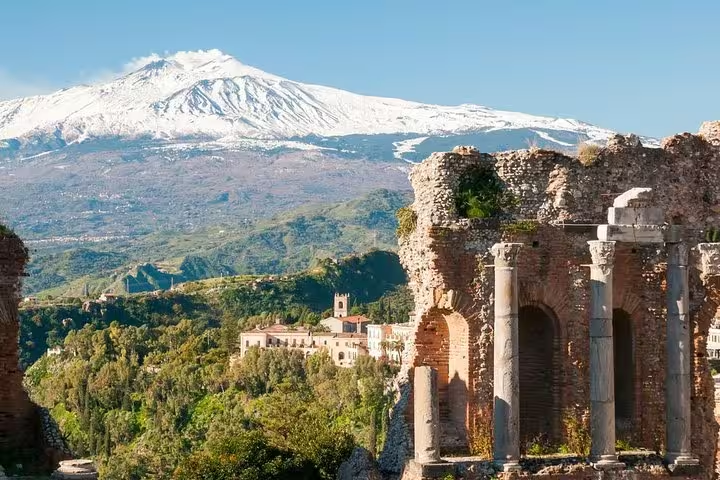
Etna rises above the eastern coast of Sicily. It is the tallest mountain on the island, and no other Mediterranean island has a higher one. It is also among the most restless volcanoes on Earth, and people come up its slopes from Catania, Taormina and the rest of Sicily to walk among old craters and fields of black lava. This page explains what keeps Etna active, what you see on the mountain, why it is a World Heritage site and how to go up it.
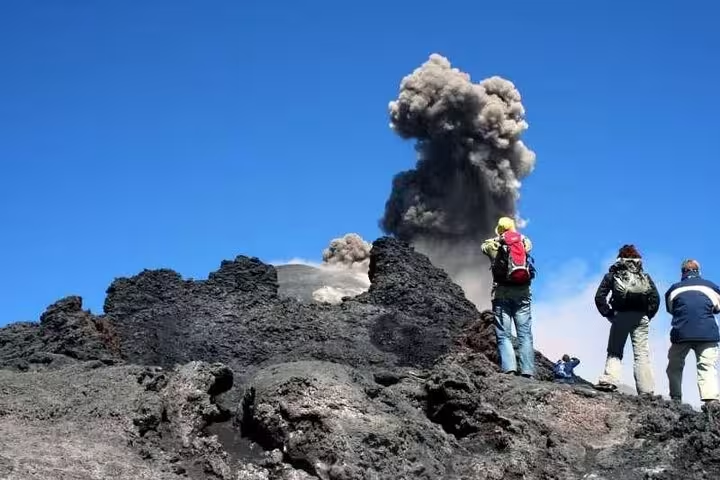
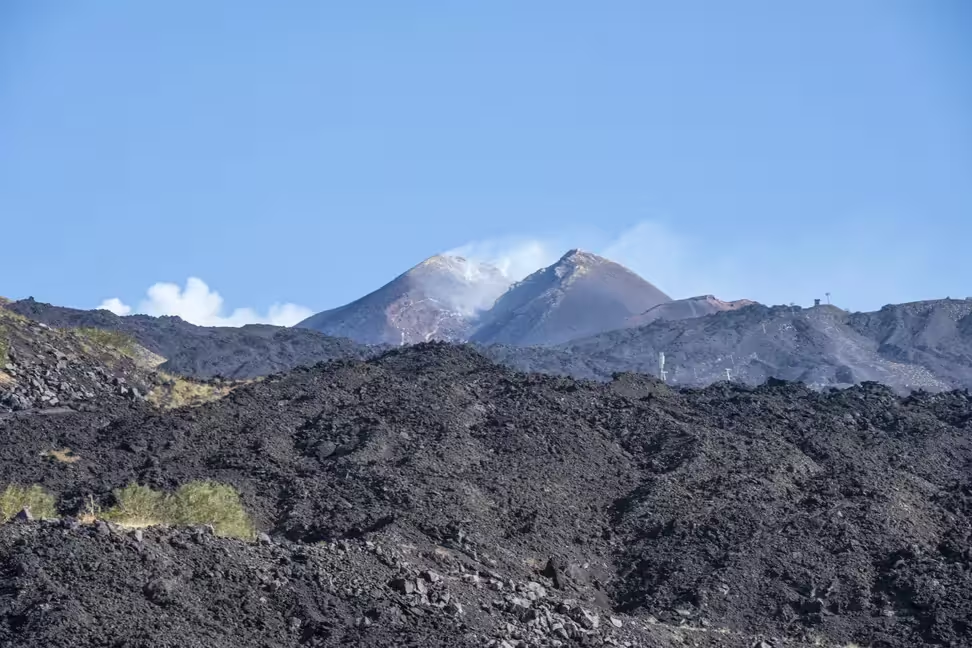
Etna is a stratovolcano, and its summit craters erupt almost without pause. Every so often lava also breaks out lower down, pouring from craters and fissures that open on the flanks of the mountain. Its eruptive story reaches back 500,000 years, and for at least 2,700 years people have written down what it did, which makes Etna's one of the longest written records of a volcano anywhere.
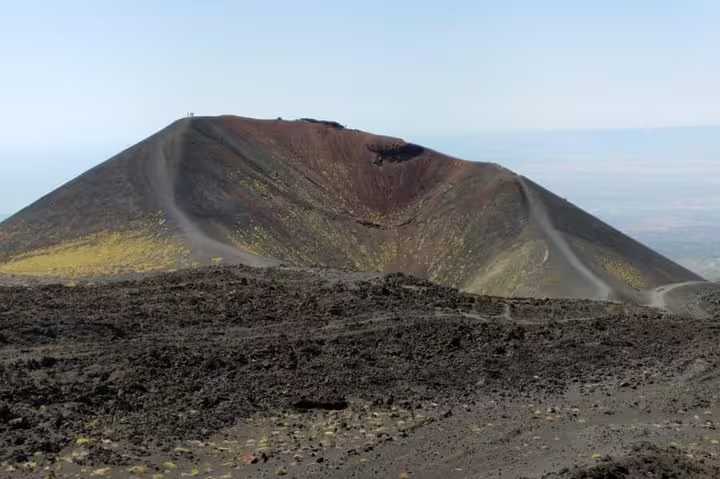
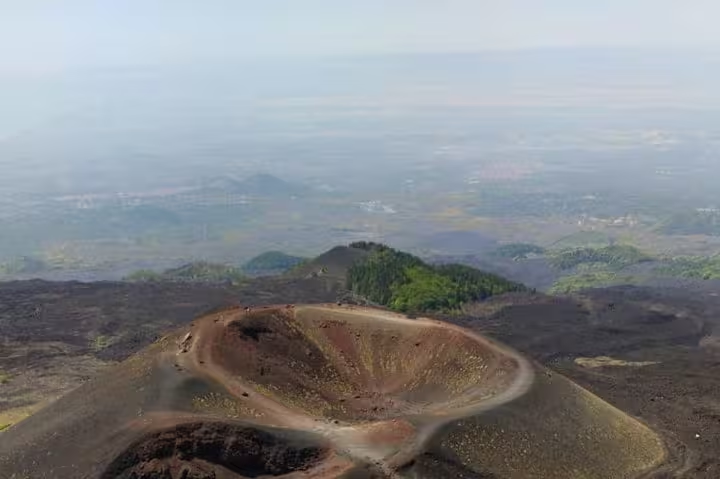
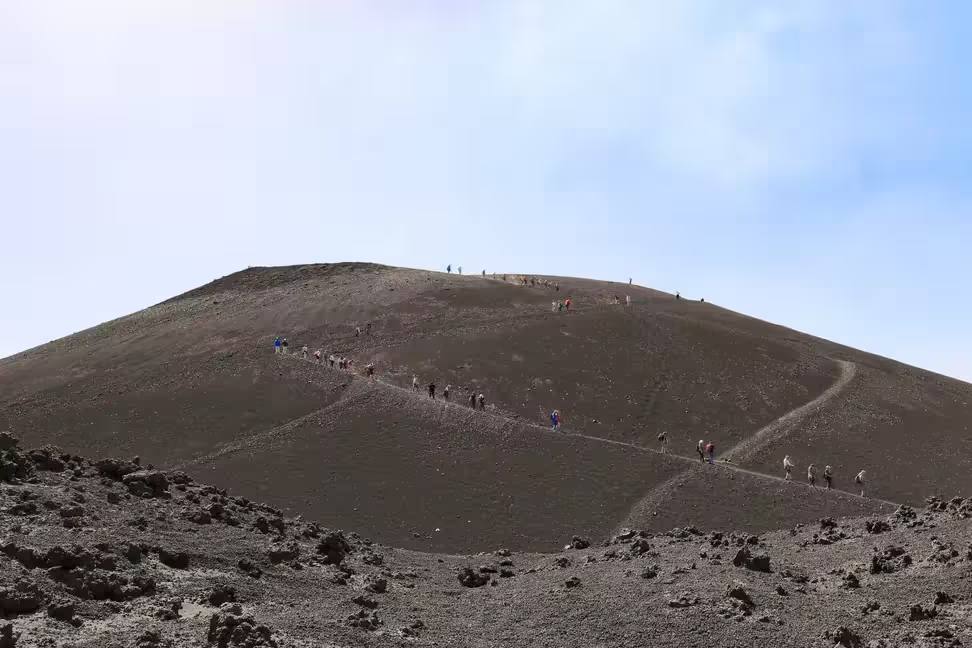
Walking on Etna means crossing a landscape built by eruptions: the summit craters, cinder cones scattered over the slopes, tongues of hardened lava, lava caves and the wide hollow of the Valle del Bove. Because so many of these forms can be reached and compared side by side, the mountain has long drawn researchers and school groups as well as walkers.
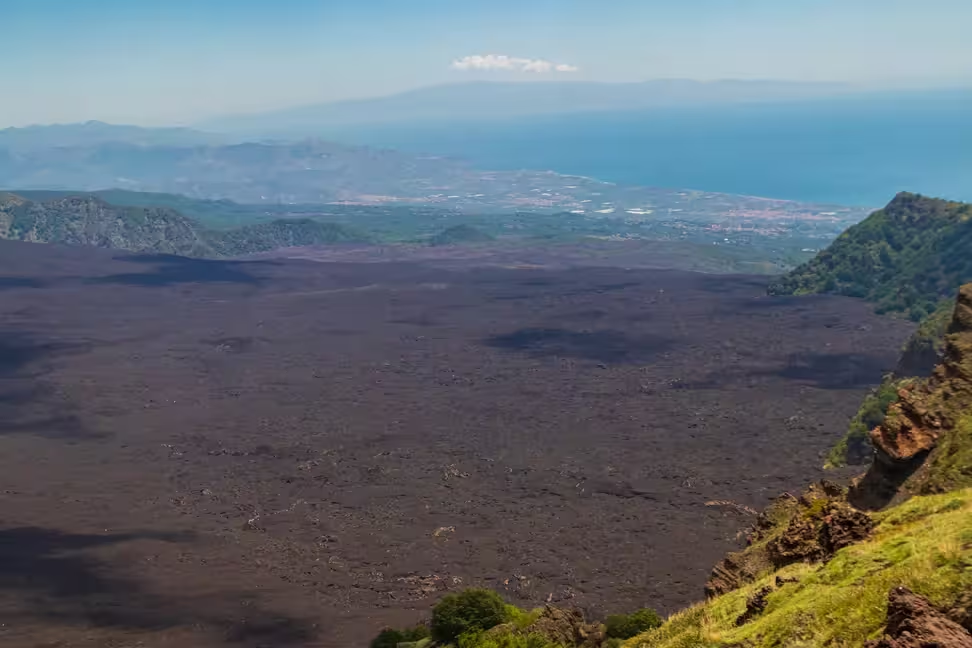
The volcano joined the World Heritage list in 2013, under criterion (viii), as an outstanding example of geological processes still under way and of the landforms that volcanoes create. The protected area covers 19,237 hectares of uninhabited land on the highest part of the mountain, with a further 26,220 hectares of buffer zone around it. Etna is also home to land ecosystems with plants and animals found nowhere else, and its constant activity turns it into an open air laboratory for ecologists and biologists. Few volcanoes are watched and studied as closely, and what scientists learn here still shapes volcanology, geophysics and the other Earth sciences.
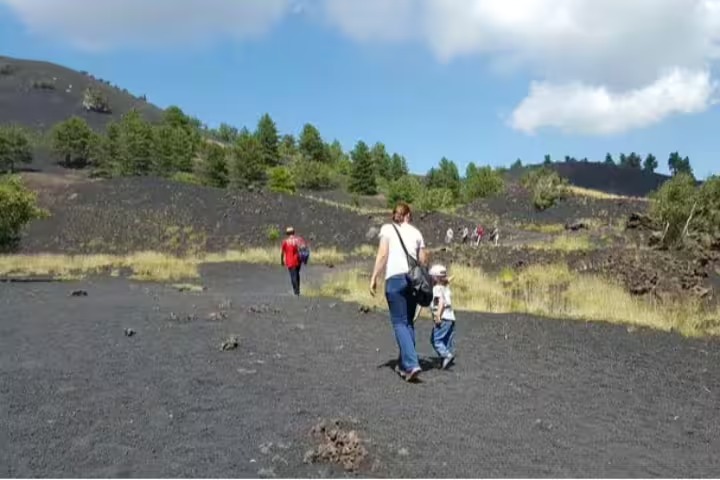
Most visits leave from the coast below the volcano. From Catania you can join a half day with a volcanologist up to the summit area, with a lava cave on the way back; an easy morning walk among side craters and lava fields; or a walk to the Silvestri craters followed by a tasting of Etna wines. From Taormina, a full day by 4x4 on the northern slopes includes a lava cave and lunch in the countryside. If you are staying further away, a private day from Cefalù or a private trip from the port of Messina pairs the volcano with Taormina. Weather and eruptions decide how high any group can go on a given day.
Every trip that starts or stops here is also listed on the destination page.
Yes. Its summit craters are in almost continuous eruption, and lava flows from the flanks are fairly frequent.
It is the highest in Sicily and the highest on any island in the Mediterranean.
A large depression on the volcano, one of the landforms listed among Etna's main features alongside its craters, cinder cones and lava caves.
Since 2013, for the value of its ongoing geological processes and volcanic landforms.
Sources: Ministero della Cultura (cultura.gov.it) (CC BY 3.0): monte-etna.