Last updated:
Córdoba keeps three of its great sights within a short walk of each other: the Mosque-Cathedral, the lanes of the Judería with their medieval synagogue, and the Alcázar de los Reyes Cristianos beside the Guadalquivir. Each one tells a different chapter of the city's past, and together they show how many cultures have left their mark on the same few streets. This page looks at the three in turn and ends with the guided visits that bring them together.
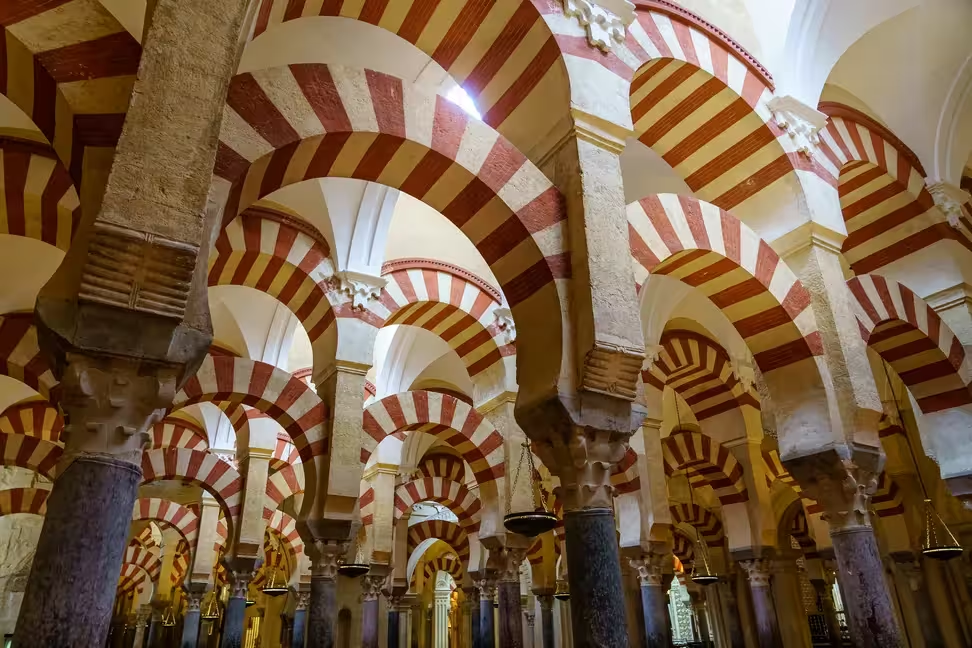
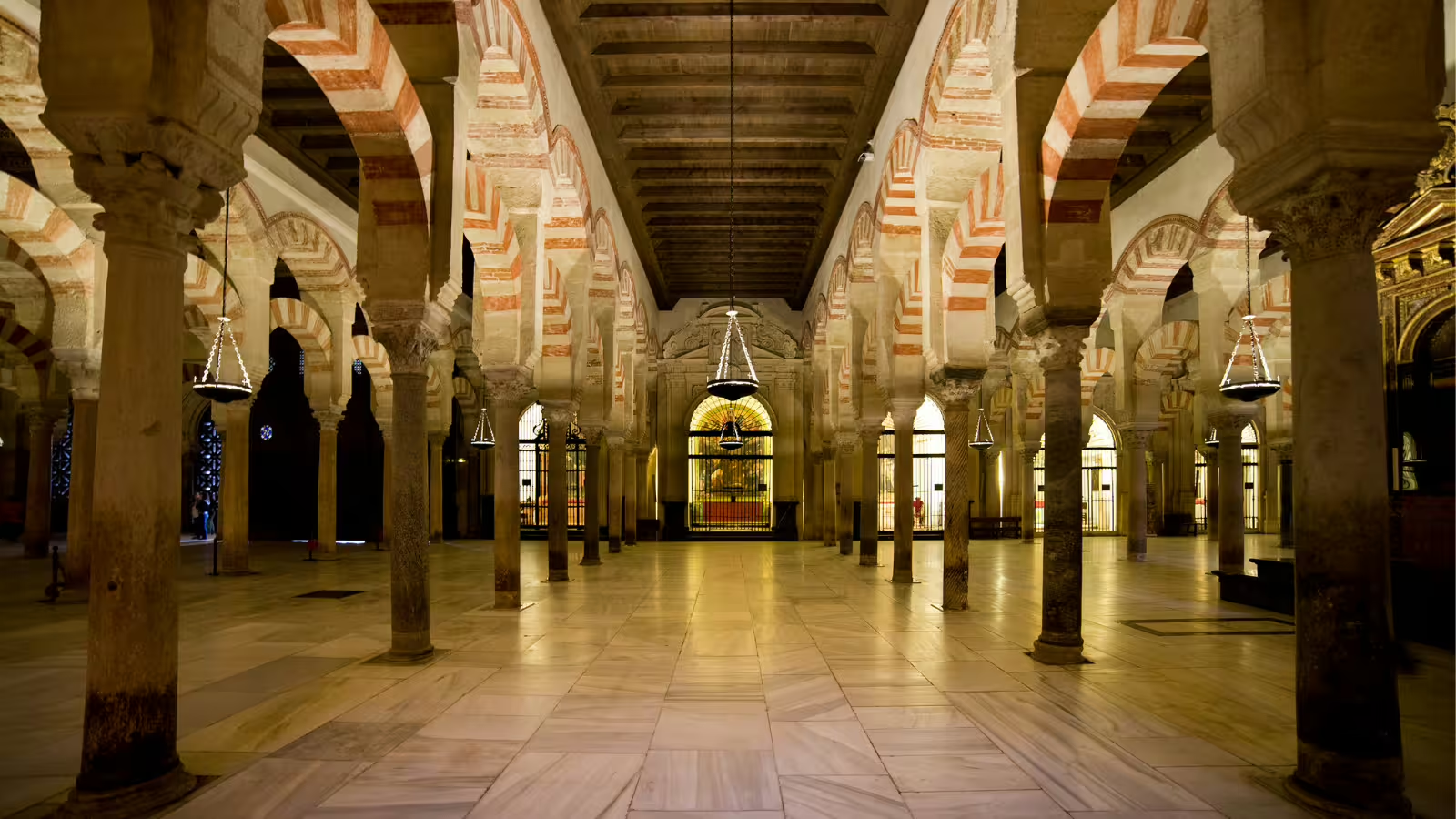
The Mosque-Cathedral rose on top of an earlier Visigothic basilica, and it ranks among the masterpieces of the Arab world. Its builders drew on the mosque of Damascus, yet they found new ways of building that let them reuse materials already at hand. What came out of it is a real forest of columns holding up arches whose voussoirs alternate in white and red. Under the Umayyad caliphate the prayer hall was altered and enlarged many times, Almanzor's extension among them, so the building mirrors each stage of Islamic rule in a city that was capital of Al-Andalus under the Emirate and the Caliphate.
Later the building became a Christian cathedral, and a new central nave went up in the middle of the arches, in sharp contrast with everything around it. Every change left a trace you can still see: the Islamic arcades; the Byzantine mosaics of the mihrab; the Mudéjar Puerta del Perdón; and the Renaissance transept. Few buildings let you read so many centuries in a single visit.
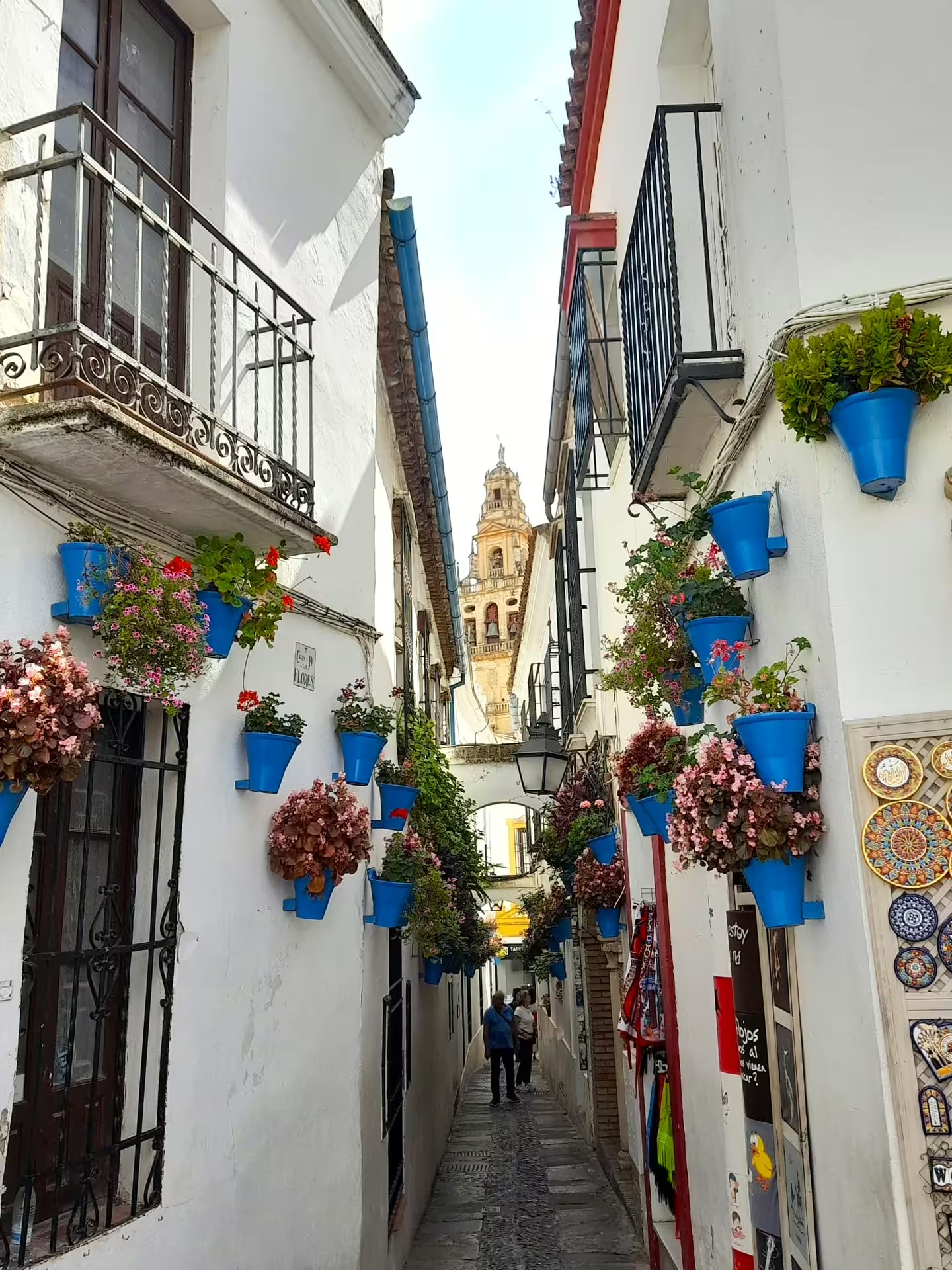
Beside the Mosque-Cathedral lies the Judería, the old Jewish quarter, a living reminder of the Jewish culture that was part of the city in the Middle Ages. Its best-known building is the Synagogue, which dates from the early 14th century and is a magnificent example of Mudéjar architecture. In 1994 the protected area around the Mosque was extended to take in the streets that surround it, among them the San Basilio quarter, with its irregular grid of narrow lanes; the Roman Bridge over the Guadalquivir; the Calahorra Tower; the Alcázar; and the Synagogue itself.
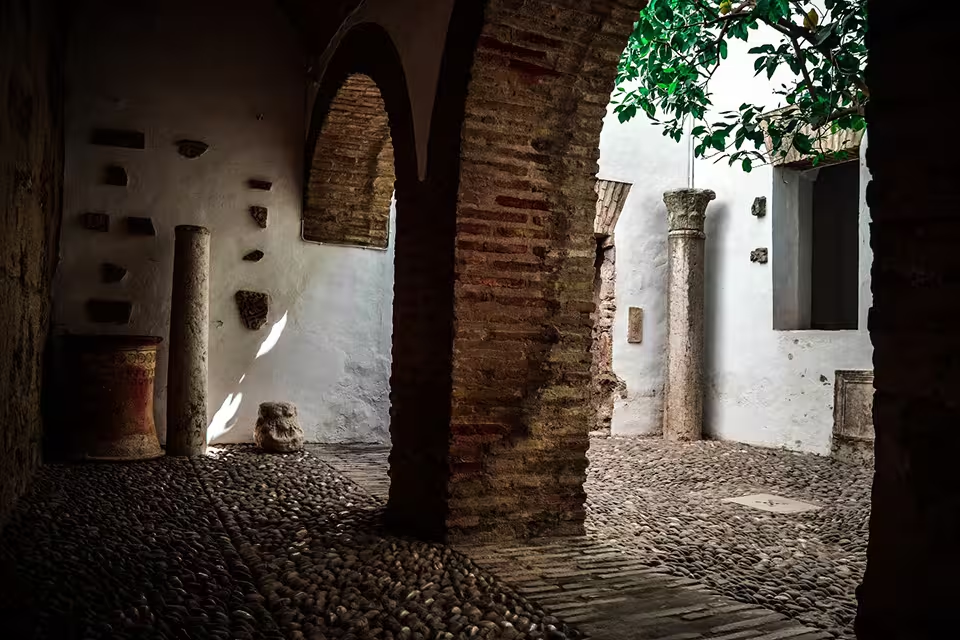
Behind many doors in these streets are the patio houses so typical of Córdoba, which go back to Roman times and were later reinterpreted by Islamic culture. Down by the river, Roman Córdoba is still present in the bridge over the Guadalquivir, from the age of Augustus, while the columns of the Temple of Claudius Marcellus date from the 1st century.
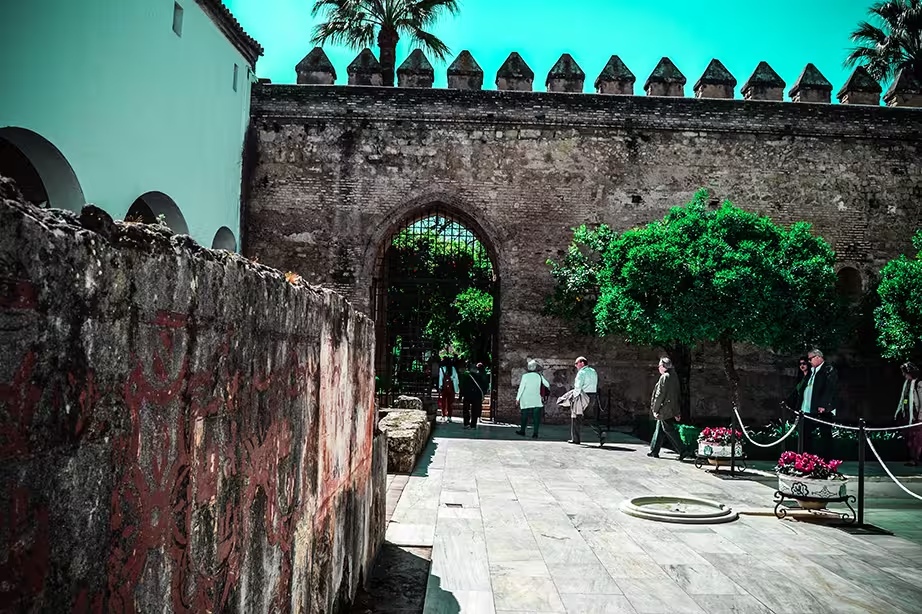
A short walk away, on the bank of the Guadalquivir, the Alcázar rises behind its solid walls. The present building was ordered by Alfonso XI in 1328, but the site had been a royal residence since 1236, when Fernando III took the city. Roman and Visigothic remains share the ground with Arab ones: in Roman times this was a fortress on the riverbank, and under Muslim rule it was part of the Umayyad alcázar. Along with the Calahorra, it is one of the two key buildings of Christian medieval Córdoba.
For ten years the campaign to conquer the Kingdom of Granada was planned from here, so the Catholic Monarchs stayed at the Alcázar many times. Their daughter María, later queen of Portugal, was born within its walls, and it was here that the talks with Christopher Columbus took place before his first voyage to America. Other uses followed: the Inquisition had its seat here in the early modern period; it served as a prison from 1822 to 1931; and military premises occupied it until it passed to the city council in 1955.
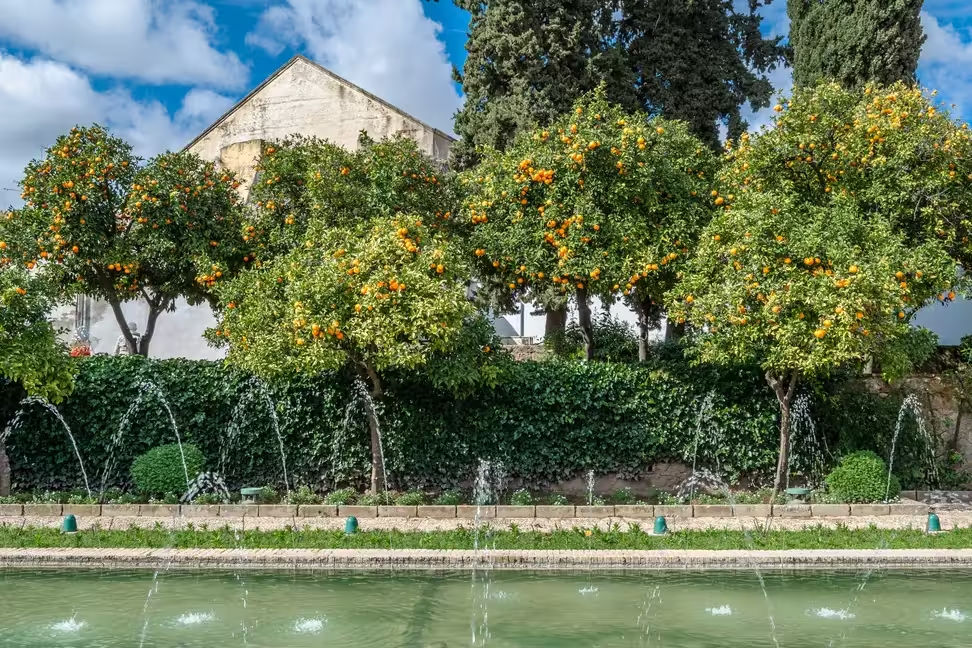
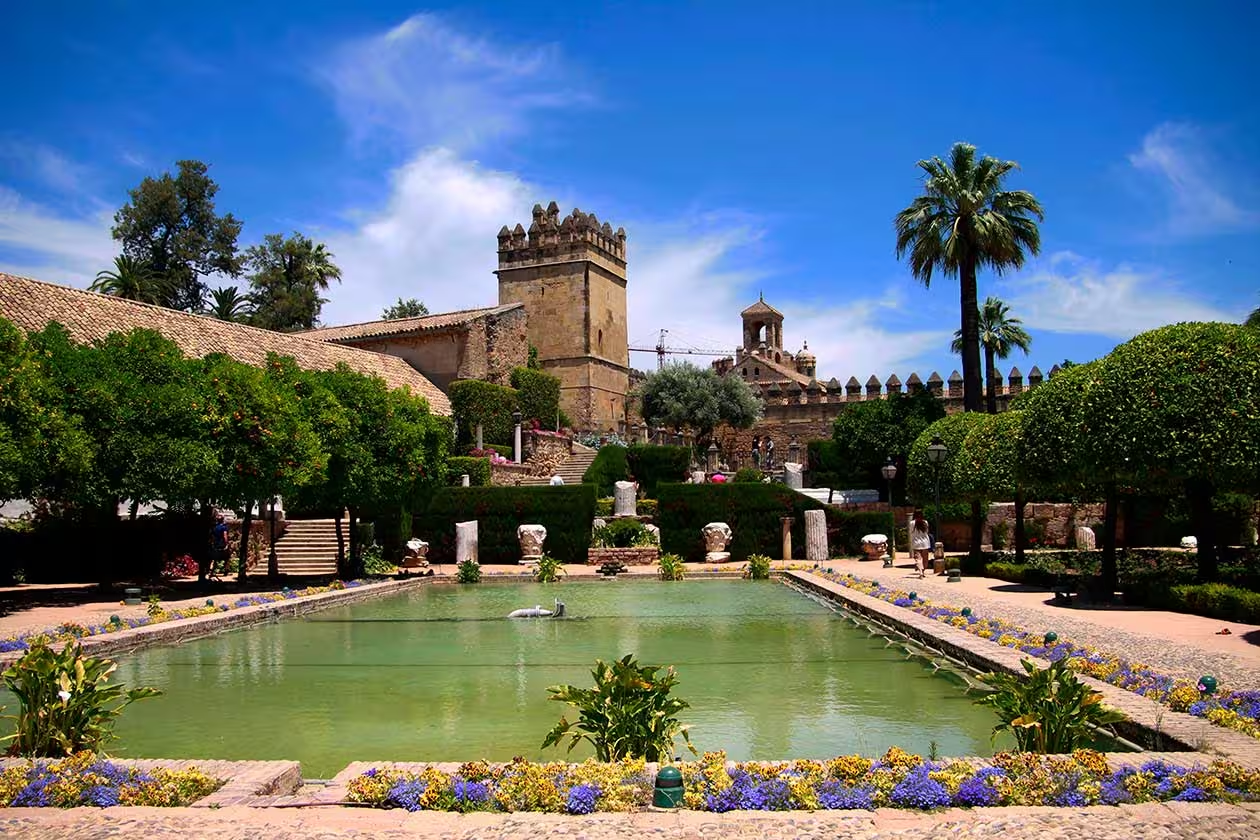
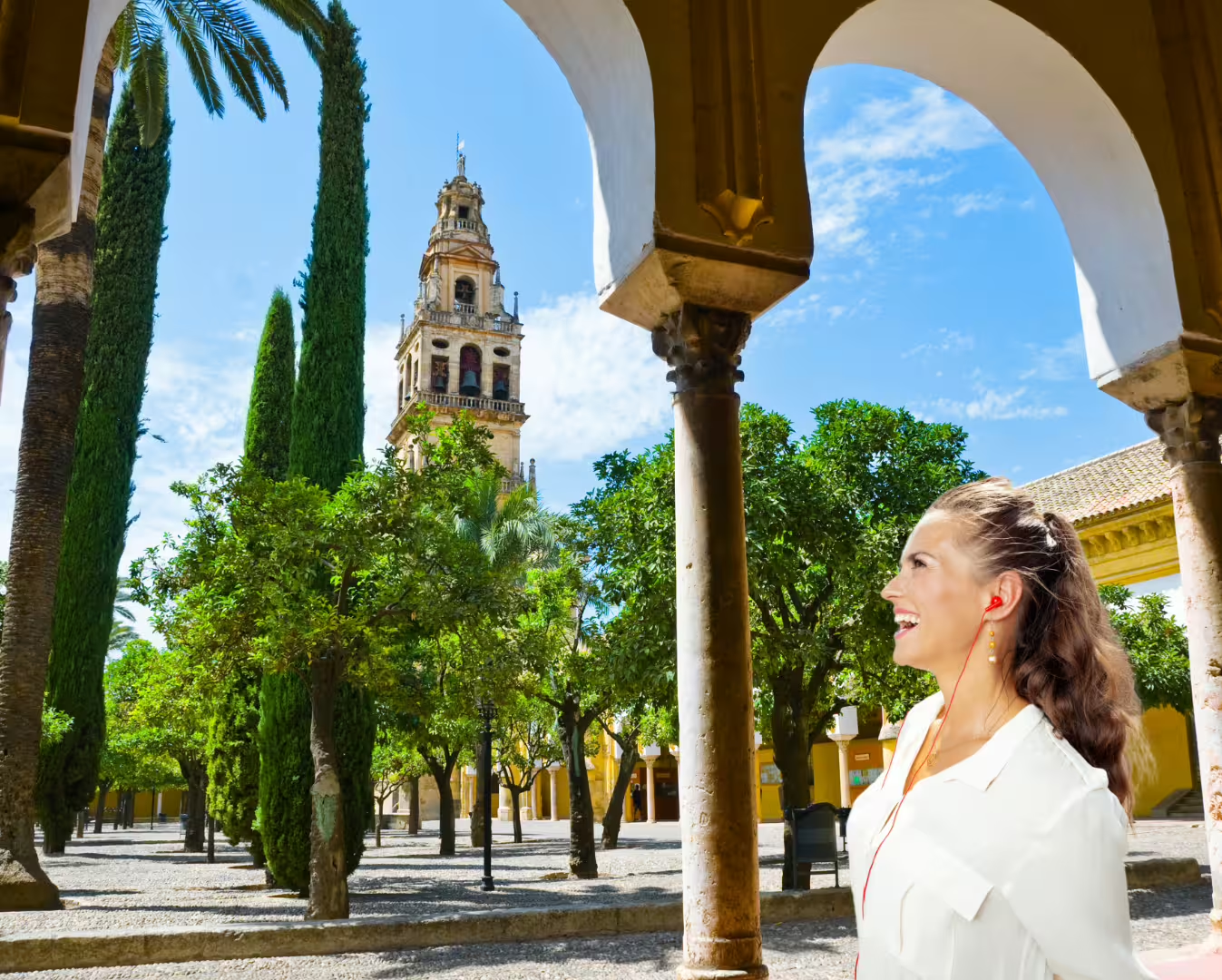
The Alcázar forms an almost square enclosure with a tower at each corner. The main one, the Torre del Homenaje, is where the oath to defend the fortress was sworn and where kings were proclaimed; the Torre del León, the oldest of the group, owes its name to one of the gargoyles on its upper floor. Inside, the Salón de los Mosaicos, once the chapel of the Inquisition, displays Roman mosaics of the 2nd and 3rd centuries AD, found in 1959 beneath the Plaza de la Corredera; one of them shows Polyphemus and Galatea. Outside, the gardens grew out of the old Huerta del Alcázar and cover some 55,000 square metres, where palms, cypresses, orange and lemon trees alternate with fountains and ponds in the Arab garden tradition.
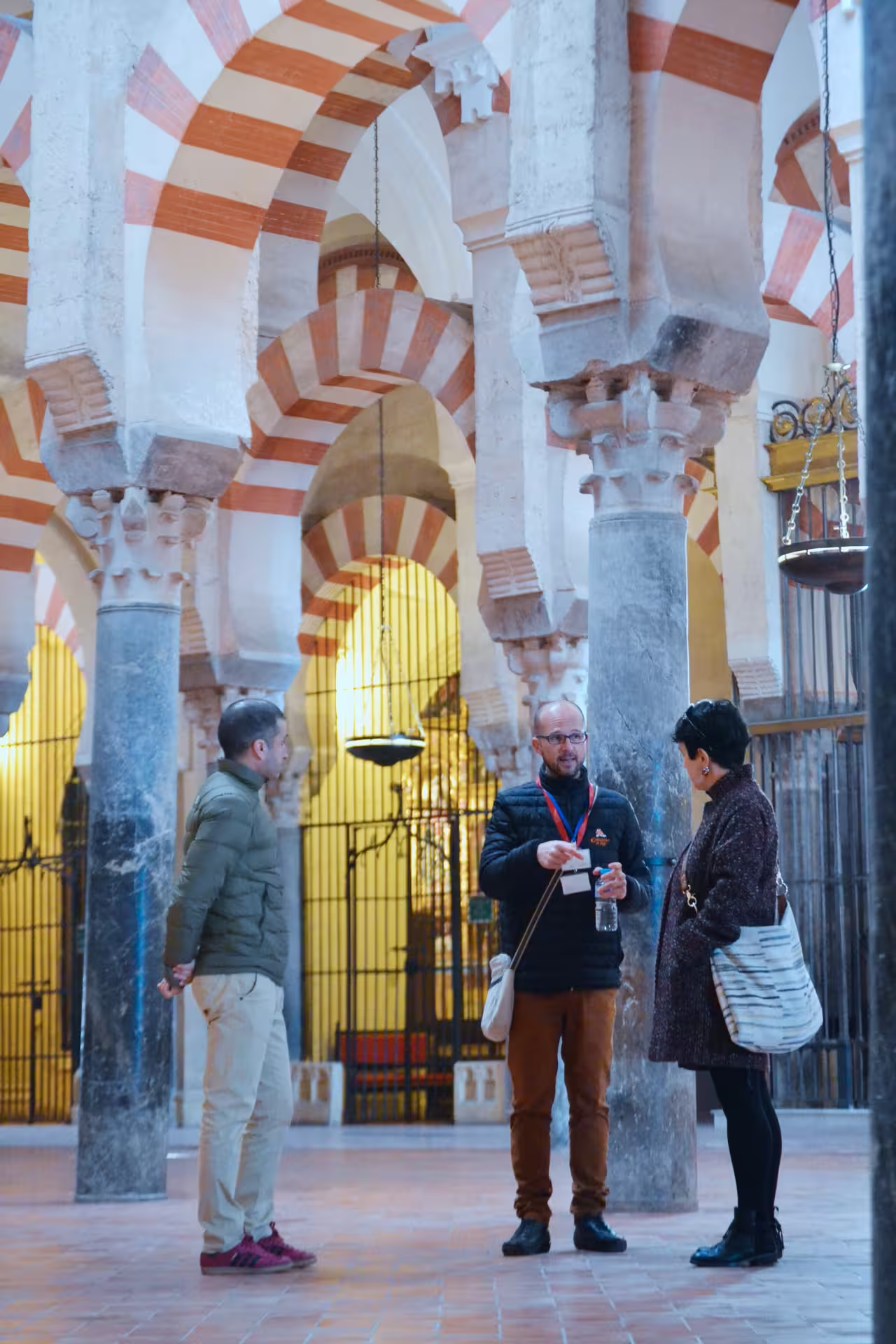
A guided visit is an easy way to link the three sights. A guided tour of the Mosque-Cathedral and the Alcázar gardens walks you through the forest of arches and then on to the Alcázar; a guided tour of the Judería and the Alcázar gardens follows the lanes of the old Jewish quarter, passes the synagogue and ends at the Alcázar. From the coast, a private day trip from the Costa del Sol spends most of its time in the Mosque-Cathedral and the Judería.
Every trip that starts or stops here is also listed on the destination page.
Their wedge-shaped stones alternate between white and red, and they rest on row after row of columns.
It was built in the early 14th century, in the Mudéjar style.
King Alfonso XI ordered it in 1328, on a site that kings had used as a residence since 1236.
Yes. The royal fortress by the river is where they discussed his plans, ahead of the first crossing.
About 55,000 square metres of ponds, fountains and trees such as palms and orange trees.
Sources: Origen de los datos: Ministerio de Cultura (Ley 37/2007); Información obtenida del Portal de la Junta de Andalucía (CC BY 3.0): 1984-cordoba.html, patrimoniocultural; Información obtenida del Portal del Ayuntamiento de Córdoba (CC BY 3.0): alcazar-de-los-reyes-cristianos.