Ras Al Khaimah: tours, mountains and heritage
Ras Al Khaimah lies towards the northern end of the United Arab Emirates. Its landscapes range from beaches and mangrove woodland to dunes with a terracotta colour and the Hajar mountains.
Ras Al Khaimah tours
The Ras Al Khaimah desert safari with a camel ride and barbecue dinner lasts 5 hours and includes 30 minutes of dune bashing, a camel ride at camp, belly dancing, a Tanoura performance, a fire show and a barbecue dinner at a Bedouin style camp.
Jebel Jais
Jebel Jais is a mountain in Ras Al Khaimah. A winding road of almost 30 km climbs most of the way to the summit. Near the upper end of this road are places to park, food outlets, toilets and a platform for viewing the surroundings.
Ras Al Khaimah and the UAE
The emirate occupies 1,684 square kilometres, accounting for 3.16 per cent of the UAE. Ras Al Khaimah joined the United Arab Emirates on 10 February 1972.
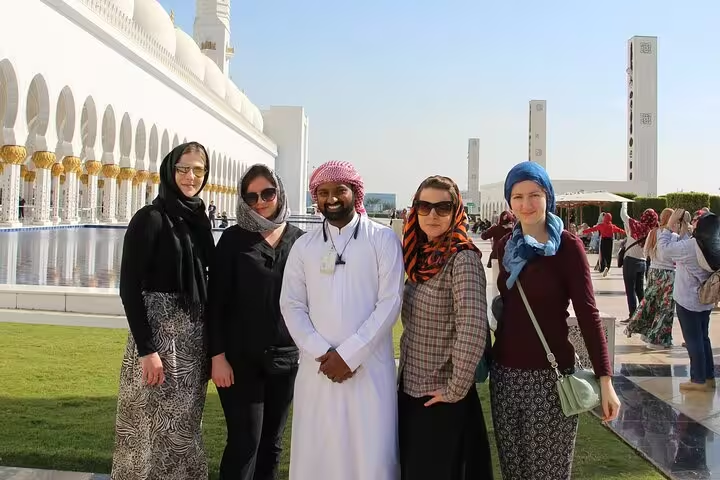
The Abu Dhabi day trip with the Grand Mosque from Ras Al Khaimah lasts 11 hours and includes return transport, a licensed guide, visits to Sheikh Zayed Grand Mosque and Qasr Al Watan, Heritage Village entry, lunch and date market tastings.
The guided Dubai tour with a fountain show from Ras Al Khaimah lasts 8 hours and includes return transport, an English speaking guide, an Al Fahidi visit, an Al Seef walk, an abra crossing, a Deira Gold Souk visit and a Palm Jumeirah viewpoint visit.
Forts, museums and pearling heritage
The area has been settled since around 5000 BC. Before the modern town, Julfar served as a port and a centre for trade. The name Ras Al Khaimah means "top of the tent".
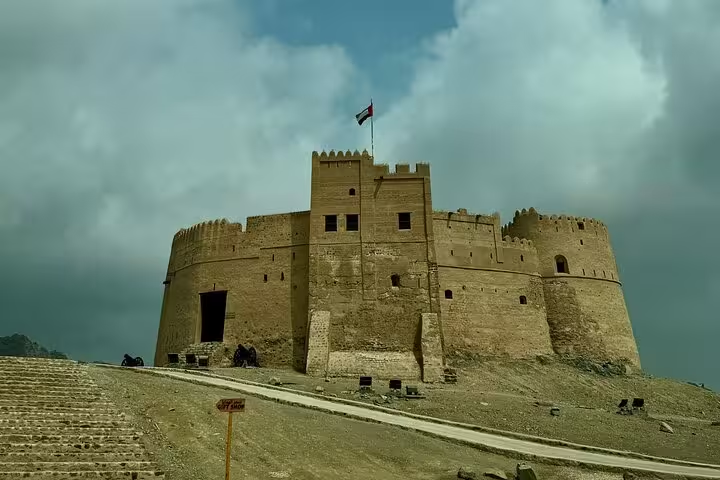
Dhayah Fort dates from the nineteenth century (restored in the late 1990s) and is part of The Cultural Landscape of Dhayah on the UNESCO Tentative List. In 1819, Al Qasimi forces fought their final defence there against a British expeditionary fleet. Some 239 steps lead up to the fort, which looks out over plantations of date palms.
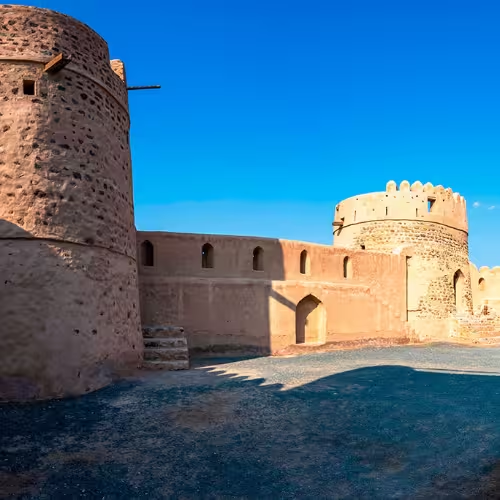
The National Museum occupies a fort built in the early nineteenth century, formerly the official home of the ruling Al Qasimi family. Coral blocks and stone were used to build it. Its collections span discoveries associated with the earliest inhabitants through to the late Islamic period.
At Al Jazirah Al Hamra, the pearling village contains a fort, watchtowers, a mosque, a souq and houses arranged around courtyards. Its coral stone homes, wind towers, mosques and courtyards reflect life before oil. The village was left behind in the late 1960s, unintentionally helping to preserve it.
Coast, mangroves and creeks
Along 68 km of coast are beaches of white sand, green mangroves, creeks and lagoons. Flamingos inhabit the mangroves, where migrating birds also pause on their journeys. Endangered green turtles nest and feed in the Khor Al Muzhami area. A creek separates the western old town from Al Nakheel to the east.
Airport connections
Ras Al Khaimah city is approximately 18 km and 20 minutes from Ras Al Khaimah International Airport. Dubai International Airport is about 100 km and roughly 60 to 90 minutes away. Sharjah International Airport is roughly 60 km and 35 minutes from the city.
Frequently asked questions
Where is Ras Al Khaimah?
It lies towards the northern end of the United Arab Emirates.
Is Jebel Jais in Ras Al Khaimah?
Yes, Jebel Jais is a mountain in Ras Al Khaimah.
What is the setting of the National Museum?
The museum occupies a fort built in the early nineteenth century that formerly housed the ruling Al Qasimi family.
What is at Al Jazirah Al Hamra?
The pearling village has a fort, watchtowers, a mosque, a souq and courtyard houses.
Which birds inhabit the mangroves?
Flamingos live there, and migrating birds use the mangroves as a stopover.