Amman tours and city sights
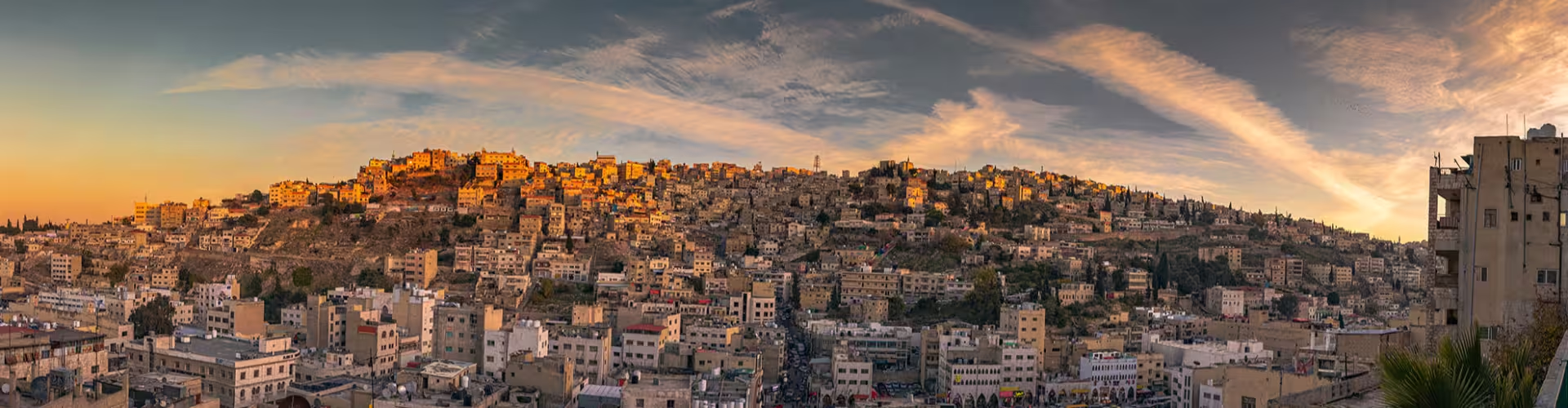
Amman became the capital of independent Jordan in 1946. The city occupies the East Bank Plateau, where three major wadis cross the upland landscape. Its original development spread over seven hills.
Guided tours in Jordan
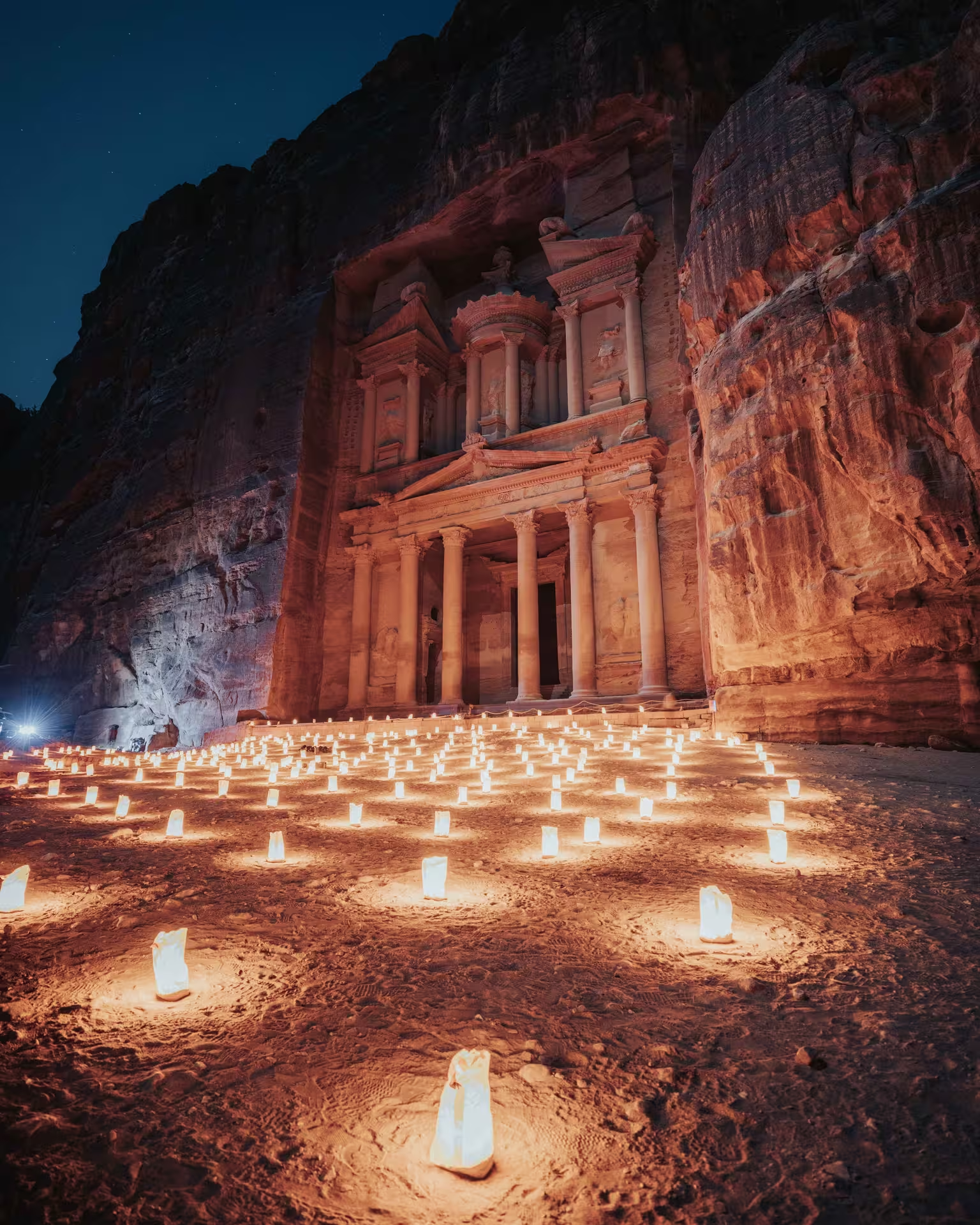
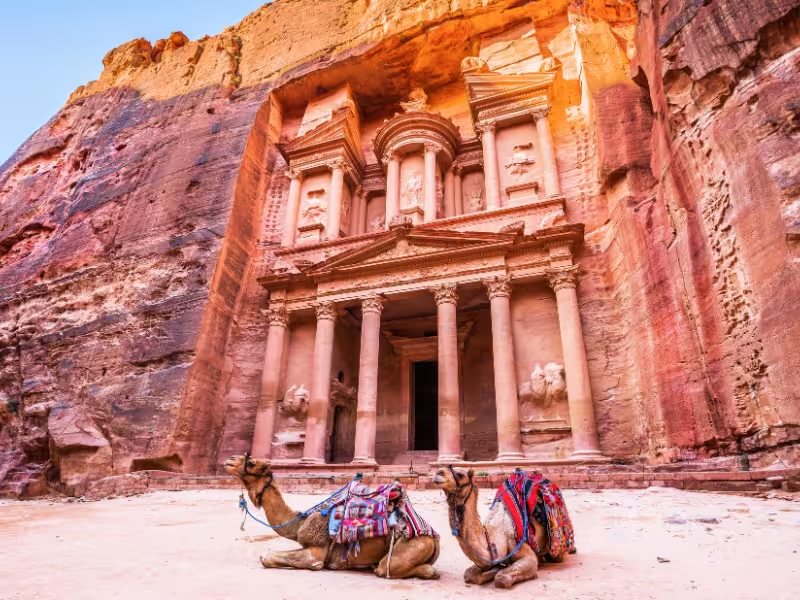
The guided Jordan tour covering Petra, Wadi Rum and the Dead Sea lasts 5 days. It includes a night in a Bedouin camp in Wadi Rum, the meals specified in the itinerary, an English speaking guide throughout, a Wadi Rum jeep safari and a Dead Sea visit with leisure time.
The guided Egypt and Jordan tour with flights lasts 13 days. Included are the Cairo to Amman flight, two overnight sleeper train journeys with meals, five nights on a Nile cruise with full board, accommodation at a Wadi Rum Bedouin camp, the specified meals including open buffets, guides in Egypt and Jordan, and the listed guided excursions.
The guided Egypt and Jordan tour with a Nile cruise lasts 15 days. It includes a night at a Wadi Rum Bedouin camp, the specified meals, a Nile cruise from Aswan to Luxor, English speaking guides, a horse ride through the Siq at Petra and a Cairo to Amman flight.
Amman in Jordan
Elevations in the Amman area extend from 700 to 1,100 m. The Arabic name for the downtown city centre is Al Balad. At 'Ain Ghazal, evidence of settlement reaches back to the eighth millennium BC. Amman served as the Ammonite Kingdom's capital in the thirteenth century BC. Ptolemy II renamed Rabbath Ammon Philadelphia. In 1921, Abdullah I, then a Hashemite emir and subsequently king, chose Amman as the capital.
Things to do in Amman
The Citadel occupies a hill above Downtown Amman. Fortifications were established on the hill around 1800 BCE, during the Bronze Age. The palace built by the Umayyads on Citadel hill is now called the Umayyad Palace. The Umayyad Palace was built in the first half of the 8th century (c. 720 to 750). Construction of the Roman Temple of Hercules took place between AD 161 and 166, during the governorship of Geminius Marcianus in the Province of Arabia.
At the base of Citadel Hill stands the Roman Theatre. Its construction honoured Emperor Antoninus Pius. The theatre was cut into the site in the second century with space for 6,000 spectators. The Jordan Museum of Popular Tradition occupies rooms behind its entrances. Construction of the King Abdullah I Mosque spanned the years 1982 to 1989.
Museums and Jabal Amman
Rainbow Street and the cultural market Souk Jara are both in Jabal Amman. Jordan Museum is in the Ras al-Ain district, near Downtown. Queen Rania Al Abdallah inaugurated Amman's Children's Museum in 2007.
Jordanian food
Often described as the national dish of Jordan, mansaf combines lamb with a sauce made from fermented dried yogurt and is served with rice or bulgur. Jameed is a hard, dry yogurt made by boiling sheep or goat milk, then allowing it to dry and ferment.
Heritage beyond Amman
Qusayr Amra lies about 85 km east of Amman. It received UNESCO World Heritage status in 1985. Jerash is situated 48 km to the north of Amman. Madaba carries the name City of Mosaics.
Frequently asked questions
Where is Amman situated?
Amman occupies the East Bank Plateau, an upland crossed by three major wadis.
When did Amman become the capital of independent Jordan?
Amman became the capital when Jordan gained independence in 1946.
What is the Umayyad Palace?
The Umayyad Palace was built in the first half of the 8th century (c. 720 to 750).
Where are Rainbow Street and Souk Jara?
Both Rainbow Street and the cultural market Souk Jara are in Jabal Amman.
What is mansaf?
Mansaf is a Jordanian lamb dish with fermented dried yogurt sauce, accompanied by rice or bulgur.