Jordan

logoBlack

Build your dream
experience

dreamimg

More to know about Jordan


Jordan Travel Guide

Jordan is a compact Middle Eastern destination that delivers big contrasts, from ancient stone cities and desert horizons to lively urban streets and the mineral rich shores of the Dead Sea. The country rewards travelers who like history with context, landscapes with meaning, and meals that feel like a social ritual. This guide focuses on practical decision making, so you can plan routes, timing, and experiences with confidence.


Snapshot

Jordan feels both timeless and easy to navigate, with signature experiences that move quickly from Roman ruins to red sand deserts to coral edged coasts. Go now if you want a destination where you can build a high impact itinerary without long internal flights, and where guided experiences can add real value through storytelling. The vibe is hospitable and unhurried, especially once you leave the capital and settle into desert nights or seaside afternoons.


๐Ÿ—บ๏ธ Geography and Logistics

๐Ÿ“ Orientation: Where is it within Middle East and Jordan? Name key gateway airports or hubs.

Jordan sits in the heart of the Levant, bordering major cultural corridors of the Middle East and linking desert interiors with the Rift Valley. Most trips route through Amman, the capital and main transport hub, which connects to the north, the Dead Sea corridor, and the southern desert. Gateway air access is commonly via Queen Alia International Airport near Amman, with Aqaba serving as a southern entry point for Red Sea focused itineraries.

๐Ÿ•’ When to Go: Seasonal breakdown. Weather patterns vs. crowd levels.

Spring and autumn are typically the easiest seasons for combining city touring with outdoor sites, since temperatures are generally more comfortable for walking ruins and desert viewpoints. Summer can suit coastal time in Aqaba and early morning sightseeing, but midday heat can reshape your schedule, especially in open archaeological areas and the desert. Winter can be quieter and atmospheric for cities and museums, with the tradeoff that conditions can feel cooler in the highlands, so layering becomes part of the plan.

๐Ÿ’ฐ Budget & Currency: Practical money tips, local price levels, and card vs. cash advice.

Plan a flexible daily budget that accounts for transport, guided experiences, and site entry fees, since costs can vary by route and travel style. Cards are commonly used in many hotels and larger restaurants, while cash remains useful for small shops, tips, and quick purchases when you are on the move. Keep smaller denominations on hand for taxis and local eateries, and consider setting aside extra for a guided day in Petra or Wadi Rum, where interpretation and logistics can strongly shape the experience.


โญ Essential Things to Do

Petra, Wadi Rum, and the Dead Sea are often the headline trio, but Jordan becomes more memorable when you add layers like Roman cities, local markets, and coastal downtime. Use these experiences as building blocks, then connect them with realistic travel days.

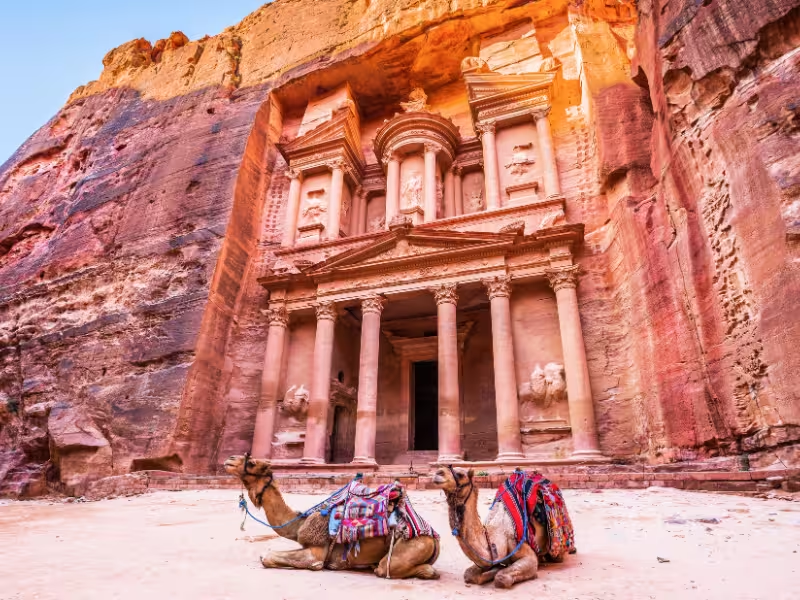
Explore Petra’s rock carved city
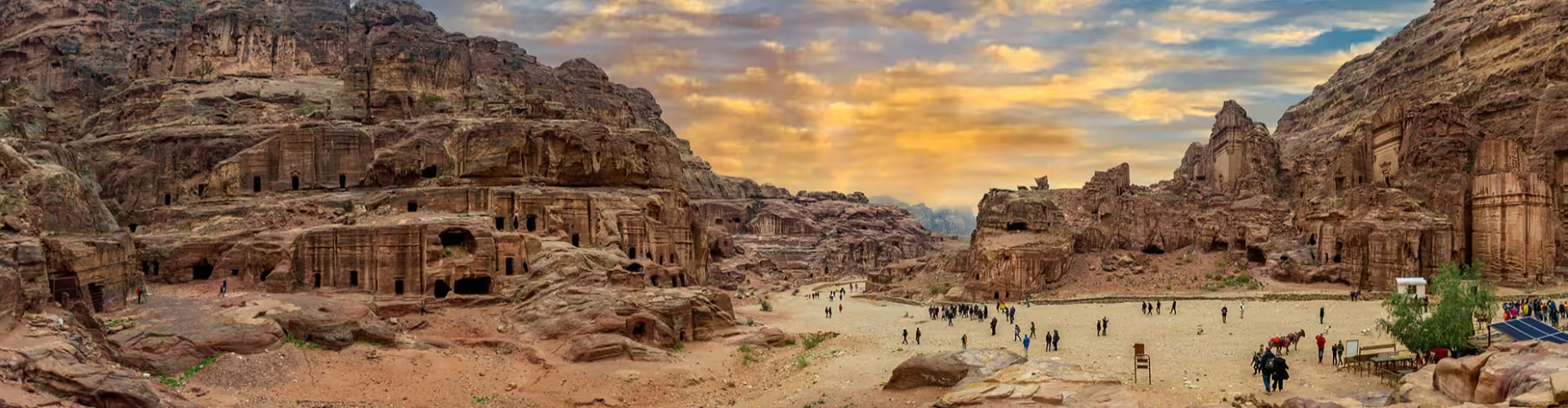
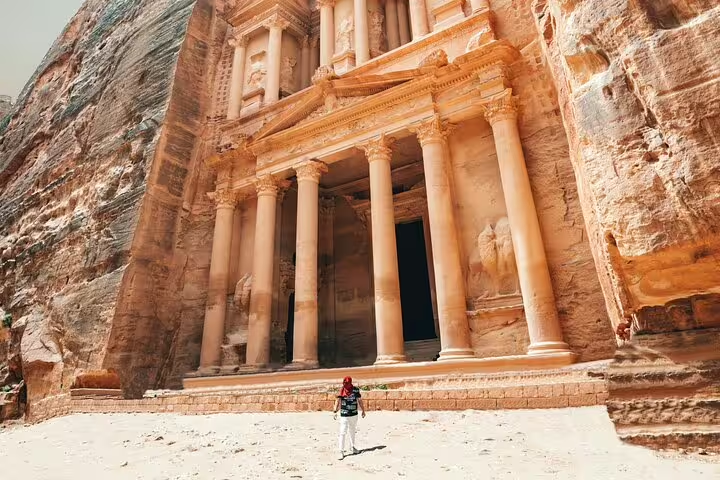
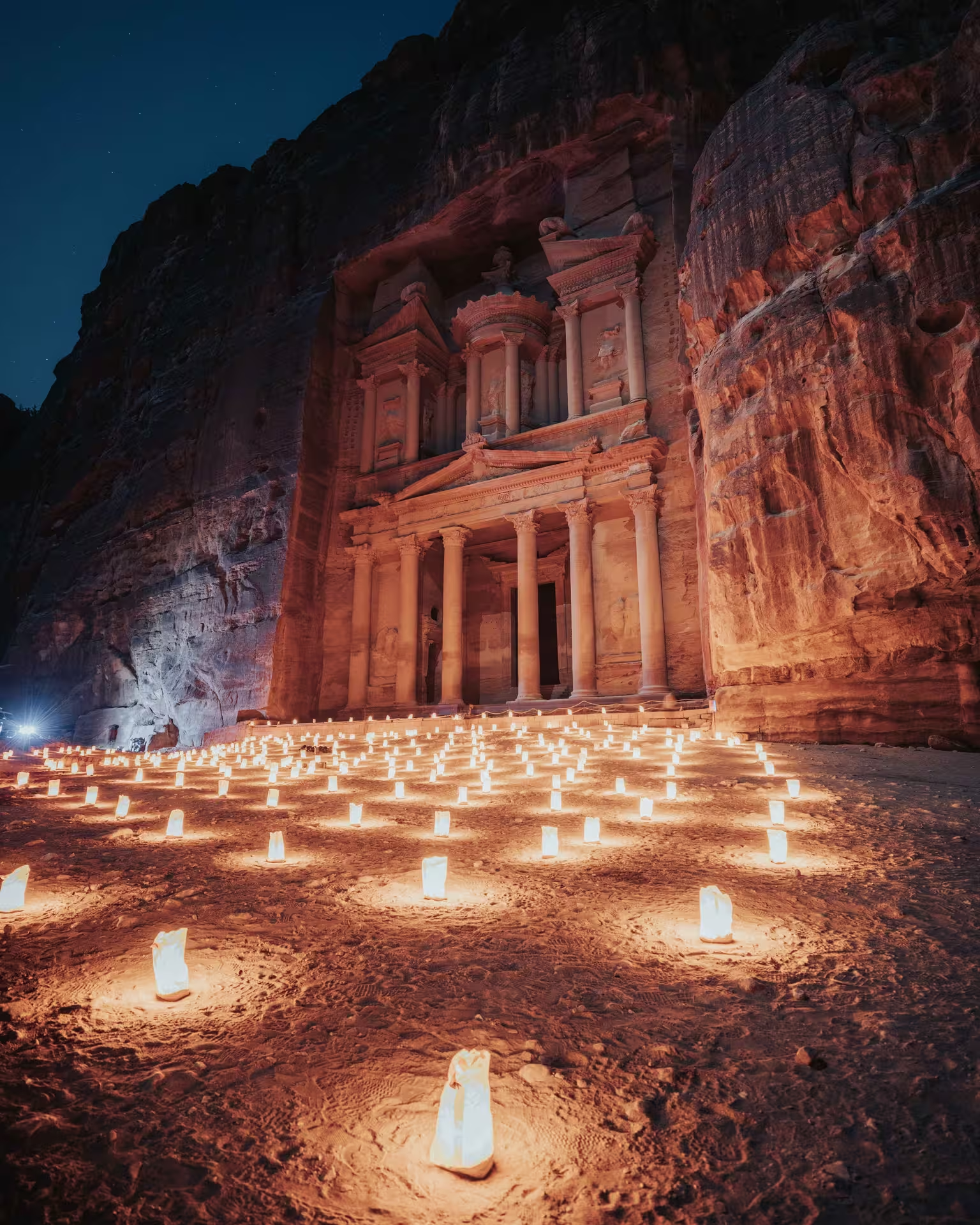
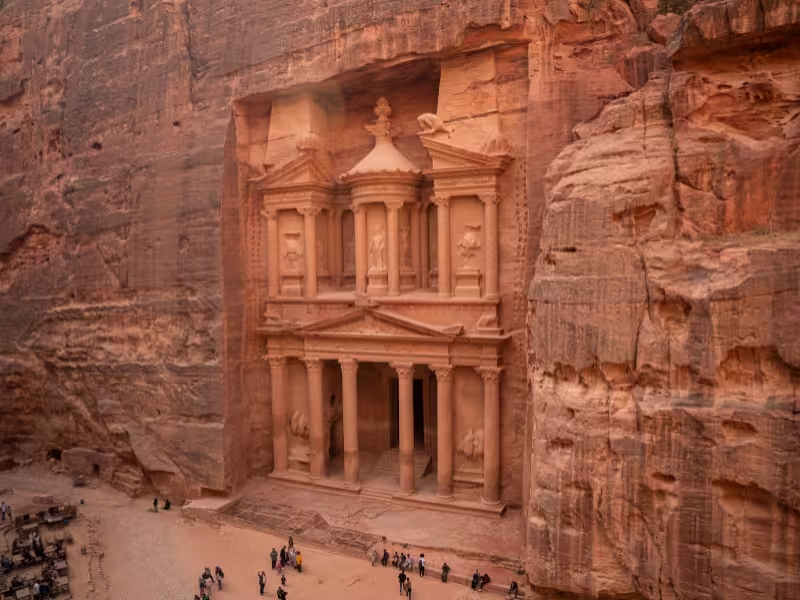
Petra is not just a single monument, it is a sprawling archaeological landscape where the approach, the scale, and the changing light are part of the story. The experience builds as you move deeper, from narrow passages into wider ceremonial spaces. Practical tip, start early for cooler walking and calmer photos, then pace yourself with breaks since distances add up.

Sleep under the stars in Wadi Rum
Wadi Rum delivers the iconic desert mood of Jordan, with sandstone massifs, open valleys, and night skies that feel theatrical. A desert stay adds texture to your itinerary because the best moments often happen at sunrise and after dark, not just during a quick jeep loop. Practical tip, pack a warm layer for evenings and confirm what your camp provides so you do not overpack.

Float at the Dead Sea
The Dead Sea is a natural wonder and a sensory reset, with buoyant water and mineral rich mud that turns a short stop into a ritual. It also breaks up travel between Amman and the south, making it easy to fit into a transfer day. Practical tip, avoid shaving right before you go, bring water shoes if you have them, and rinse off after a dip.

Walk Amman’s hills and street life
Amman is a city of neighborhoods and viewpoints, where daily life, cafes, and small shops give context to the grand sites elsewhere. It is a strong place to adjust to local rhythms, try classic dishes, and pick up essentials before heading south. Practical tip, group nearby sights together and use ride hailing for steep hops, since walking can be hilly and time consuming.

Step into Roman history at Jerash
Jerash is one of the most evocative classical sites in the region, and its colonnaded streets help you imagine civic life at full scale. It complements Petra by showing a different era and architectural language, making your trip feel broader than a single headline attraction. Practical tip, go earlier in the day for softer light and easier temperatures, then pair it with a relaxed afternoon back in Amman.

See the Crusader legacy at Kerak Castle
Kerak adds medieval atmosphere and strategic geography, perched to control key routes across the plateau. It is a powerful stop when traveling between the Dead Sea corridor and Petra, especially if you enjoy sites that feel rugged and layered. Practical tip, wear shoes with grip and give yourself time to explore corridors and viewpoints slowly.

Unwind in Aqaba on the Red Sea
Aqaba brings a different energy, with a coastal pace and easy access to the Red Sea. It is ideal for travelers who want to balance archaeology and desert with water time, whether that means snorkeling, diving, or simply a relaxed seaside meal. Practical tip, schedule water activities earlier in your stay so you have flexibility if conditions shift.

Follow the King’s Highway for scenic context
The King’s Highway is not a single attraction, it is a route that adds narrative to Jordan, connecting highland towns, viewpoints, and historic stops. It turns transfers into travel, and it helps you understand why forts, cities, and trade routes mattered. Practical tip, allow buffer time for photo stops and short walks, since the best moments are often unplanned.


๐Ÿšถ Curated Itineraries

โฐ The Highlights (1 Day): A fast paced Best Of route.

If you only have one day in Jordan, focus on a single anchor experience rather than trying to cover the whole country. Choose Petra for maximum impact, then build a simple rhythm, early start, steady walking, breaks for shade, and a return before dark. If Petra is not feasible from your base, use Amman plus a close day trip like Jerash to keep the day realistic and rewarding.

โฐ Deep Dive (2-3 Days): Adding neighborhood exploration and local secrets.

With two to three days, combine city context with one major landscape. Start with Amman for food and street life, then add Jerash for classical scale, and finish with either the Dead Sea for a reset or Wadi Rum for desert atmosphere. If you can stretch to three days, place Petra as the headline day and keep the day before or after lighter, since Petra is physically demanding and deserves your best energy.


๐Ÿฝ๏ธ Flavors of Jordan

Food in Jordan is built around sharing, warmth, and comfort, with flavors that lean on olive oil, herbs, legumes, grilled meats, and bright pickles. These staples are easy to find and help you eat well across different budgets.

  • Mansaf, a celebratory dish with rich, tangy depth. Ordering tip, ask if it is served for sharing so you can plan portions.
  • Falafel, crisp outside and herbaceous inside, often paired with fresh vegetables. Ordering tip, request extra tahini or pickles if you like stronger contrast.
  • Hummus, creamy and savory, best when freshly made. Ordering tip, look for places where locals linger in the morning for a fresher batch.
  • Shawarma, spiced and satisfying, ideal for quick lunches between sights. Ordering tip, ask what comes in the wrap so you can choose garlic sauce or hot sauce to taste.
  • Maqluba, a comforting layered dish with a home style feel. Ordering tip, it is often filling, so consider sharing if you plan more stops.
  • Knafeh, sweet and cheese forward with syrupy crunch. Ordering tip, try it warm, and pair it with tea to balance sweetness.

๐ŸšŒ Navigation & Transport

Getting around Jordan is simplest when you plan by regions, Amman and the north, the Dead Sea corridor, and the southern loop that includes Petra and Wadi Rum. In cities, walking works best for compact areas, but hills and heat can make short ride hailing trips more comfortable. Between major sites, many travelers use private drivers or organized tours for efficiency, while buses can suit fixed routes if you are flexible with timing.

For safety and comfort, keep water with you, especially at open sites, and build rest breaks into your day rather than pushing through midday heat. If mobility is a concern, prioritize viewpoints and curated stops, since some archaeological areas involve uneven paths and longer walks.


๐ŸŒ„ Beyond the Center: Day Trips

  • Jerash from Amman, often done as a half day to full day, for one of the region’s most impressive Roman cityscapes.
  • Dead Sea from Amman, commonly a day trip, for floating and a restorative change of pace.
  • Madaba and Mount Nebo, typically combined in a day, for cultural heritage and elevated viewpoints that add context to the landscape.
  • Kerak Castle, often paired with a southbound travel day, for Crusader era atmosphere and dramatic setting.
  • Wadi Rum from Aqaba, possible as a long day but best with an overnight, for desert scenery and stargazing.

โœ… Insider Tips for Travelers

  • Plan your route so you do not backtrack, grouping Amman and the north, then the Dead Sea corridor, then Petra and Wadi Rum, then Aqaba if you want the Red Sea.
  • Start major outdoor sites early, especially Petra and Wadi Rum, to protect your energy and improve photo light.
  • Carry cash in small denominations for tips, quick snacks, and short taxi rides.
  • Pack sun protection and a refillable water bottle, since many highlights involve open terrain.
  • Choose shoes for uneven ground, particularly for ruins and desert walking.
  • Build a lighter evening after a big walking day, so you enjoy meals and markets rather than rushing.

โ“ Frequently Asked Questions, FAQ

How many days do I need to see the main highlights?
Two to three days can cover a strong mix of Amman, one major site like Petra, and either the Dead Sea or Wadi Rum. If you add Aqaba, plan extra time so your trip does not feel rushed.

Is it better to base in Amman or move hotels?
Amman works well for the capital and northern sites like Jerash, but the southern highlights are far enough that changing bases saves time. Many travelers use Amman first, then stay closer to Petra or Wadi Rum.

What is the easiest way to get between Petra and Wadi Rum?
A private driver or organized transfer is often the simplest option because it reduces waiting and helps you keep a clean schedule. If you are traveling independently, confirm transport timing in advance so you do not lose daylight.

When is the best time of day to visit Petra in Jordan?
Morning is usually the most comfortable for walking and gives you calmer conditions for photos. If you want warmer light, late afternoon can be beautiful, but plan your return so you are not rushing out.

Should I bring cash for a trip to Jordan?
Yes, having cash is useful for small purchases, tips, and quick transport even if you plan to use cards for hotels. Keep smaller notes so you can pay easily without needing change.