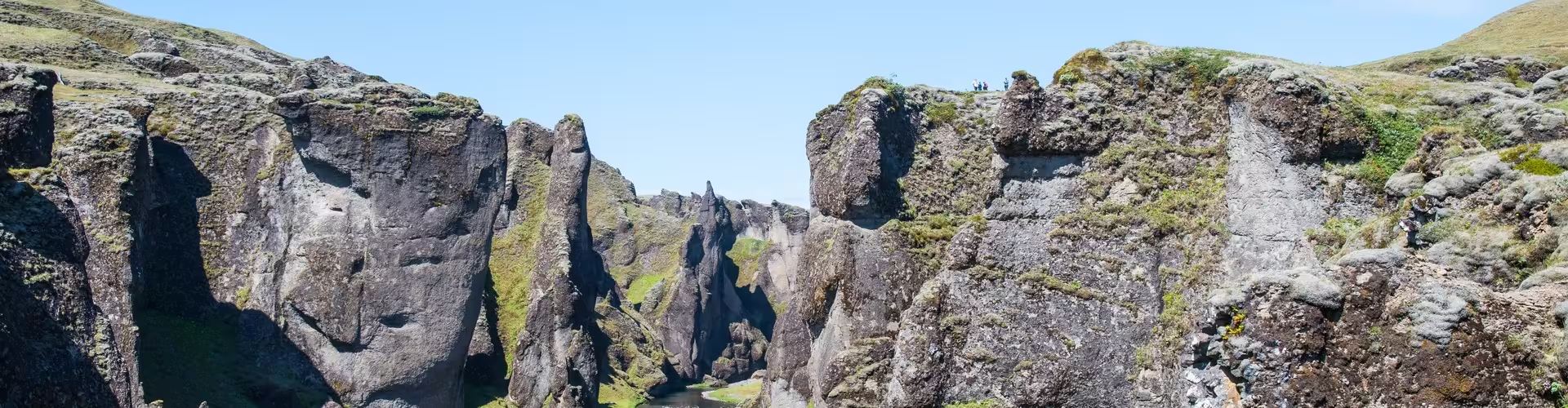
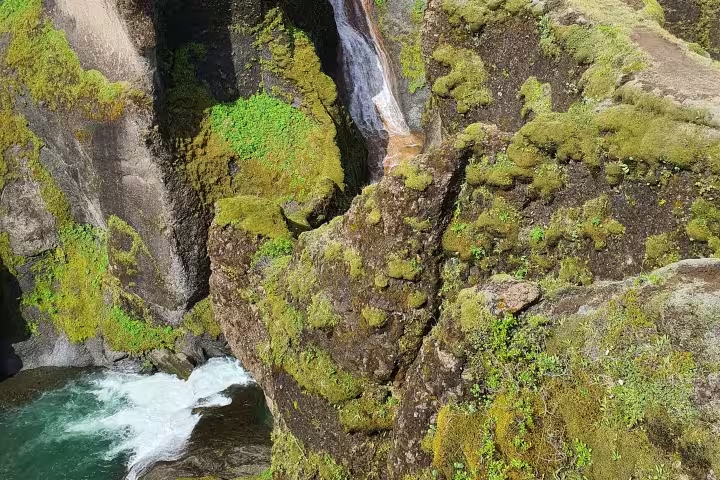
Fjaðrárgljúfur canyon
Fjaðrárgljúfur extends for approximately 1.5 km, with a depth reaching around 100 m. Its landscape continues to take shape through processes that started as the last ice age ended, around 10,000 years ago.
How the canyon formed
Terraces of gravel above the canyon suggest that a lake developed ahead of a glacier as it retreated. Later, glacial rivers carrying large volumes of water and silt carved a passage through the móberg bedrock beneath them. Much of the bedrock is palagonite dating from cold phases of the Ice Age. The Fjaðrá river rises at Geirlandshraun.
The ongoing formation of the landscape gives the canyon value as a place for research and education, and access is good.
South Iceland tours
The South Iceland day trip with Glacier Lagoon and Northern Lights lasts 15 hours and includes a professional guide who speaks English, vehicle transport and stops at the listed South Coast sights.
The private South Coast tour with glaciers and Diamond Beach runs over 2 days and includes a private vehicle, a professional driver and guide, transport along the South Coast route, accommodation near the route and a pace adapted to the group.
The private guided Glacier Lagoon day trip in Iceland lasts 14 hours and includes private vehicle transport, a professional licensed guide throughout, an itinerary adapted to the group and the standard stops along the South Iceland route.
The private Iceland South Coast tour with Glacier Lagoon and Diamond Beach lasts 14 hours and includes private transport, a private professional guide throughout, an itinerary adapted to the group and commentary about geology and regional history.
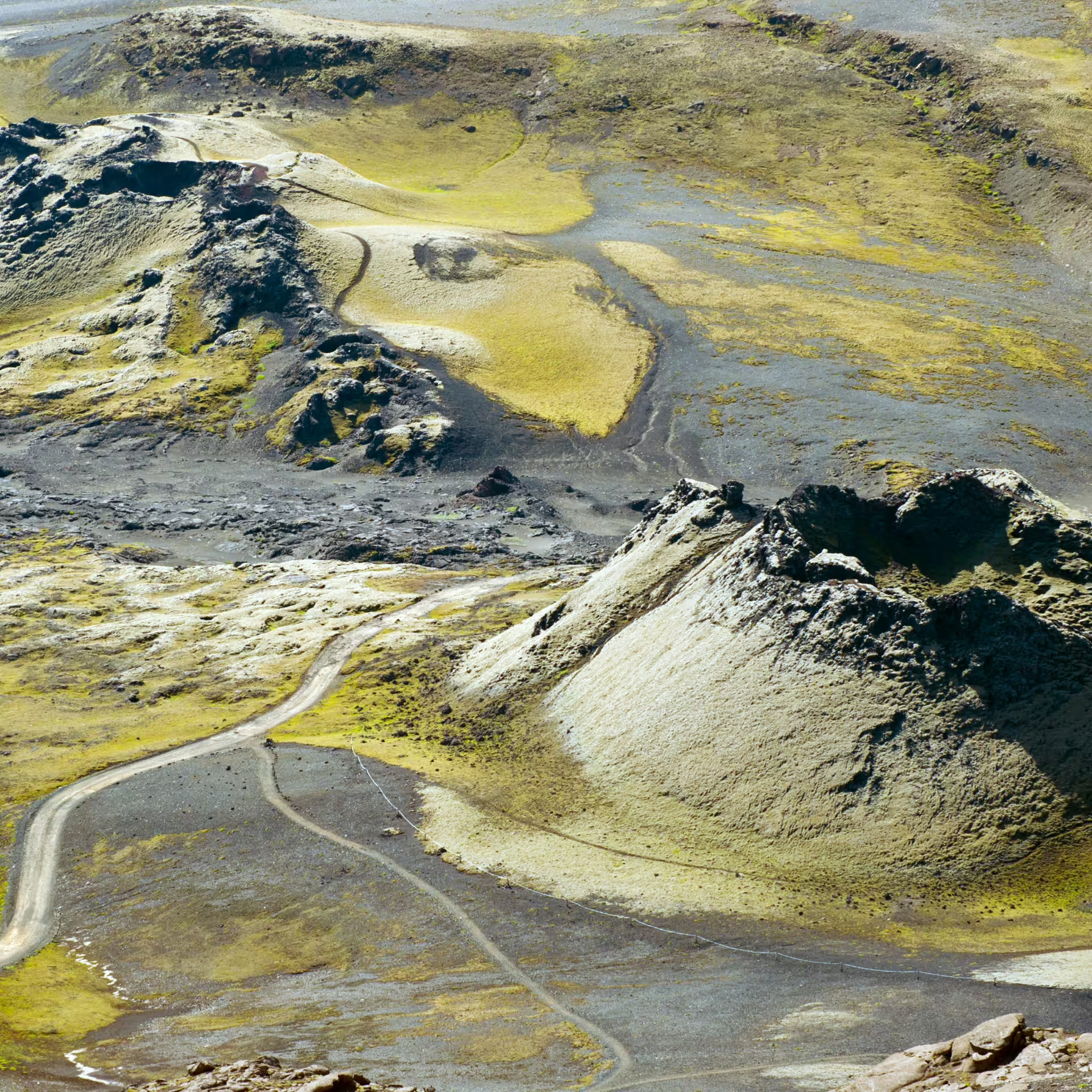
The eruption known as Skaftáreldar, or the Laki eruption, started on 8 June 1783. Lakagígar, also called the Laki Craters, comprises about 130 craters along a fissure about 27 km long.
The private Laki Craters tour by Super Jeep from Vik lasts 11 hours and includes a private Super Jeep with an experienced local guide, access to the Laki Craters and the Mount Laki hiking trail, a visit to the crater lake at Tjarnargígur, a stop at Fagrifoss waterfall and a walk along the rim of Fjaðrárgljúfur.
Protection of the canyon
Iceland's minister for the environment, energy and climate designated Fjaðrárgljúfur a natural monument under Article 48 of the Nature Conservation Act No. 60/2013. A notice dated 11 May 2024 announced protection for the canyon in Skaftárhreppur. The area under protection measures 0.15 km². Protection aims to preserve the vegetation, distinctive scenery, geological features, watercourse and waterfalls.
Management rests with the Nature Conservation Agency of Iceland (Náttúruverndarstofnun), while the Icelandic Institute of Natural History monitors the protected area. Pressure from visitor numbers has sometimes resulted in temporary closures.
Access rules
Walking upstream through the canyon beside or in the river is prohibited to protect important breeding grounds. Disturbance of plants or alteration of geological features is prohibited within the protected area. Waste cannot be left or buried there and must be removed from the area.
Dogs cannot roam loose in the natural monument, with an exception for service dogs carrying out their work. Horse riding is prohibited within the monument. Bicycles may be ridden on designated cycle routes or pushed along walking trails. Staying overnight within the monument is prohibited.
Frequently asked questions
How long and deep is Fjaðrárgljúfur?
The canyon is approximately 1.5 km in length and reaches around 100 m in depth.
When did the canyon begin to take shape?
The processes shaping the canyon began around 10,000 years ago, at the end of the last ice age, and continue today.
How long is the Laki Craters Super Jeep tour?
The private Laki Craters tour by Super Jeep from Vik lasts 11 hours.
What does protection of the canyon cover?
Its aims include preserving vegetation, distinctive scenery, geological features, the watercourse and waterfalls.
Is walking along the river through the canyon allowed?
Walking up the canyon along or in the river is prohibited because of important breeding grounds.