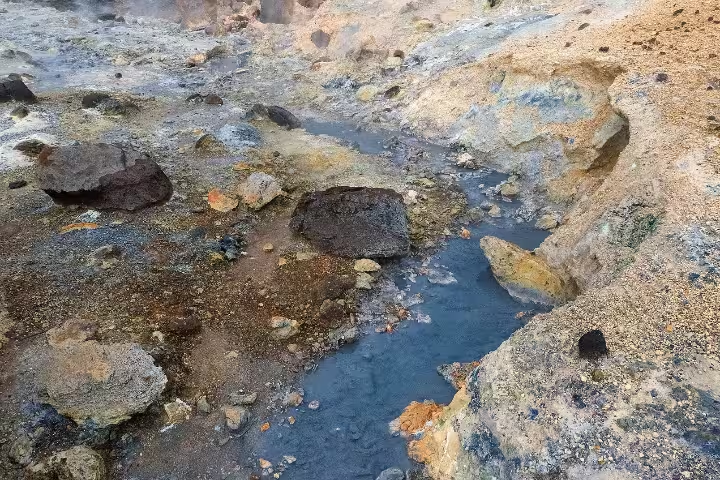
Krysuvik is a geothermal area on the Reykjanes Peninsula in southwestern Iceland, known for its dramatic volcanic landscape and active hot springs. This remote region showcases Iceland's raw geological power through steaming vents, colorful mineral deposits, and otherworldly terrain that attracts visitors seeking authentic geothermal experiences.
What to see in Krysuvik
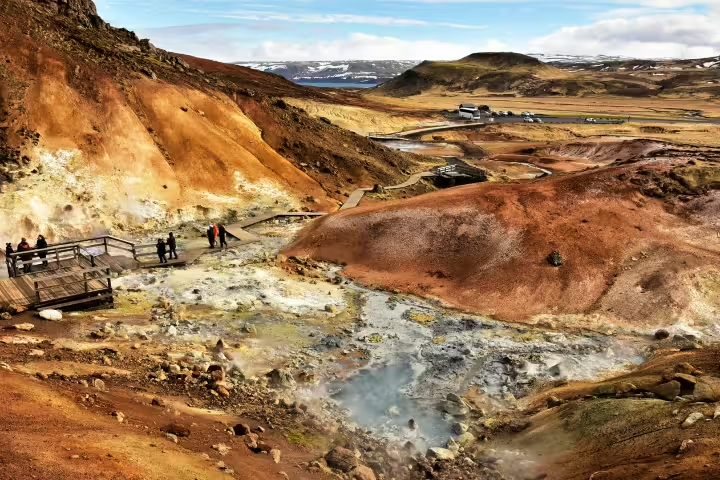
The main attractions include the Seltun geothermal field with its bubbling mud pools and vibrant sulfur-colored rocks, and the striking Lake Seltun that reflects the surrounding geothermal activity. Visitors can walk trails that wind through steam vents and observe the geological features that define this unique Icelandic landscape.
Things to do in Krysuvik
Explore self-guided walking trails through the geothermal area, photograph the surreal landscape, and experience the sensory aspects of geothermal activity firsthand. The region works well as part of a Reykjanes Peninsula day trip, combining visits to nearby attractions and providing insight into Iceland's volcanic geology.
Geothermal Wonders and Film Locations
Krysuvik's ethereal landscape has attracted filmmakers and photographers from around the world. The otherworldly terrain has served as a filming location for various productions, making it a destination for those interested in experiencing Iceland's most visually striking natural phenomena.
Krysuvik is located on the Reykjanes Peninsula, approximately 50 kilometers southwest of Reykjavik, Iceland. The area is part of a geothermal zone that exemplifies Iceland's unique position on the Mid-Atlantic Ridge, making it one of the most geologically active regions in the country. The landscape reflects Iceland's volcanic heritage with active geothermal features visible across the terrain.
Krysuvik represents Iceland's geothermal tourism sector, featuring natural hot springs and geological formations that attract approximately thousands of visitors annually. The area is accessible year-round, though winter visits require careful navigation due to weather conditions. The geothermal features remain active and dynamic, continuously shaped by Iceland's geological processes.