Last updated:


Malia suits a trip built around Minoan history, with a palace to explore and finds to follow into museums. In 2025, UNESCO added Malia, together with Knossos, Phaistos, Zakros, Zominthos and Kydonia, to the World Heritage List as the Minoan Palatial Centres.
Two days make a workable history-focused plan: a day for Malia palace, followed by a day in Heraklion for the museum and Venetian walls. Keeping the palace and museum on separate days lets you follow the story from the buildings to the objects found there.
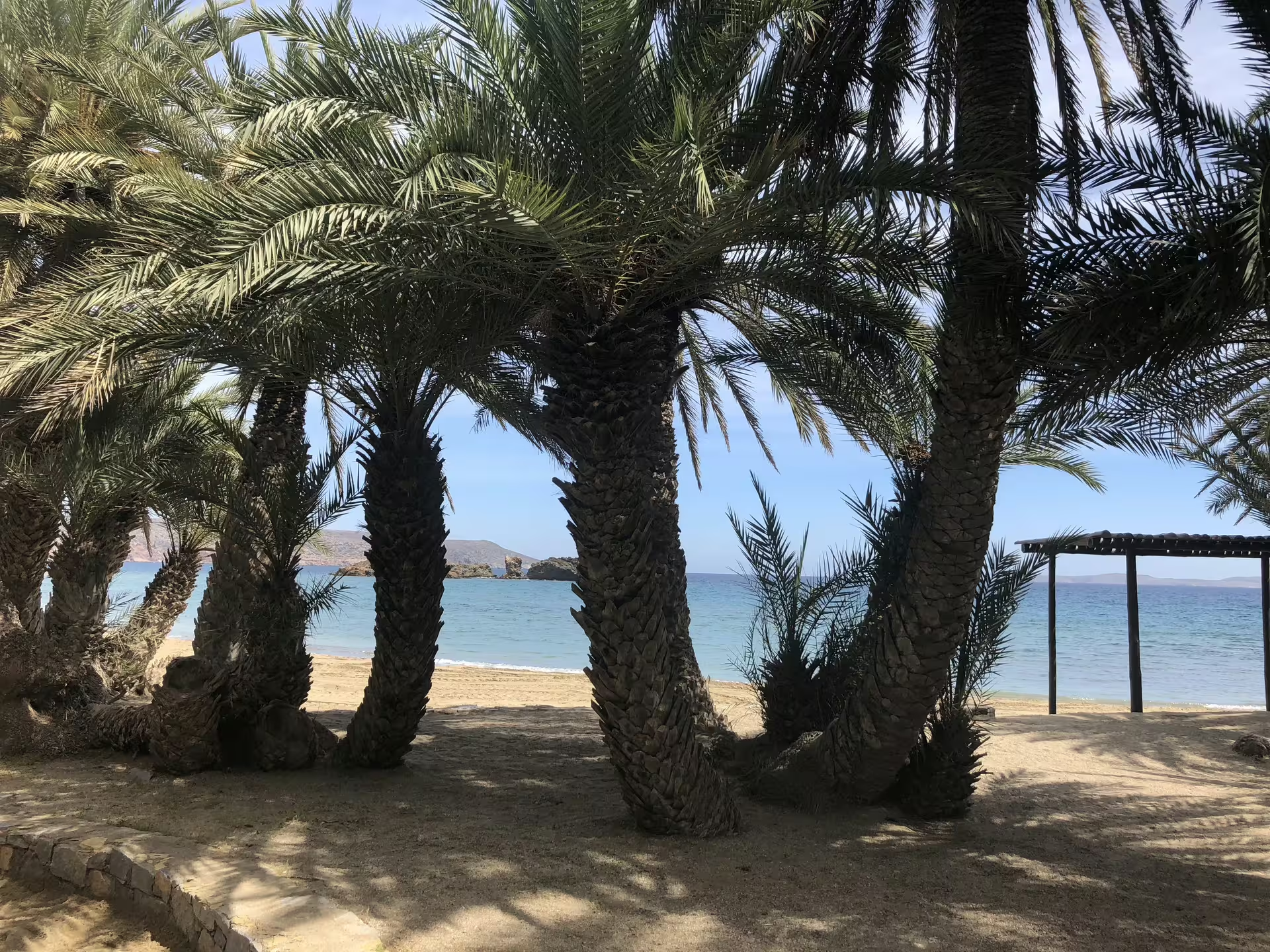
An additional day can be set aside for the full-day guided tour to Vai Palm Beach from Hersonissos, Crete, which lasts 8 hours. It includes an air-conditioned vehicle and a professional driver-guide for the whole day.
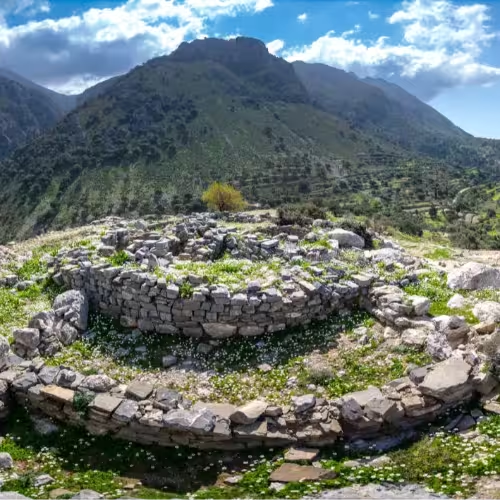
The central court, grain silos and Hypostyle Hall give your palace visit a clear focus. The court measures about 48 m by 23 m, and porticoes originally lined its north and east sides. In the southwest corner, eight round structures were used to store grain. Behind the north side of the court lies the Hypostyle Hall with its antechamber.
Those details help you picture the scale of the complex. Each side of the palace had an entrance, and the main ones were in the north and south wings.
The palace is worth including if you want to understand how successive settlements occupied the same site. People were already present here in the Neolithic period, between 6000 and 3000 BC. Beneath the palace lie houses from a Pre-palatial settlement dated to 2500 to 2000 BC.
Palace building began around 2000 to 1900 BC, followed by destruction around 1700 BC and reconstruction in 1650 BC. The rebuilt palace met its own destruction around 1450 BC. A brief return to occupation in the 14th to 13th centuries BC, and a sixth-century basilica preserved nearby, extend the story beyond the palace.
For context on Minoan culture, its Cretan Hieroglyphic script was used from around 2000 to 1700 BC alongside Linear A, and both remain undeciphered.
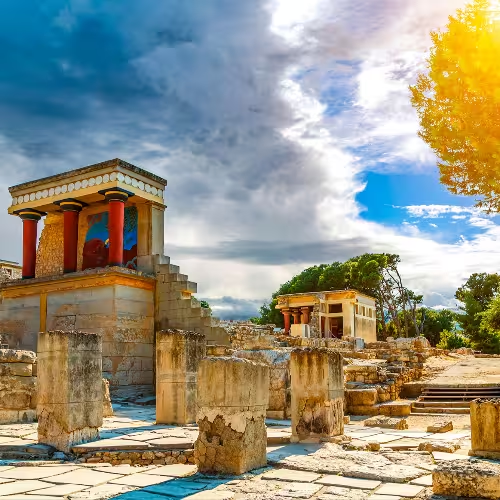
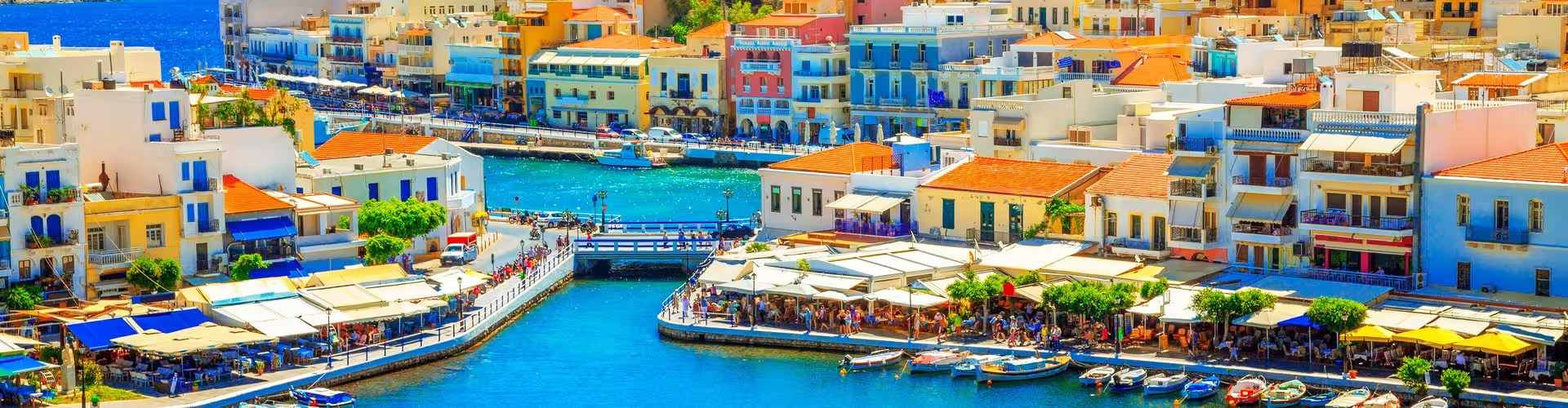
Heraklion is a useful addition for palace finds, while Dikteon Cave offers a different thread of ancient history. Objects excavated at Malia are held in the Museum of Heraklion, with some also displayed in the Museum of Agios Nikolaos. Heraklion also gives access to Knossos and the Archaeological Museum, with Venetian walls surrounding the city.
Dikteon Cave appears to have served for both habitation and burial from 2800 BC onwards. For an interest in windmills, the Seli Ampelou complex received recognition as a work of art in 1986. On the Lasithi Plateau, Mesa Lasithi offers a village stop at about 850 m above sea level.
The discovery dates to 1915 and is credited to Joseph Hazzidakis.
Hersonissos is at the western end of the Gulf of Malia.
Crete's coastline extends for more than 1,000 km.