Faxaflói bay: what to see and do
Between the Snæfellsnes and Reykjanes peninsulas, Faxaflói opens along the southwest of Iceland. Faxa Bay, Faxe Bay and Faxi Bay are alternative names for the same bay. Its islands are few in number and lie near the land. People along its shores have drawn food from these waters.
Whale watching in Reykjavík
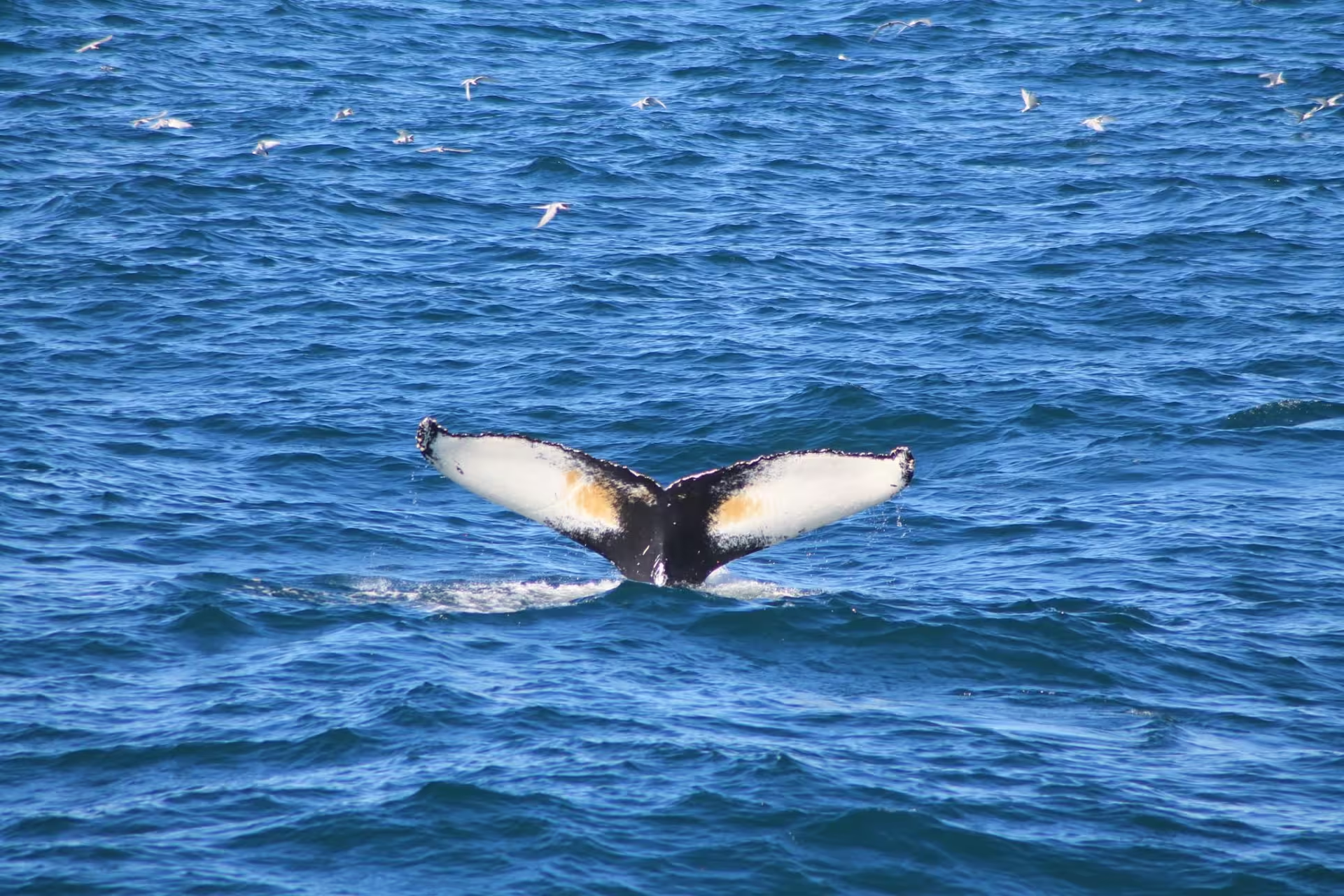
A Reykjavík bay whale watching and Arctic wildlife cruise lasts 3 hours. It includes a guided whale watching tour, a naturalist and crew, indoor and outdoor seating, a passage through Faxaflói and past islands in the bay, safety equipment and a safety briefing.
The whale watching boat tour in Reykjavík on Faxaflói bay has a duration of 3 hours and 30 minutes. Included are a whale watching trip aboard the Amelia Rose superyacht, crew commentary on wildlife and the marine environment, access to three panoramic decks and sheltered seating.
Reykjavík bay and the city
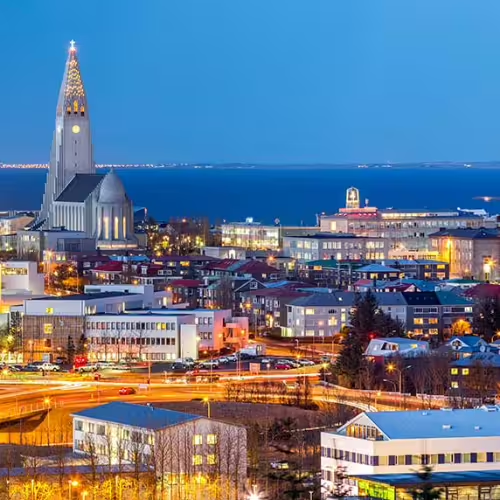
Iceland's capital, Reykjavík, stands beside the southern shore of Faxaflói. Its formal establishment as a trading town dates to 1786. Iceland's settlement began at Reykjavík with the arrival of Ingólfur Arnarson from Norway.
Harpa serves Reykjavík as both a concert venue and a conference centre. The building received the European Union's Mies van der Rohe award for contemporary architecture in 2013. Work on Hallgrímskirkja ran from 1945 until 1986. The church also functions as an observation tower.
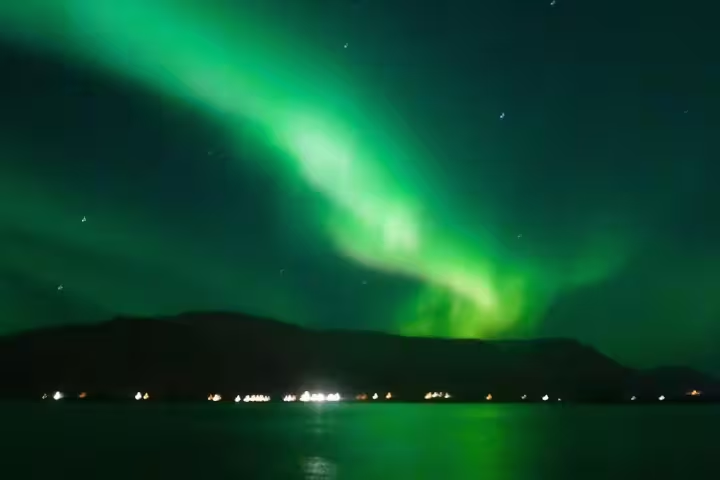
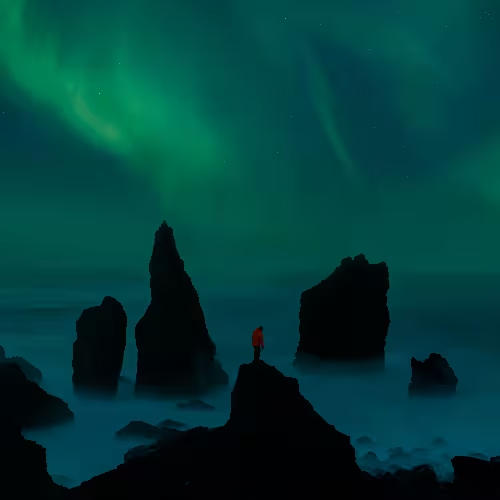
The northern lights boat tour in Reykjavík is a winter cruise lasting 2 hours. It includes a cruise on Faxaflói, use of a heated indoor saloon, access to an open deck with views through 360 degrees, overalls to borrow and crew monitoring of weather and solar activity.
Viðey: history and art
Viðey lies in Kollafjörður Bay, just outside Reykjavík. The village on Viðey was abandoned in the 1940s, and farming on the island ended in 1970. Its area is about 1.6 square kilometres. An Augustinian monastery stood on Viðey from 1226 until the Reformation in the 16th century.
Viðeyjarstofa, completed in 1755 as the residence of treasurer Skúli Magnússon, is attributed to the Danish architect Nicolai Eigtved. Viðey also holds the Imagine Peace Tower, a tower of light created by artist Yoko Ono to commemorate John Lennon.
The peninsulas beside the bay
In western Iceland, Snæfellsjökull is a stratovolcano with a glacier covering its summit. It rises to 1,446 metres and belongs to Snæfellsjökull National Park. Jules Verne used Snæfellsjökull as the entrance to an underground journey in his science fiction novel. In clear weather the volcano can be seen across the bay from Reykjavík, about 120 km away in a straight line.
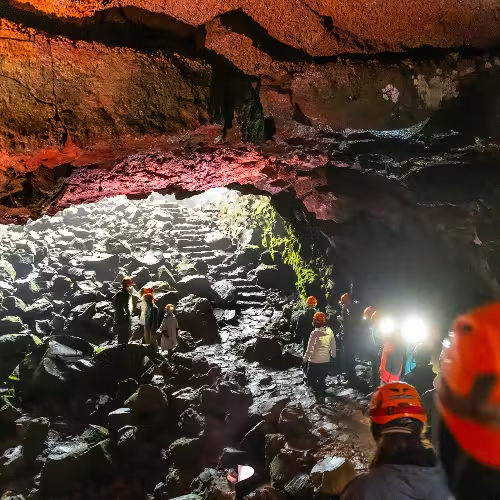
Beneath Reykjanes, volcanic activity accompanies extensive lava fields on the peninsula. Reykjanes received UNESCO Global Geopark recognition in 2015.
Near Reykjavík, Mount Esja reaches an elevation of 914 metres.
Reykjavík's climate
Reykjavík's climate falls within the subpolar oceanic category. Although the city lies at a northern latitude, winter temperatures fall below 15 °C below zero only very rarely. Its summers are cold, with temperatures varying between 10 and 15 °C and only rarely rising above 20 °C.
Ports and coastal towns
Akranes is a port settlement on Iceland's western coast. Borgarnes occupies a peninsula beside Borgarfjörður in Iceland. The ports at Reykjavík, Akranes, Grundartangi and Borgarnes are operated by Faxaflóahafnir.
Frequently asked questions
Where is Faxaflói bay?
The bay lies in southwest Iceland between Snæfellsnes and Reykjanes.
What other names does Faxaflói have?
The bay is also called Faxa Bay, Faxe Bay and Faxi Bay.
Where is Reykjavík in relation to the bay?
Reykjavík stands on the southern shore of Faxaflói.
How long are the whale watching tours?
The Reykjavík bay whale watching and Arctic wildlife cruise lasts 3 hours, while the Faxaflói bay whale watching boat tour lasts 3 hours and 30 minutes.
What is the Imagine Peace Tower?
On Viðey, the Imagine Peace Tower is a tower of light that Yoko Ono created in memory of John Lennon.