Harran: what to see and do
Harran belongs to Turkey's Southeastern Anatolia Region and stands about 44 km south-east of Şanlıurfa, close to the Syrian border. Its name refers to a place where roads come together, and major trading routes between Mesopotamia and Asia Minor meet here.
Harran beehive houses
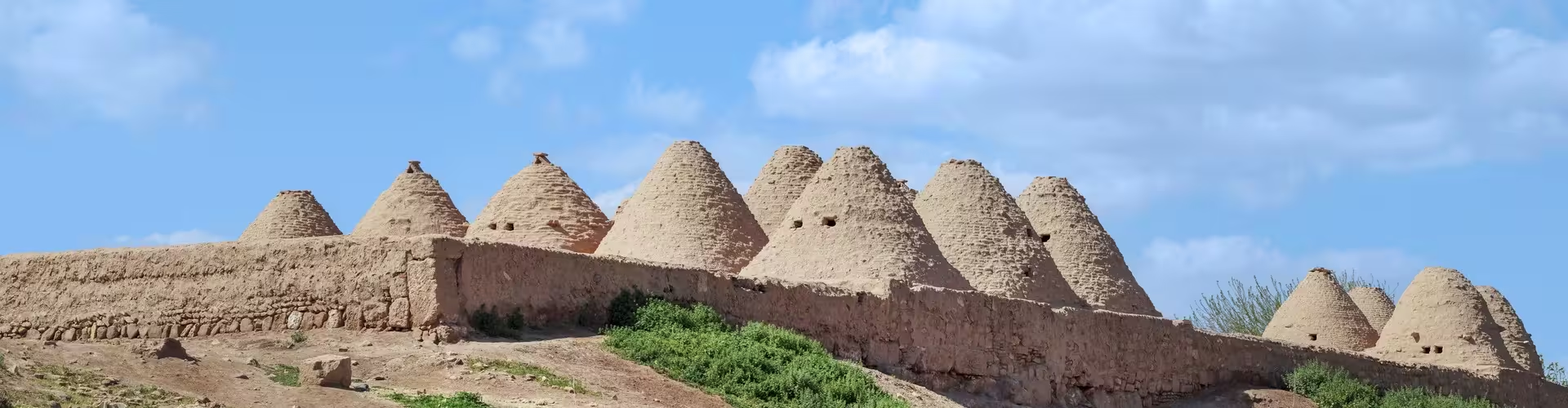
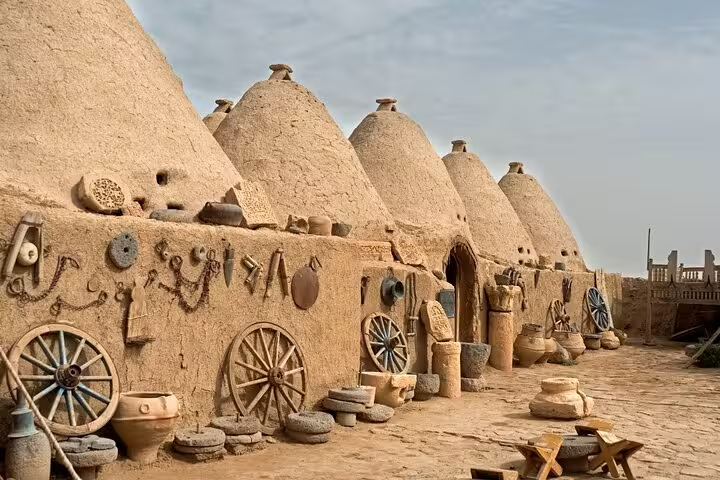
The beehive houses are a feature for which Harran is known. Their shape tapers as it rises, becoming narrower towards the top. Built from stone and brick taken from Harran's ruins, finished with mud, these houses can reach 5 metres. A separate room corresponds to each of the conical domes on a house.
The design and building materials help the interiors stay cool during summer and retain warmth in winter. The domed houses received registration as an archaeological and urban site in 1979. Building further cone-shaped houses ceased following that registration.
Harran and Turkey tours
The two-day guided tour to Göbeklitepe and Şanlıurfa from Istanbul runs for 2 days. It includes return domestic flights between Istanbul and Şanlıurfa, a licensed professional guide throughout, a vehicle for all ground transport, a light breakfast and a Sıra Night (Sıra Gecesi) experience.
The full-day private tour to Göbeklitepe from Istanbul by plane lasts 17 hours. Included are return flights between Istanbul and Şanlıurfa, a private licensed guide for the day, a private vehicle with a driver in Şanlıurfa and a light breakfast.
The four-day private tour of Cappadocia, Göbeklitepe and Şanlıurfa from Istanbul lasts 4 days. It includes domestic flights from Istanbul to Cappadocia and from Şanlıurfa to Istanbul, a private professional guide throughout, lunches in Avanos, Göreme, Kahramanmaraş and Şanlıurfa, and a visit to a pottery workshop in Avanos.
Harran's history and heritage
Archaeological finds in Harran reach back to 7,000 BCE, while its written record spans nearly 4,300 years. Abraham and his family paused in Harran during their journey from Ur of the Chaldees towards Canaan. Excavation work at Harran started in 1950. Harran entered the UNESCO World Heritage Tentative List in 2000.
Harran's medieval school of learning educated scholars in subjects including religion, astronomy, medicine, mathematics and philosophy. Harran Castle is a large fortress built mostly of limestone, with some brick and basalt; its construction date is unknown. The main gate of Harran Palace is approximately 7 metres high and made of basalt stones.
Harran's setting
Heat and dryness characterise Harran's climate.
Göbeklitepe and Şanlıurfa
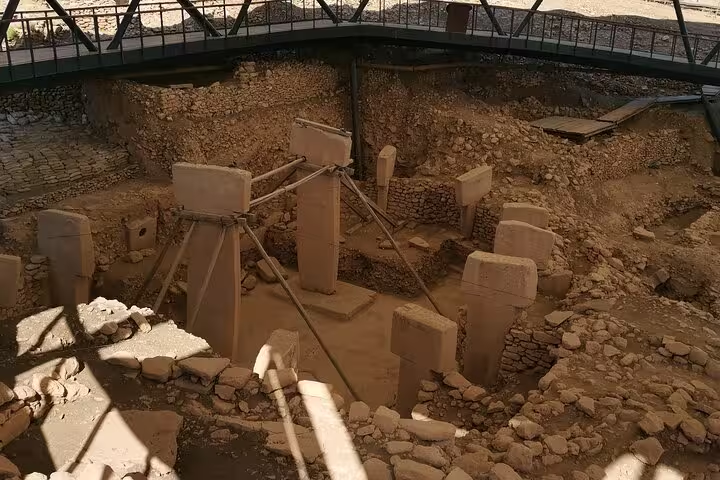
Göbeklitepe is about 15 km north-east of Şanlıurfa. The site looks out over the Harran plain. Its UNESCO World Heritage inscription dates to 2018. Excavations have continued following the discovery of Göbeklitepe in the 1990s.
Circular structures at Göbeklitepe stand on pillars shaped like a T, reaching up to 5.5 metres high. The settlement was occupied between about 9600 and 8200 BCE. Şanlıurfa Museum displays steles and sculptural pieces originating at Göbeklitepe.
Frequently asked questions
What shape are Harran's beehive houses?
The houses taper upwards, and each conical dome corresponds to a room.
How tall are the beehive houses?
Built from stone and brick taken from Harran's ruins, finished with mud, these houses can reach 5 metres.
How do the houses respond to the seasons?
Their architecture and materials help keep the interiors cool in summer and warm in winter.
Is Harran on the UNESCO World Heritage Tentative List?
Harran joined the UNESCO World Heritage Tentative List in 2000.
What is displayed in Şanlıurfa Museum from Göbeklitepe?
The museum exhibits steles and sculptures from Göbeklitepe.