Last updated:


Milan occupies a municipal area of 181.76 square kilometres, with an elevation of 138 metres above sea level. Among its six principal entrances is Porta Venezia.
The Milan city game is a self-guided walking tour built around clues and stories. Its duration is 1 hour and 45 minutes, and it includes a mobile exploration game, an original professionally written story, challenges at each stop and directions between locations.
The fashion mystery walking game in Milan is self-guided and lasts 2 hours and 25 minutes. It includes access to a digital game, a narrative with character roleplay, puzzle clues for 11 stops and directions between them.
The private night tour of Milan landmarks and city lights lasts 3 hours. It includes a private English-speaking driver, an air-conditioned vehicle and a private guided night tour.
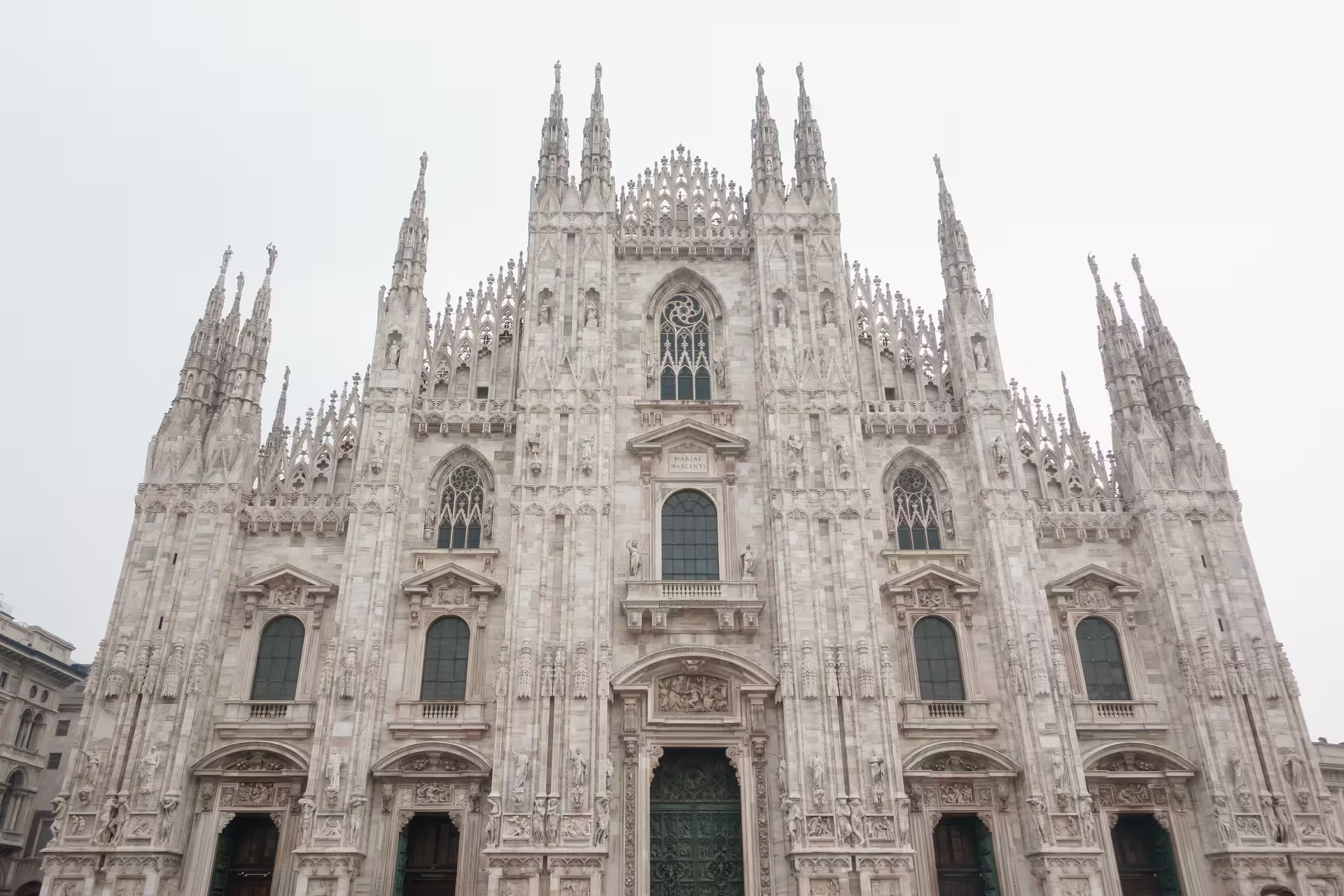
Work on Milan Cathedral started in 1386, under Archbishop Antonio da Saluzzo, and Gian Galeazzo Visconti soon made it his project. Its pale marble has a pink tint and comes from the Candoglia quarries, reserved for the cathedral. A golden Madonnina statue crowns a cathedral spire. The Duomo's Music Chapel dates from 1402.
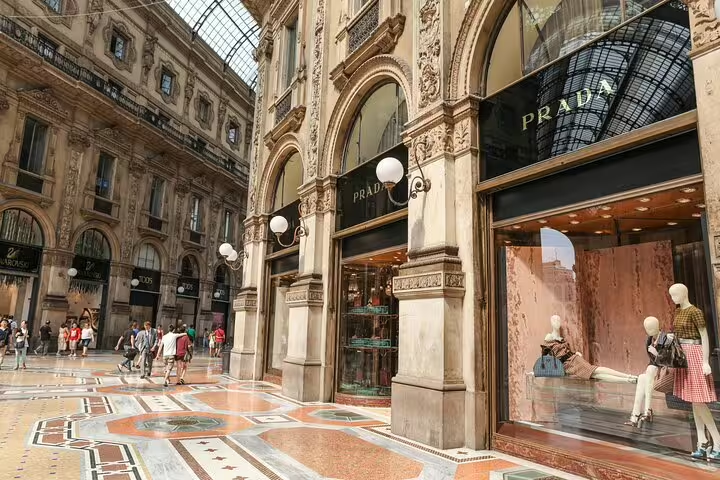
A bronze statue of Vittorio Emanuele II on horseback occupies the middle of Piazza Duomo. The Galleria Vittorio Emanuele II has a central dome reaching 47 metres.
The private Duomo Cathedral tour with a local guide and crypt visit lasts 2 hours. It includes a licensed private local guide, entry to the cathedral interior, a visit to the crypt beneath the main altar and lift access to the rooftop terraces.
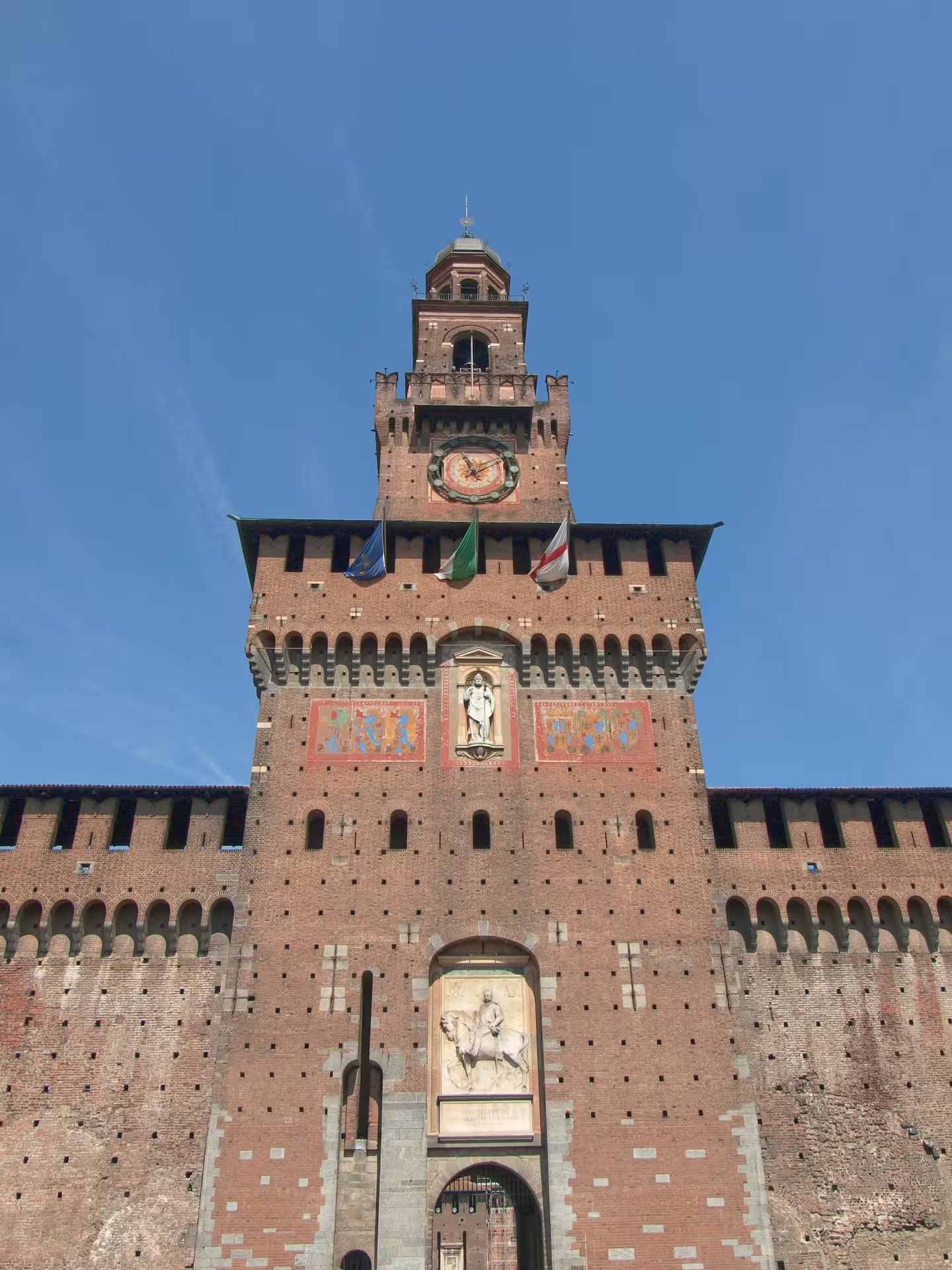
Begun as a Visconti fortress in the 14th century and rebuilt by Francesco Sforza from 1450, Castello Sforzesco was built chiefly for defence. Its Civic Museums include art by Mantegna, Bellini and Antonello da Messina. The castle also contains an unfinished Michelangelo sculpture and Leonardo da Vinci's Sala delle Asse.
In Brera, the Academy of Fine Arts was founded by Maria Theresa in 1776. The district also contains the Braidense National Library. Mudec's collection brings together about 7,000 artworks, objects, textiles and musical instruments from every continent. Fondazione Prada, whose art activity began in 1993, opened its Largo Isarco venue of roughly 19,000 square metres in southern Milan in 2015.
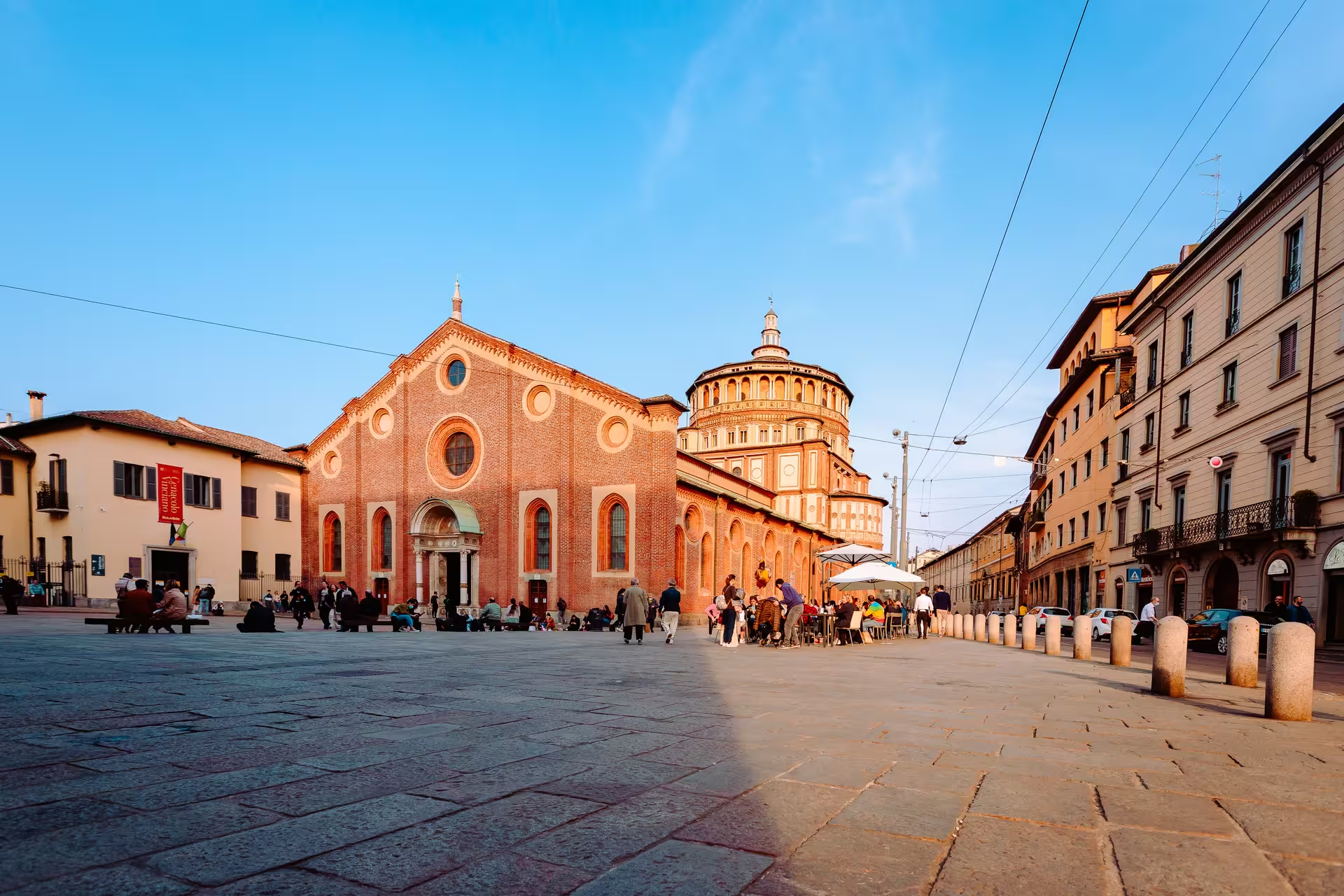
Ludovico il Moro chose Santa Maria delle Grazie as the Sforza family mausoleum and had Bramante remodel it from 1492. Building began in 1463, with Bramante altering the complex towards the close of the 15th century. Leonardo da Vinci received the commission for The Last Supper in 1495 and finished it in 1497. The church and painting gained UNESCO World Heritage status in 1980. Although the refectory suffered heavy damage during the Second World War in 1943, the wall carrying the painting remained standing.
After severe wartime bombing damage, La Scala was rebuilt and reopened with Arturo Toscanini conducting on 11 May 1946. Following restoration, it opened again on 7 December 2004 with Riccardo Muti conducting Salieri's Europa riconosciuta.
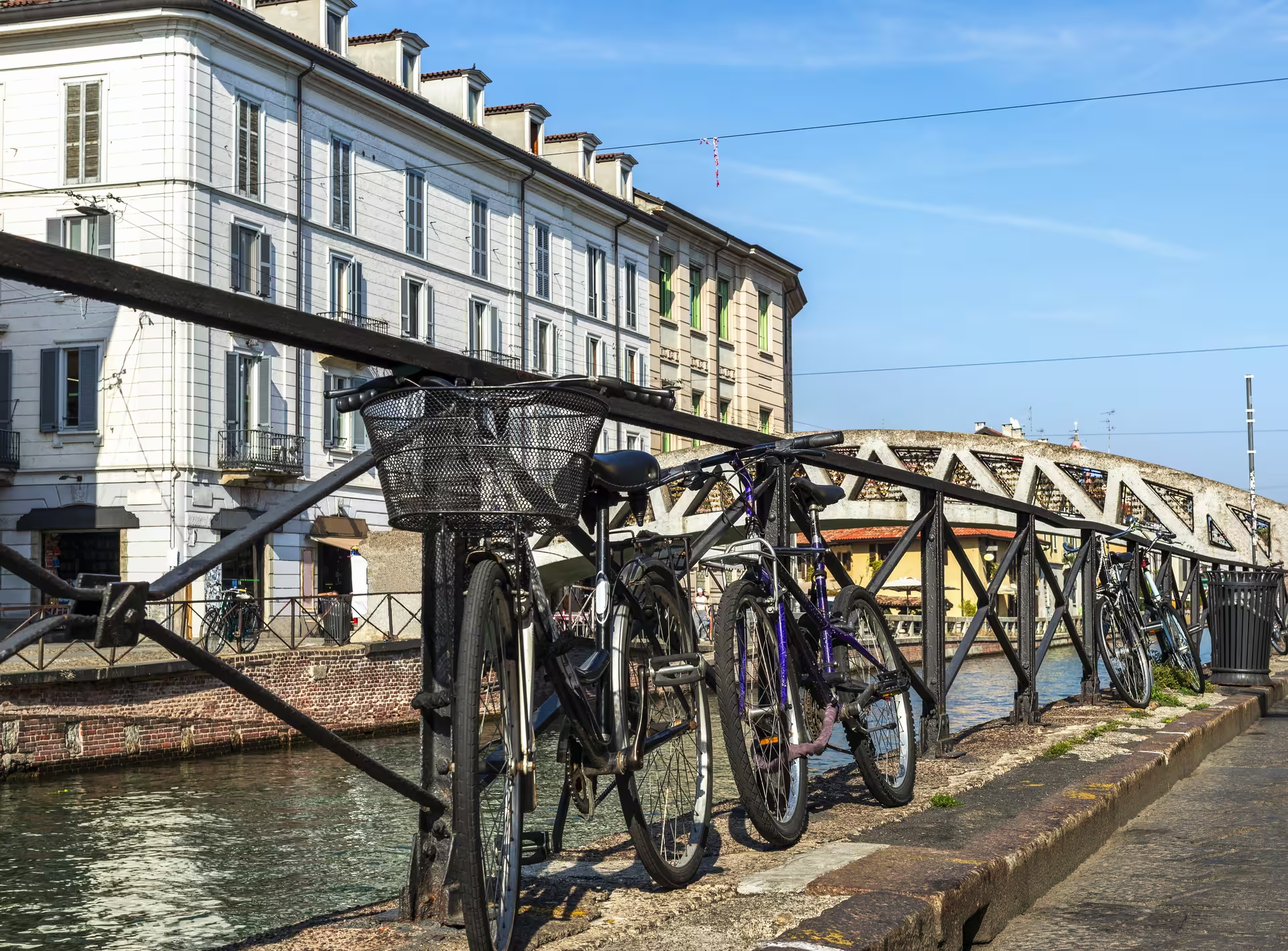
Milan's canal history reaches back to the 12th century. The Naviglio Grande and Naviglio Pavese are the two principal canals of the Navigli district. The Naviglio Pavese linked Milan with Pavia.
Tradition credits panettone to Toni, a boy working in the scullery of Ludovico Sforza's kitchens.
Work on Milan Cathedral started in 1386, under Archbishop Antonio da Saluzzo, and Gian Galeazzo Visconti soon made it his project.
It comes from the Candoglia quarries, reserved for the cathedral.
Its collections include works by Bellini, Mantegna and Antonello da Messina, an unfinished sculpture by Michelangelo and Leonardo da Vinci's Sala delle Asse.
Leonardo da Vinci completed the painting in 1497, after receiving the commission in 1495.
Its two main canals are the Naviglio Grande and Naviglio Pavese.