Last updated:
The Old Town of Santiago de Compostela joined the World Heritage List in 1985 on the strength of its cathedral and the historic quarter that surrounds it. Its link to the Camino de Santiago, one of the great phenomena of the Middle Ages, gave the city a decisive influence across the north of Spain. This page walks through the old town in the order a pilgrim meets it: the tomb, the rebuilt medieval city, the cathedral and the stone streets all around.
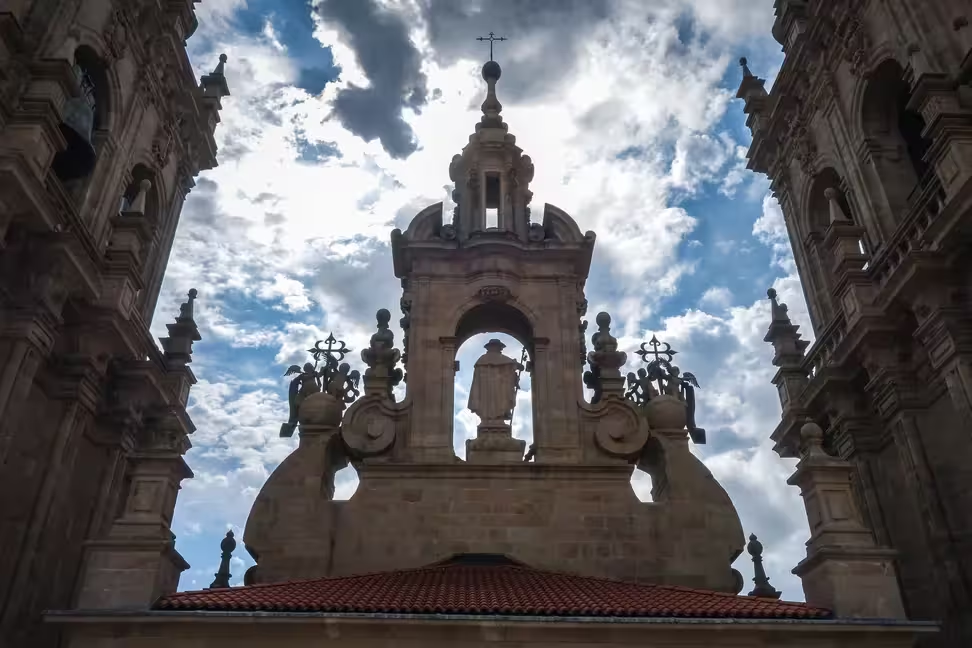
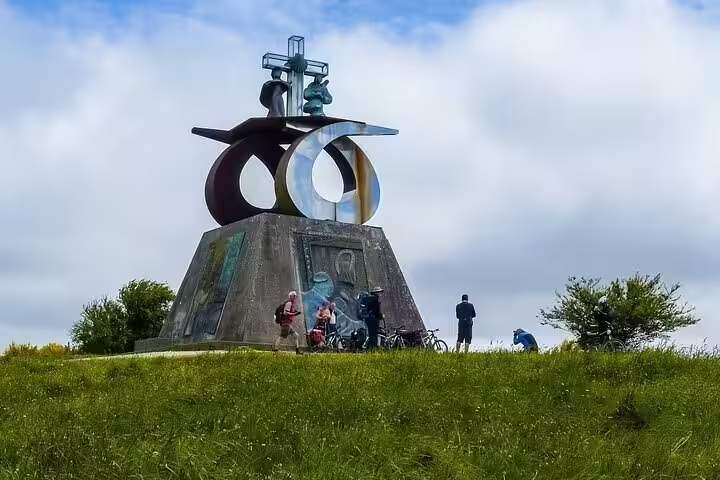
It all began with a discovery: early in the 9th century, the tomb of the apostle St James was found here. From then on the city grew quickly into one of the great pilgrimage centres, competing with Rome and Jerusalem for the faithful. Over the centuries, the pilgrims' footsteps traced a web of routes that all converge on Santiago, the point where every Jacobean way arrives.
The journey has a poetic side as well. Pilgrims steered their way to Compostela by the Milky Way, which on clear nights draws a road of stars across the sky, and that starry path came to be called the Camino de Santiago.
Much older layers lie beneath the old town: Santiago sits on a dolmen necropolis and a Celtic hillfort, with Roman remains as well. At the end of the 10th century its medieval story took a violent turn when Almanzor sacked the city. Santiago was rebuilt from end to end in the following century, and by the 11th and 12th centuries it had grown into a place of great influence and prestige.
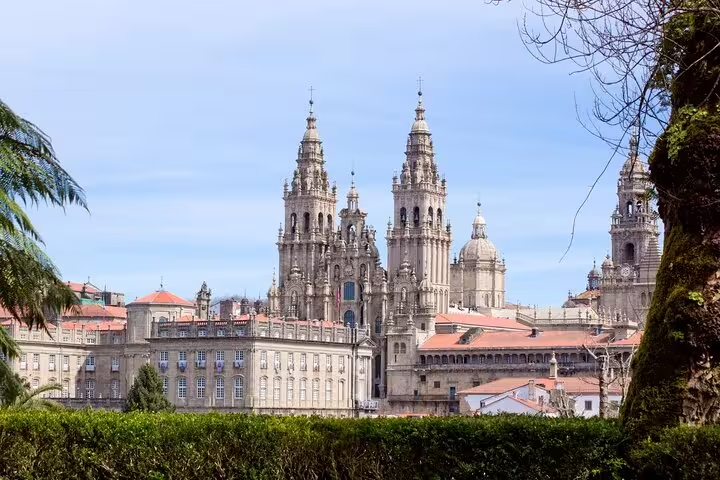
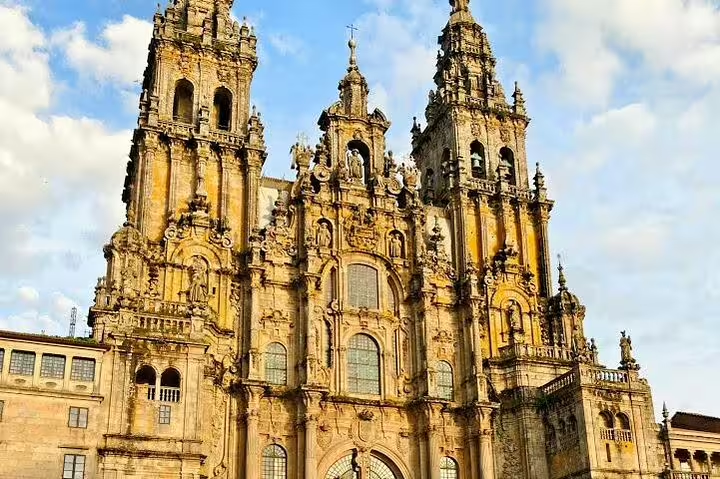
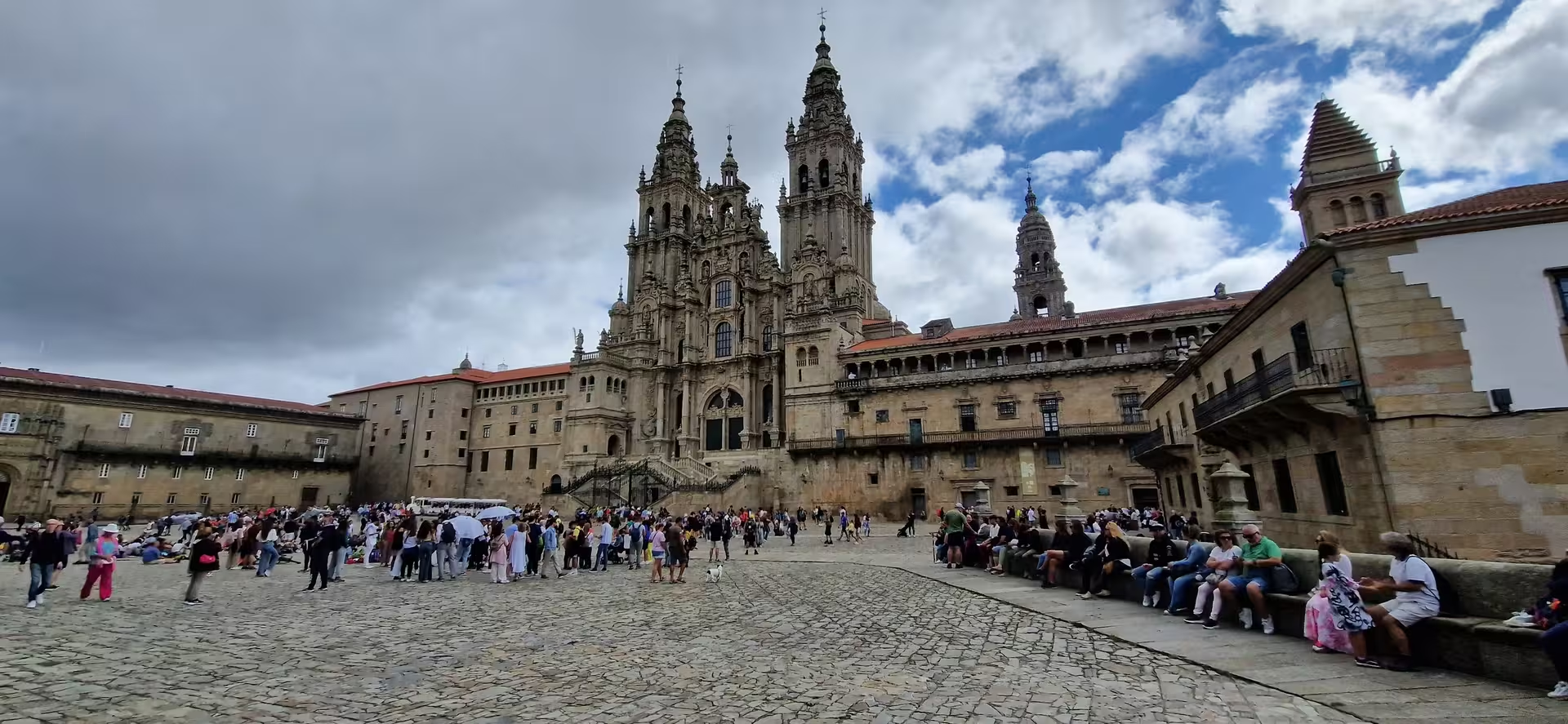
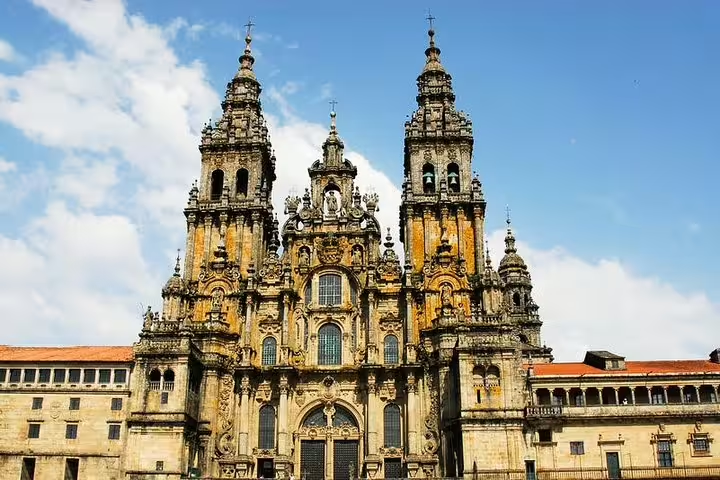
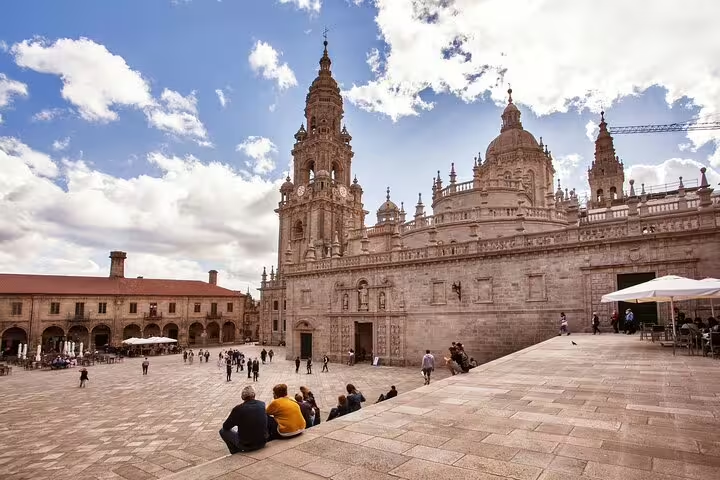
Work on the cathedral began in 1075, and the result is a masterpiece of Romanesque building. It shelters the Pórtico de la Gloria, one of the jewels of medieval sculpture. Its western façade is Baroque and makes up one side of the Plaza del Obradoiro.
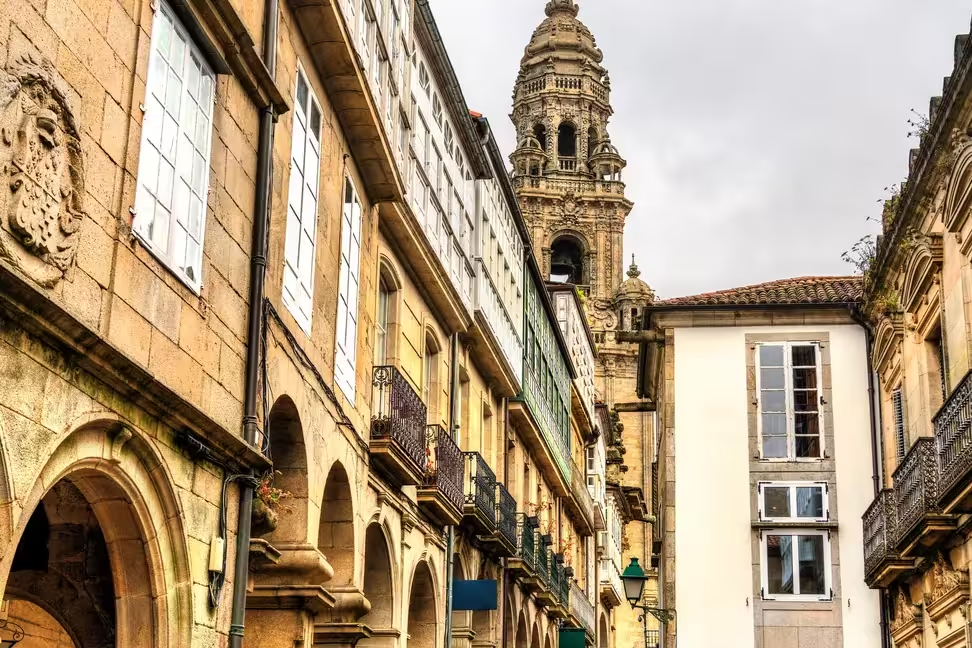
Around the cathedral, the old town is a remarkably well preserved historic city. Its squares and narrow lanes are lined with Romanesque, Gothic, Renaissance, Baroque and Neoclassical buildings. Traditional Galician architecture holds its own among them: the typical wooden galleries, and materials such as stone, wood and iron, stand side by side with the great monuments.
Pilgrims have long written about the road. One account, attributed to Aymeric Picaud in the 12th century, is found in Book V of the Codex Calixtinus and recounts in close detail his journey on the French Way. The French Way itself has been World Heritage since 1993, and the Northern Ways of the peninsula followed in July 2015. In 1987 the Council of Europe made the historic routes its first European Cultural Route, and in 2004 the Camino was honoured with the Prince of Asturias Award for Concord. The year 2027 is a Jacobean Holy Year, and Spain has declared it an event of exceptional public interest.
To explore the old town on foot with someone who knows it well, there is a private walking tour with a local guide. Many visitors cross the border from Porto for the day: you can pick a full-day tour from Porto, a private full-day tour from Porto or a private guided tour from Porto. Others add more stops along the way, on a full-day tour that includes Valença do Minho or a private trip from Porto with scenic stops.
Every trip that starts or stops here is also listed on the destination page.
In 1075, in the Romanesque style.
It is the cathedral's portico, regarded as a jewel of medieval sculpture.
Because the apostle St James was buried here: his tomb came to light early in the 9th century.
Pilgrims followed it to Compostela, and its trail of stars became known as the Camino de Santiago.
Yes, since 1985, thanks to the cathedral and the old streets around it.
Sources: Origen de los datos: Ministerio de Cultura (Ley 37/2007).