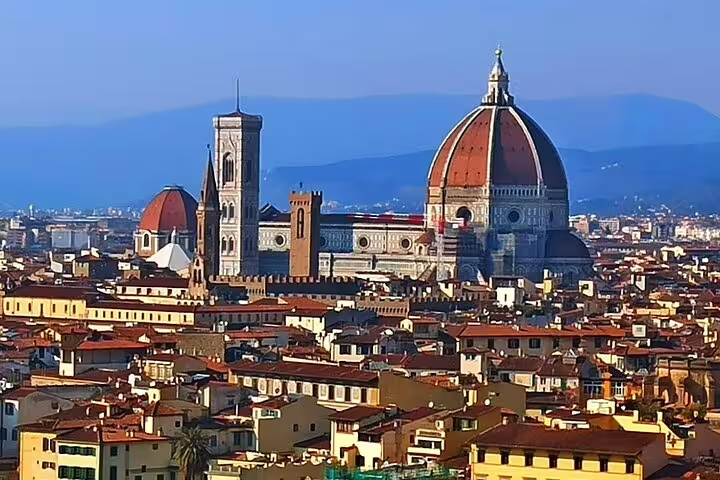
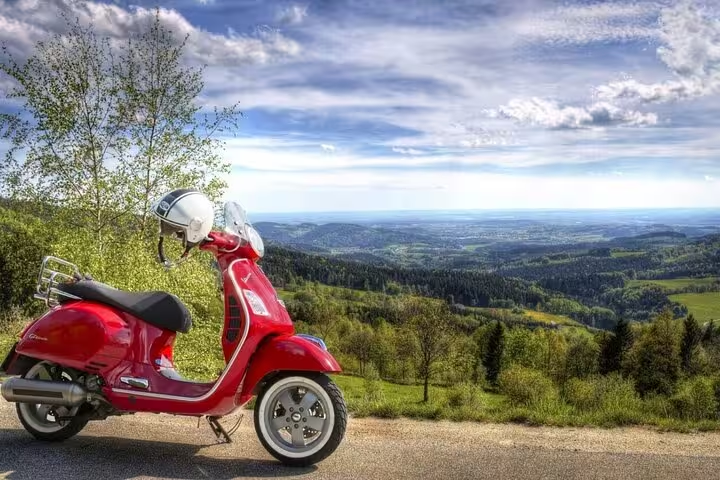
The Chianti hills are famous above all for their vineyards, but the countryside around Greve in Chianti also holds a walled medieval village, castles that became country houses and an abbey founded to shelter travellers. This page covers what to see in Greve and Montefioralle, which castles and villages are worth the drive into the hills, and how to explore the area on a wine tour, by Vespa or on a cooking day.
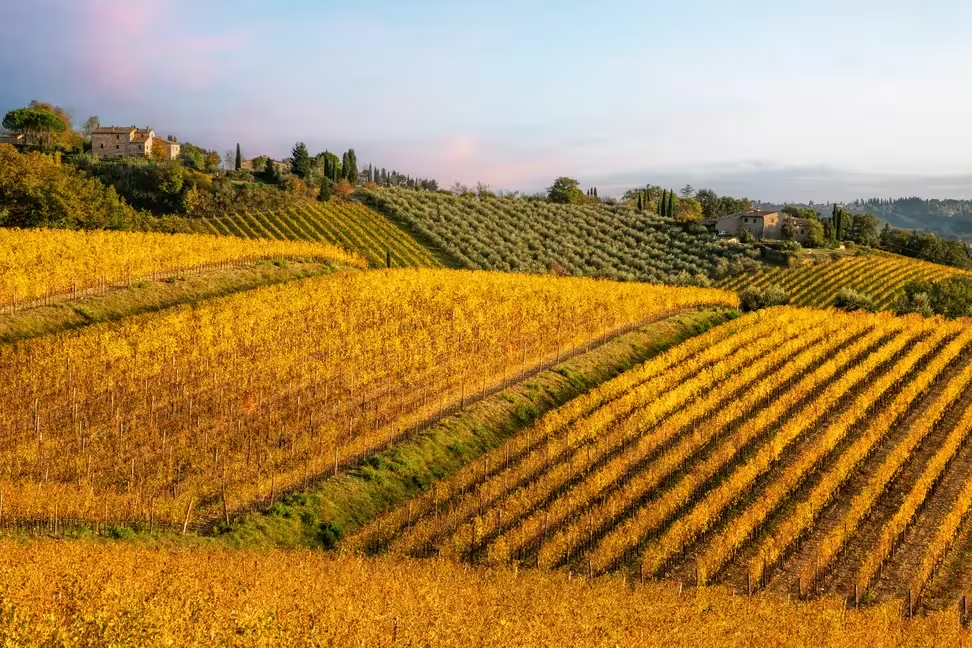
In the Middle Ages, Greve was the market of the area, a place that mattered for trade alone, while power lay with the castle of Montefioralle on the hill. Today the main square of Greve is overlooked by the church of Santa Croce, raised between 1833 and 1835 in neo-Renaissance style to plans by the architect Luigi de Cambray-Digny, who took the church of Santo Spirito in Florence as the model for the ceiling decoration. Inside, look for the triptych of the Madonna and Child with saints painted by Bicci di Lorenzo in the first half of the 15th century.
Since September 2002, the former convent of San Francesco has been home to the town's museum of sacred art, which also introduces visitors to the works kept in churches and parish churches across Chianti. Its most celebrated piece has never left its place above the oratory altar: a Lamentation over the Dead Christ in painted terracotta, a group of seven statues that recent restoration has linked to the style of Baccio da Montelupo.
Montefioralle, recorded in early times as Monteficalli, is still enclosed by its original circuit of walls, with a massive towered building rising above them. In the Middle Ages it ranked among the chief military and administrative centres of the entire valley, and the market of Greve below depended on it. At the top of the village stands the church of Santo Stefano, which keeps a Madonna and Child painted on panel in the 13th century by the artist known as the Master of Montefioralle. Along the lane through the village, tradition points to one house as the home of the family of the navigator Amerigo Vespucci; the coat of arms and the letter V of the Vespucci appear on its lintel.
From its hilltop, the castle of Verrazzano commands a broad view over the Val di Greve. It probably grew from a Roman settlement and later passed to the family of Giovanni da Verrazzano, the navigator. At first it was a small stronghold clustered around one central tower in late Romanesque style; it was then converted into a farm and manor house, and a 19th-century restoration gave back its towered profile, softened by an Italian garden. It remains a private residence, and visits are by booking only.
Lucolena grew up around its own castle, whose remains are now absorbed into the village. The castle first appears in a document of January 1059. In 1302, when the whole district was laid waste, it was half destroyed, and it was later rebuilt.
Getting to Lamole is part of the pleasure. The road branches off at a junction on the route between Greve and Panzano and climbs past cypresses, small villages, sheer drops and old springs. The village sits at about 600 m (1,969 ft) among chestnut and oak woods, above the valley where the river Greve rises, looking down on vineyards and across to ranges of hills in the west.
Also within the municipality, the abbey of Montescalari was first a plain stone oratory where travellers could find shelter, built between 1038 and 1040. It was raised to the rank of abbey in 1137, and its greatest treasure was the tower bell cast by Andrea del Verrocchio in 1474, later sold and recast. Grand Duke Pietro Leopoldo suppressed the abbey in 1775, after seven centuries, and the buildings are now permanently closed to visitors.
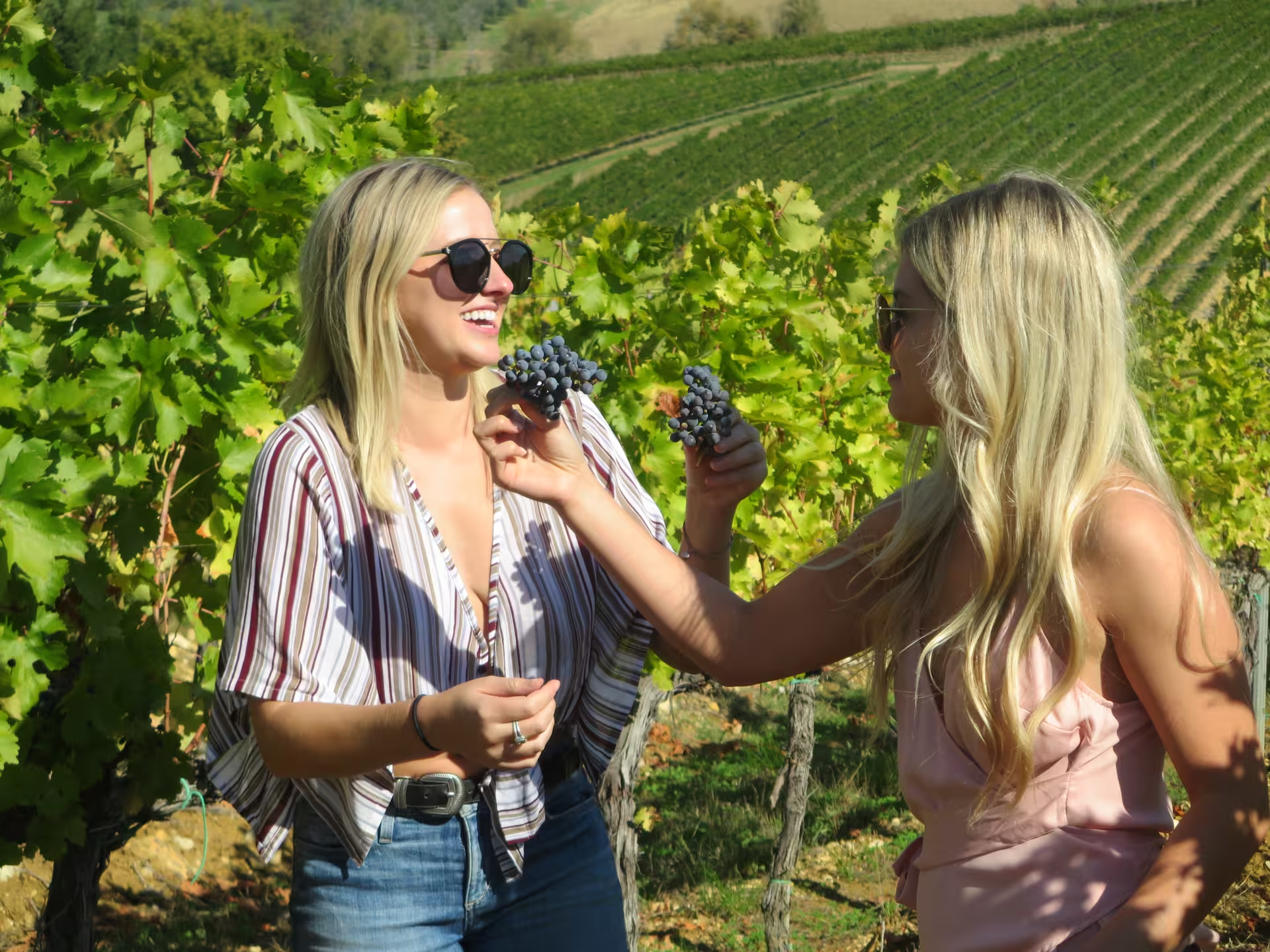
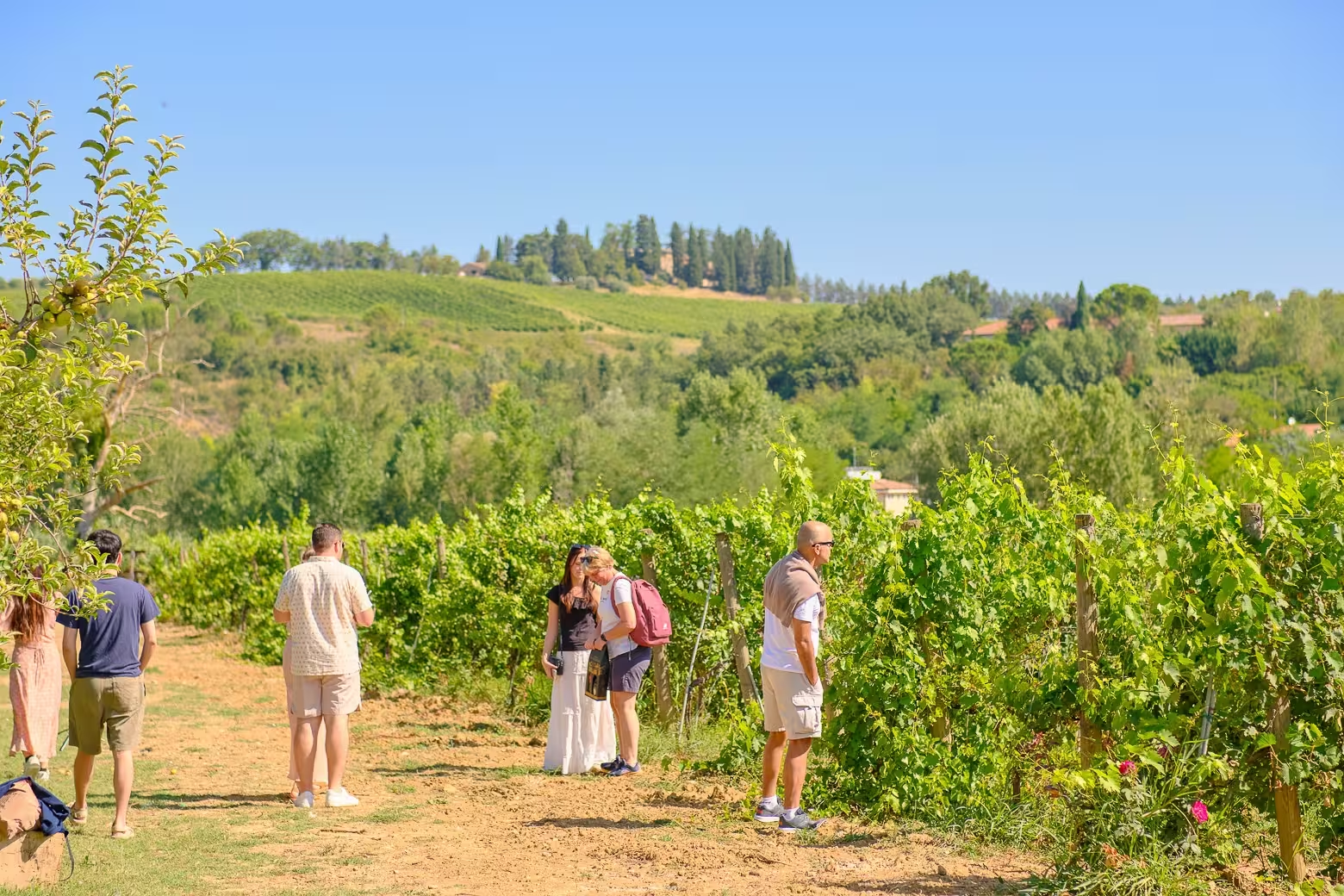
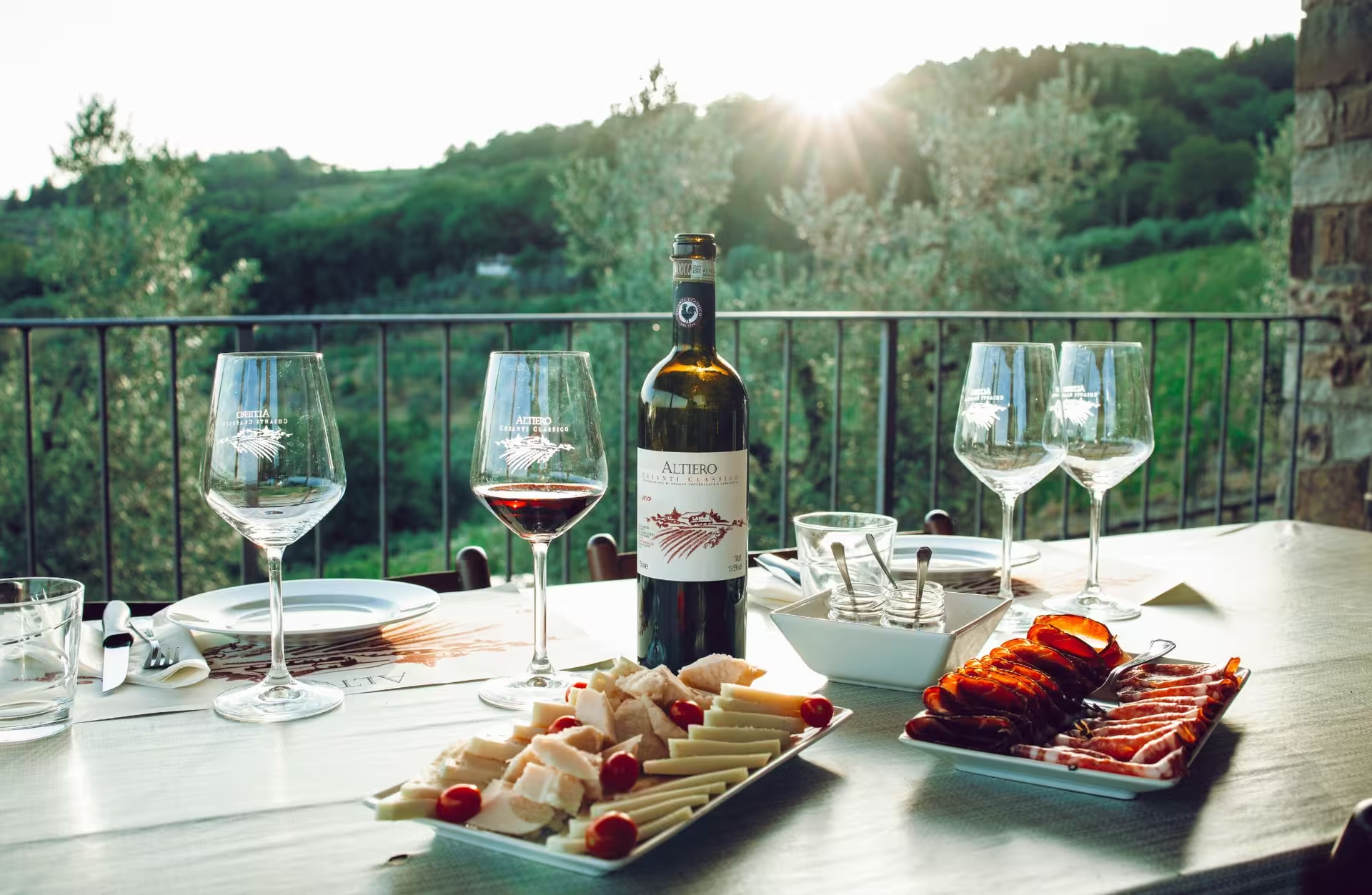
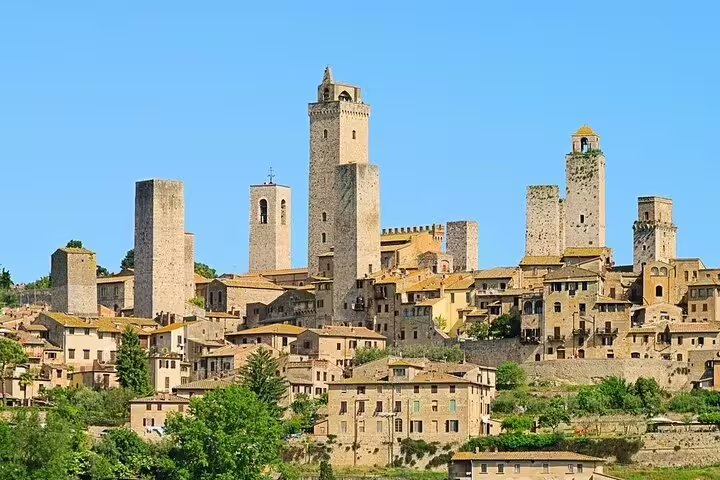
Several of these trips leave from Florence. Around Greve, you can join a private tour of two Chianti Classico estates with time in the medieval centre of Greve, spend a full day with a private driver through Greve, Panzano and Montefioralle or book a guided visit to a family winery with wine and food tasting. For a change of pace, a Vespa ride along the Chianti roads with lunch takes in vineyards and hilltop villages. Two experiences go beyond the glass: a private cooking class with a local family, paired with the estate's wine and a truffle hunt in the Chianti woods with a truffle lunch and wine tasting. To add another Tuscan highlight, there is a private wine tour of Chianti and San Gimignano with lunch and a day that pairs Florence with an afternoon among the Chianti vineyards.
Every trip that starts or stops here is also listed on the destination page.
Close to Greve in Chianti. In medieval times the market of Greve depended on this walled village.
Yes, but it is a private residence, so visits have to be booked in advance.
Tradition places the Vespucci family home in a house on the village's inner street, marked with their coat of arms and a V on the lintel.
Roughly 600 m (1,969 ft) above sea level, surrounded by woods of chestnut and oak.
No. The building no longer opens to visitors.
Sources: Comune di Greve in Chianti (CC BY 4.0): montefioralle-castello-di-montefioralle-e-chiesa-di-santo-stefano, castello-di-verrazzano, chiesa-di-santa-croce-greve-chianti, il-museo-di-arte-sacra-san-francesco, lamole, castello-di-lucolena, abbazia-di-montescalari.