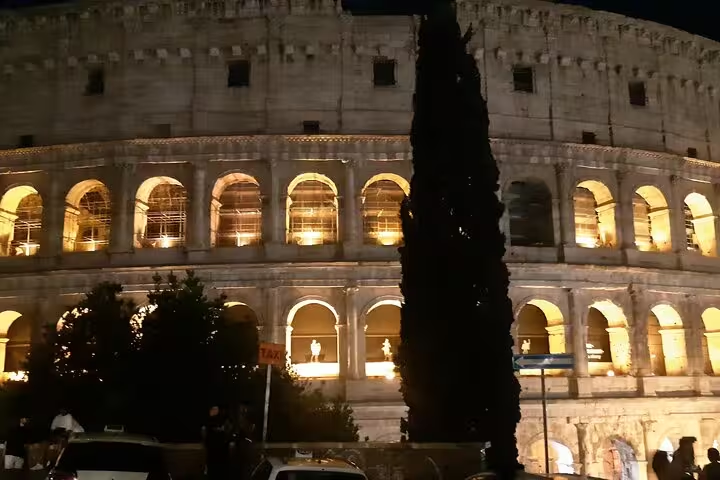
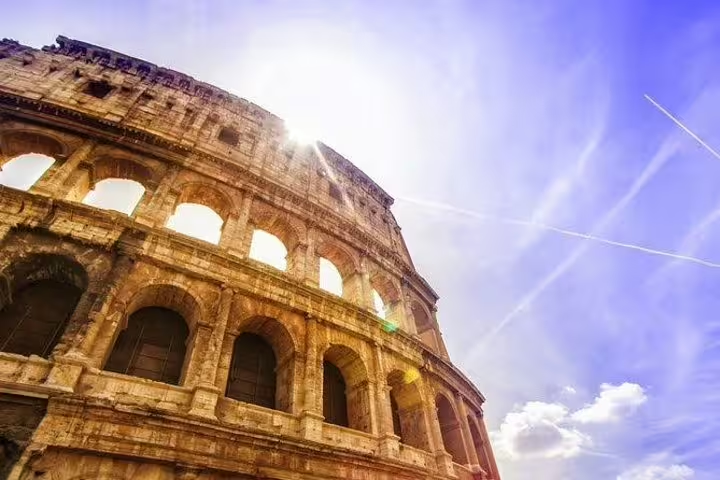
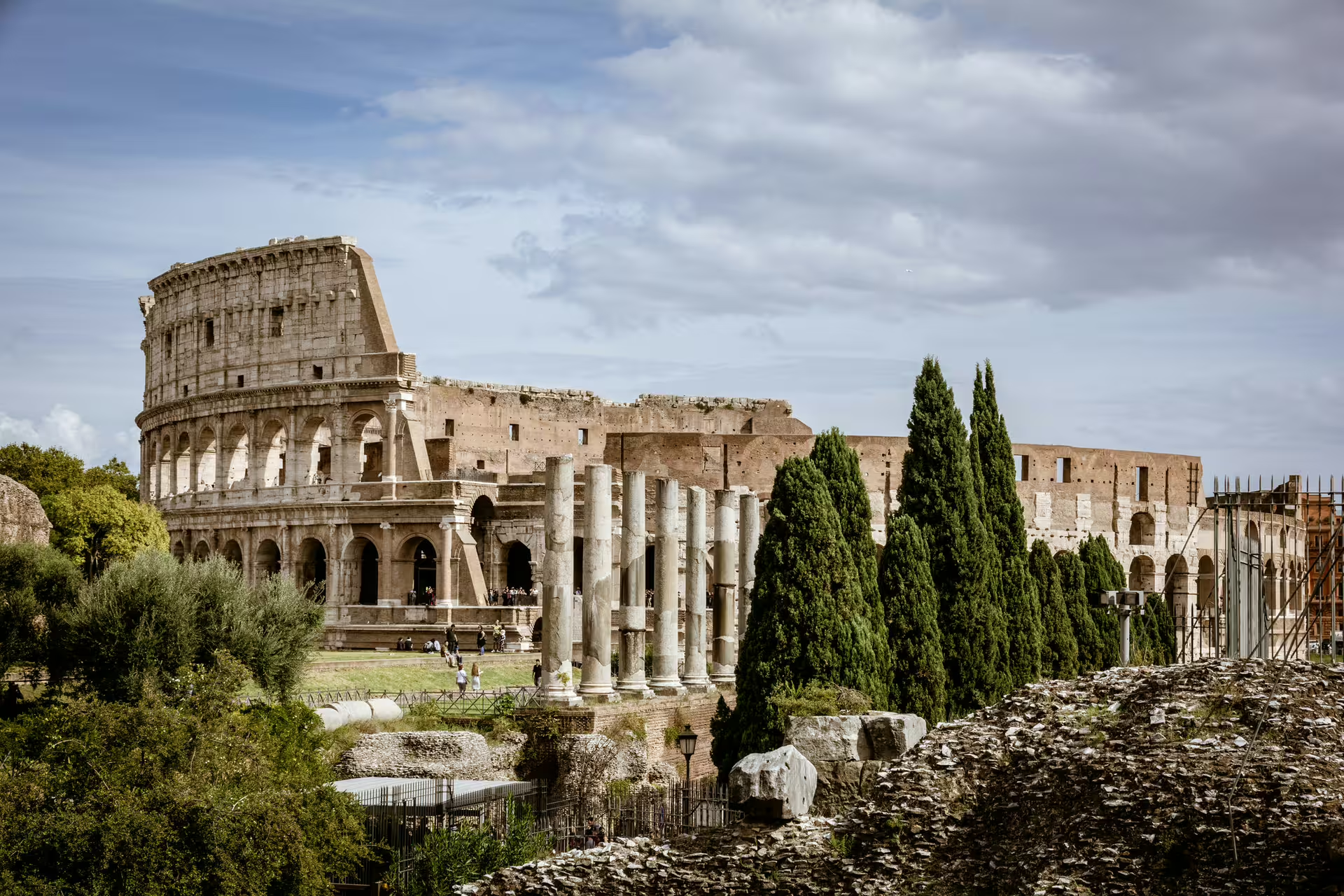
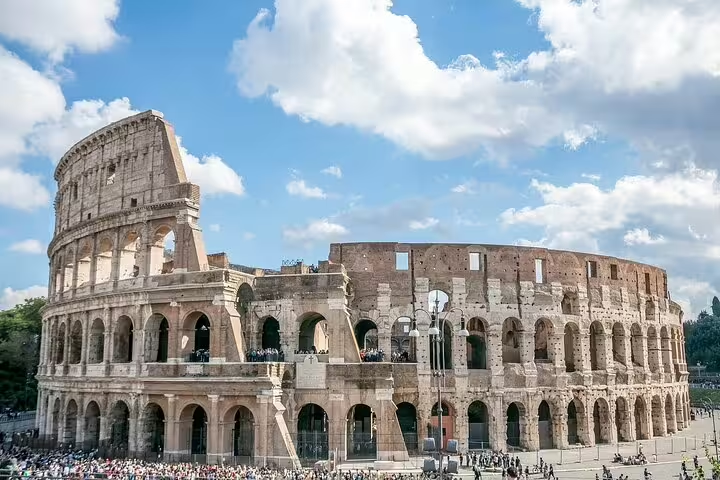
The Colosseum, officially the Flavian Amphitheatre, rises in the archaeological heart of Rome. No amphitheatre in the city, or anywhere else in the world, is bigger, and its northern face climbs to almost 50 m (164 ft). It also counts among the ancient monuments of the Historic Centre of Rome, a World Heritage property since 1980. This page looks at who built it, what went on in and under its arena, and how it fits with its neighbours: the Forum, the Palatine Hill and the Arch of Constantine.
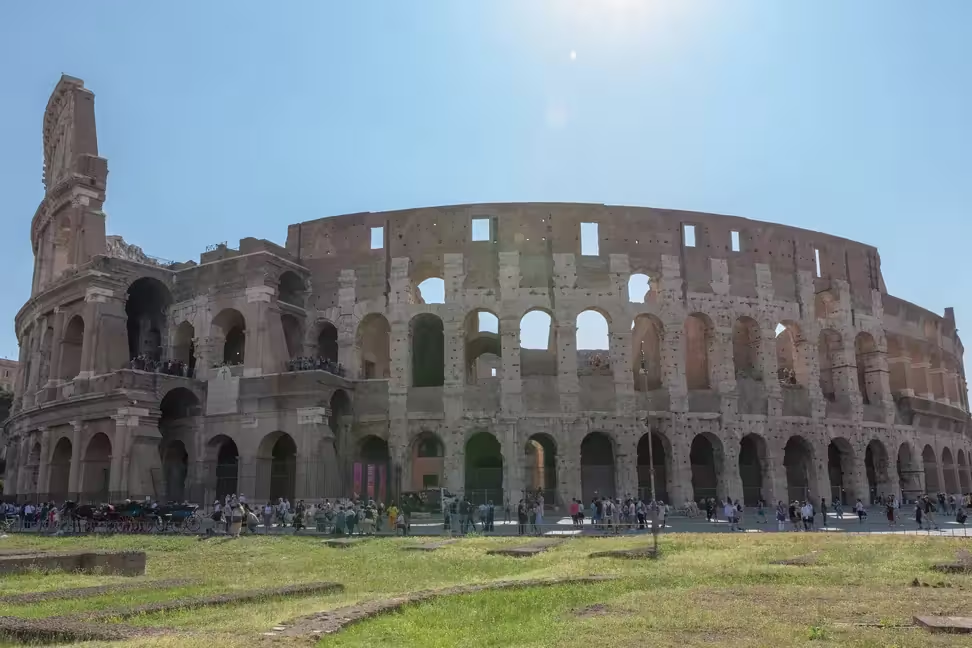
The emperors of the Flavian dynasty had the amphitheatre built in the 1st century AD, on ground with a recent past. After the fire of AD 64, Nero had started a vast new residence, the Domus Aurea, and its grounds included an artificial lake in the valley where the Colosseum stands today. The palace also had an enormous entrance hall holding a colossal statue of Nero dressed as the Sun god. The amphitheatre's popular name comes from a colossal statue that once stood nearby.
Until the end of antiquity, crowds came here for shows of enormous popular appeal, above all hunts and gladiator fights. Two gates on the building's long axis framed each show: gladiators and animals made their entrance through the Porta Triumphalis, and the bodies of fighters who had died were carried out through the Porta Libitinaria. That second gate takes its name from Libitina, the Roman goddess who presided over the honours paid to the dead.
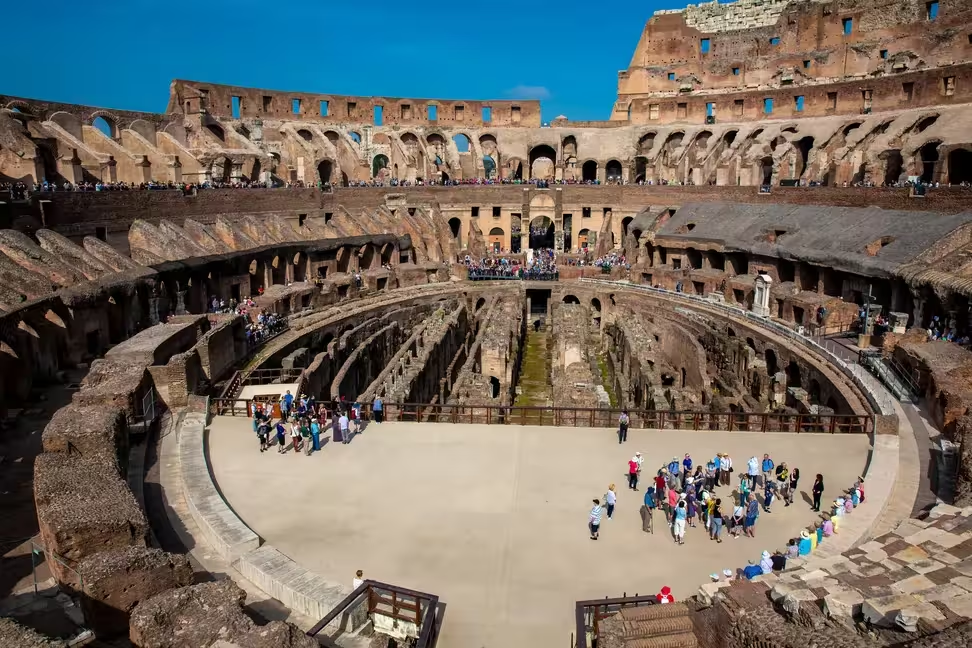
Beneath the arena lay the underground structures that made the games and hunts possible. They held the animals and the machinery that raised elaborate stage sets up into the arena, and gladiators and animals gathered there for the last preparations before going on. Filled in at the end of the 5th century AD, these passages survive in the state they were in at that time.
Since 2017 the Colosseum has belonged to the Parco archeologico del Colosseo, created that year as an autonomous institute. The park also takes in the Roman Forum and the Palatine, the Domus Aurea on the Oppian Hill, the Arch of Constantine and the Meta Sudans.
The square of the Forum was paved at the end of the 7th century BC, once the marsh that filled the valley had been drained, and it became the hub of Roman public life for more than a thousand years. After Augustus chose the Palatine for his own home, the hill became the seat of the imperial palaces, which is why its name, Palatium, has become a synonym for a residence in modern languages.
Along the old route of the triumphs, between the Circus Maximus and the Arch of Titus, stands the Arch of Constantine, the largest honorary arch to have survived. It celebrates Constantine's triumph over Maxentius after the battle of the Milvian Bridge in AD 312, and the Senate dedicated it to the emperor in AD 315.
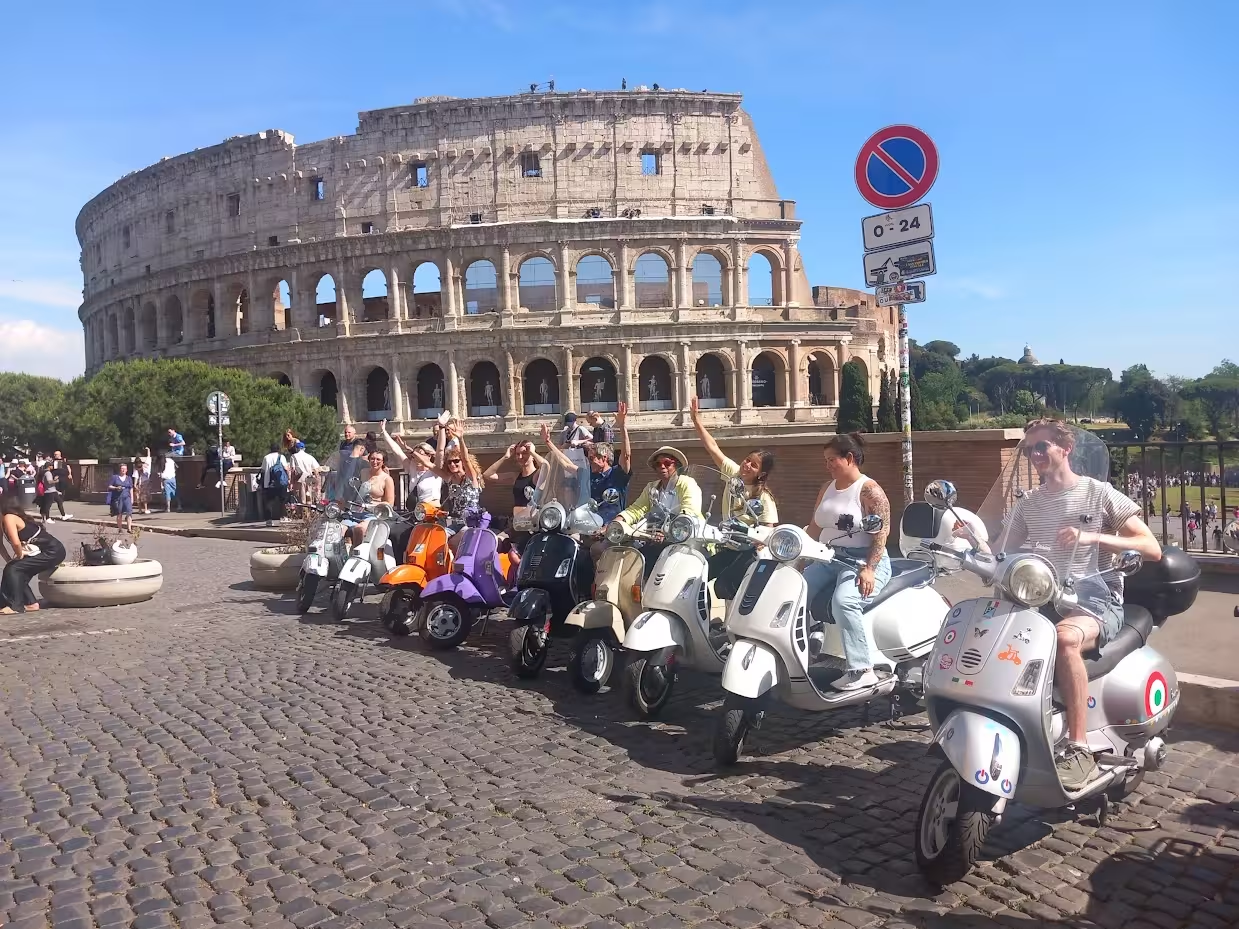
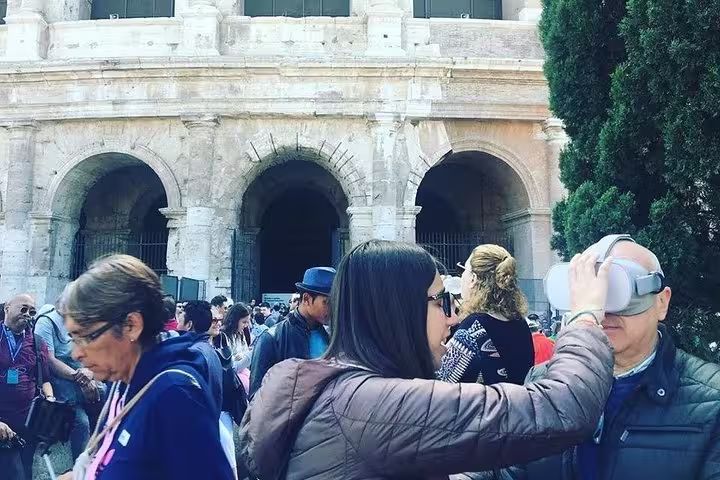
Many visitors pair the amphitheatre with its neighbours on a guided tour of the Colosseum with the Forum and Palatine Hill, or join a small-group guided tour of the Colosseum and the Forum. For a different look at the city around it, there is a vintage Vespa ride that passes the Colosseum and crosses to Trastevere and a buggy tour of the Colosseum and the ancient city. A private guided sightseeing tour of Rome suits those who want a plan shaped around them, and cruise passengers can make the trip on a full-day private tour of Rome from Civitavecchia port.
Every trip that starts or stops here is also listed on the destination page.
The name refers to a colossal statue that stood nearby; officially it is the Flavian Amphitheatre.
Flavian emperors commissioned it in the 1st century AD.
Animals and stage machinery were kept there, and the performers got ready before each show.
The Forum, the Palatine Hill, the Domus Aurea, the Meta Sudans and the Arch of Constantine.
Yes. The Historic Centre of Rome, inscribed in 1980, lists it among its monuments of antiquity.
Sources: Ministero della Cultura (cultura.gov.it) (CC BY 3.0).