Lagos, Portugal: what to see and do
The municipality of Lagos extends over about 213 square kilometres. Its parishes are São Gonçalo de Lagos, Odiáxere, Luz, Bensafrim and Barão de São João. The settlement that developed into Lagos was known to the Romans as Lacóbriga.
Things to do in Lagos
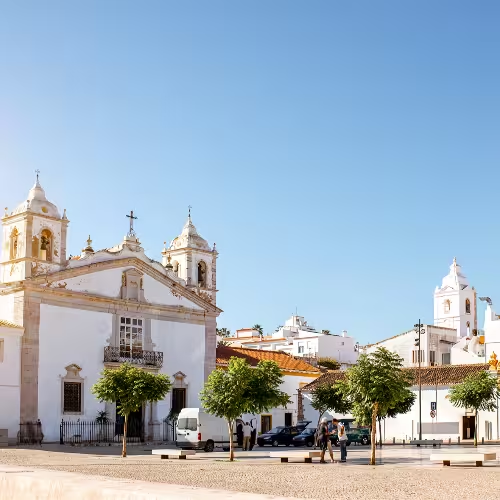
Completed in 1707, the church was badly damaged by the 1755 earthquake and restored from 1769. Built between 1680 and 1690, the Forte da Ponta da Bandeira protected the quay and the sides of the city wall. Leopoldo de Almeida created the statue of Prince Henry in Lagos. In the Jardim da Constituição, the statue of Gil Eanes is a sculpture by Canto da Maia.
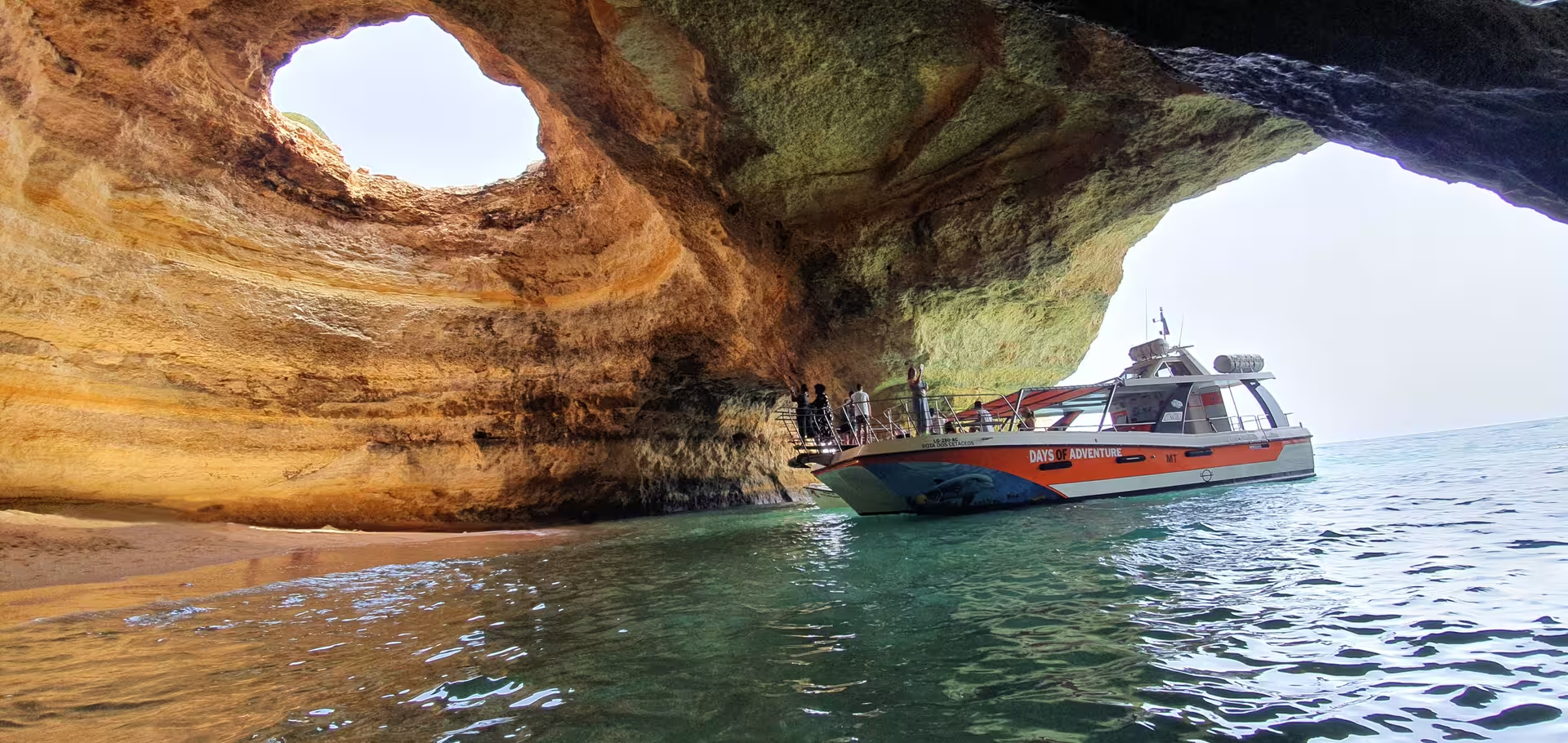
A Benagil Cave and dolphin watching boat tour from Lagos lasts 2 hours and 30 minutes and includes a marine biologist guide, dolphin watching in the open Atlantic, a sea visit to Benagil Cave, safety equipment and a crew briefing.
The catamaran sunset cruise in Lagos, Algarve lasts 2 hours and 30 minutes, with an experienced sailing crew, a welcome drink of wine or prosecco, safety equipment, stand-up paddleboards, snorkelling equipment and a guided coastal cruise included.
A full-day catamaran boat tour on the Lagos Algarve coast lasts 7 hours and includes a professional crew, safety equipment, stand-up paddleboards, snorkelling equipment, welcome drinks, toasts, fresh fruit, cheese, olives and snacks.
Ponta da Piedade in Lagos
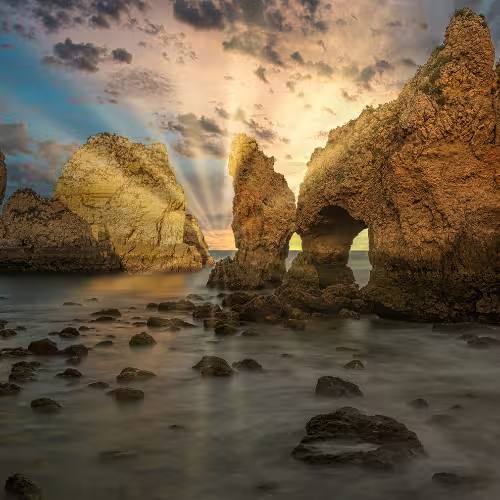
Fossils bound together by calcite account for 90 percent of the Ponta da Piedade rock formation. The lighthouse on this rocky point started operating on 1 July 1913. Its original tower stood 9 metres high, and its light was converted to electricity in May 1952.
The guided kayak tour of the Ponta da Piedade caves from Lagos takes approximately 2 hours and 15 minutes and includes a double kayak and paddle, a life jacket for each participant, a qualified guide during kayaking and use of the onboard water slide during free swimming time.
The history of Lagos
Lagos became definitively part of Portuguese territory in 1249 under Afonso III. King Sebastian granted it city status in 1573. Completion of the Cerca Velha, the older part of the city walls, dates to the 14th century. The Castelo dos Governadores was constructed in the latter half of the 15th century and was probably Prince Henry’s palace.
In August 1444, Lançarote de Freitas brought a fleet of caravels back to Lagos carrying some 235 captives from Africa. The Mercado de Escravos building stands over the remains of a building from the 15th century. The 1755 earthquake devastated Lagos, followed by years of poverty and decline.
Praia do Camilo and Meia Praia
Praia do Camilo sits halfway between Praia de Dona Ana and Praia da Boneca. A wooden staircase supported by the rock leads to the beach, with around 200 steps. Cliffs surround the sandy beach, and Ponta da Piedade is visible from the beach.
Meia Praia stretches for about four kilometres along the bay of Lagos, from the town towards Alvor. The train journey from Lagos railway station to Meia Praia takes about four minutes and covers one stop.
Frequently asked questions
What was Lagos called in Roman times?
The Romans knew the settlement that became Lagos as Lacóbriga.
What is the rock at Ponta da Piedade made of?
Fossils cemented together by calcite make up 90 percent of the rock formation.
When did the Ponta da Piedade lighthouse begin operating?
The lighthouse started operating on 1 July 1913.
How is Praia do Camilo reached?
Access is by a wooden staircase of around 200 steps, supported by the rock.
Is there a train connection to Meia Praia?
Meia Praia is one stop from Lagos railway station, with a journey of about four minutes.