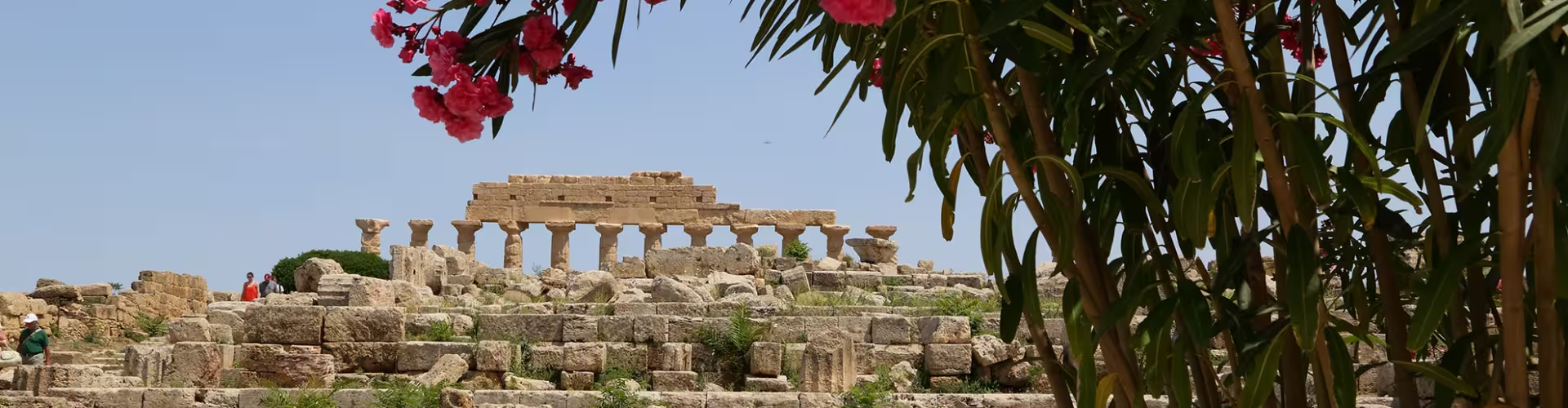
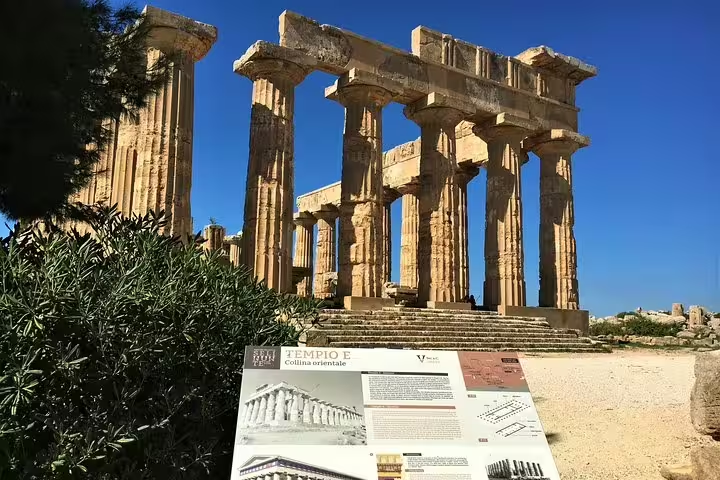
Selinunte is one of Sicily's most impressive archaeological sites, located on the southern coast of Italy near the town of Castelvetrano. This ancient Greek city is home to striking temple ruins and expansive archaeological landscapes that tell the story of a once-thriving Mediterranean civilization.
What to see in Selinunte
Visitors should not miss the iconic temple complexes scattered across the site, particularly Temple G and Temple C, which stand as testaments to Greek architectural ambition. The acropolis area features well-preserved structures and offers panoramic views of the surrounding countryside and distant coastline. The on-site museum houses artifacts including sculptures and pottery that illuminate daily life in ancient Selinunte.
Things to do in Selinunte
Explore the archaeological ruins through self-guided walks or join organized tours that provide historical context and insights. The nearby beaches offer opportunities for relaxation and swimming, making it easy to combine history with coastal leisure. Visitors can also venture to the adjacent nature reserve to experience the diverse flora and fauna of the region.
Ancient Greek Heritage and Architecture
Selinunte showcases remarkable examples of Doric temple architecture that rivals other Greek sites throughout the Mediterranean. The scale and ambition of these structures reflect the city's importance as a major Greek colony, offering a compelling window into classical civilization and its engineering achievements.
Selinunte is located on the southwestern coast of Sicily, Italy, approximately 100 kilometers southeast of Palermo and near the modern town of Castelvetrano. The site sits on a plateau overlooking the Tyrrhenian Sea, making it strategically positioned along Sicily's ancient Mediterranean trade routes. The region experiences a Mediterranean climate with warm summers and mild winters, and the surrounding landscape features rolling hills and coastal plains.
Ancient Archaeological Site, Mediterranean Destination, Cultural Heritage, Coastal Sicily, Greek History