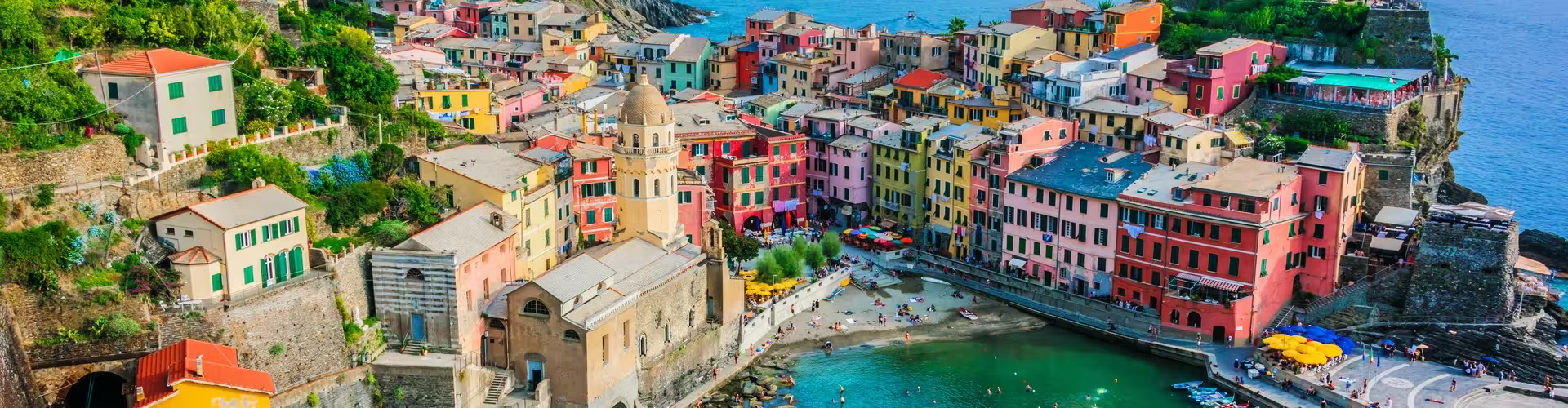
Vernazzo is a picturesque village nestled in the Cinque Terre region of Liguria, Italy. This colorful seaside settlement clings to the rocky cliffs along the Mediterranean coastline, featuring pastel-colored buildings that cascade down to a natural harbor. The village is known for its dramatic cliff-side architecture and quintessential Italian charm.
What to see in Vernazzo
The historic harbor and piazza form the heart of Vernazzo, surrounded by centuries-old fishermen's houses painted in vibrant yellows, pinks, and blues. The Doria Castle ruins overlook the village from above, offering panoramic views of the Ligurian Sea. Visitors can explore narrow winding streets and discover hidden staircases that connect different levels of this ancient settlement.
Things to do in Vernazzo
Swimming and diving in the clear Mediterranean waters attract visitors year-round. The famous hiking trail connecting all five Cinque Terre villages passes through Vernazzo, offering spectacular coastal views. Boat tours to neighboring villages and sunset cruises along the coast provide memorable experiences for travelers.
Vernazzo in Cinema and Culture
Vernazzo has captured the imagination of filmmakers and artists for generations, featuring prominently in Italian cinema and travel documentaries. The village served as inspiration for scenes in Dolce Vita-era Italian films, and its unique landscape continues to attract photographers and visual artists from around the world seeking authentic Mediterranean settings.
Vernazzo is located in the Cinque Terre National Park in Liguria, northern Italy, approximately 140 kilometers southeast of Genoa and 100 kilometers west of La Spezia. The village sits on the Ligurian coast along the Gulf of Poets, accessible by train, boat, or hiking trail. Its position makes it a central hub for exploring the five UNESCO-protected villages of Cinque Terre.
Vernazzo stands as one of five UNESCO World Heritage villages in Cinque Terre, representing authentic Mediterranean coastal living with minimal modern development and no vehicle access. The village maintains centuries-old fishing traditions while serving as a gateway to some of Italy's most dramatic coastal hiking trails and marine landscapes.