




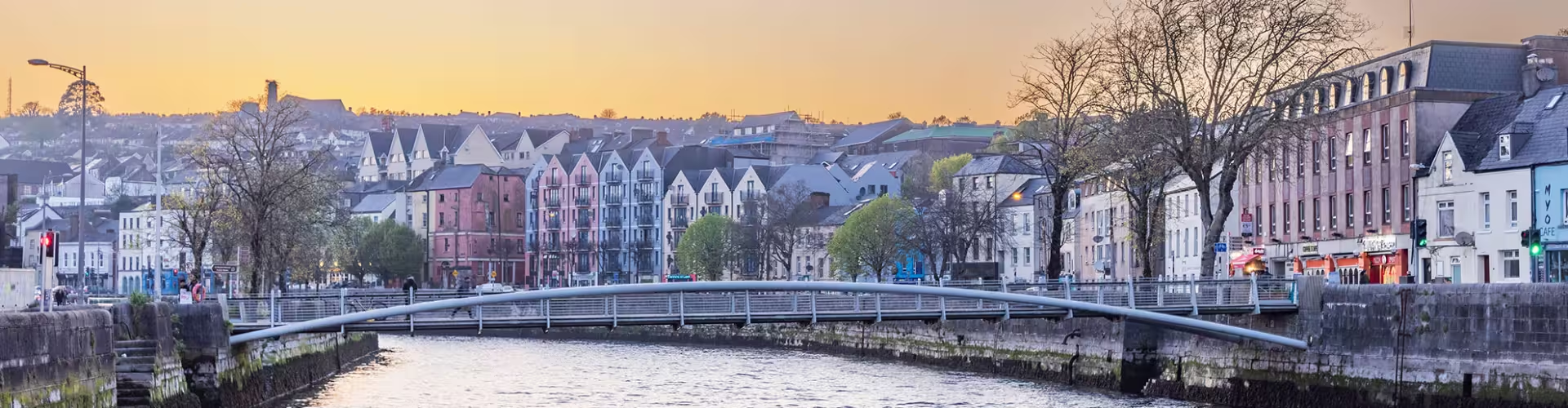


Munster is Ireland's most southerly province, encompassing five counties stretching from the Atlantic coast to the Waterford Mountains. This region captivates visitors with the dramatic Cliffs of Moher, the rugged beauty of the Ring of Kerry, and the vibrant cultural heart of Cork City.
Munster boasts remarkable natural attractions including the Cliffs of Moher, one of Ireland's most visited landmarks, and the scenic Dingle Peninsula. Waterford's medieval Viking Triangle offers historical intrigue, while Cashel's ancient round towers and monastic sites reveal centuries of Celtic heritage. The lush countryside dotted with stone walls and green valleys provides endless photo opportunities.
Explore the iconic Ring of Kerry driving route through County Kerry's mountain passes and coastal views. Visit traditional Irish music sessions in Dingle and Cork, take coastal walks along the Waterford Greenway, and discover hidden coves and beaches. Food tours in Cork showcase local whiskey and fresh seafood traditions.
Munster holds deep significance in Irish literature and arts. Frank McCourt's Limerick and Edna O'Brien's County Clare inspire literary pilgrimages. The region maintains vibrant traditional music scenes, particularly in Dingle and Doolin, where sessions run nightly in authentic pubs steeped in Irish cultural identity.